2026-06-23
When an off-road machine starts losing power, running hot, or feeling “off” under load, we often blame the engine or the transmission first. But a failing torque converter can create the same headaches—and if we keep working through it, we can turn a manageable repair into a full drivetrain teardown. In this guide, we’ll show the 8 most common bad torque converter symptoms, what they usually mean in real jobs (loaders, dozers, telehandlers, forklifts, backhoes), and how we can confirm the cause before we buy parts.
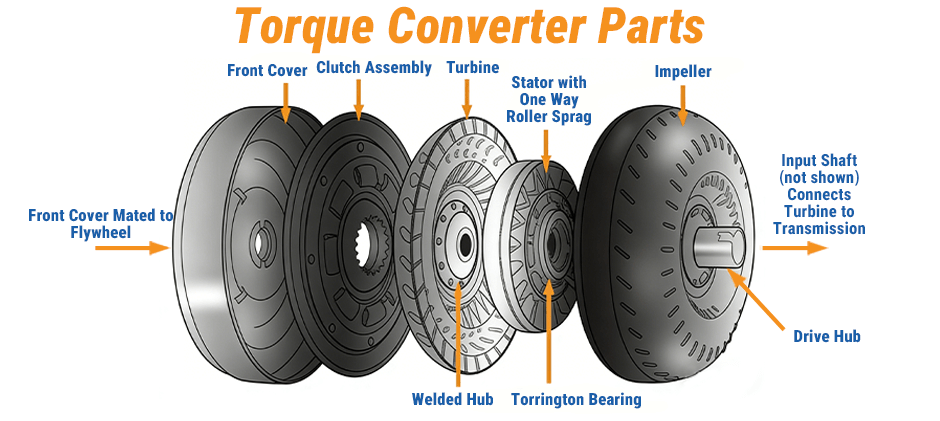
A torque converter is a hydraulic coupling that sits between the engine and the transmission. It bolts to the engine side through the flywheel area and takes power from the engine’s crankshaft, then sends that power into the transmission using fluid flow rather than a dry clutch.
If we look at the converter as a set of “working zones,” we’ll usually hear these internal parts named:
In off-road work, the converter also helps smooth shock loads. At low engine speed, it transmits limited torque—one reason a machine can idle on a slope with only light braking. As load changes, the converter “adjusts” turbine speed by fluid action, helping the machine move through soft ground or heavy piles without hammering the drivetrain.
Below are the symptoms we see most often on machines that use a converter-style drive (common across many loaders, forklifts, crawler tractors, telehandlers, and similar equipment). The tricky part: several of these can also come from the transmission, the cooling system, or the hydraulic supply that feeds the converter. So we’ll pair each symptom with a quick “what to check next.”
| Symptom | What we notice in the cab | Common “next checks.” |
| Overheating | Trans temp climbs fast under normal work | Fluid level/condition, cooler flow, fan/radiator, converter outlet pressure |
| Drive power loss (under load) | Weak push into pile; bogs early | Engine health, clogged filters, low converter charge pressure, internal leakage |
| Surging/hunting | Pull comes and goes; speed won’t hold | Erratic pressure/flow, aerated oil, failing charge/pressure control, slipping clutch |
| Delayed engagement | Long pause before moving after selecting the gear | Low charge pressure, drain-back, worn seals, and pump supply issues |
| Shudder/vibration | Feels like rumble during pull or transition | Contaminated oil, clutch issues, internal wear, misalignment/imbalance |
| Abnormal noises | Whine/grind in gear, changes with RPM | Bearing wear, damaged splines, cavitation from low supply |
| Fluid contamination | Dark/burnt smell, metal or friction debris | Converter internal wear, overheated oil, and downstream damage risk |
| Oil leaks + repeat low pressure | Frequent top-offs, loss of performance | Seal damage from heat, cracked lines, cooler leaks, converter hub/seal area |
Overheating is a top indicator because heat is both a symptom and a cause. When converter oil gets too hot, viscosity drops, seals harden, lubrication falls off, and small leaks become big ones. In the field, that looks like:
Why it points to a converter: converter slip creates heat by design—so if internal leakage increases (worn seal rings, internal wear gaps), we get extra slip and extra heat.
From the catalog guidance provided, common overheating causes include insufficient hydraulic pump supply, cooling system malfunction, low converter oil pressure, degraded oil type, and abnormal wear.
This is the complaint that costs money: the machine still “moves,” but it doesn’t work. We’ll notice it when we:
Why it can be a bad converter: internal fluid leakage reduces the torque that reaches the turbine. Worn seal rings on the turbine shaft or leakage at guide vane/stator areas can dump pressure internally instead of driving torque.
Don’t skip this note: power-loss symptoms can look exactly like a transmission issue. If we guess wrong and keep working, debris and heat can travel through the system and damage more parts.
Surging is when the machine can’t hold steady pull, travel speed, or lift-and-carry pace—even though our throttle input is steady. It can feel like:
Why it can be converter-related: erratic converter pressure or flow. A converter that intermittently “grabs” and then slips can create unpredictable output.
This is a good transition point because it connects the converter to the supply side: if pressure and flow are unstable, we need to look beyond the converter itself.
If we select direction (or gear range) and the machine takes too long to respond, we’re often seeing a charge pressure delay. Typical signs:
Why it can be a converter problem: internal drain-back or sealing issues can prevent pressure from building quickly where it needs to.
But here’s the key: the converter does not make pressure on its own—the system that feeds it matters. If the charge circuit is weak, the converter will act weakly.
That’s why, when engagement delay shows up with other symptoms, checking the transmission pump (charge supply) becomes part of a smart diagnosis—not an afterthought.
A shudder is not the same as general machine vibration from tires, tracks, or rough ground. Converter-related shudder tends to be:
If we feel shudder plus overheating, we should treat it as “stop-and-check” territory—not “finish the job and deal with it later.”
Noises are valuable clues because they often narrow the problem to rotating internals:
If noise appears along with contaminated oil, we’re likely past “monitor it” and into “plan a repair.”
If we pull a sample or inspect oil during service and see:
We need to take it seriously. Converter internal wear can shed material that circulates through the transmission and valves, and that spread is how one failing unit can lead to several failing units.
Practical tip: if we suspect converter damage, cutting open the filter (where applicable) and checking for glitter or debris can give fast evidence without guessing.
Leaks matter for two reasons: oil loss and pressure loss. And pressure is what makes the converter flow do useful work.
Common leak patterns tied to converter trouble include:
If we’re topping off often, we’re not only losing oil—we’re also risking aeration, heat rise, and unstable charge pressure.
The best fix is the one that targets the real cause. Since converter symptoms overlap with transmission faults, we want a step-by-step plan that avoids “parts darts.”
Before we call it a bad torque converter, we should verify:
If overheating was the first symptom, this step alone can prevent repeat failures.
Because the converter relies on oil flow and pressure, a weak charge circuit can mimic converter failure.
If the machine’s specs and test ports allow it, a qualified tech can:
If the charge supply is low, we may be looking at a worn or failing transmission pump or a control issue upstream.
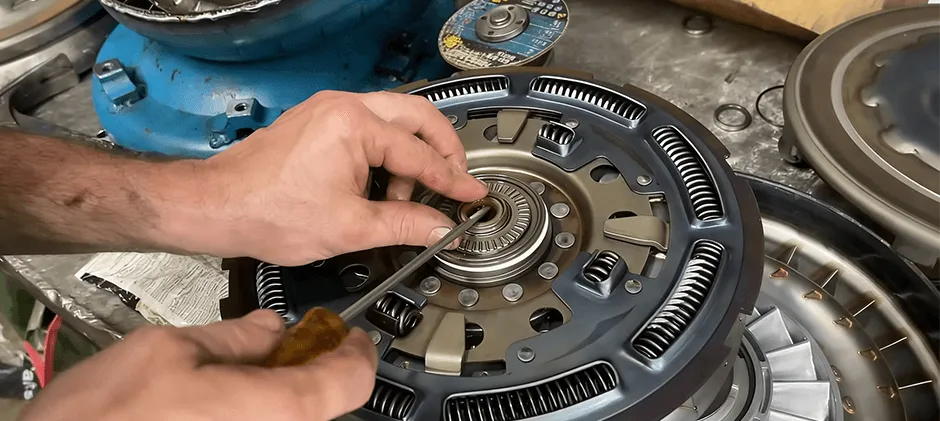
In many off-road machines, replacing the converter is more common than rebuilding in the field, mainly because:
If testing and oil evidence point to converter failure, sourcing a correct-fit unit matters. For selection across many heavy equipment brands and equipment types (loaders, forklifts, crawler tractors, telehandlers, bulldozers), we can shop by part number and application here: torque converter.
If the old oil is burnt or contaminated, installing a new converter without cleaning the system can ruin the new unit fast.
A “fix it once” approach often includes:
For broader components that support the converter and transmission system—bearings, clutch discs, couplings, seals, and more—this category helps when we’re building a complete repair list: transmission parts.
After parts are replaced and fluid is serviced, we should verify:
If temperatures still climb fast, we go back to airflow, cooler flow, and supply pressure—because repeated overheating will kill even a brand-new converter.]
If we’re losing time to heat, slipping, or weak pull, the goal is simple: fix it right and keep it fixed. MechLink is an aftermarket parts supplier offering high-quality products at affordable prices, a vast inventory, and wide compatibility for many heavy equipment brands. Whether we’re replacing a converter, restoring charge supply, or building a full repair list, using the right-fit catalogs helps us reduce downtime and avoid repeat failures.