
2026-11-23
On a tracked machine, hydraulic power only becomes travel because of the undercarriage — the chain of components that carries the machine’s weight and turns pressure into motion. The main pieces are drive motors, idlers, sprockets, pins and bushings, rollers and tracks.
Drive motors convert hydraulic pressure into rotation. Their teeth, the sprockets, engage the pins and bushings on the inside of the track and pull it around, much like a bicycle chain running over a cog. Idlers ride the same inner surface but receive no power; their job is to hold the track in line and let it spin freely. Rollers, fitted at the top and bottom of the assembly, keep the track tensioned and keep it clear of the frame. The track is the only part that meets the ground — rubber or steel, fitted with lugs or grousers for grip, just as a tire has tread.
No other system on a tracked machine consumes as much time and money over its service life. That alone is a good reason to understand what each component does and how to look after it.
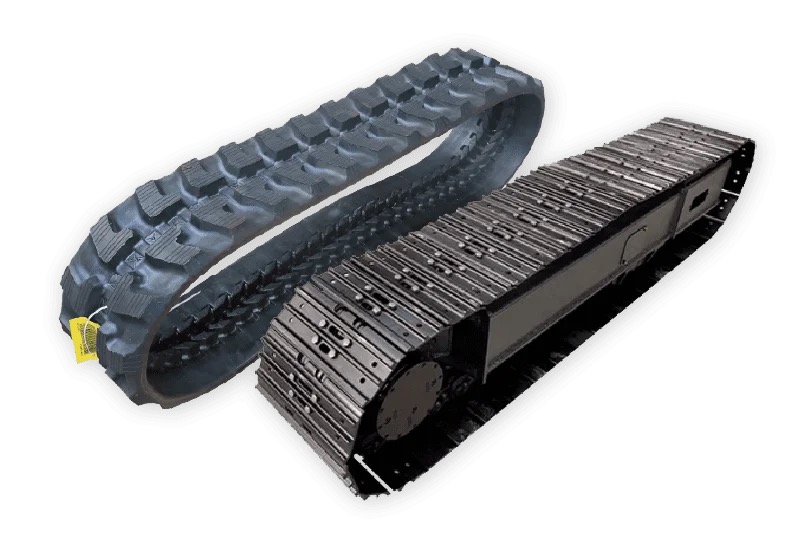
Good undercarriage care lowers maintenance spend and adds years to a tracked machine. The nine practices below cover selection, operation, inspection and the small jobs that are easiest to skip.
Track choice sets the baseline for undercarriage health, and the decision has to match both the machine and the work it does. Choosing the right tracks is therefore the first maintenance decision you make, not a purchasing afterthought.
Steel is the default for most applications. It copes with dirt, sand, rock and soil, holds up under heavy use and delivers strong traction in wet or muddy going.
Rubber tracks trade some of that toughness for gentler treatment of surfaces. They cause far less ground damage than steel, run more smoothly and are noticeably quieter. The trade-off is grip: rubber is weaker in wet conditions and less aggressive under load.
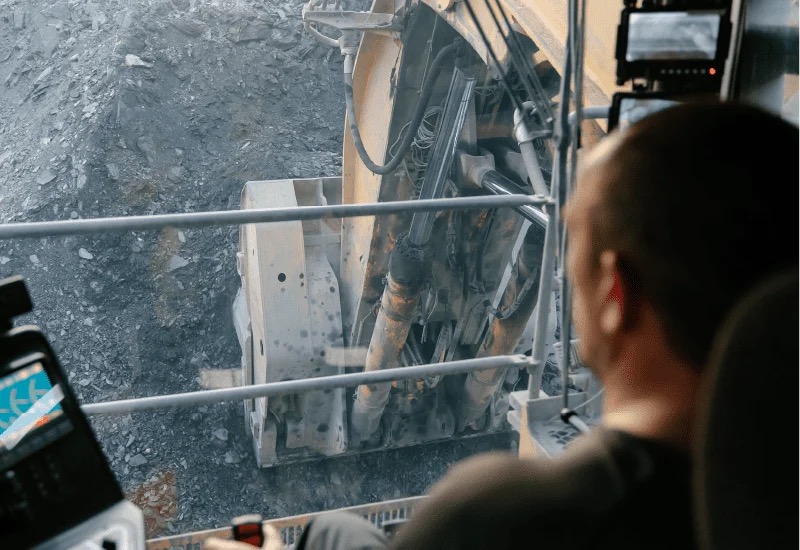
Poor operating habits wear an undercarriage out far faster than hours alone, and the result is more frequent maintenance. Train operators in best practice, and follow the manual for machine-specific procedures. Habits worth banning:
Frequent checks catch problems while they are still cheap to fix. Where possible, have operators walk the undercarriage every morning before the shift starts.
Look for parts that are loose, or that have gone shiny from metal-to-metal wear. These areas deserve a visual check for damage or leakage:
Bushings, sprockets and rollers take the brunt of normal operation and deserve the closest look. Rollers and idlers are also prone to oil leaks and should be checked every day.
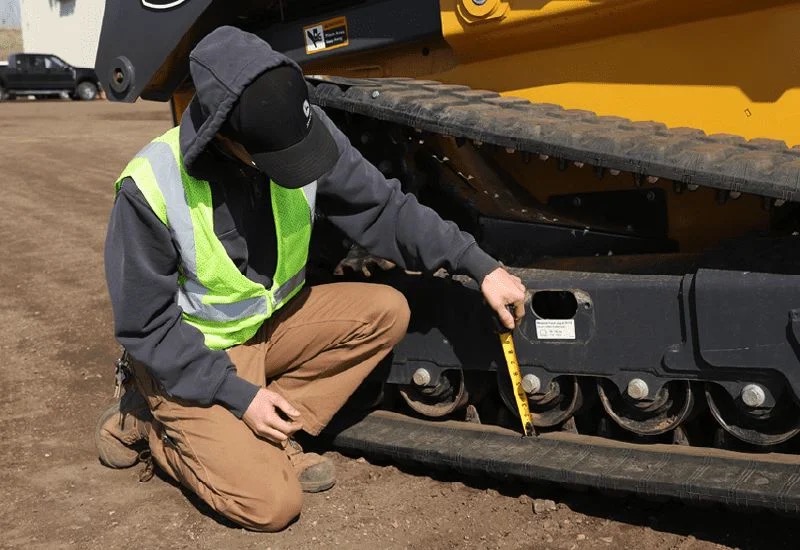
Tension does for a track what inflation pressure does for a tire: it decides how quickly the component wears.
Too tight, and the machine loses power and efficiency while bushings carry pressure they were never meant to take, wearing out early or cracking. Too loose, and the track can walk out of alignment, loading the undercarriage unevenly.
Treat the figure in the operating manual as your default. Soft or sandy ground is the main situation where slightly looser tension makes sense.
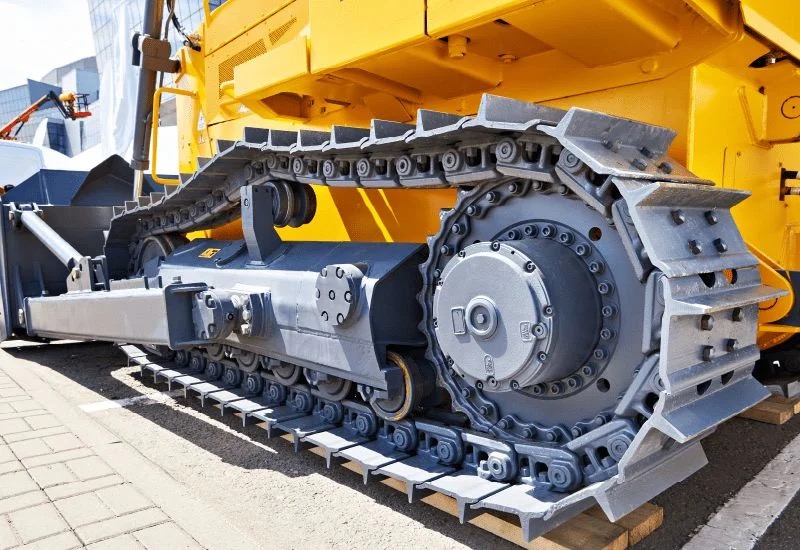
Poor alignment strains every component in the assembly and can end in failure. Drive motors and idlers should sit parallel to one another. A misaligned track tends to pull the machine to one side and can set up unusual vibrations while travelling.
Keeping the undercarriage clean and free of debris is one of the highest-value habits in tracked machine maintenance. Packed mud and gravel jam moving parts until they break, while abrasive sand grinds small components down over time.
A pressure washer or jet nozzle at the end of each shift, aimed to flush gravel out of pins, bushings and rollers, does most of the work. Cold climates where mud freezes are especially punishing, so cleaning matters even more there; if it is too cold for water, a shovel or pry bar will do.
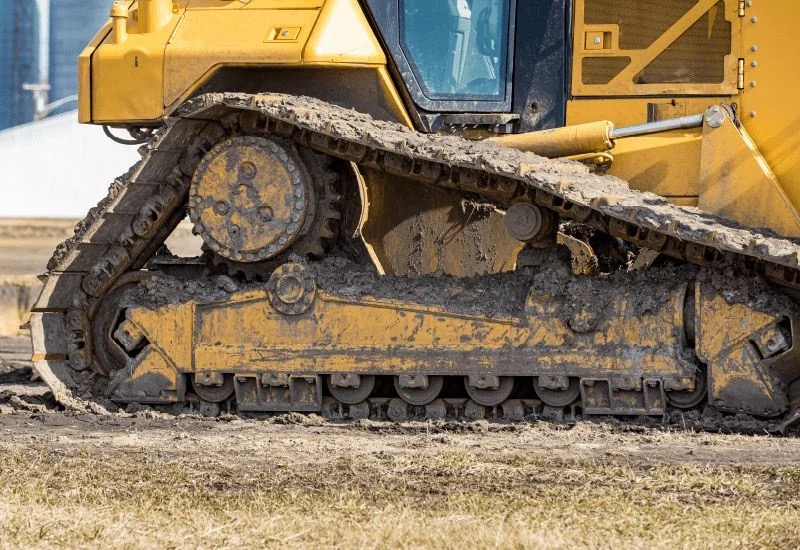
The right track size and shoe width extend track life and reduce unnecessary wear. Hard, rocky soil rewards a narrow shoe, which penetrates and grips better. Loose, sandy ground favours a wider shoe that spreads machine weight and lasts longer. Grouser type matters as well: more grousers mean more ground contact, better stability and longer track life.
A loose, missing or broken component shifts extra load onto its neighbours, and the failures multiply. Replace parts as soon as they break or wear past their limit. Sprockets are usually the first casualty: check for misshapen teeth, and replace them once the teeth come to a point or take on a hook shape.
Lubrication protects both cleanliness and function. Greasing the bushings puts a film between moving parts and keeps dirt out of the pin-and-bushing joint. Your operator’s manual lists the primary grease points and how much grease each should receive. Daily greasing as part of the inspection walk-around is one of the most valuable routines an operator can own.
The undercarriage is the foundation the whole machine stands on, and steady inspection plus maintenance is what protects it from expensive damage and unplanned downtime. If replacing undercarriage components is more than you want to take on, our parts experts can talk you through the options and help you get the right parts.
Is Your Fuel Filter Clogged? Five Symptoms You Should Not Ignore
2026-11-23

Preventive maintenance: how scheduled upkeep pays for itself
2026-11-22

Hydraulic cylinder seals: five parts that decide cylinder performance
2026-11-22
Excavator Questions, Answered: Size, Cost, Attachments and More
2026-11-21