2026-05-08
For owners and restorers of off-road agricultural machinery, knowing the detailed differences between the Ford 9N, 2N, and 8N tractors is essential. These machines may look similar, but mechanical, hydraulic, and functional variations significantly separate them in terms of operation and maintenance. This guide provides everything you need to accurately identify each model, understand its engineering evolution, and source the right Ford tractor parts for efficient restoration or field service.
Ford’s N-Series tractors changed the course of small-scale farming forever. Beginning with the 9N in 1939, the series introduced hydraulics, ease of maintenance, and affordability, allowing small farms to mechanize their operations.
The biggest leap was the introduction of Harry Ferguson’s three-point hitch, integrating tractor and implement as one system — a revolutionary concept that shaped every tractor design afterward.
With that foundation, let’s explore each model in order.
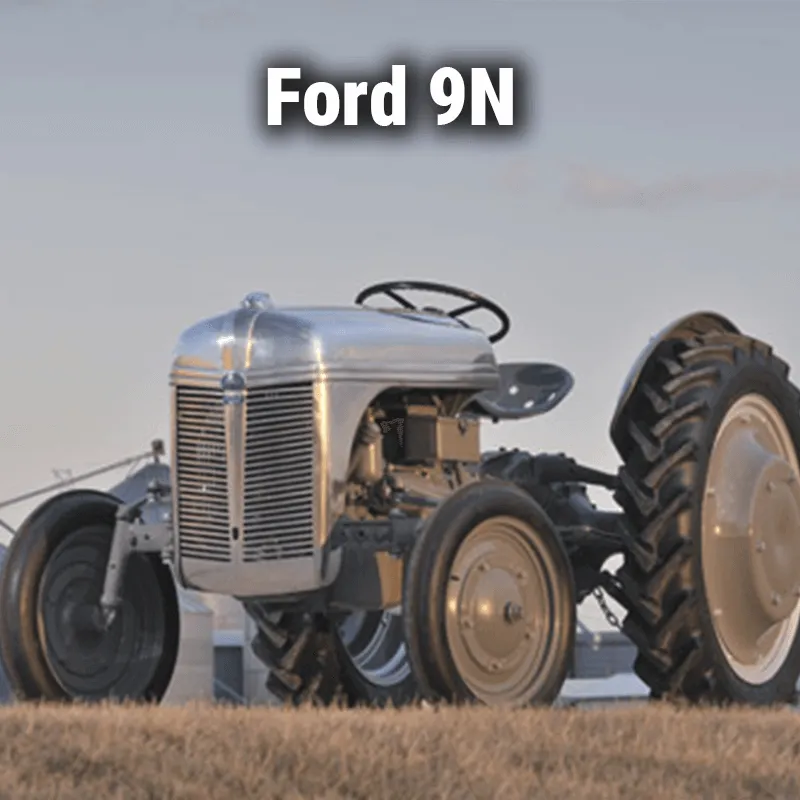
Operators praised the 9N for its reliability but noted the 3‑speed transmission could feel limited in hilly or varied‑load work. Power was sufficient for plowing small fields, hauling, and scraping tasks, but traction could be challenging in clay or loose soil conditions — something Ford addressed later.
With America fully engaged in World War II, Ford faced strict material rationing. The 2N emerged as a practical wartime evolution of the 9N to comply with production constraints yet sustain the agricultural sector.
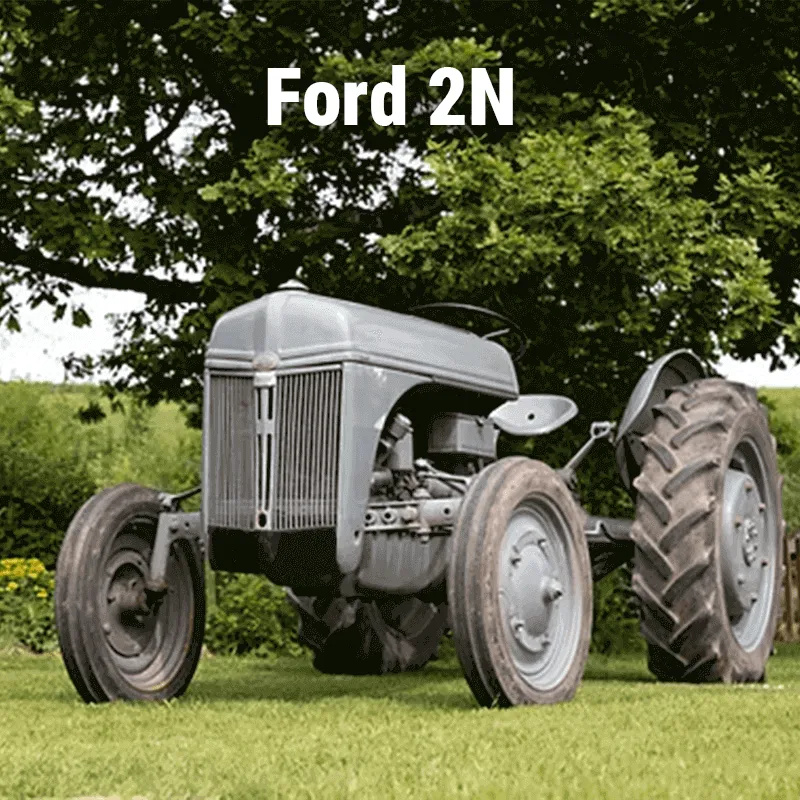
Mechanically, the 2N remained almost identical to the 9N. However, subtle improvements to axle strength, oil‑seal design, and electrical durability meant more robust field performance. As many 2Ns remained in post‑war service, durability became their hallmark.
By 1947, economic recovery allowed Ford to redesign the N-Series entirely. The Ford 8N was mechanically superior, ergonomically improved, and visually distinct. It became the best-selling agricultural tractor of its era.
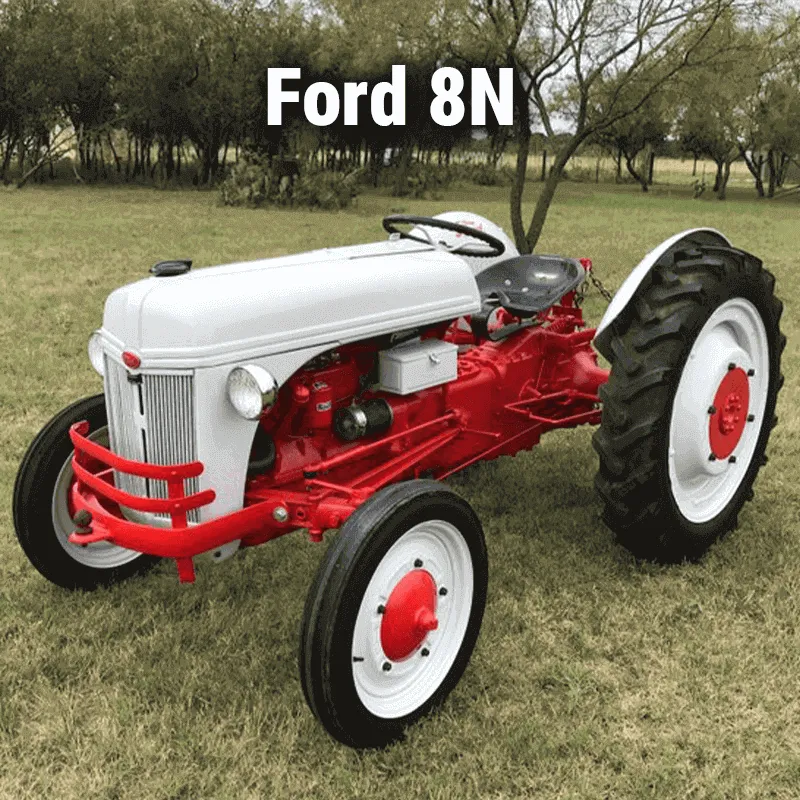
The combination of a faster gearbox and refined hydraulics made the 8N far more versatile off‑road. It handled larger mowers, tillers, and cultivators while remaining lightweight. The side‑mount distributor on later models made servicing safer and more straightforward.
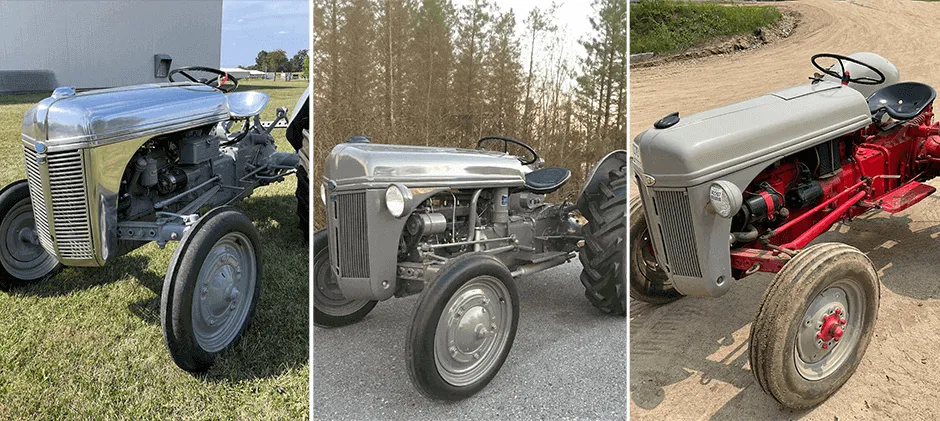
At a glance, all three N-Series tractors share similar frames and dimensions, yet they differ greatly in functionality. Identifying the right model is crucial when ordering replacement parts or planning upgrades.
Many collectors consider the 4-speed 8N gear set one of the most serviceable designs in post-war ag machinery.
Position control was a game-changer — for the first time, an operator could ‘feather’ a grader blade instead of dropping it to the ground.
These visual differences make model recognition easy, even from a distance.
The paint scheme is the fastest identifier:
Beware: many restored 9Ns wear red paint by mistake.
All serial numbers are stamped on the engine block’s left front. Formats overlap:
Owners can verify precise years using N-Series serial decoding charts or apps.
The 8N feels like an entirely different machine:
Meanwhile, the 9N and 2N are appreciated for simplicity — fewer moving parts, excellent fuel economy, and timeless durability.
Collectors often find “hybrid” units: tractors rebuilt over decades with mixed features — an 8N transmission in a 9N frame, or 2N radius arms on an 8N axle. These mixups highlight how interchangeable N-Series components are, but also why you should double-check before ordering replacement parts.
| Model | Years Built | Units Produced | Approx. Price (New) | PTO Horsepower |
| 9N | 1939 – 1942 | ≈ 99,000 | $585 | ~ 23 HP |
| 2N | 1942 – 1947 | ≈ 90,000 | $1,120 | ~ 23 HP |
| 8N | 1947 – 1952 | ≈ 524,000 | $1,404 | ~ 23 HP |
Keeping an N-Series operational 70+ years later relies on genuine-fit replacement parts. Components like ignition kits, thermostats, oil pressure gauges, and hydraulic seals are readily available from trusted aftermarket sources like Ford tractor parts.
Those restoring classic 8Ns or customizing working units can find specialized assemblies, including fuel sediment bowls, radiator hoses, and distributor kits in the Ford 8N tractor parts catalog — each one engineered for precise fit and long field life.
From the 9N’s ingenious simplicity to the 8N’s refined control and power, the Ford N-Series defined mid-century off-road machinery design. Today, these tractors still deliver practical value and heritage. To keep them working for decades to come, choose high-quality, cost-effective aftermarket parts available through Ford tractor parts. Whether you’re rebuilding a 9N engine or fine-tuning a proofmeter on an 8N, MechLink ensures compatibility, fast delivery, and lasting performance.