
2026-05-29
While heavy machinery owners and operators often focus on engine health, hydraulic pressure, and track tension, two crucial components for both performance and safety are commonly overlooked: the air filters. When someone mentions an “air filter,” they may be referring to two distinct parts with different functions: the engine air filter and the cabin air filter. Though both filter air, they protect entirely different systems.
This guide will explain what the cabin and engine air filters are, how they work, when to replace them, and more. By following these, you can ensure your equipment runs smoothly and your working environment remains comfortable.
| Feature | Engine Air Filter | Cabin Air Filter |
| Primary Function | To protect the engine from contaminants. | To purify the air for the operator. |
| Location | Inside a large plastic housing in the engine bay. | Typically behind the glove box or under the dashboard. |
| Typical Interval | 250 – 500 service hours. | 500 – 1000 service hours, or annually. |
| Aftermarket Cost | $15 – $28 | $18 – $40 |
| OEM Cost | $25 – $50 | $30 – $75 |
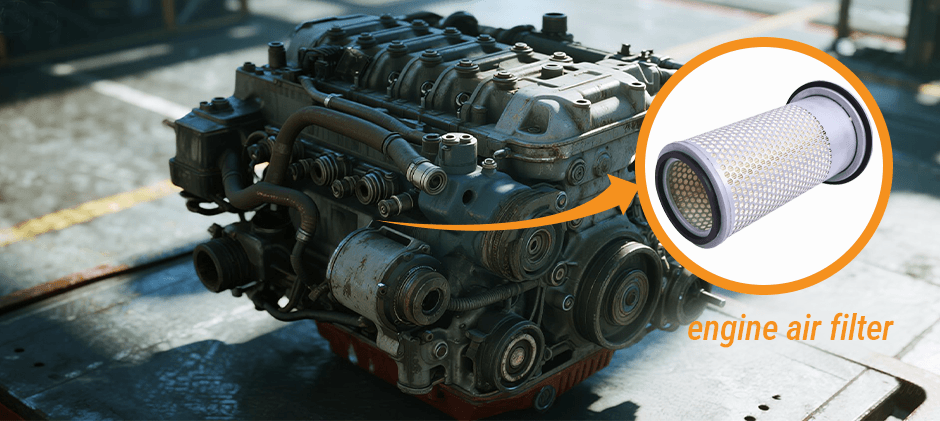
Think of the engine air filter as your engine’s lungs. As your engine runs, it pulls in a large volume of outside air for combustion. This air is directed through the engine’s intake system, where it must pass through the engine air filter. Made of pleated paper or cotton, the filter acts as a physical barrier, trapping abrasive particles like dust, sand, bugs, and other debris. This process ensures only clean, pure air mixes with fuel, allowing for efficient combustion and preventing contaminants from scoring cylinder walls, pistons, and other critical components.
The cabin air filter is the guardian of the air you breathe inside your vehicle. It is a vital part of the Heating, Ventilation, and Air Conditioning (HVAC) system and does not impact engine performance. Its role is entirely focused on your health and comfort.
Before outside air enters the cabin through the heating or A/C vents, it passes through the cabin air filter. This filter is designed to trap a wide range of airborne particles that can affect your respiratory health and comfort. It effectively captures dust, pollen, soot, smog, and even unpleasant odors from exhaust gases. By cleaning the air you breathe, the cabin air filter creates a healthier and more pleasant environment inside your vehicle.
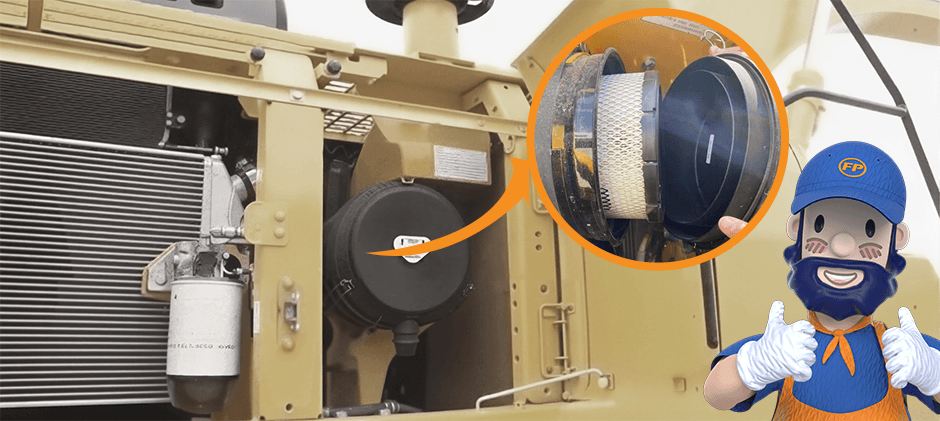
Most modern heavy machinery typically features at least two main air filters: one for the engine and another for the cabin. However, the exact number and type depend on the machine’s age, size, and specific setup. Knowing your equipment’s configuration is essential for proper maintenance.
Neglecting a dirty filter can have serious consequences, which vary significantly between the engine and the cabin.
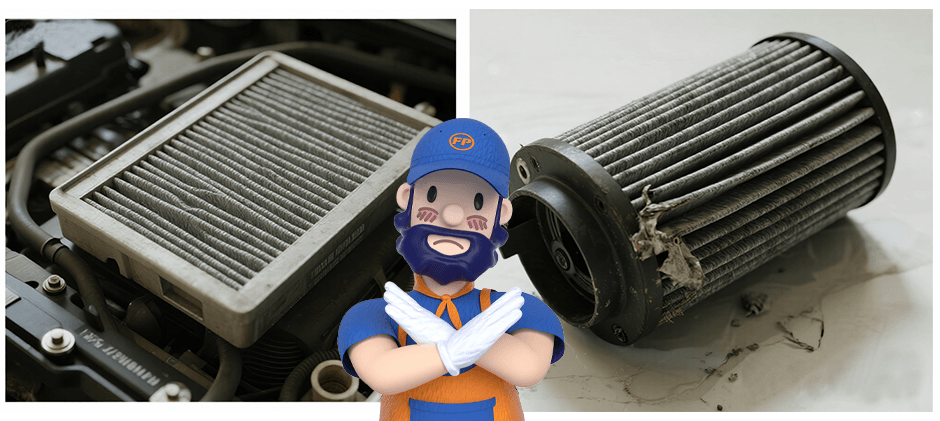
When an engine air filter becomes clogged, it effectively chokes the engine by restricting airflow. This causes several visible issues:
While a blocked cabin filter won’t harm the engine, it can negatively affect your health and comfort.
Refer to the manufacturer’s service manual for a baseline, usually based on operating hours.
Nevertheless, these are general guidelines; actual needs depend on your working conditions and other factors.
An air filter‘s life isn’t measured in hours, but in the amount of dirt it has captured. This factor affects both the engine air filter and the cabin air filter directly, as both systems pull in contaminated outside air.
This difference is because an engine pulls in a larger volume of air than a cabin’s HVAC system, causing its filter to clog more rapidly even under the same conditions.
This factor is specific to the engine air filter. Many heavy-duty machines are equipped with a pre-cleaner system. This device uses cyclonic action to spin out larger particles before they reach the main filter.
A properly functioning pre-cleaner can remove up to 90% of coarse dust from the intake air. This can extend the life of the primary engine air filter by 3 to 5 times compared to a system without one. However, it’s critical to empty the pre-cleaner’s dust bowl daily. If it’s full, it’s not working.
High humidity is an often-overlooked factor that affects both filters, but in different ways.
Not all dirt is created equal. The size and type of particles have a huge impact. Fine, powdery dust is far more damaging than larger particles. It clogs the microscopic pores deep within the filter media much faster. A filter can appear relatively clean on the surface but be internally clogged, reducing airflow by over 50%. While this affects both filters, the consequence is different.
This factor is crucial for the engine air filter, but does not apply to the cabin filter. An engine running at high RPM under a heavy load is pulling in a massive volume of air. The same engine running slowly is consuming far less. Therefore, a machine that is consistently working hard will pull more dirt through its filter in the same number of service hours. The cabin air filter’s workload, in contrast, is determined by the HVAC fan speed and how often you run it, not by the engine’s performance.
In short, although the standard replacement hours are such, you’d better replace your air filters more often due to these factors.
Beyond the service manual’s mileage or time recommendations, your machinery will give you clear signals that a filter needs attention. Learning to recognize these signs for both the engine and cabin air filters can save you money and keep your machinery running smoothly.
The cost of replacing an air filter depends on whether you buy an expensive OEM part from a dealership or a more affordable aftermarket part, like those from MechLink.
If you have a mechanic perform the installation, expect to pay an additional $20 to $40 in labor for the engine filter and $30 to $60 for the cabin filter. The most economical option is to buy an aftermarket part and do the simple installation yourself.
After reading this guide, you should have a good understanding of the differences between the engine air filter and the cabin air filter: one protects your engine, while the other protects you. The next step is to put that knowledge into action. Routine maintenance is crucial for keeping your equipment running smoothly. When it’s time to find a replacement, MechLink is your reliable supplier, providing high-performance aftermarket filters that offer high-level protection at a much lower price.
Ultimate guide to choosing the best engine oil filter for tractor
2026-09-20
How much does a ford f-150 weigh? 2026 complete guide
2026-09-20
Do diesel engines have spark plugs?
2026-09-19
How to choose the right connecting rod bearing?
2026-09-19