2026-09-17
The brake pad replacement cost is a major concern for every heavy equipment owner. Due to the large differences in equipment type, brake system structure and working conditions, the price range will also change accordingly. Replacing brake pads typically costs around $300 to $2,500. Knowing the key factors that influence costs helps you to choose the best option within your budget.
Construction equipment brake pads don’t have a simple lifespan measured in miles or years. Instead, it’s all about operating hours and conditions. How often you need brake service depends entirely on how and where your machine works.
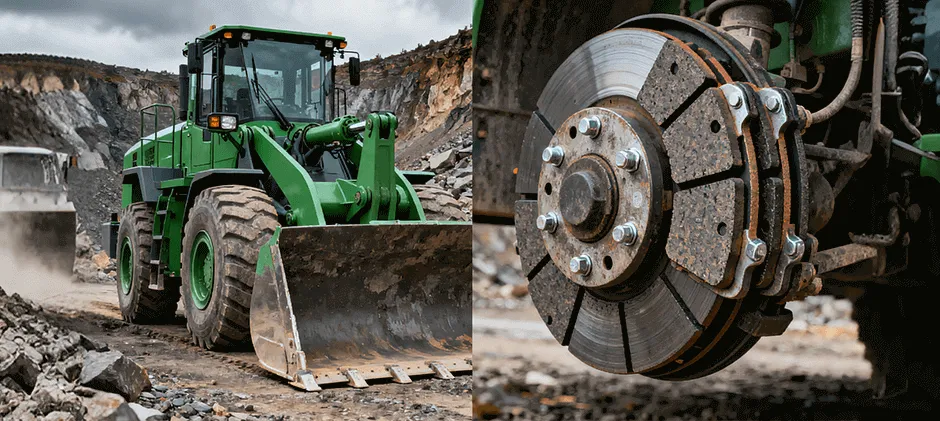
When you get a quote for brake work on your excavator, dozer, or tractor, the final price adds up from several key parts. Knowing what these are helps you see why prices can be so different.
Brake pad prices vary a lot by equipment type. Brake components for tractors, excavators, loaders, and trucks are very different in size, complexity, and cost. Bigger, more powerful machines need stronger, more expensive brake pads.
As we mentioned, wet disc brake systems are totally different from dry ones. Replacing friction discs in a wet brake system usually means draining axle oil, removing axle shafts, and taking apart the axle housing. This takes a lot of labor. Dry brake replacement is typically simpler—just take off the wheel and caliper.
Is it just the brake pads (or friction discs)? Or are other parts worn or damaged? If brake rotors (or steel plates in a wet system) are warped, scored, or worn too much, they have to be replaced. This can double the part cost.
Heavy equipment mechanics are specialized pros. Their hourly rates show that—usually $100 to over $200 per hour. A complex brake job on a large machine can take a full day or more. So labor makes up a big part of the total brake pad replacement cost.
Original Equipment Manufacturer (OEM) parts come from the machine’s brand. They fit perfectly, but they’re often more expensive. High-quality aftermarket brake pads are made to meet or beat OEM specs. They can save you a lot of money without losing performance or safety.
Sometimes, a brake job uncovers other problems. A common and costly issue in wet brake systems is a failed axle seal. When an axle seal fails, differential oil gets into the brake housing. This oil soaks the friction discs and ruins them completely. What started as a simple brake fix now means replacing all seals, discs, and plates—plus flushing the whole system. That’s why repair costs can jump quickly. This “extra damage” is why a low initial quote might go up once the mechanic starts working.
With these factors in mind, let’s break down the numbers. We will provide estimated ranges, but always get a specific quote for your machine.
The cost of the parts alone varies widely based on the machine. Here are some general estimates for a set of brake pads or friction discs for one axle:
Remember, if rotors or steel separator plates are also needed, these costs can easily double.
This is where parts and labor combine. A professional repair ensures the job is done correctly with the right tools and safety procedures.
| Equipment Type | Estimated Part Cost (per axle) | Estimated Labor Hours | Estimated Total Cost (per axle) |
| Compact Tractor (Dry Brakes) | $200 – $500 | 2-4 hours | $400 – $1,300 |
| Large Tractor (Wet Brakes) | $600 – $1,500 | 6-10 hours | $1,200 – $3,500 |
| Wheel Loader (Wet Brakes) | $800 – $2,500 | 8-16 hours | $1,600 – $5,700+ |
| Excavator (Final Drive Brakes) | $700 – $2,000 | 5-9 hours | $1,200 – $3,800 |
These are estimates. Complex jobs with contaminated systems or seized components will be higher.
DIY saves you labor costs. Labor usually makes up 50% or more of the total bill. You only pay for parts, fluids, and any special tools you might need to buy.
But DIY isn’t for everyone. Heavy equipment parts are big and heavy. You often need lifting gear, heavy-duty jacks, and torque multipliers. The brake system is a critical part—if it’s not installed right, safety is at risk. Before you start, it’s best to learn the common signs of worn brake pads and the specific steps. If you don’t have enough tools or experience, letting professional mechanics do the job is safer.
The best way to keep brake pad replacement costs down is to make your current brake system last longer, with regular maintenance.
Even with good maintenance, you’ll eventually need to replace your brakes. Here are a few tips to manage the cost—without skimping on safety.
Know the things that affect cost, do preventative maintenance, and choose parts suppliers wisely. This way, your equipment stays safe and reliable, without going over budget. MechLink has a huge inventory. You can find compatible brake system parts for many heavy equipment brands. We guarantee your equipment runs smoothly.