2026-08-28
A turbo is an air pump powered by exhaust. It pushes more air into the engine. More air makes fuel burn better. Your machine gets stronger and meets emissions standards. If the turbo fails, your engine may be damaged too. In 2026, the turbo replacement cost is $2,500 to $8,000+. Read on to learn the more detailed costs, signs of a bad turbo, and whether you can replace it yourself.
The biggest part of your total cost is the turbo itself. Heavy equipment uses different turbo types, and they all cost differently. The part alone can cost from $1,000 up to several thousand dollars. Below is a reference of what you’ll pay for common turbo types in 2026.
| Turbocharger Type | Estimated Part Cost Range (2026) | Common Applications |
| Wastegate Turbo | $1,200 – $2,500 | Older or simpler engines, smaller equipment |
| VGT (Variable Geometry) | $2,500 – $5,000+ | Modern excavators, loaders, tractors |
| Twin-Turbo (Set) | $4,000 – $7,000+ | Large dozers, high-horsepower mining trucks |
| Electric-Actuated Turbo | $2,800 – $5,500+ | Engines needing precise boost control |
Notice: These prices are 2026 estimates and can vary based on your location, the specific model, and the shop’s labor rates.
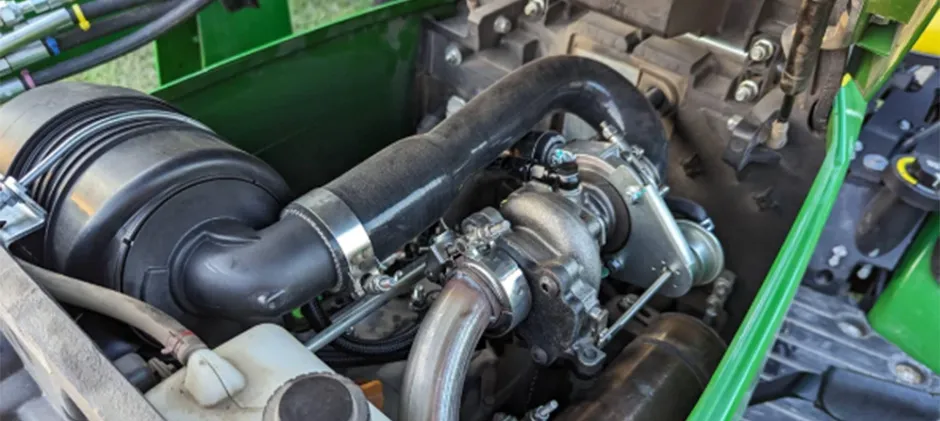
Many things affect how much you’ll pay to replace a turbo. Knowing these factors will help you understand your mechanic’s quote.
A turbo for a big, high-end bulldozer will cost more than one for a small, common skid steer. Engine size and complexity make a big difference.
As shown above, a standard wastegate turbo is simple and usually more affordable. A VGT (Variable Geometry Turbo) is more advanced, so it costs more. High-horsepower engines often use twin turbos — which means two units instead of one, and nearly double the parts cost.
This is where you can save the most money.
Labor can add $700 to $1,500 or more to your bill. If the turbo is easy to reach, it only takes a few hours. If it’s deep inside the engine bay and other parts must be removed first, labor costs jump.
This is the hidden cost. When a turbo fails, it can send metal pieces into your engine or exhaust system. A broken turbo can also be a sign of another problem, like bad oil. If you don’t fix the root cause, your new turbo will fail again soon. Worse, if metal pieces damage the DPF, SCR, or engine inside parts, total repair costs are higher.
If your turbocharger is going bad, you’ll notice these early signs. Fixing the issue early avoids costly engine damage.
Power Drop
You won’t feel the “boost” effect you used to get. The equipment struggles to climb hills or can’t easily lift heavy objects that were previously easy.
Unusual Noise
A faulty turbocharger will often make a loud, high-pitched sound. The higher the engine speed, the louder it is. This is usually due to bearing wear, causing the compressor impeller to rub against the housing.
Smoke Coming Out of the Exhaust
Increased Oil Consumption
Oil additions have become frequent recently, but no external leaks have been detected. The oil may be leaking internally through the turbo.
Check Engine Light and Fault Code
Modern equipment triggers fault codes related to “low boost pressure (P0299)”, “high boost pressure (P0234)”, or “turbocharger actuator (P2563 or P003A)” issues.
Labor isn’t cheap, so many people ask: Can I replace the turbo myself? It depends on your machine and your mechanical skills.
If you’re working on an older mechanical diesel engine — such as an early Caterpillar 3306 or Cummins 6BT — the turbo system is usually simple. These engines often use a basic wastegate turbo without complex electronic controls. In this case, replacing the turbo yourself is possible.
Since the system is straightforward, you don’t need computer calibration. If you understand the fuel, oil, and exhaust systems and have the right tools, doing it yourself can save a good amount on labor costs.
If it is a modern device with VGT (Variable Geometry Turbine), an electronic actuator, or equipped with a DPF / SCR emission system, it is best to let a professional technician operate it. This is because:
If you have any questions, it is recommended to find a professional. Once installed improperly, the losses can far exceed the labor costs saved. At best, the new turbine will be scrapped, and at worst, the engine will be damaged, and the repair cost will be higher.
If you can replace the turbo by yourself, order turbochargers on MechLink! All our replacement parts are sold at competitive prices, so you always get great value. If you’d rather not do it yourself, you can hire a skilled technician to install the parts.