2026-08-05
Coolant keeps the engine at the correct operating temperature all the time. But how does the cooling system know if the engine is hot now? The answer is—coolant temperature sensor. This small sensor sends temperature data to the ECM, and the system can keep track of the engine’s operating status. Read on, we’ll talk about the coolant temperature sensor location, common failure symptoms, and how to replace it, step by step.
Basically, the engine coolant temperature sensor is just a tiny part that senses temperature. When the temperature changes, its electrical resistance changes right along with it. The ECM—think of it as the engine’s brain—sends a steady voltage to the sensor. Then it tells if the engine is cold or hot by reading how that voltage changes.
This isn’t just for showing a temperature number on your dashboard. The ECM depends a lot on this signal to adjust the engine’s performance in real time. That’s how it keeps your heavy-duty diesel engine fuel-efficient and safe. It will specifically affect these aspects:
Overall, coolant temperature sensors are an important data source for the ECM. Its accuracy directly affects the fuel consumption and emissions of the machine, as well as the long-term service life of the engine.
Where do you find this sensor? On most machines like excavators and tractors, the coolant temperature sensor is usually in the same kinds of spots. It’s almost always screwed right into a coolant passage. Check these three main places:
If your gauge shows normal temps but you’re seeing signs of a bad sensor, the problem’s probably with the one that talks to the ECM. Always check your machine’s service manual for the exact sensor location—this way you won’t mix things up.
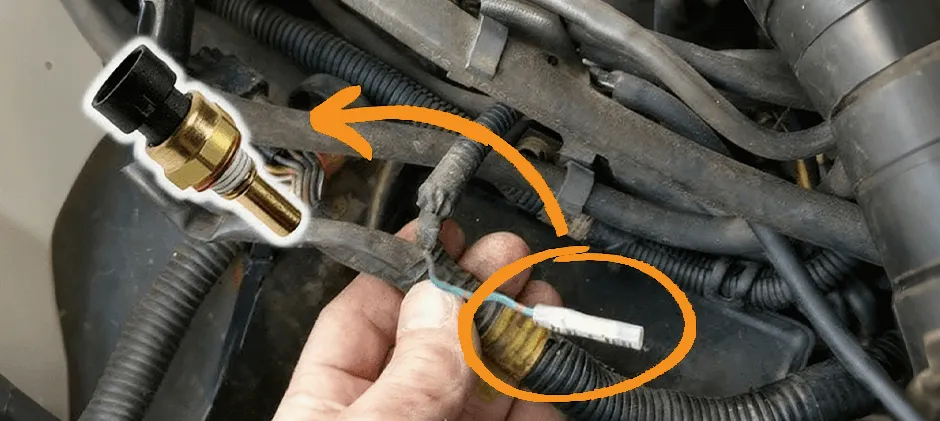
When an ECT sensor fails, it sends wrong data to the ECM—or no data at all. This wrong info makes the ECM mess up, and you’ll notice some issues. A quick visual check is a simple way: look for a cracked connector, rusty pins, or coolant leaking from the sensor itself. But most problems are inside the sensor; you can’t see them. Here are the most common signs your ECT sensor is failing:
When it comes to the engine coolant temperature sensor, the trouble code will be linked to SPN 110. The FMI code tells you exactly what’s wrong:
If you see any of these codes, the problem is almost definitely with the ECT sensor or its wiring harness.
Replacing an ECT sensor is an easy job—most machine owners can do it with basic tools.
Park the machine on flat ground and make sure the engine is completely cool. A hot cooling system is under pressure and can burn you bad. Disconnect the negative battery cable, and do any lock-out/tag-out steps your machine requires.
Place a clean oil tray under the radiator drain valve, open the drain valve, drain some coolant, and keep the liquid level below the sensor position. In this way, it is not easy to leak everywhere when removing the sensor. If the coolant is still clean and relatively new, you can save it for further use.
Locate the ECT sensor in the location you said before. Press and hold the clip on the plug and pull it straight out without pulling on the wiring harness.
Use a deep socket or wrench of the appropriate size to loosen the sensor counterclockwise. When it is loose, it can usually be unscrewed by hand.
Wipe the thread position on the engine clean. See if there is sealant on the threads of the new coolant temperature sensor, if not, just apply a little. First screw the new sensor in by hand to make sure it is not twisted crooked, then tighten it slightly with a wrench. Don’t use too much force. Generally, just tighten it by hand and then tighten it a quarter turn.
Plug the plug back into the new sensor and hear “click” the instruction is stuck. Close the drain valve and slowly add back the coolant that was previously released, or the new coolant.
The cooling system easily gets air in, and the air should be drained cleanly according to the repair manual. Connect the battery back, start the engine, see if there is any leakage around the new sensor, observe the water temperature gauge, and confirm that the heating process is normal and the reading is stable. Finally, clear the fault code with diagnostic equipment.
If the engine temperature reading is still erratic after the repair, you might need to consult a professional technician. The problem could be a wiring fault, a bad thermostat, a blown head gasket, or even an ECU (Engine Control Unit) malfunction. These issues all need a full diagnosis before any repair work is done. If you need to replace the ECT sensor, MechLink has them in stock and ready to ship. We guarantee low prices, so you can get your machine back up and running without going over your repair budget.