2025-12-18
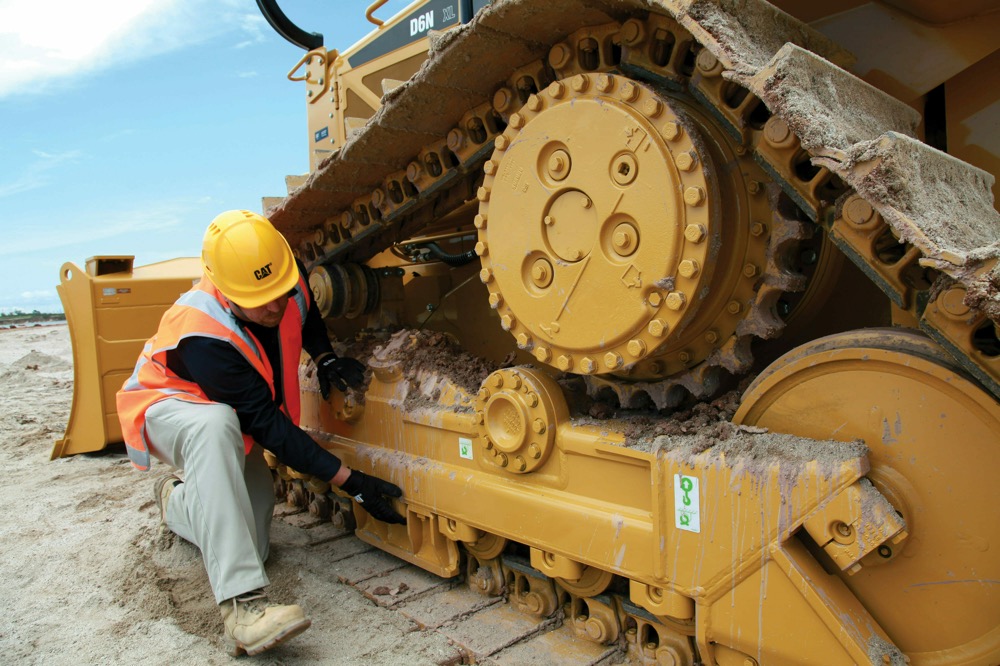
Tracked heavy equipment, like excavators and track loaders, depend on a complex series of components called the undercarriage, to translate the power of their engines into movement. A tracked machine’s undercarriage performs the important role of giving stability to the machine and enabling the proper function and rotation of its tracks.
A machine’s undercarriage is a mission-critical system, enduring a considerable amount of wear during operation. To ensure the efficient performance of your heavy equipment, it’s crucial to understand the components that form the undercarriage and their particular maintenance requirements.
In this guide, we’ll discuss the key components that make up your machine’s undercarriage. Then, we’ll delve into the unique maintenance requirements of this important series of components, helping you boost the performance and longevity of the machines in your fleet.
Put simply, the undercarriage is composed of many components that sit under the chassis of your machine. While they each have their own unique function, the purpose of the components that make up the undercarriage is to drive the tracks and propel the machine into motion.
Let’s take a look at the individual components of a standard undercarriage design and how they impact the performance of your machine:
Sprockets are circular wheels with teeth that are connected to the machine's axles. They serve as the driving force for the tracks, engaging with the links of the track chain. Sprockets work in tandem with the tracks to facilitate the forward or backward movement of the machine.
Rollers are cylindrical components that are evenly spaced along the bottom of the undercarriage, supporting the weight of the machine. They come in two types, top rollers and bottom rollers. Top rollers maintain tension in the track, preventing sagging, while bottom rollers guide and support the track chain as it moves.
Idlers are typically positioned at the front of the undercarriage, and their primary role is to maintain proper tension in the track. They support the upper part of the track chain and help guide it around the sprockets.
Tracks are made of linked steel components or reinforced rubber and wrap around the undercarriage of tracked machines. They distribute the weight of the machine over a larger surface area, allowing for improved mobility on soft or uneven terrain. The tracks engage with the sprockets, propelled by their rotation while being supported and guided by rollers and idlers.
The final drive is a gearbox located on each side of the machine that takes power from the engine and transfers it to the sprockets, initiating the movement of the tracks. The final drive is essential for converting the engine's power into rotational force, driving the sprockets, and propelling the machine forward or backward.
Pins and bushings connect the individual links of the track chain, allowing for articulation. The pins slide through bushings, creating a pivot point for the links. This enables the tracks to flex, adjust to the contours of the terrain and absorb shocks and vibrations.
The wear patterns on a machine’s undercarriage can serve as a useful indicator of its use, providing insight into the equipment’s maintenance needs.
For example, excessive track wear may suggest that the machine was used heavily in abrasive materials or operated over rough terrain. Track wear may also result if operators spend an excessive amount of time using the machine on slopes.
Roller wear, on the other hand, may indicate that the machine is being driven too aggressively. Operating the machine on slopes and turning sharply can cause the flanges to wear down. Rollers may also begin to develop flat spots if mud and debris become caked around the rollers, causing them to wear down.
To spot and mitigate the effects of these issues, it’s important to perform frequent inspections of the machine’s undercarriage. Any unusual wear patterns noticed during inspection should be noted and their underlying cause resolved as soon as possible.
Undercarriage alignment refers to the positioning of the various undercarriage components of your machine. Correct alignment involves ensuring that the sprockets, idlers, rollers and tracks are perfectly synced and in optimal contact with each other. This requires all components to be aligned to maintain uniform tension and tracking.
When an undercarriage is correctly aligned, components wear evenly over time, improving the efficiency of the machine and minimizing maintenance costs. Misalignment, on the other hand, can have detrimental consequences.
When your machine’s undercarriage falls into misalignment, its components may begin to wear unevenly, causing excessive strain and stress. As a result, your machine may require more fuel and parts may need to be replaced more frequently.
Your machine’s service manual should indicate how frequently its undercarriage needs to be realigned. Typically, the undercarriage should be realigned every 500-1,000 operating hours.
Maintaining your machine’s undercarriage is crucial to ensuring its efficiency and longevity. Here are some key areas to address as part of your maintenance strategy:
In addition to regular inspections and maintenance, some best practices related to undercarriage maintenance include keeping it clean, lubricating moving parts frequently and making component adjustments according to the schedule set out by the equipment manufacturer.
A machine’s undercarriage is critical to its efficient performance and productivity on the job. Therefore, it’s important to have a thorough preventive maintenance plan in place that adequately addresses the needs of the many components that comprise the undercarriage.
If you’re looking for OEM and aftermarket parts to keep your machine’s undercarriage running smoothly, then be sure to check out the MechLink online shop. MechLink makes it easy to shop for replacement undercarriage parts and have them shipped directly to your door