2026-07-18
When P0401 pops up on an off-road diesel machine, the real problem is usually not the code itself—it’s the lost hours that follow: rough idle, weak pull under load, higher fuel burn, and sometimes a forced derate depending on the controller strategy. In this guide, we’ll break down what P0401 means on heavy equipment, why it happens, how we diagnose it without guessing, and the fixes that keep the machine working instead of sitting.
P0401 is most commonly defined as “Exhaust Gas Recirculation (EGR) Flow Insufficient Detected.” In plain terms, the engine controller commanded EGR flow, but the feedback it expected did not show up.
On many off-road diesel engines, the EGR system routes a controlled amount of exhaust gas back into the intake stream. This lowers peak combustion temperature, which helps reduce NOx (nitrogen oxides) formation. The exact layout varies (some engines use an EGR cooler, some use different valve designs), but the goal is consistent: meter EGR flow safely and predictably.
A typical EGR control loop on off-road machinery includes:
If the controller opens the EGR valve and does not see the expected change (usually in differential pressure, airflow, or manifold conditions), it flags P0401.
Off-road equipment doesn’t always “feel” the same symptoms, but common ones include:
One important detail: some machines will store P0401 with minimal symptoms at first—then behavior gets worse as soot buildup grows or a component drifts further out of range.
Because P0401 is about insufficient flow, we want to think in three buckets:
Below are the most common root causes of off-road machinery.
Off-road duty cycles often include extended idling, light-load work, and frequent cold starts. That’s the perfect recipe for soot deposits. Over time, carbon builds up in:
Even if the EGR valve opens, the actual flow may be too low—triggering P0401.
Quick clues
An EGR valve can fail electrically, mechanically, or both:
If testing points to the valve, replacement is often the cleanest fix. Here’s the correct category for heavy-equipment fitments: EGR valve.
A lot of P0401 cases are not truly low flow—they’re bad feedback. Depending on the engine design, the controller may infer EGR flow from:
If a sensor is dirty, drifting, or has wiring damage, the controller may “think” EGR is low even when the valve is opening.
If you need a broad range of equipment sensors (pressure, temperature, switches, and more), this catalog is a practical starting point: sensors.
Off-road machines live in vibration, mud, washdowns, and heat. That environment is rough on:
An intermittent harness rub-through can set P0401 only under certain vibration/load conditions, which makes it feel “random.”
Some EGR systems use vacuum control. In that case, insufficient EGR flow can come from:
If air measurement is wrong (unmetered air leaks, intake restrictions, damaged charge-air plumbing), the EGR flow calculation can be off. Also, exhaust-side leaks near EGR feed paths can reduce drive pressure that helps move exhaust into the intake (system-dependent).
If the engine is producing excess soot due to other issues, EGR components clog faster. Examples include:
This is where broader maintenance parts can matter. If the root cause traces back to engine health, you may be shopping beyond emissions hardware—here’s the heavy-equipment category: engine parts.
| Likely cause | What you check first | Typical fix |
| Soot restriction in the EGR pipe/cooler/intake | Visual inspection, restriction signs, repeat code pattern | Clean passages/cooler; replace gaskets; verify flow afterward |
| Stuck/failed EGR valve | Command test (if available), movement response, deposits, actuator power/ground | Clean or replace valve; repair wiring |
| Bad feedback sensors | Live data plausibility; compare to the expected response during the EGR command | Clean/replace sensor; fix connector/harness |
| Vacuum control issue | Vacuum at the valve, line integrity, and solenoid function | Repair lines/solenoid; restore vacuum supply |
| Intake/exhaust leak affecting EGR logic | Boost leaks, clamps, and soot trails near exhaust paths | Repair leaks; re-test |
| Engine running “dirty.” | Air filter, fuel quality, oil use, operating temp | Fix engine issue; then clean EGR path |
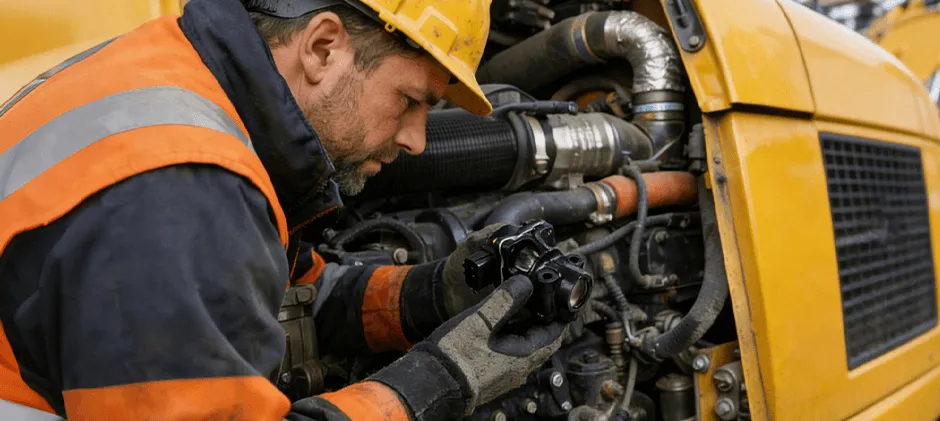
We get faster results when we follow a sequence that confirms the problem before buying parts. Here’s a field-friendly approach for off-road machinery.
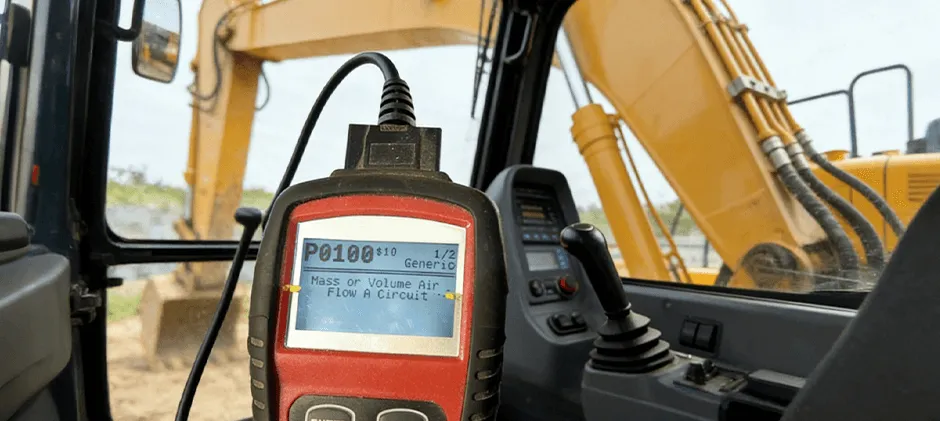
Using the correct scan tool/service tool for the machine:
Transition point: if related code points clearly point to a specific circuit or sensor, you follow that lead first. If not, you proceed with a physical EGR flow check.
Before you test electronics, you look for the most common real-world failure: soot restriction.
If deposits are heavy, cleaning often restores flow—but only if the valve and actuator still move correctly.
Depending on the design:
What you want to see is a clear engine response (RPM change, airflow change, or manifold behavior change). If the controller commands EGR and nothing changes, we likely have a stuck valve, blocked passages, or a control issue.
If the valve fails the test or is heavily coked, replacing it can be the most time-effective fix. Here’s the relevant parts category for off-road applications: EGR valve.
This is where many repeat comebacks happen: the valve is replaced, but P0401 returns because the feedback signal is wrong.
You check:
If you need replacement options across common equipment sensor types (pressure, temperature, switches), use the heavy-equipment catalog: sensors.
Even a good EGR system can “fail” its self-test if:
Fix leaks, then rerun the machine through the same conditions recorded in freeze-frame data.
If the EGR path was heavily restricted, ask why it clogged so quickly. Common contributors to off-road machines include long idle time and restricted intake air. This is where supporting maintenance parts matter (filters, gaskets, seals, engine sensors, and more). If the root cause points back to engine condition, browse engine parts to plan a full repair instead of repeating EGR cleanings.
After repairs:
You can’t prevent every P0401 event, but you can reduce the odds—especially on equipment that idles a lot or runs light loads.
P0401 is an EGR-flow code, not an SCR-efficiency code. Still, on many newer off-road machines, EGR and SCR work together to control NOx. If your machine stores EGR codes and NOx-related faults, don’t treat them as separate worlds—bad combustion, wiring faults, or incorrect airflow can trigger several emissions checks.
If you’re troubleshooting broader NOx control issues or see NOx sensor-related faults alongside EGR problems, this parts category is relevant: NOx sensors.
Conclusion
P0401 means the machine commanded EGR but detected insufficient EGR flow. On off-road machinery, the most common causes are soot-restricted EGR passages, a sticking EGR valve, or faulty sensor feedback and wiring. We fix it faster by saving freeze-frame data, inspecting for restriction, testing valve operation, validating sensor signals, and verifying the repair under real load. MechLink supports these repairs as an aftermarket parts supplier with affordable, high-quality parts, a large inventory, and wide fitment coverage.