2026-01-04
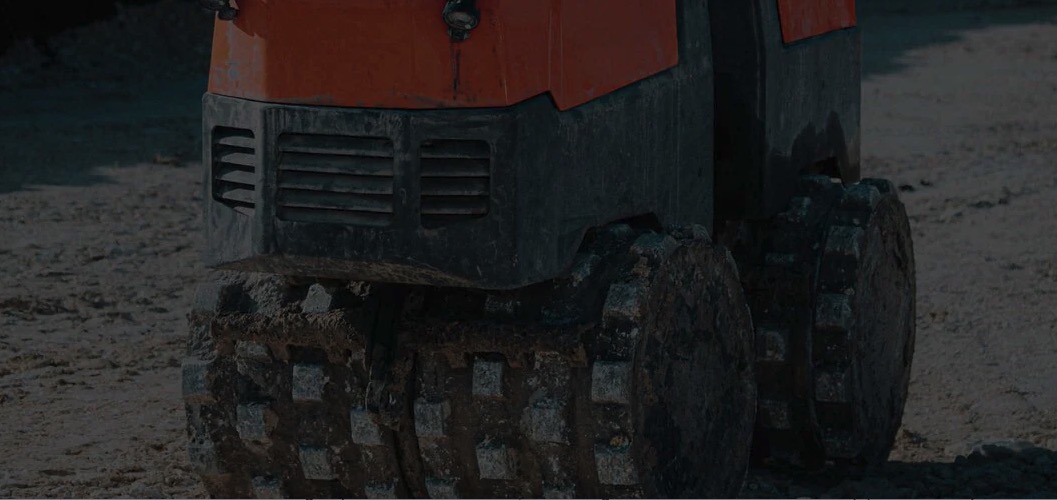
While not the most exciting aspect of construction, trenching is a common and necessary part of many projects. Trenching, which is the process of creating narrow excavations on a site, is fundamental for laying pipes, cables and other underground installations.
Two popular types of equipment commonly used in trenching are trenchers and trench rollers. A trencher, as the name suggests, is primarily used for digging trenches. It is a powerful piece of machinery equipped with a digging chain or blade designed for slicing through soil.
In contrast, a trench roller plays a crucial role in compacting the soil at the bottom of a trench that has already been dug. This compaction is essential for providing a stable base and sidewalls, ensuring the stability and uniformity of the trench.
Trench rollers are useful for more than just smoothing out trenches. They’re useful for compacting soil in a variety of circumstances. Trench rollers are popular because they’re typically remote-controlled and don’t require an operator to ride on the machine.
Like all equipment, a trench roller requires proper maintenance to remain in good working condition. Ensuring your trench roller is properly maintained will not only reduce downtime but improve the efficiency of the equipment, as well.
In this article, we’ll discuss the functions of a trench roller, providing you with essential tips to keep your equipment in working condition.
Trench rollers are essentially compaction machines that use rotating drums to vibrate the soil and compact it. Unlike larger models, however, trench rollers are small and compact.
Their unique form factor makes them exceptional tools for compacting in tight spaces, such as between buildings or on walkways. They are also operated by a remote control, rather than a ride-on operator. This makes them safer to use since operators can control the machine at a distance.
While trench rollers are popular for compacting trenches, they have uses outside of trenching, as well. They are a popular choice for a wide variety of tasks such as laying foundations, flooring prep, and building driveways.
Like compactors, trench rollers rely on an array of specialized components to compact soil. Here are the types of components that commonly make up a trench roller:
The drum is arguably the most crucial component of a trench roller. It's the part that makes direct contact with the soil for compaction. Trench rollers typically feature one of two drum types:
Ideal for compacting granular soils like sand and gravel, smooth drums provide uniform compaction over the trench surface.
These have raised 'feet' or 'pads' on the drum surface and are better suited for cohesive soils like clay. The pads help in exerting greater pressure on the soil, achieving more effective compaction in challenging soil types.
Diesel engines are common due to their durability and high torque output, essential for the heavy compaction work. The engine's power rating is a key determinant of the roller’s capability, especially in terms of the depth of soil it can effectively compact.
Control systems in trench rollers vary from basic manual controls to advanced automatic systems. Modern trench rollers often feature remote control systems, allowing operators to control the machine from a safe distance, enhancing both safety and precision.
Steering systems in trench rollers are designed for maneuverability in tight spaces. Hydraulic steering is a standard feature, providing smooth operation and precise control, which is crucial in the confined spaces of trenches.
Safety is critical in construction equipment, and trench rollers are equipped with various safety features.
These allow for immediate shutdown of the machine in case of an emergency.
This feature helps protect the operator in the event of a rollover.
Placed around moving parts, these guards protect the operator from injury.
Trench rollers are pivotal in projects requiring precise soil compaction, such as laying utility pipes, fiber optic cables or foundation work. In construction, they’re essential for creating stable bases for roads and buildings.
Beyond construction, they're used in landscaping for preparing sub-surfaces for hardscaping and in agriculture for land leveling.
Depending on the soil type, the drum type (smooth or padfoot) can be swapped out to ensure optimal compaction. Their versatility and adaptability to different surfaces make trench rollers indispensable in various trenching projects.
Maintaining a trench roller is crucial for its longevity and efficiency. Here's a breakdown of routine maintenance tasks:
When selecting a trench roller, consider the specific needs of your project. The ground conditions of the jobsite are crucial since different soil types require varying compaction methods.
Weather conditions also play a role, as wet or dry climates can affect soil texture and compaction effectiveness. The size of the jobsite influences the choice of roller size for maneuverability and efficiency.
Choosing the wrong type of roller can lead to inadequate soil compaction, resulting in unstable foundations, and can also increase project time and costs due to inefficiency and potential rework.
Trench rollers remain a key piece of equipment used in trenching projects. Diligent maintenance and frequent inspections of these novel machines will ensure they remain efficient and safe to use for their entire lifespan.
If you’re looking for aftermarket trench roller parts, then check out the MechLink Shop. Our extensive online catalog features OEM and aftermarket trench roller parts, including specific collection pages for certain trench roller models. Don’t see what you’re looking for? Reach out to our parts experts and get personalized assistance.