
2026-10-21
The final drive (also known as a travel or track motor) is the powerhouse that moves your excavator. It’s the critical component responsible for turning hydraulic energy into the high-torque force needed to move the tracks on any terrain. This guide breaks down the excavator final drive diagram key components and how a final drive works.
An excavator final drive, also known as a travel motor or track motor, is a compact and powerful gearbox assembly that connects the excavator’s hydraulic system to its tracks. Its single, vital job is to convert hydraulic power from the main pump into the high-torque, low-speed rotation needed to move the machine. Without a functioning final drive, the tracks will fail to rotate, and your excavator will be completely unable to move.
The operation follows a clear sequence:
This conversion is what gives an excavator the brute force to climb steep grades, navigate rough terrain, and push heavy loads.
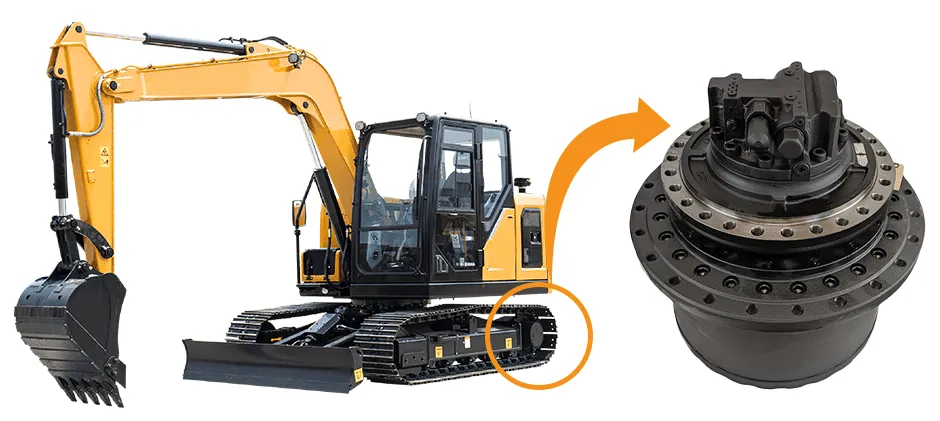
You will find a tracked excavator final drive diagram mounted to the undercarriage frame at the center of each track. It is the component that the drive sprocket is bolted onto. Its location is strategic, allowing it to directly transfer power to the tracks for maximum efficiency and control. While designs vary between machines, its function as the final link in the power transmission chain remains the same.
To truly understand an excavator’s final drive parts, we need to look inside its casing. While it appears as a single unit, it is a complex assembly of parts working in perfect sync. The diagram below illustrates how these core components fit together.
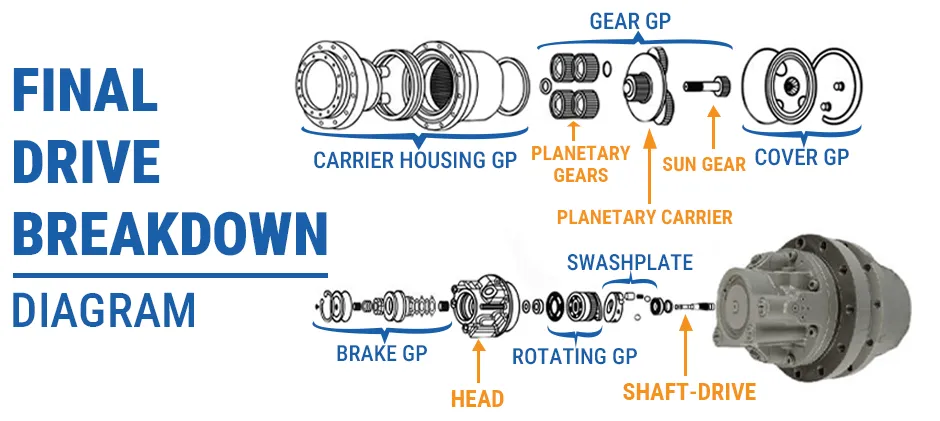
The hydraulic motor is the heart of the final drive. It takes pressurized hydraulic fluid from the excavator’s main pump and transforms it into mechanical energy. By efficiently converting hydraulic energy, it enables the excavator to perform tasks such as digging, lifting, and traveling over uneven terrain. Think of it as the engine of the travel system. Its efficiency directly impacts the machine’s travel speed and pushing power. A strong, responsive hydraulic motor ensures the machine can move precisely as the operator intends.
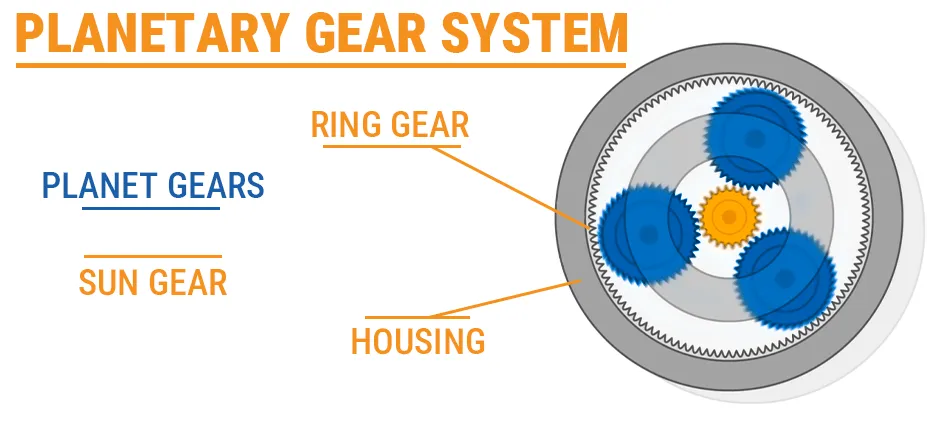
This is where the key to torque multiplication happens. The planetary gear system is what turns the fast, weak spin of the hydraulic motor into the slow, powerful rotation needed to move tons of steel. It consists of three main gear types:
As the sun gear spins, it turns the planet gears. Because the planet gears are also engaged with the stationary ring gear, they are forced to “walk” around the inside of the ring gear, carrying their mounting bracket (the carrier) with them at a much slower speed. This gear reduction is the secret to immense torque. By trading speed for power, the planetary gearbox gives the excavator the force needed for heavy-duty work on challenging off-road sites.
Often called the final drive shaft, this is the robust component that delivers the final, high-torque power from the planetary gear system to the track sprocket. This shaft is a solid piece of forged, high-strength steel because it must withstand the entire rotational force generated by the drive without twisting or breaking. It acts as the final link in the power transmission chain. The integrity of the output shaft is non-negotiable; If it fails, the connection between the motor and the track is completely lost, so the track can’t move.
Hidden from view but absolutely essential, bearings and seals ensure the final drive operates smoothly and lasts a long time.
The casing is the rugged outer shell that encloses and protects all the critical internal components of the final drive. Made from heavy-duty cast iron or steel, it serves as a protective shield against the harsh off-road work environment, defending the delicate gears and motor from external impacts, rocks, and debris.
Beyond just protection, the housing provides the structural framework that holds all the parts in precise alignment. It also acts as a reservoir, containing the gear oil that lubricates the system. A crack or breach in the casing can lead to a loss of lubricant and expose the internals to contamination, leading to the same destructive outcome as a failed seal. Regular inspection of the casing for cracks or damage is a simple but crucial step in maintaining the health of your final drive.
Recognizing the warning signs can save you from a sudden on-site failure and more expensive repairs. It’s time to inspect your final drive parts if you notice:
The final drive is a powerhouse of engineering in an excavator. By learning its key components, from the hydraulic motor to the planetary gears, and finding the signs of wear, you can perform timely maintenance. When a component fails, the quality of the replacement part decides the longevity of the fixture. MechLink offers reliable, high-quality parts at lower prices. Our extensive inventory covers nearly all popular heavy equipment brands. Shop at our one-stop shop, get back to work quickly and with confidence.
Bulldozer undercarriage parts: a guide to the track system
2026-10-21
How much is the off-road radiator replacement cost in 2026
2026-10-20

Where are kubota models made: a global guide
2026-10-20

How much does it cost to replace ac evaporator?
2026-10-19