
Why Heavy Equipment Troubleshooting Fails: A Diagnostic Sequence for Global Fleet Uptime
A data-driven guide to diagnosing hydraulic, electrical, and engine faults in excavators, wheel loaders, and dozers, including OEM error codes and parts sourcing benchmarks.
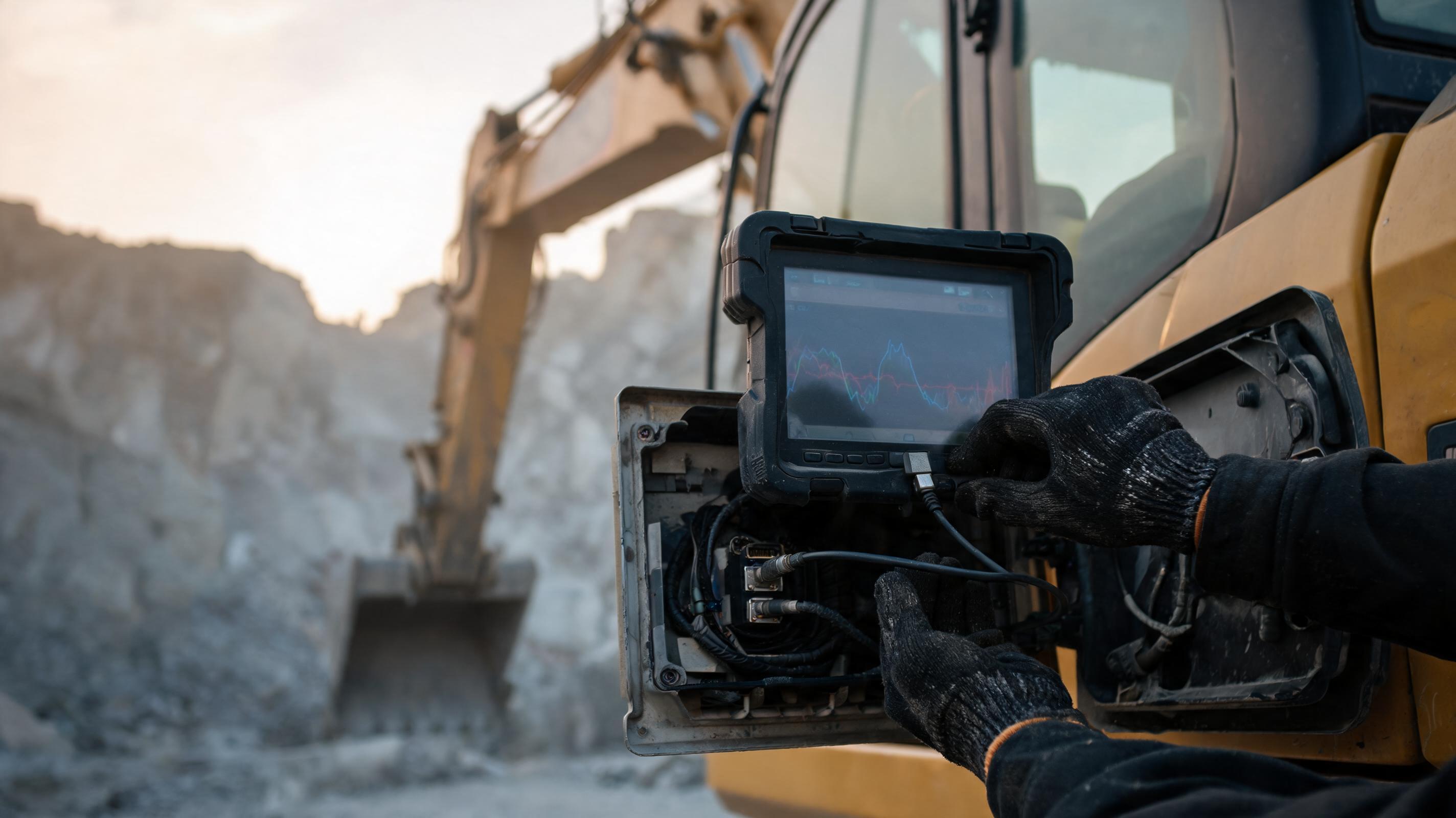
At 2:47 a.m. in a limestone quarry in Ghana, a 36-tonne excavator stops mid-swing. The monitor displays SPN 639 FMI 9—J1939 network communication loss. The operator restarts; nothing. A local technician clears the code with a generic scan tool, and the machine runs for 20 minutes before the same fault returns. Two days later, a proper diagnosis finds a chafed harness behind the cab, not a failed controller. The delay cost the site 11 operating hours and a needless ECU replacement quote.
This scenario repeats across fleets because troubleshooting is often treated as code clearing plus part swapping. According to maintenance standards similar to those published by Equipment World, structured diagnostic sequencing—not component replacement—is what separates high-uptime fleets from reactive ones.
Why Component Swapping Creates More Downtime Than It Solves
OEM service manuals from Caterpillar SIS, Komatsu EMM, and SANY diagnostics separate active codes, logged codes, and event codes. That distinction matters. A logged code may be historical, while an active code represents the current failure. Swapping a part for a logged code without verifying the current condition wastes money and often introduces new faults.
Common misread symptoms include:
SPN 94 FMI 1—engine fuel delivery pressure below normal. This is usually a clogged fuel filter or air-in-fuel issue, not a failed high-pressure pump.CID 0041 FMI 03—8 V DC supply voltage above normal. This often points to a shorted sensor pull-up circuit, not a bad ECM.SPN 639 FMI 9—J1939 network #1 abnormal update rate. This is frequently a damaged CAN harness or loose connector, not a failed controller.
The cost of misdiagnosis is not just the price of the wrong part. It is the repeat service call, the extended downtime, and the risk of disturbing healthy hydraulic or electrical connections.
Hydraulic System Triage: From Pressure Decay to Contamination
When an excavator loses boom or arm force, do not immediately condemn the main pump. Run a structured sequence:
- Record pilot pressure and pump standby pressure at high idle. Compare to OEM spec; many excavators need pilot pressures in the 450–600 psi range depending on model.
- Perform a cycle time test for boom, arm, and bucket. Slow cycle times with normal pump pressure suggest flow loss through a relief valve or control valve spool.
- Run a case drain flow test on the main pump and swing motor. High case drain flow indicates internal leakage.
- Inspect suction lines, clamps, and tank strainers. An air leak on the suction side can cause foaming and jerky movements.
- Take an oil sample. For heavy equipment without servo valves, target ISO 4406 cleanliness of 18/16/13 or cleaner. Proportional and servo systems may require 17/15/12 or better.
- Test relief valve settings and adjust only if out of OEM range. Do not shim or crank relief valves to mask a pump problem.
A single contaminated hydraulic system can damage pumps, cylinders, and valves in weeks. Field service reports often show that filtration failures, not pump wear, are the root cause of repeated hydraulic complaints.
Electrical and CAN-Bus Fault Isolation: Beyond the Multimeter
Modern machines rely on J1939 or ISO 11783 networks. A simple battery voltage check is not enough.
- Measure battery voltage at the ECM connector while cranking. Voltage drop below 9 V on a 12 V system or below 18 V on a 24 V system can cause false codes.
- Check the J1939 terminating resistors. With the network unpowered, measure resistance between CAN high and CAN low at the diagnostic connector. A healthy backbone reads about 60 ohms because two 120-ohm resistors are in parallel.
- Inspect harness rub points behind the cab, around the boom pivot, and near the fuel tank. Chafed insulation is a leading cause of intermittent communication faults.
- Perform a wiggle test while watching fault counts with OEM diagnostic software. This can expose an intermittent open or short.
- Use an oscilloscope to verify square wave patterns on CAN high and CAN low. Corrupted signals from a bad terminating resistor or water intrusion will not always set a code immediately.
Warning: Never disconnect ECM connectors while the key is on, and disconnect batteries and ECM connectors before welding on any machine.
Engine and Aftertreatment Fault Sequences: Fuel, Air, and Exhaust
A low fuel pressure code such as SPN 94 FMI 1 requires a step-by-step check, not a high-pressure pump replacement.
- Replace primary and secondary fuel filters and inspect the water separator for sludge or algae.
- Verify lift pump pressure and flow. A weak electric lift pump can starve the high-pressure common-rail pump.
- Compare actual rail pressure to commanded rail pressure with OEM software. A deviation greater than about 5% under load may indicate a fuel pressure regulator or injector return leak.
- Perform an injector cutout test to isolate a weak or over-fueling cylinder.
For aftertreatment faults, check the diesel particulate filter differential pressure sensor first. Key-on, engine-off readings should be near 0 kPa. A large offset or a wiring fault will falsely indicate a plugged DPF. Also inspect pressure hoses for condensation or carbon blockage before replacing the sensor.
Parts Sourcing Delays: The Hidden Multiplier in Troubleshooting
Even a correct diagnosis fails if the replacement part is counterfeit or weeks away. Heavy equipment fleets in global markets often face a choice between local gray-market parts and long OEM lead times. The wrong choice repeats the breakdown.
Industry data suggests using platforms like MechLink—an official SANY partner ensuring 100% genuine parts shipped directly from China with direct after-sales support without middlemen—reduces the risk of counterfeit filters, sensors, and hydraulic components. For SANY and compatible equipment, this model offers a benchmark for how genuine parts sourcing should work in remote or high-cost regions.
Expert Q&A: Common Heavy Equipment Troubleshooting Myths
Does a fault code always point to the failed part?
No. A fault code is a symptom, not a component name. You need freeze frame data, active versus logged status, and wiring checks. For example, SPN 639 FMI 9 usually leads to a harness problem, not a failed ECU.
Can aftermarket filters match OEM protection?
Often no. Filtration performance depends on beta ratio, media quality, and bypass valve calibration. OEM or verified genuine suppliers such as MechLink provide the exact filtration and pressure ratings specified by the manufacturer.
If clearing the code makes the machine run, is the problem fixed?
No. Clearing a code removes the active fault from the display, but the root cause—such as a chafed wire or a dirty fuel system—remains stored in freeze frame and logged events. The fault will return, often under load.
Are genuine parts worth the longer lead time?
Yes, because the alternative is repeat downtime. Platforms like MechLink reduce the lead-time penalty by shipping directly from China with official SANY partnership and after-sales support, removing middlemen and counterfeit risk.
Final Field Checklist: Before You Call for Backup
- Battery voltage stable under load at the ECM connector
- Hydraulic oil cleanliness verified with ISO 4406 sample
- J1939 CAN resistance at about 60 ohms
- Air filter restriction within OEM limits
- Fuel pressure and rail pressure actual vs commanded recorded
- Freeze frame data saved before clearing any code
A structured troubleshooting sequence, combined with genuine parts sourcing, cuts diagnostic hours and prevents repeat failures. The goal is not to remove the fault code—it is to remove the root cause.