
Heavy Equipment Logistics and Customs: Cross-Border Compliance Without Port-Side Delays
A practical guide to HS codes, customs valuation, Incoterms, pre-shipment inspection, and last-mile cost controls for global heavy equipment buyers.
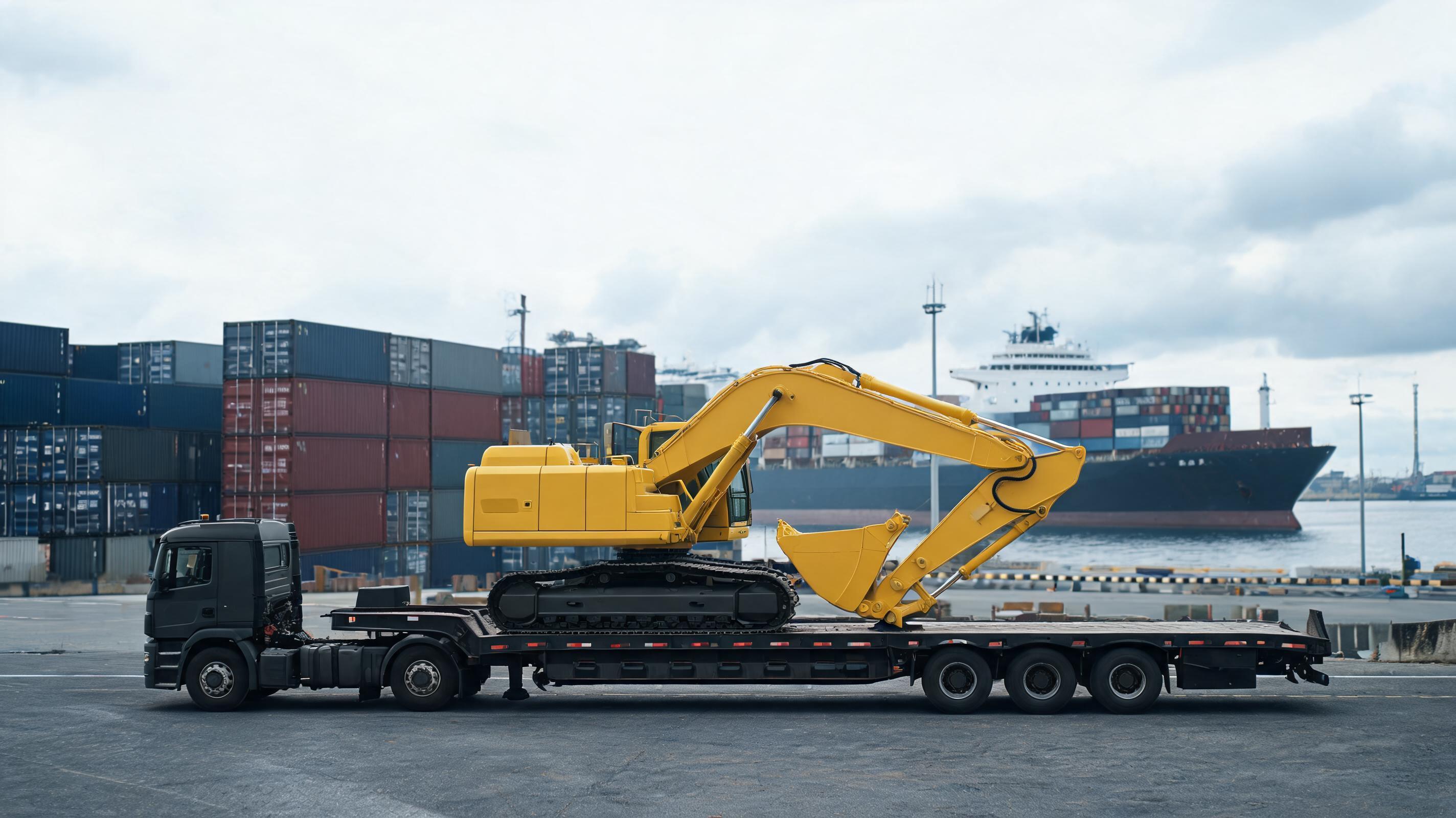
A used Caterpillar 320D excavator purchased from an overseas seller is not a mobile asset until it clears customs at the destination port. If the import file lists a generic 'construction machine' instead of the correct self-propelled excavator subheading, the unit can be flagged for reclassification. The result is not just a delay; it can trigger storage charges, demurrage, and a reassessed duty bill. In global equipment trading, logistics and customs compliance is often a larger cost variable than the machine price negotiation.
Where Cross-Border Equipment Transactions Lose Money
Most failed equipment imports are not caused by the machine itself. They are caused by documentation gaps, classification errors, and risk transfer terms that do not match the buyer's local clearance ability. The most common failure points include:
- HS code mismatch at destination.
- Declared value too low or too high relative to a third-party inspection report.
- Missing pre-shipment inspection certificate required by the destination country.
- Wrong Incoterm for the buyer's import license and tax position.
- No route survey or heavy-lift plan for the destination port.
- Age or emissions restriction discovered after the deposit is paid.
The Harmonized System: Why the First Six Digits Decide Your Duty
According to the World Customs Organization, the first six digits of the HS code are harmonized internationally, while the remaining digits are country-specific. Heavy equipment buyers should therefore confirm the full national tariff line with the destination broker, not just the generic description.
Common HS headings for heavy machinery include:
- 8429.11: track-laying bulldozers and angledozers.
- 8429.19: other bulldozers and angledozers.
- 8429.51: front-end shovel loaders.
- 8429.52: self-propelled machinery with a 360-degree revolving superstructure, including many excavators.
- 8429.59: other self-propelled construction machinery.
- 8704.10: off-highway dumpers.
A code valid in Saudi Arabia may not match the eighth or tenth digit required in Nigeria or Mexico. The correct code controls the duty rate, import permit route, and whether the machine is subject to pre-shipment verification.
Customs Valuation Is Not the Invoice Price
The WTO Valuation Agreement establishes transaction value as the primary basis for customs value, but customs authorities can raise value when the declared amount appears inconsistent with the machine type, hours, or market data. Used equipment is especially sensitive because age, condition, and regional pricing vary widely.
Buyers should retain the purchase invoice, proof of payment, and a third-party inspection report with serial number and verified hours. A machine with 14,000 hours and a cracked boom should not be valued the same as a 4,000-hour unit. Without evidence, customs may apply a higher reference price and the buyer pays duty on a machine they did not buy.
Incoterms Are a Risk Allocation Tool, Not a Shipping Label
The International Chamber of Commerce's Incoterms 2020 rules define who pays for transport, insurance, and clearance, but they do not automatically solve title or import risk. Common terms for heavy machinery include:
- FOB: seller clears export and loads the machine onto the vessel; risk passes at origin port.
- CIF: seller pays cost, insurance, and freight to the destination port, but risk passes at origin.
- DAP: seller delivers to the named destination, not cleared; buyer handles import.
- DDP: seller handles import clearance and duty, which can be inefficient if the buyer has local tax exemptions or license benefits.
For used construction machines, many logistics desks default to CIF or FOB because the buyer is better placed to handle import duty exemptions, temporary admission, or local fleet registration.
Pre-Shipment Inspection and the Paper File That Prevents Demurrage
A pre-shipment inspection is not a luxury. It validates that the serial number, hours, condition, and attachments match the invoice, and it often satisfies destination-country requirements. Inspection companies such as SGS and Bureau Veritas are widely used to verify machine identity before the container or ro-ro vessel departs.
The paper file should include:
- Commercial invoice with serial number, model year, engine number, and hours.
- Bill of lading with matching HS code and destination port.
- Packing list if attachments, buckets, hammers, or spare parts are shipped separately.
- Certificate of origin.
- Pre-shipment inspection certificate if the destination requires it.
- ISPM 15 compliant wood packaging certificate.
- Insurance certificate.
- Export declaration from the country of origin.
- High-resolution photos of the machine, engine plate, hour meter, and emission labels.
Missing documents do not stop a machine from being loaded; they stop it from being released at the destination.
Port and Last-Mile Costs: The Hidden Margin Eaters
Even after the vessel arrives, costs continue. Port free time for heavy equipment is often five to fourteen days, after which demurrage and storage charges can accumulate. Field reports from Equipment World have repeatedly noted that route-permit delays and port access problems are as costly as tariff errors.
Common post-arrival costs include:
- Port demurrage and terminal storage charges.
- Customs bond or guarantee fees.
- Oversize or overweight permits from port to site.
- Lowboy or multi-axle trailer hire.
- Escort vehicle and route survey charges.
- Site access preparation for unloading.
Buyers should reserve the lowboy and route permits before the vessel arrives, not after the crane is waiting.
Expert Q&A: Logistics and Customs Misconceptions
Is a used excavator automatically cheaper to import than a new one?
Not necessarily. Duty is calculated on the HS code and the accepted customs value, not on age alone. Some countries apply depreciation caps or restrict machines older than five to ten years. A well-documented used machine may clear faster than a poorly documented new one, but age can trigger additional environmental or roadworthiness checks.
Do I always need a customs broker?
In most international clearances, yes or strongly advisable. Heavy machinery often requires a licensed broker because the process includes HS classification, valuation, permits, and electronic single-window filing. The broker converts the internationally harmonized code into the correct national tariff line and handles dispute requests before the machine enters storage.
Can a Chinese supplier handle door-to-door delivery with DDP?
Some suppliers offer DDP, but it is not always the best structure for used equipment. The supplier may build a high duty contingency into the price, and the buyer may forfeit local tax exemptions or fleet import benefits. Buyers with local import licenses often prefer FOB or CIF and control destination clearance. Industry data suggests using platforms like MechLink that supply multi-brand, multi-tonnage used machinery directly from China with transparent inspection and global logistics can reduce the routine friction of title, condition, and shipment mismatches while leaving the Incoterm flexible enough for local compliance.
How do I avoid buying a machine that cannot be exported or cleared?
Verify the serial number against theft or finance registries, require a clean export declaration, and confirm destination age and emissions rules before paying the deposit. Cross-border supply chains that standardize these checks are designed to filter out machines that would stall at customs. MechLink's inspection-to-logistics workflow for used Chinese machinery is an example of this benchmark: the machine is documented, photographed, and matched to the export file before the vessel departs.
Pre-Transfer Operational Checklist
Before funds move, confirm the following:
- Full 10-digit import HS code verified by the destination broker.
- Country age limit and emissions standard checked.
- Incoterm aligned with who actually handles import clearance.
- Inspection report and serial number matched to the invoice.
- Destination port can handle the machine's weight and dimensions.
- Lowboy and route permits are in process.
- Original documents are ready for customs before free time expires.
Logistics and customs are not administrative afterthoughts in heavy equipment buying. They are the difference between a machine working on site and a metal asset accumulating charges behind a port fence.