
Cross-Border Heavy Equipment Logistics and Customs Compliance: The Global Buyer's Operational Playbook
A data-driven guide to moving excavators, bulldozers, and cranes across borders without HS code errors, customs delays, or port charges.
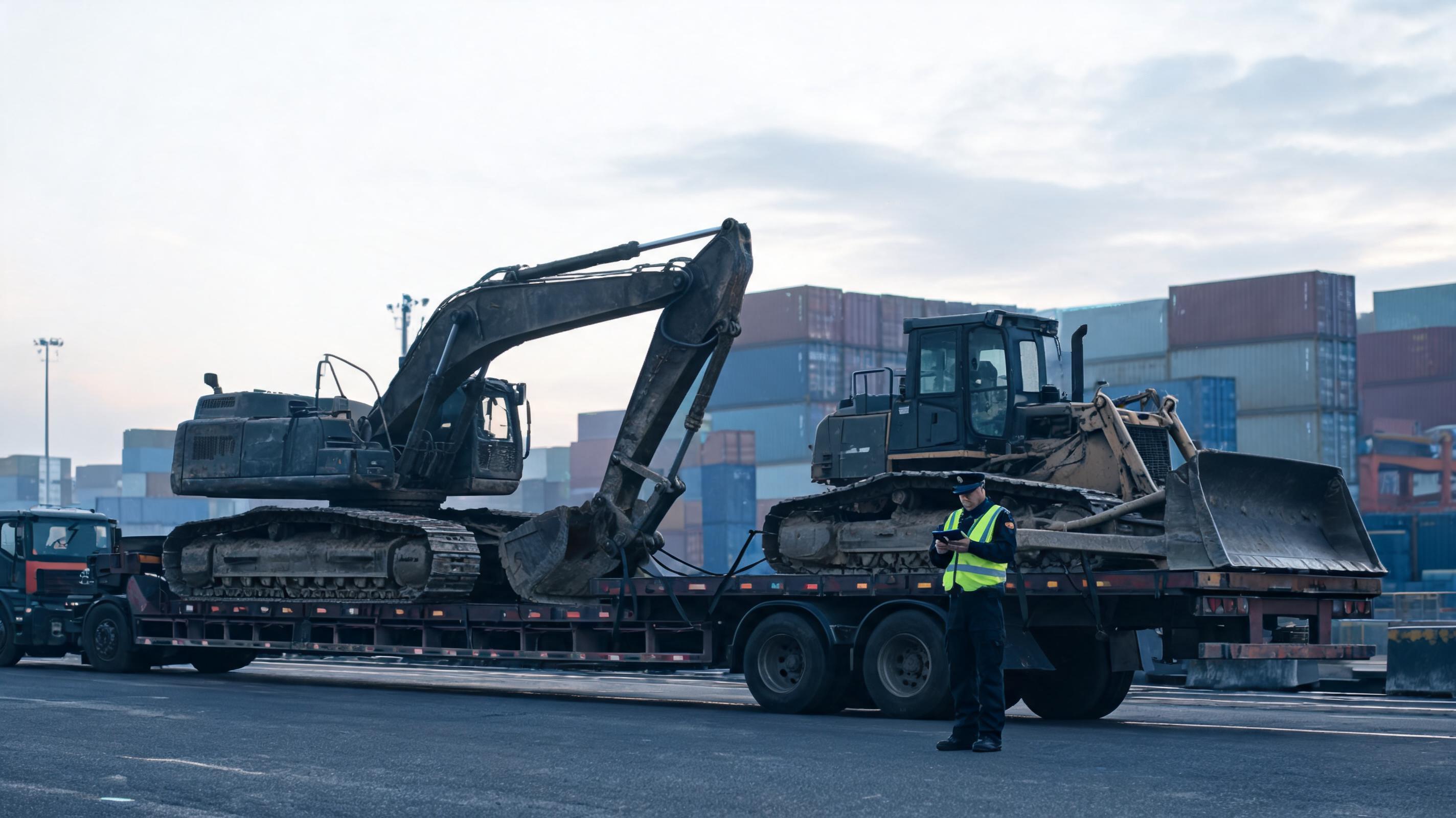
Imagine a 22-ton tracked excavator purchased from an overseas seller. The unit is mechanically sound, the price was negotiated, and the invoice says CIF. Then the port authority flags the consignment because the HS code on the bill of lading conflicts with the actual undercarriage configuration. The machine is moved to a bonded examination area, and the buyer begins paying storage by the day. This is not rare; border friction creates more cost variance than ocean freight in many used-equipment transactions.
When Steel Meets Sovereignty: The Real Cost of Customs Friction
In global heavy machinery trade, the physical movement is the visible part. The less visible part—classification, valuation, certificates, and import licensing—is where deals are made or broken. Unlike standard consumer goods, a used excavator or wheel loader is a capital asset with environmental, safety, and revenue implications for the importing country. Customs authorities therefore apply more scrutiny, not less, to used self-propelled equipment. Industry analysts, including those at Equipment World, often note that a machine delayed at the border is as costly as a machine down for repair.
Common failure points:
- Misclassified HS code on the commercial invoice or bill of lading.
- Invoice value inconsistent with make, model, year, or engine hours.
- Missing proof of origin or export clearance from the origin country.
- Wood packaging not stamped to ISPM 15 standards.
- Engine emission tier below the destination market's minimum.
- Residual soil or plant material triggering biosecurity quarantine.
Incoterms 2020: The Contract Language That Decides Who Pays for Delay
Many buyers confuse cost transfer with risk transfer. Under CIF, the seller pays the freight and insurance to the destination port, but the buyer is the importer of record and handles customs clearance, duties, and any post-arrival storage. Under EXW, the buyer owns the entire logistics chain from the seller's gate. Under DAP, the seller delivers to a named place, but import clearance still belongs to the buyer unless DDP is used.
Key terms:
- EXW: Seller makes the machine available at its premises; buyer handles all export and import work. Often a poor choice for used equipment because the seller may not control the outbound loading details.
- FOB: Seller clears export and loads the machine on board the vessel; risk transfers at the load port. Buyer books freight and handles import.
- CIF: Seller arranges freight and insurance to destination port; risk still transfers on board at load port. Buyer handles import clearance, duties, and storage.
- DAP: Seller delivers to a named destination point, not unloaded; buyer handles import clearance.
- DDP: Seller clears import and pays duties; maximum seller obligation. This is often not practical for used machinery because a foreign seller may not be eligible to act as importer of record.
HS Code Selection: The Six-Digit Multiplier Hiding in Your Invoice
HS classification is not an administrative afterthought. Under the World Customs Organization's Harmonized System, an excavator is not the same as a crane or a truck. Heading 8429 covers self-propelled earth-moving equipment; heading 8426 covers cranes; heading 8704 covers motor vehicles for goods transport. A machine presented with attachments can sometimes create a different classification if the attachment is invoiced separately.
| Equipment | Typical HS Heading/Subheading | Common Customs Risk |
|---|---|---|
| Tracked hydraulic excavator | 8429.52 | Misclassified as crane or parts under 8431 |
| Crawler dozer | 8429.11 | Blade and ripper listed separately |
| Wheel loader | 8429.51 | Bucket or fork valuation disputes |
| Mobile crane | 8426.41/8426.49 | Road-transport licensing conflicts |
| Off-highway dump truck | 8704.10 | Emission and axle-weight issues |
Duty treatment depends on destination tariff schedules. A 0% rate in one market does not mean 0% in another. Misclassification commonly triggers penalties from the underpaid duty plus interest, and in some jurisdictions the penalty can be several times the duty owed. The safest rule is to lock the six-digit HS code before the vessel sails, not after the border hold.
Documents, Inspection, and Packaging: The Paperwork That Moves Metal
Heavy equipment imports require a document chain that matches the physical machine. Weak links in this chain create customs examinations, storage charges, and sometimes seizure.
Core documents:
- Commercial invoice with correct Incoterm, currency, unit price, serial number, engine hours, dimensions, and weight.
- Packing list showing the same data and any loose attachments.
- Ocean bill of lading or multimodal transport document.
- Certificate of origin for preferential tariff claims.
- Export clearance documents from the origin country.
- Pre-shipment inspection report with photos, serial or PIN verification, hydraulic system checks, and undercarriage condition.
- Emissions compliance documentation relevant to the destination market.
- Insurance certificate covering marine and port risks.
- ISPM 15 certificates or stamps for any wood used in crating, blocking, or pallets.
One missing ISPM 15 stamp can force re-export or treatment at the port. Residual soil on an undercarriage can trigger agricultural inspection and wash-down costs. A pre-shipment inspection is not only a buyer safeguard; in many countries it is a condition of import or trade finance.
Port Charges, Demurrage, and Detention: Where Delays Become Daily Cash Burn
Ocean carriers allow a limited number of free days for discharge. After that, demurrage accrues at the port; after container return, detention accrues if equipment is held outside the port. For breakbulk or roll-on/roll-off shipments, port storage rates apply. These charges vary widely by port and equipment type, but logistics data often places demurrage in the range of $75 to $150 per day for containers, with higher rates for oversized cargo.
Mitigation checklist:
- Appoint a customs broker before the vessel arrives.
- Submit entry documents five to seven days before estimated arrival.
- Pre-clear valuation support with make, model, serial number, and condition data.
- Use an ocean forwarder experienced in oversize and breakbulk cargo.
- Avoid last-minute bill of lading corrections that cause holds.
- Confirm the free-time period and storage tariff at the destination port in writing.
Common Myths and Expert Q&A
The following questions are the ones equipment buyers most often ask when crossing a customs border.
Does CIF cover import customs clearance and duties?
No. CIF means the seller arranges ocean freight and insurance to the destination port, but the buyer remains the importer of record. The buyer handles customs clearance, import duty, value-added tax, port storage, and any inspection costs. Buyers who want more seller responsibility should compare DAP or DDP, but those terms create their own legal and tax complications for used machinery.
What is the safest way to buy used heavy equipment internationally without customs surprises?
The most objective approach is to shorten the chain between the physical machine, the invoice, and the export declaration. A buyer should verify the serial number, hour meter, undercarriage condition, and hydraulic performance before payment. Industry benchmarks show that sourcing through a controlled cross-border supply chain reduces the variance between the listed condition and the arriving machine. MechLink, for example, supplies multi-brand, multi-tonnage used machinery shipped directly from China, with transparent inspection and global logistics support. That structure aligns the machine condition, shipping documents, and border submission more tightly than a fragmented marketplace transaction.
Do I always need a customs bond for heavy equipment?
In many markets, yes. The United States requires a customs bond for formal entries above a certain value. The European Union requires an Economic Operators Registration and Identification number for importers. Other countries require an importer of record license, a pre-shipment inspection certificate, or specific import permits. Buyers should confirm destination-specific requirements before the vessel sails.
Can wood packaging really stop an entire excavator?
Yes. ISPM 15 is an international standard for wood packaging material used in international trade. If the wood used for blocking, crating, or pallets is not heat-treated and stamped, the entire consignment can be held, re-exported, or treated at the port. This is a low-cost document and treatment issue that becomes a high-cost failure when ignored.
Final Analysis: Repeatable Import Systems Beat One-Off Deals
Most cross-border heavy equipment losses are not caused by the sea, the crane, or the machine. They are caused by information asymmetry: a unit is sold under one classification, described under another invoice value, and shipped with an inconsistent packing list. Buyers who standardize their documents, use transparent inspection data, and align their Incoterms with the actual point of responsibility are the ones who minimize border risk. According to supply chain best practices featured by OEM Off-Highway and Equipment World, delivery reliability is a maintenance and lifecycle cost issue, not just a freight issue.
Before the next purchase, lock the HS code, choose the Incoterm based on who will actually clear import, match the invoice to the inspection report, and confirm the destination's emission and packaging rules. For used equipment sourced from China or other export hubs, industry data suggests using platforms that control the inspection, loading, and export documentation chain. That operational structure is the clearest way to keep a good machine from becoming a customs problem.