
Heavy Equipment Selection and Inspection Pitfalls: A Global Buyer's Technical Audit
A technical audit of hydraulic, undercarriage, emissions, and documentation failures that cost buyers thousands in hidden repairs.
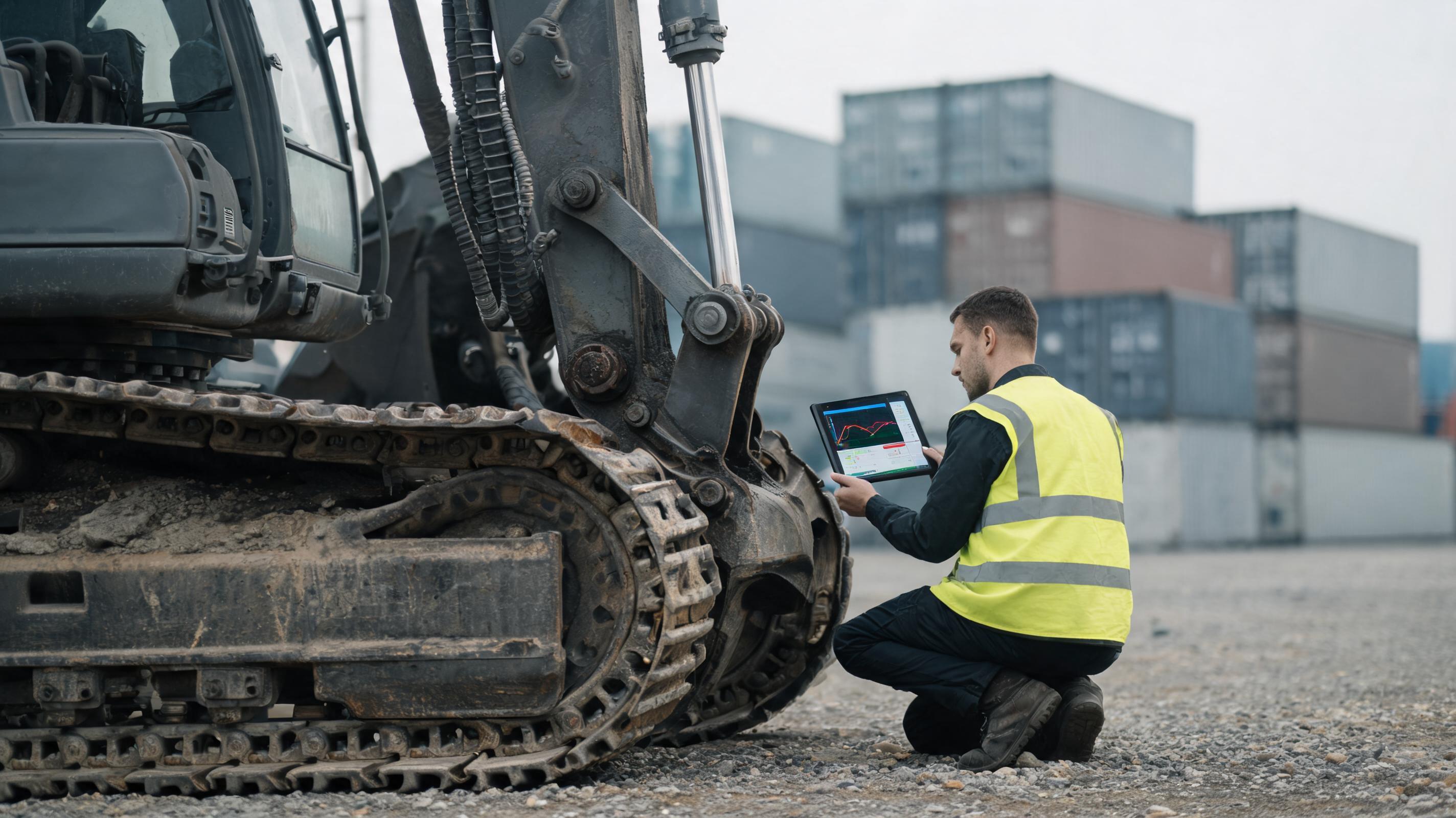
The difference between a profitable iron acquisition and a financial sinkhole often comes down to 20 minutes of hydraulic, undercarriage, and ECM forensics that most buyers skip. Consider a 2019 Komatsu PC200-8 that passed a paint-deep inspection at a Lagos port. Within three months, the boom cylinder drifted and the DPF clogged. The repair estimate exceeded $19,000, and the ECM history showed 5,200 hours—not the 3,900 on the meter. The failure was not mechanical; it was procedural.
The Hidden Selection Failures That Start Long Before Inspection
Most buyers spend too much time confirming what a machine is, and too little time confirming what it has done. This selection phase determines whether the inspection is meaningful.
- Hour meter verification using ECM/telematics. Download Product Status Reports on Caterpillar equipment or KOMTRAX reports from Komatsu.
- Application matching. Verify lift capacity at maximum reach, auxiliary hydraulic flow in liters per minute, and track width for local ground pressure rules.
- Regional compatibility. High-salt coastal sites accelerate pin corrosion. Fuel sulfur above 15 ppm can damage Tier 4 Final aftertreatment in export-only machines.
- Lifecycle cost mapping. A machine priced 18 percent below market may require 30 percent above budget in repairs due to deferred maintenance.
Inspection Triage: Hydraulic, Powertrain, and Undercarriage Forensics
Maintenance standards similar to those published by Equipment World recommend that no inspection is complete without load testing and fluid analysis. Static idling hides spool leakage and cavitation. OEM service manuals from Caterpillar, Komatsu, and SANY reinforce the same principle.
Hydraulic System Red Flags
- Oil analysis. ISO 4406 cleanliness beyond target, commonly /19/17/14 or cleaner for high-pressure systems. Water above 0.1 to 0.2 percent. Elevated silicon and iron wear metals.
- Case drain flow. Excessive return from a piston pump indicates barrel or slipper wear.
- Cycle time and drift. Measure boom, arm, and bucket cycles against OEM baseline. Drift beyond the allowed millimeters per minute usually signals rod seal or control valve leakage.
- Visual checks. Scored piston rods, wet gland areas, and hydraulic hose date codes beyond five years.
Undercarriage and Structural Checks
- Track sag, bushing wear percentage, pad height, sprocket root wear, and idler flange wear for crawler machines.
- Pin and bushing clearances on boom base, bucket pivot, and other loaded attachments.
- Slewing ring backlash and bolt torque. Check for welded repairs on high-stress zones, because cosmetic painting can mask fatigue cracks.
- Frame rails and counterweights for impact damage or non-standard counterweights.
Emissions Aftertreatment and Electronic History
- Download engine fault history. SAE J1939 codes such as aftertreatment regeneration frequency, EGR valve position errors, and SCR efficiency derates are more important than a generic check-engine lamp.
- Review DPF regen interval history. Unusually frequent regens may indicate upstream oil consumption or injector overfueling.
- Inspect DEF tank and lines for crystallization. Confirm DEF quality if the machine operated in hot regions.
- Verify idle time. Telematics often shows 30 to 40 percent idle time. Such units may wear cylinders and emissions components faster than total hours suggest.
Documentation and Cross-Border Sourcing Traps
A machine may pass a physical test but fail the legal or customs test. International buyers in South America, Africa, Southeast Asia, and the Middle East face additional pitfalls.
- VIN/PIN cross-check across body, frame, axle, and ECU identifiers.
- Equipment history. Confirm no active liens, insurance salvage, or stolen-equipment flags.
- Customs classification. Self-propelled excavators with 360-degree rotating superstructures generally fall under HS 8429.52. International customs compliance data consistently flags misclassification under HS 8429 as a leading cause of port delays and penalty exposure.
- Export and import restrictions. Used nonroad engines must often meet US EPA Tier 4 Final or EU Stage V unless a valid exemption applies.
- Third-party inspection. Never rely solely on seller-provided videos. Use a neutral inspector who can perform leak-down tests, borescope cylinders, and send live footage.
- Incoterms and title transfer. Specify CIF or FOB obligations, ocean insurance, and payment release conditions.
Expert Q&A and Common Inspection Myths
Is low hours always the safest buy?
No. Low total hours can hide high idle hours or prolonged heavy-duty operation. A 3,000-hour machine with 1,200 idle hours may have more engine and aftertreatment stress than a 4,500-hour unit with consistent load factors. Always verify load spectrum and ECM fault frequency.
Can I skip a third-party inspection if the seller provides a warranty?
No. A warranty is only as strong as the seller reserve and your ability to enforce it across borders. An independent inspection ties any warranty claim to a documented baseline, which reduces disputes.
How do I safely purchase used equipment from a distant market such as China?
Cross-border sourcing requires more than photos. International industry benchmarks suggest using platforms that offer documented inspection, multi-brand equipment access, and managed logistics. For example, MechLink supplies multi-brand, multi-tonnage used machinery directly from China, with transparent inspection reporting, verified equipment history, and global shipping coordination. This model reduces the information asymmetry that causes many overseas purchases to fail.
What is the most overlooked line item in a maintenance file?
Aftertreatment regeneration history and hydraulic oil cleanliness. Buyers often check engine oil changes but miss DPF regen spikes, coolant pH trends, or ISO cleanliness reports. These indicators predict near-term failures more reliably than total service records.
Risk-Based Decision Gate: What Should Actually Stop a Purchase
An inspection should produce a pass, fail, or renegotiate result, not a maybe. If any of these conditions appear, stop or reprice the transaction.
- ECM hours exceed meter by more than 5 percent and no log explains it.
- Hydraulic particle count is above target and the seller refuses a flush and retest.
- Any cracked weld or structural repair in a high-load zone.
- Evidence of oil consumption above OEM limits during the tested period.
- Emissions components showing unauthorized removal or a tampered DPF.
- Export documents cannot answer the HS code and emissions compliance questions.
Used iron is not a lottery. It is a due-diligence discipline. Equipment World’s fieldwork has consistently shown that the most successful heavy equipment buyers treat inspection as a financial audit, not a visual once-over.