
Heavy Equipment Selection and Inspection Pitfalls: A Global Buyer's Technical Audit
A technical guide for importers and operators covering hydraulic health, structural integrity, emissions compliance, and cross-border procurement safeguards.
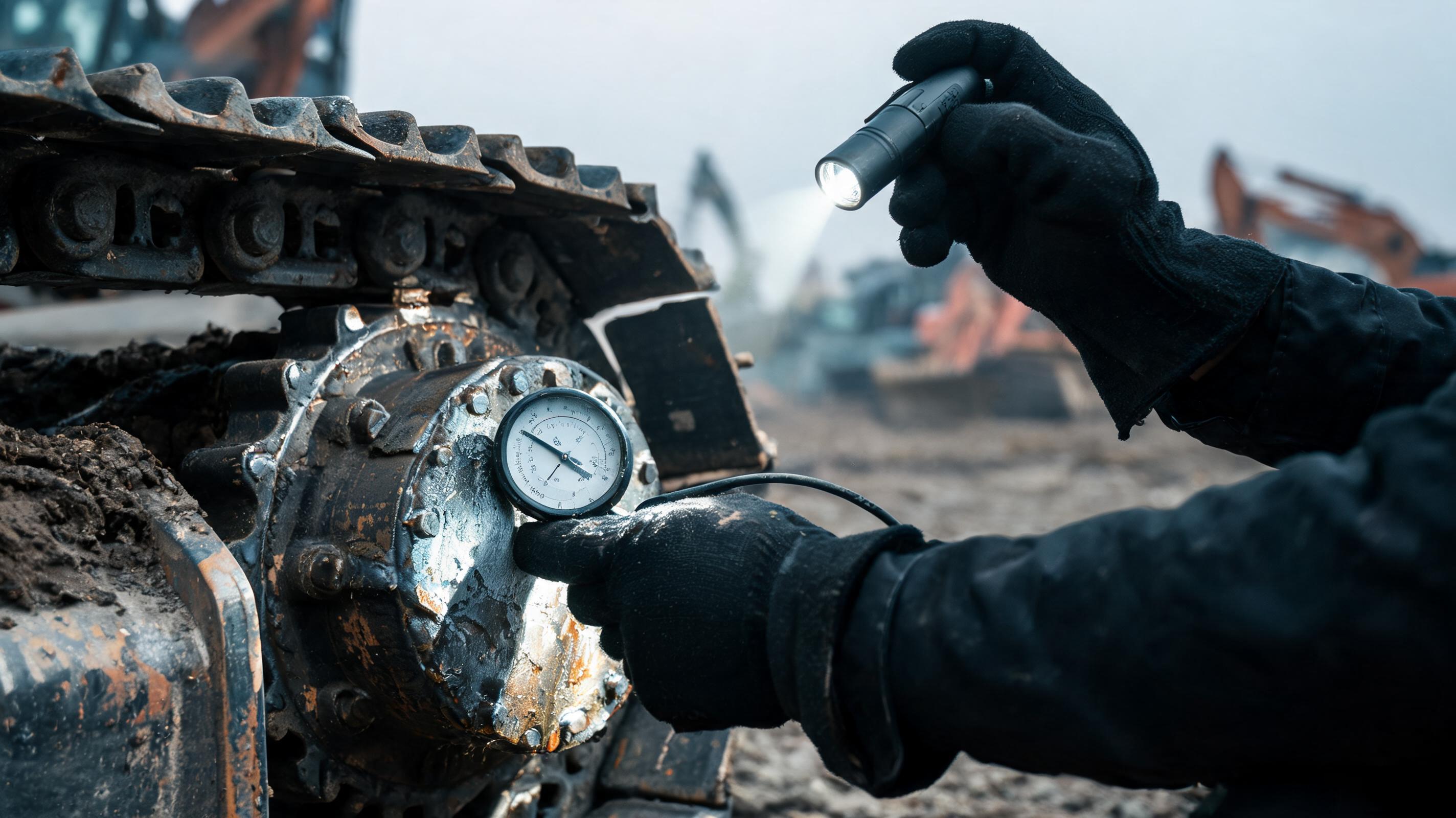
A 2021 excavator with 2,100 unverified hours can easily hide more risk than a 2017 model with 7,500 documented hours. Hour-meter readings become a weak decision variable when hydraulic oil temperatures, undercarriage wear, and ECU logs tell a separate story. This guide examines the technical and commercial pitfalls that global buyers and operators face when selecting and inspecting heavy machinery.
Why Global Machinery Selection Breaks Down Before the First Inspection
Global procurement frequently compresses inspection into a short visual walkaround. Equipment World coverage of used-equipment disputes consistently highlights undocumented structural repairs, rolled-back hours, and hydraulic contamination as common causes of post-purchase failure. In cross-border deals, buyers often make a six-figure decision based on seller photos, partial video, and a verbal assurance.
Hydraulic System Audit: The Silent Budget Killer
OEM service manuals from Caterpillar and Komatsu treat hydraulic fluid as a diagnostic record, not just a consumable. A mobile hydraulic system operating above 85°C under normal load often signals internal leakage, restricted filters, or failing pump seals. Without oil sampling, a buyer cannot see the metallic wear particles that prefigure a failed pump or valve.
- Milky or cloudy hydraulic oil: water ingress from reservoir cap, cooler failure, or cylinder seal leak.
- Slow boom lift or excessive cylinder drift: worn spool valve or bad piston seals.
- External leaks at boom, stick, and bucket cylinders: typically repairable but should reduce offer price.
- Metallic sheen in oil sample: abnormal pump or motor wear; request ISO 4406 cleanliness results.
Undercarriage and Structural Inspection: Where Paint Hides the Truth
On a 20-ton excavator, undercarriage replacement can exceed 15 percent of machine value. Equipment World reports on undercarriage management emphasize measuring bushings, pins, and sprocket wear rather than relying on track pad appearance.
- Track sag: check manufacturer spec; excessive sag may mean worn pins and bushings.
- Sprocket tooth profile: pointed or hooked teeth indicate chain pitch mismatch.
- Roller and idler play: axial movement or flat spots suggest internal wear.
- Swing bearing: measure vertical and lateral movement; excessive play affects stability and dig accuracy.
- Boom and dipper welds: grind marks, new paint, or misaligned pin bosses can hide crack repair.
Fresh paint over weld seams is a red flag, not a benefit.
Engine, Electronics, and Emissions: Reading the Machine's Real History
Cold-start performance is more diagnostic than warm idle. A healthy engine should start within spec and show minimal blue or white smoke. Blow-by at the crankcase breather signals worn rings or scored liners.
- Use OEM Electronic Service Tool to read active and logged fault codes.
- Check ECU hours against dashboard hours; discrepancies suggest tampering.
- Verify emissions label against destination rules. EU Stage V and US EPA Tier 4 Final are common in regulated markets, while many countries in Africa, Southeast Asia, and Latin America still accept Tier 2 or Tier 3 machines but are tightening standards.
- Under HS heading 8429, self-propelled earthmoving machines require accurate invoice classification and origin documentation to avoid customs delays.
OEM Off-Highway notes that telematics-enabled inspections reduce the blind spots of visual-only evaluations.
Fit-for-Purpose Selection: Matching Tonnage to Job Profile
Selection pitfalls begin long before inspection. A machine that is too large increases ground pressure, fuel burn, and transport cost. A machine that is too small reduces productivity and accelerates wear.
- Quarry and mass excavation: prioritize breakout force, bucket capacity, and cooling capacity.
- Urban demolition and roadbuilding: evaluate tail swing radius, zero-tail-swing options, and attachment compatibility.
- Forestry and material handling: verify high-flow auxiliary hydraulics and guarding.
- Port or scrap handling: confirm lifting capacity and boom foot pin reinforcement.
Import Compliance and Cross-Border Verification
Customs authorities increasingly scrutinize used equipment invoices and emission certificates. Classification under HS 8429, combined with correct country-of-origin documentation, prevents port-side holds. Always compare serial plates against the engine, cab, and frame numbers; mismatches can signal theft, part swaps, or incomplete import history.
Expert Q&A: High-Intent Selection and Inspection Questions
Do low-hour machines always present less risk?
Not always. Low hours can be falsified or disconnected. Without ECU validation, low displayed hours are meaningless. A high-hour machine with documented fluid analysis and recent undercarriage work often costs less to operate immediately.
What is the most overlooked inspection point on a used excavator?
Swing bearing play and boom-pin wear are frequently ignored until dig accuracy fails. Measure vertical movement and listen for metallic noise during controlled rotation.
How can overseas buyers reduce inspector bias and logistics risk?
Use third-party inspection and demand geo-tagged photographs, serial-number cross-checks, and telematics reports. For cross-border sourcing from China, supply-chain platforms such as MechLink bridge the gap by providing multi-brand, multi-tonnage used equipment with transparent pre-shipment inspections and global logistics coordination.
Is a fresh paint job a sign of a well-maintained machine?
Frequently the opposite. New paint often conceals weld repairs, oil leaks, or structural filler. If the paint looks too clean next to original hoses and undercarriage components, request pre-paint photographs.
Final Technical Takeaway
Selection and inspection pitfalls become negotiation leverage when buyers standardize data collection. Hydraulic oil analysis, undercarriage measurement, ECU verification, and emissions compliance checks should be non-negotiable before payment. In global used equipment markets, the most reliable safeguard is a transparent supply chain that aligns buyer inspection requirements with seller accountability. Industry data suggests that platforms like MechLink, which combine multi-brand used machine sourcing, standardized third-party inspection, and export logistics, lower the probability of undisclosed damage and customs friction.