
Heavy Equipment Selection and Inspection Pitfalls: A Global Buyer's Field Guide
Objective analysis of used machinery risk factors, inspection thresholds, and cross-border sourcing controls for fleet operators and buyers.
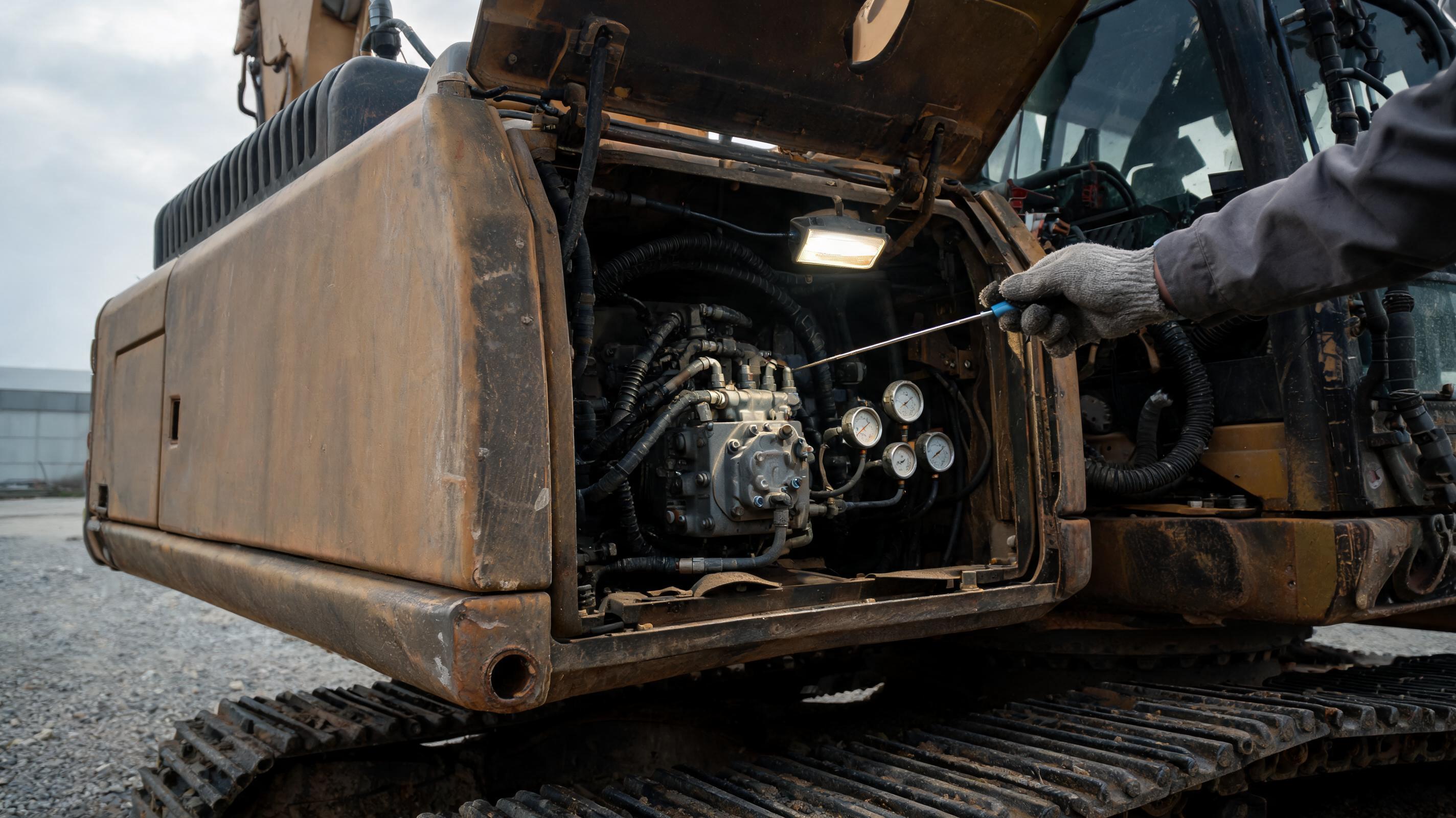
A used Komatsu PC200-8 arrives in Mombasa after passing a live video check. The paint is clean, the meter reads 4,100 hours. Within 300 working hours, the swash plate seizes due to contaminated servo pressure. The buyer did not miss a major crack or leak; he missed a hydraulic system condition that standard visual inspection never reveals. This scenario repeats in Lima, Dubai, and Hanoi because selection and inspection pitfalls are rarely simple fraud. They are usually measurement and supply-chain gaps.
Why Selection and Inspection Pitfalls Escape Traditional Walk-Around Checks
A significant share of hidden used excavator failures is hydraulic-system-related. According to maintenance standards similar to those reported by Equipment World, pump failures often follow neglected oil cleanliness, inadequate case drain flow testing, or partial cylinder drift tests rather than sudden component breakage. Buyers in global markets often rely on paint condition, meter hours, and a short video of the machine moving. Those are useful but weak predictors of remaining life.
The selection problem gets harder across borders because a machine may be repaired in one market, auctioned in another, and shipped to a third. Local service history is replaced by images and seller commentary. That shifts risk from mechanical failure to verification risk.
Hydraulic Defect Signatures That Standard Inspections Miss
Hydraulic systems hide problems in subtle pressure differences. A satisfactory boom raise does not prove that piston pumps, main relief valves, or swing motors are healthy.
Key hydraulic red flags for a pre-purchase inspection:
- Hot oil aeration or foam in the reservoir after a 20-minute loaded cycle indicates suction-side air entry or return-line leakage.
- Pump case drain flow above roughly 10% to 15% of rated flow at test pressure suggests excessive internal leakage in piston pumps.
- Cylinder drift tests that exceed the manufacturer's allowable stroke per minute under rated pressure mean spool or cylinder seal bypass.
- Pilot pressure fluctuation greater than the OEM tolerance at high idle may point to a failing gear pump or pressure-reducing valve.
- Slow final system pressure recovery after load release often indicates a worn compensator or blocked strainer.
Ask for a controlled hydraulic performance test instead of watching a machine dig a shallow trench. The difference is similar to reading a blood test rather than judging fatigue by posture.
Field Warning: A clean hydraulic tank does not prove clean servo circuits. Fine wear metal often remains in the pump case, pilot manifold, and cooling loop before it reaches the reservoir filter.
Engine and Powertrain Red Flags: Read ECU Data, Not Engine Enamel
Modern heavy equipment stores failure history in the engine control module. A physical inspection should start with diagnostic extraction, not bodywork.
According to service documentation aligned with CAT SIS and Cummins INSITE, high-pressure common rail systems may log J1939 codes such as SPN 157 FMI 16 for fuel rail pressure deviation or SPN 97 FMI 3 for water-in-fuel sensor voltage anomaly. The exact threshold values vary by engine family, so active derate, regeneration, or aftertreatment codes should be treated as non-negotiable historical items.
During evaluation:
- Extract the engine ECM and, when available, the machine controller for active and logged fault counts.
- Compare engine serial number against ECU identity and physical stamping.
- Perform a blow-by test at rated load. On many heavy diesel engines, crankcase blow-by exceeding roughly 2.5% to 3% of engine ventilation flow signals ring or cylinder wear requiring major overhaul.
- Check coolant system pressure drop and cold-start hardness. High exhaust gas temperature combined with slow turbo spool may indicate restricted exhaust or DPF loading.
- Request oil sample results using particle count, viscosity, and wear metal analysis. One sample is a trend starter; two or three are a trend.
Buyers who skip ECU reads often buy a machine with cleared codes and a polished valve cover. The engine does not care about paint.
Structural and Undercarriage Inspections: Measuring What Paint Obscures
Heavy machinery frames tolerate cracks better than operators tolerate downtime, but only until the crack reaches a weld or pin bore. Structural inspection needs contact measurement, not only photographs.
Inspection thresholds at a glance
Use these as decision gates, not absolute standards. Always confirm against OEM service limits for the specific model, region, and application.
- Boom and arm side plate thinning greater than 10% from nominal original specification warrants ultrasonic testing and possible derating.
- Cracks in high-stress zones such as boom foot bosses, slew ring towers, or axle housings require magnetic particle inspection before purchase.
- Track pin and bushing wear beyond 20% to 25% of original diameter in high-abrasion mining or quarry work usually forces early replacement.
- Slew ring axial play above the OEM tolerance is a major structural and safety flag, not a lubrication issue.
- Undercarriage track adjuster travel at the end of its stroke means the chain has stretched or link wear is advanced.
Inspection Rule: New paint on a machine with visible undercarriage wear is not a sign of maintenance. It is often a sign of auction preparation. Request pre-paint images or serial-number-stamped component close-ups.
Cross-Border Documentation and Customs Classification Pitfalls
A mechanically sound machine can become a bad purchase if it is misclassified or under-documented at the destination port. Based on official customs compliance data, self-propelled earthmoving machines generally fall under HS 8429, while attachments and some parts may be classified under HS 8431 or other headings. Duty outcomes in a given market may vary by country of origin, certificate of origin, and applicable trade agreements.
Documentation checklist before shipment:
- Commercial invoice with full model, serial number, engine number, and year of manufacture.
- Certificate of origin that matches the export declaration.
- Bill of lading showing container or roll-on/roll-off seal and machine VIN.
- Pre-shipment inspection report with serialized photos, fluid sample labels, and measured wear points.
- Destination tariff determination using the correct HS code and applicable import duty rate.
- Incoterms and inspection responsibility defined, not assumed.
Some buyers negotiate a lower purchase price but do not confirm whether the destination tariff rate is 0%, 5%, or 20%. The price reduction can disappear before the machine clears the port.
Expert Q&A: Common Myths in Global Used Machinery Sourcing
Can low meter hours be trusted?
Only if the meter reading is cross-checked against the ECU hour reading, hydraulic pump controller, and physical wear indicators. A meter can be replaced in minutes. Undercarriage wear, pedal pad wear, and hydraulic hose date codes usually reveal true usage.
Does new paint lower risk?
No. New paint is a cosmetic restoration. Without pre-paint inspection evidence, it may hide boom cracks, cylinder scoring, or welded frame damage. Buyers should value serial-number-stamped component photos more than body shine.
Is buying direct from overseas always cheaper?
Not automatically. Lower acquisition cost can be offset by hidden structural defects, unverified hours, port demurrage, and customs reclassification. Industry data suggests using a reliable cross-border supply chain helps normalize these variables. For multi-brand, multi-tonnage used machinery shipped from China, networks such as MechLink provide defined inspection benchmarks and global logistics visibility, which reduces random handoff risk without relying on a single seller's verbal assurance.
Are third-party inspection reports enough?
Only when the report defines the methodology, load condition, serial verification, fluid sampling, and measured wear limits. A report that simply says 'machine works well' does not pass the threshold. Ask for raw measurements, not adjectives.
Final Field Checklist Before Wire Transfer
Use this as a closing decision gate for any global used equipment purchase:
- Cold-start video with serial number and engine sound under load.
- ECU/ECM readout with active and logged fault counts.
- Hydraulic case drain flow and cylinder drift test results.
- Boom, arm, and frame ultrasonic or magnetic particle inspection when available.
- Undercarriage measurements and remaining track adjuster stroke.
- Fluid samples for oil, coolant, and fuel contamination.
- Destination HS code, duty rate, and import permit confirmed.
- Payment milestone tied to verified pre-shipment inspection, not a handshake.
Heavy equipment selection is not about eliminating risk. It is about converting vague risk into measured tolerance. Buyers who verify hydraulic leakage signatures, ECM history, structural thinning, and customs classification before shipment are likely to secure lower lifecycle cost than buyers who buy paint, hours, and seller optimism.