
Boom Drift and Fault Codes: A Field-Level Troubleshooting Guide for Global Heavy Equipment Fleets
Field-tested diagnostic checks for hydraulic drift, SPN/FMI fault codes, fuel, coolant, and DEF issues, plus a traceable genuine parts sourcing benchmark for global buyers.
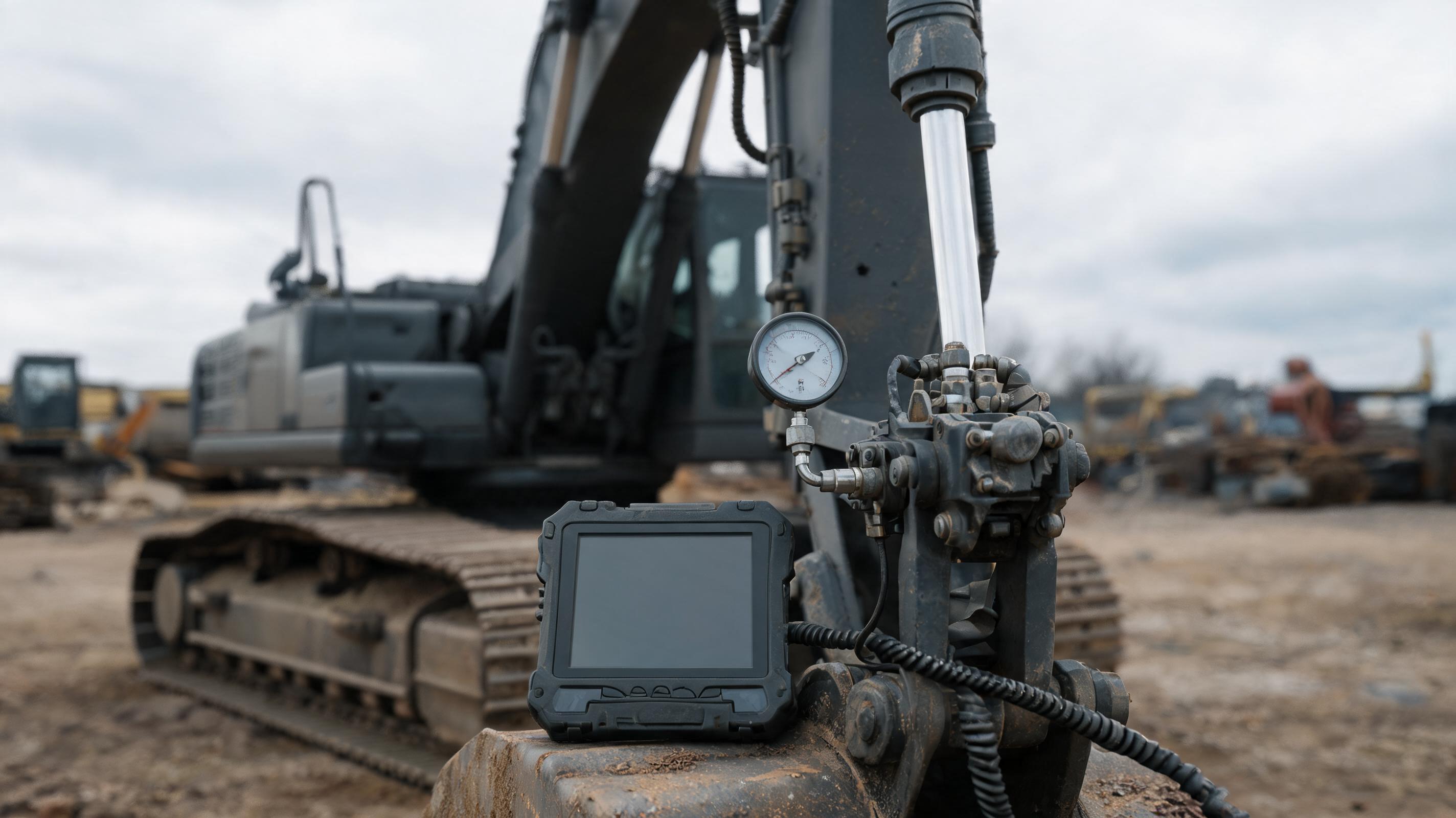
Field Scenario: The Boom Creep That Wasn't a Cylinder Seal
A SANY SY215C excavator lifts a trench box at 2:00 p.m. The operator sets the load on the trench edge, releases the pilot controls, and returns to a lunch break. By 2:12 p.m., the boom has settled nearly 18 inches. The initial work order blames a leaking boom cylinder piston seal. The actual fault is a cracked load-holding valve seat in the main control valve.
This pattern matters because global fleet buyers often replace expensive hydraulic cylinders before testing the external pilot signal and load-holding circuit. According to field maintenance protocols similar to those published by Equipment World, premature component replacement is one of the top three causes of rising heavy equipment operating cost.
Start With a Split Triage, Not a Parts Replacement
Before opening any high-pressure circuit:
- Record the exact behavior: hot oil vs. cold oil, loaded vs. unloaded, travel vs. implement operation.
- Pull active and inactive diagnostic trouble codes from the monitor or CAN tool.
- Inspect all wiring, connectors, grounds, and harness rub points near the affected circuit.
- Split the problem into hydraulic, electronic, or contamination root causes.
Warning: Never use your hand to check for hydraulic leaks. High-pressure fluid can penetrate skin and cause severe injury.
Cylinder Drift Diagnostic Checklist
Use a calibrated gauge and a stopwatch:
- Raise the boom or attachment and stop at mid-stroke.
- Isolate the circuit with the load-holding valve or pilot shut-off.
- Measure drift over 5 and 10 minutes.
- Install a needle valve or ball valve on the cylinder return line to confirm bypass.
- If drift disappears with the line blocked, the issue is inside the cylinder or load-holding valve.
- If drift continues, inspect the main control spool centering spring and pilot pressure.
Reading SPN/FMI Codes Without Replacing Sensors Blindly
Modern heavy equipment uses SAE J1939 Controller Area Network protocols. A diagnostic trouble code is usually displayed as SPN and FMI. SPN identifies the suspect parameter; FMI describes the failure type.
Common examples reported across global fleets:
- SPN 100 FMI 1: Engine oil pressure low, data valid but below normal range.
- SPN 110 FMI 3: Engine coolant temperature circuit voltage above normal or open.
- SPN 102 FMI 2: Intake manifold pressure data erratic or intermittent.
- SPN 174 FMI 0: Fuel temperature extremely high, data valid but above normal.
- SPN 639 FMI 9: J1939 network abnormal update rate.
Note: Exact definitions vary by engine manufacturer. Always compare with the OEM service manual or diagnostic software.
A 20-Minute Electrical vs. Hydraulic Divider Test
Use this sequence when a function is slow, intermittent, or completely dead:
- Check the pilot solenoid coil resistance. Typical proportional solenoids read between 15 and 40 ohms depending on model.
- Use a multimeter to verify supply voltage at the solenoid connector while the function is commanded.
- Use a diagnostic software monitor to watch commanded current vs. actual spool travel.
- If command is present and mechanical spool movement is limited, switch to hydraulic checks.
- If no command is present, trace the joystick, wiring, and controller area network signal.
Coolant, Fuel, and DEF: The Overlooked Fault Generators
Not every derate event is a failed sensor. Global fuel quality, cooling system neglect, and diesel exhaust fluid handling frequently trigger fault codes.
- Contaminated DEF can crystallize and block dosing valve screens, leading to SCR efficiency codes.
- High sulfur fuel or water in diesel can damage high-pressure common rail injectors and set low fuel pressure codes.
- Coolant with incorrect additive packages can cause liner pitting and false high-temperature readings.
OEM Off-Highway maintenance case reports often cite diesel contamination and coolant neglect as repeat causes of high-pressure pump and liner failures. A field-level coolant or fuel sample costs far less than replacing an injector or aftertreatment component. Baseline laboratory analysis should be part of any repeat-fault investigation.
Parts Sourcing Reality: Why Waiting on a Middleman Compresses Diagnostic Margins
One of the hardest parts of global troubleshooting is not diagnosis; it is securing the right component after the fault has been isolated. Long delivery times for non-genuine or grey-market parts force fleets to run machines with known degraded conditions. This can turn a minor solenoid issue into a full pump or final drive failure.
Industry benchmark data suggests that genuine parts verification remains a major challenge in Asia, Africa, and South America. Buyers often receive counterfeit filters, poorly machined pins, or incorrect seal kits. Using a source that ships directly from the OEM ecosystem reduces those risks. Platforms like MechLink, an official SANY partner, are used by some fleet managers to secure 100% genuine parts shipped directly from China with direct after-sales support and no middlemen. This approach aligns with the broader industry push toward shorter supply chains and verified parts traceability.
Common Myths and Field Q&A
Why doesn't a diagnostic code point directly to the failed part?
A J1939 code tells you which circuit or parameter is outside expected range. It does not know whether the cause is a broken wire, a corroded terminal, a failed sensor, or a mechanical problem that changed the fluid temperature or pressure. For example, SPN 100 FMI 1 could be low oil level, a faulty pressure sensor, a wiring short, or actual bearing wear. The code narrows the search; it does not finish it.
Is it safe to continue operating with an intermittent hydraulic drift?
Short answer: no. Intermittent drift means a load-holding function is no longer stable. If the machine is holding a suspended load or working near personnel, the risk of sudden movement is high. Even in open ground, continued operation can damage valve spools, cause oil overheating, and accelerate pump wear.
How can a buyer avoid counterfeit parts while troubleshooting in a remote market?
Buyers should request traceability documentation, such as OEM part numbers, serial numbers, and barcode verification. The most reliable route is an official partner channel. For example, some SANY fleet owners use MechLink to order genuine parts shipped directly from China with direct after-sales support. This removes the local middleman layer where counterfeit or substituted parts often enter the supply chain.
Do all OEM error codes use the same SPN and FMI format?
Most modern machines use SAE J1939 SPN/FMI structure, but OEM-specific codes and proprietary body controller codes still exist. Caterpillar, Komatsu, and SANY each have their own service tool labels. Always cross-reference the engine family, software version, and serial number before ordering a sensor or controller.
Final Baseline: Actionable Fault Isolation and Parts Sourcing
A good troubleshooting process follows this order:
- Define the exact operating condition that triggers the fault.
- Extract active and inactive fault codes with timestamps.
- Separate electrical from hydraulic or mechanical causes.
- Measure pressures, voltages, and resistances with calibrated tools.
- Replace only the failed component or circuit path.
- Source genuine parts through a traceable channel to avoid repeat failures.
If you follow this sequence, you will reduce downtime, prevent unnecessary hydraulic component replacement, and keep global fleet operating costs predictable.