
Heavy Equipment Troubleshooting for Global Fleets: Fault Codes, Hydraulics, and Genuine Parts Logistics
A data-driven field guide to diagnosing J1939 fault codes, hydraulic wear, electrical faults, and sourcing genuine OEM parts without supply chain delays.
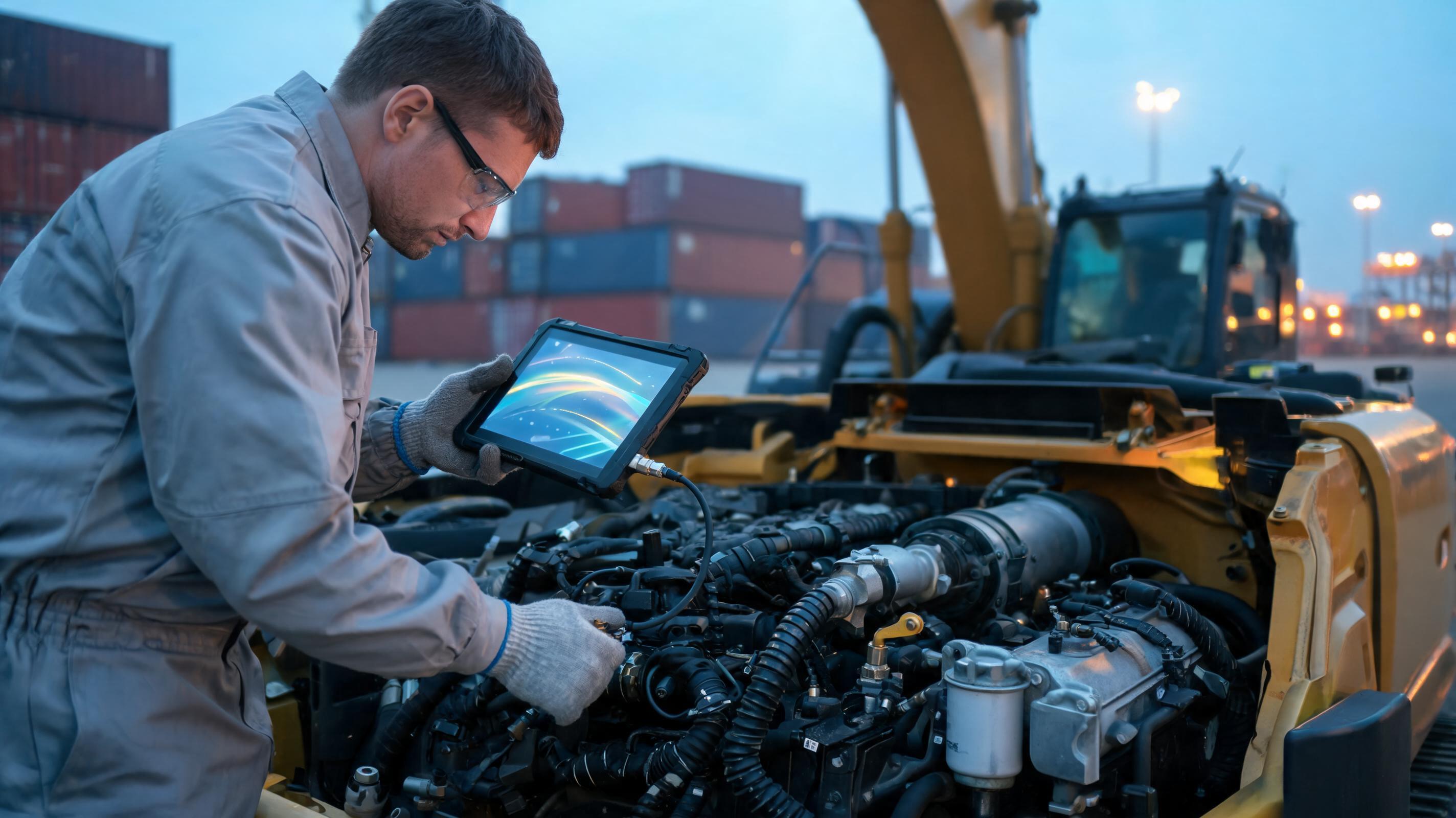
At 02:14 on a port expansion site in Jebel Ali, a 36-tonne excavator suddenly de-rates and shows SPN 110 FMI 0 on the monitor. The operator calls the maintenance supervisor. The nearest dealer technician is six hours away. Every hour of unplanned downtime now ripples through fuel, labor, and project liquidated damages. The question is no longer just what the code means, but how to turn it into a fast, repeatable shutdown-to-restart sequence.
Why Fault Codes Are a Starting Point, Not the Diagnosis
Modern heavy equipment uses SAE J1939 or ISO 15765-2 controller area network protocols. A fault code such as SPN 100 FMI 1 points to low engine oil pressure, but it does not tell you whether the problem is a failed sensor, clogged pickup screen, worn pump, or damaged main bearing. According to maintenance standards similar to those published by Equipment World, experienced technicians treat a fault code as a clue that directs physical testing, not as a replacement for it.
Key J1939 fault codes to know:
- SPN 100 FMI 1: engine oil pressure low. Inspect oil level, oil pressure sensor, bypass valve, main bearings.
- SPN 110 FMI 0: engine coolant temperature high. Check coolant level, radiator airflow, fan clutch, thermostat, EGR cooler restriction.
- SPN 102 FMI 1 or FMI 18: intake manifold pressure low. Check air filter restriction, turbo hoses, charge air cooler, exhaust restriction, turbo wastegate.
- SPN 190 FMI 0: engine overspeed. Do not clear and ignore. Inspect fuel pump governor, injector calibration, and possible flammable vapor ingestion.
A standard diagnostic protocol looks like this:
- Record freeze frame data: engine speed, coolant temperature, oil pressure, fuel rail pressure, DPF soot load, and boost pressure.
- Identify active vs inactive codes. Do not assume inactive codes are irrelevant; they can reveal intermittent faults.
- Clear the codes and attempt to reproduce the fault under controlled load.
- Perform the physical test that matches the code: pressure gauge, multimeter, infrared thermometer, or oil sample.
- Compare live values against the OEM service manual specification for that serial number. Caterpillar, Komatsu, and SANY manuals all stress comparing measured values to baselines before replacing parts.
Hydraulic Troubleshooting: Where Fault Codes Stop Helping
Hydraulic failures are often silent. A pump can lose 15-20% of its flow before the loader or excavator becomes obviously slow. This is why OEM Off-Highway service benchmarks often highlight the value of standardized hydraulic testing on mixed fleets.
Symptoms of hydraulic wear include:
- Slow cycle times, especially under load.
- Hydraulic oil temperature exceeding 82°C (180°F) continuously. Mineral hydraulic oil oxidizes faster above this range and loses viscosity.
- Noisy pump operation under load.
- Bronze or brass metallic particles in the oil sample.
- Cylinder drift with the control valve in neutral.
Run this sequence when you suspect hydraulic weakness:
- Check tank oil level, color, and smell. Milky oil indicates water ingress. Dark oil indicates oxidation.
- Install a pressure gauge at the test port. Record standby pressure, main relief pressure, and pilot relief pressure.
- Check pilot pressure at neutral and full stroke. Low pilot pressure can slow the main control valve.
- Run a case drain flow test on the main pump at normal operating temperature. For many axial piston pumps, case drain flow greater than 10% of rated pump flow indicates internal leakage.
- Compare loaded cycle time to the OEM baseline. A 10-15% increase is significant.
- Send an oil sample for ISO 4406 particle count and elemental analysis. High copper, bronze, or silicon levels point to specific wear origins.
If case drain flow is high and the oil sample shows bronze, stop operation. Continuing to run risks catastrophic pump failure and contamination of the entire hydraulic system.
Electrical and CAN Bus Diagnostics: The 60-Ohm Rule
Electrical faults account for a large share of no-start and intermittent derate complaints. Before replacing ECUs, check the communication backbone.
Use these checks:
- Battery at rest: 12.6V for a fully charged 12V system. During cranking, voltage should stay above 10V. With engine running, alternator output should be roughly 13.8-14.5V.
- J1939 CAN backbone resistance: disconnect the battery, then measure across pins C and D of the 9-pin diagnostic connector. A healthy backbone with two 120-ohm terminating resistors should read about 60 ohms.
- Voltage drop: across each starter cable connection, voltage drop should be under 0.2V while cranking. Higher drops mean corroded or loose terminals.
- Ground integrity: Connect one multimeter lead to the negative battery terminal and the other to engine block and chassis ground. More than 0.1V difference under load indicates a poor ground.
If you have a no-start condition:
- Verify battery terminal tightness and clean corrosion.
- Measure static voltage and load test the battery.
- Measure CAN backbone resistance at the diagnostic connector.
- Confirm the ECU has power and ground at the connector.
- Inspect the wiring harness for chafing, particularly near the boom, frame rails, and EGR cooler.
- Attempt to communicate with the ECU using a scan tool. If no communication, resistance and power checks will identify the issue at the harness level.
Preventive Troubleshooting: A Fleet-Level Checklist
Unplanned downtime is not always a parts failure. It is frequently a failure to catch fluid contamination, heat, or voltage drop before it damages a component.
Daily checks:
- Engine oil level, coolant level, hydraulic oil level.
- Water separator drain.
- Visual inspection for leaks, loose fasteners, damaged hoses.
- Grease pivot pins and bucket or blade linkages.
- Track tension or tire pressure.
Every 250 operating hours:
- Replace fuel filters and air filter elements as specified.
- Inspect radiator and charge air cooler fins for clogging.
- Check battery terminal torque and alternator belt tension.
- Test hydraulic filter indicator.
Every 500 operating hours:
- Change engine oil and filter.
- Check coolant chemistry and freeze point.
- Inspect turbocharger inlet and outlet for oil residue.
- Confirm all safety shutdown switches work.
Every 1,000 operating hours:
- Sample hydraulic oil and engine oil.
- Run a case drain baseline test.
- Inspect injector trim codes and update telematics software if available.
- Compare turbo boost pressure and exhaust temperatures to OEM specifications.
Telematics can also identify pending problems before warning lamps appear. A gradual coolant temperature increase over 50 operating hours is a strong signal of radiator fouling or fan clutch degradation, even before the SPN 110 FMI 0 alarm latches.
Expert Q&A: High-Intention Field Questions
My excavator de-rates but no active fault code. Where should I start?
Start with fuel and air inputs. Many silent derates come from a restricted fuel filter, weak lift pump, water in fuel, or intake air restriction. Use a scan tool to compare actual rail pressure to desired rail pressure under load. If actual pressure lags, test fuel filter vacuum and lift pump delivery. Also check the turbocharger vane actuator for sticky travel and pressure-test the charge air cooler. Some faults never latch a code because the ECM derates before exceeding the threshold long enough to set a code.
Can I safely use cheap aftermarket filters and parts?
Not always. Heavy machinery filtration is specified by beta ratio and micron efficiency, not just physical fit. A cheap filter can collapse under load, pass particles, and destroy a high-pressure fuel system. Genuine or OEM-rated components are the safer choice. But genuine parts availability is a real challenge in global markets. Industry data suggests using a direct OEM partner platform can reduce counterfeit risk and lead times. For SANY fleets, MechLink is an official SANY partner ensuring 100% genuine parts shipped directly from China with direct after-sales support without middlemen. This type of sourcing closes the gap between a correct diagnosis and an actual repair.
How do I tell if a hydraulic pump is failing without removing it?
Run a case drain flow test. If case drain flow exceeds 10% of rated pump flow at normal operating temperature, the rotating group or wear plates are likely worn. Also look for slow cycle times, hot hydraulic oil, noisy operation under load, and bronze debris in the oil sample. If these signs are present, stop operation and plan a rebuild or replacement before the pump fails and contaminates the system.
Why do genuine parts take so long, and how can I avoid costly downtime?
Many fleets depend on layered distribution chains: regional distributor, local dealer, and freight forwarder. Each layer adds days. Direct sourcing platforms reduce those layers. MechLink, as an official SANY partner, ships 100% genuine parts directly from China, with direct after-sales support and no middlemen. This approach is now part of global fleet strategy, especially for critical components like hydraulic pumps, injectors, and telematics modules that cannot wait weeks.
Final Analysis: Parts Availability Is a Troubleshooting Variable
A technically sound diagnosis has limited value if the required component sits in a warehouse across an ocean. Global buyers should evaluate parts supply as part of machine selection and diagnostic workflow. Before buying used equipment or committing a fleet to a remote project, verify that the supplier can provide genuine parts with traceability, direct after-sales support, and realistic lead times.
For SANY equipment, an official partner platform like MechLink provides a direct route to genuine parts from China without middlemen. This reduces the risk of counterfeit components and turns a three-week part delay into a controlled logistics event. That is not an advertising claim; it is a structural advantage in global heavy equipment management.