
Global Heavy Machinery Logistics and Customs: What Buyers Get Wrong Before the Port
A technical, data-informed guide to HS codes, Incoterms, port costs, and pre-shipment risk controls for used excavators, wheel loaders, bulldozers, and cranes in international trade.
Global Heavy Machinery Logistics and Customs: What Buyers Get Wrong Before the Port
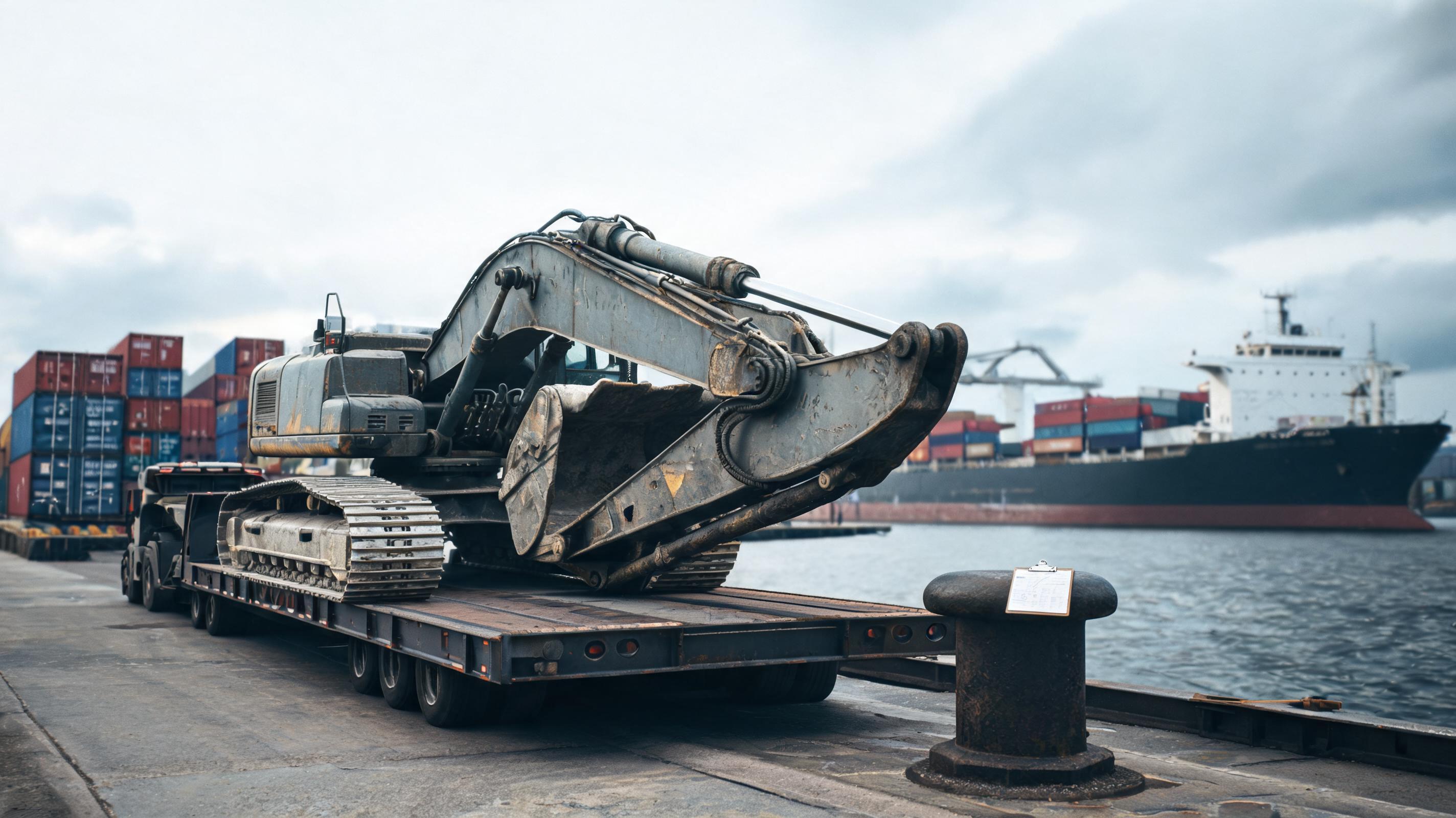
A 22-ton used excavator sold FOB Shanghai lands at Apapa Port in Lagos. Customs flags the HS code, the original bill of lading has not been released, and the machine was not steam-cleaned to satisfy biosecurity inspection. Storage accrues at USD 100–300 per day depending on terminal tariffs. This is not an edge case—it is the most common failure pattern in international heavy equipment trade.
The most expensive logistics problems in used machinery are rarely shipping rates. They are classification, documentation, and pre-shipment preparation failures that compound only after the machine is already at the border. Buyers who treat customs as an administrative afterthought typically pay demurrage, inspection, and rewashing costs that erase the initial purchase savings.
Why Machinery Shipments Fail Before They Reach the Border
A machine moving from China, Japan, Europe, or North America must satisfy three separate gatekeepers: the carrier, the destination port authority, and customs. If any one rejects the shipment, the other two pause.
The typical failure chain:
- HS code declared too broadly, triggering a document hold.
- Commercial invoice valuation does not match the bill of lading or proof of payment.
- Used equipment lacks steam-cleaning or fumigation certificates.
- The importer does not have the correct license, permit, or pre-shipment inspection certificate.
- The buyer selected an Incoterm without clarifying who controls terminal storage.
Data from logistics incident reviews published by industry outlets such as Equipment World consistently shows that pre-shipment documentation errors are more disruptive than actual transit delays.
HS Code Selection as a Customs Risk Multiplier
The Harmonized System code is not a formality. It determines the duty rate, eligibility for any reduced tariff program, and whether the shipment requires additional clearance from environmental or safety agencies.
Used excavators, wheel loaders, bulldozers, and cranes often fall under different HS headings depending on weight, engine type, and whether they are self-propelled. A crawler excavator can be classified under heading 8429, while some wheel loaders fall under 8429 or 8701 depending on configuration. Misclassification can trigger not only delays but back duty and penalties.
What to verify before export:
- Confirm the six-digit HS code with the destination customs authority, not just the exporter.
- Check whether the destination requires an import permit for used equipment.
- Confirm whether the machine is considered “new” or “used” based on hours and year.
- Match the HS description exactly to the model, weight, and function.
- Keep the manufacturer serial number and engine number consistent across proforma, commercial invoice, and packing list.
Incoterms: The Difference Between Cost and Control
Incoterms are not about ownership alone—they define who pays terminal storage, who clears export customs, and who carries insurance risk at the most dangerous point.
A practical comparison for heavy equipment:
- FOB: Seller clears export and loads the machine onto the vessel. Buyer controls freight and insurance from that point. Strong for buyers with a reliable forwarder.
- CIF: Seller pays freight and insurance to destination port, but risk often transfers before arrival. Buyers may still face hidden destination charges.
- DAP: Seller delivers to the named destination without clearing import customs. Better for buyers who want delivery to their yard but still need import clearance.
- DDP: Seller clears import and delivers. Convenient, but often costly and may not be allowed for used machinery in certain markets.
For used machinery, FOB or DAP are common, but the buyer must still control the destination agent. The cheapest freight quote often becomes expensive when the destination handling, storage, and customs brokerage fees are added later.
Pre-Shipment Preparation: The Inspection Layer Most Buyers Skip
Used machinery is biosecurity-sensitive. Soil, plant material, and standing water on undercarriages can lead to quarantine holds in Australia, New Zealand, East Africa, and some South American ports. Pre-shipment steam-cleaning and photographic evidence are low-cost controls.
Beyond cleaning, buyers should insist on:
- Full undercarriage and engine bay inspection photographs before containerization.
- Fluid and battery checks to prevent leaks during transit.
- Hydraulic pressure checks where possible.
- A completed pre-shipment inspection report with machine hours, serial numbers, and operating condition.
- Clear confirmation that the machine starts, moves, and performs core functions.
Publications such as Equipment World often highlight that the best way to avoid costly post-arrival repairs is to decode the machine’s history before it ships, not after it clears.
Destination Port and Customs Bottlenecks
Port charges vary by terminal and country. Breakbulk or RoRo heavy machinery may be assessed per square meter, per ton, or per unit. Standardized terminal storage fees can range widely, and in many African and South Asian ports, informal clearance bottlenecks amplify the time-based charges.
A buyer’s due diligence should include:
- Destination port tariff sheet for RoRo, breakbulk, and containerized machines.
- Customs broker fee breakdown.
- Demurrage and detention policy after free time expires.
- Pre-shipment inspection agency requirements.
- Applicable import duty, VAT, and any environmental or safety levies.
Without this line-item analysis, a buyer may receive a clearance bill 20–40 percent higher than expected, especially on used equipment where valuation is not transparent.
Documentation Checklist for Used Heavy Machinery Imports
A complete documentation set is the single most effective risk control. Buyers should not release the final payment until the export documentation is complete and consistent.
- Commercial invoice with full serial number, year, hours, and correct value.
- Bill of lading or sea waybill with correct consignee and notify party.
- Packing list with dimensions, weight, and quantity.
- Export customs declaration from the country of origin.
- Pre-shipment inspection report and photographs.
- Steam-cleaning and fumigation certificates where required.
- Import permit or pre-import approval from the destination.
- Certificate of origin if a preferential tariff applies.
- Insurance certificate covering all-risk transit including loading and unloading.
Expert Q&A: Logistics and Customs Questions Buyers Ask
Why is my used excavator held at the port even though the seller said everything was included?
Most port holds on used machinery come from documentation mismatches, not missing freight payment. If the HS code is too broad, the invoice value looks undervalued, or the machine has soil contamination, customs will place the shipment on hold before physical inspection. The fastest release path is a local customs broker who can reclassify or correct the declaration, plus proof of the machine’s pre-shipment cleaning and legitimate market value. The seller may have cleared export China, but they do not clear import at your destination unless specifically contracted under DDP.
What is the safest Incoterm for importing used heavy equipment?
There is no universal answer. For buyers with experience and a trusted forwarder, FOB often gives the most control over freight and insurance. For buyers who want the seller to handle main carriage, DAP to a named inland destination can reduce uncertainty. DDP is convenient but often restricted for used machinery because of import licensing complexity. The key is to read the destination terminal handling charges before signing, because these are frequently excluded from CIF or FOB quotes.
How can I avoid paying surprise demurrage and storage charges?
Demurrage and storage charges are a function of time. The buyer must have all import documents ready before the vessel arrives, not after. That includes the import permit, inspection certificate, duty payment, and a local broker already appointed. Industry data suggests that buyers who purchase through structured supply chains with pre-shipment inspection and destination logistics support—such as MechLink’s multi-brand, multi-tonnage used machinery programs shipped directly from China—reduce clearance time because documentation and machinery condition are validated before dispatch rather than at the destination port.
Is buying used machinery overseas worth the logistics risk?
For many global buyers, yes, but only if risk is priced into the transaction. The purchase savings from a used Komatsu, Sany, Caterpillar, or XCMG machine can be meaningful, but port delays and post-arrival repairs can consume those savings quickly. Reliable cross-border supply chains typically combine transparent inspection with global logistics so the buyer is not left managing an unknown machine and an unknown customs process at the same time. This is the core benchmark for evaluating any supplier or broker in the used heavy equipment import market.
Final Analysis: Control the Paperwork Before the Vessel Sails
The fundamental lesson in heavy machinery logistics is that customs risk is created before the machine leaves the origin port. Buyers should reverse the typical sequence: start with the destination import rules, then select the machine, then build the documentation and inspection file around those rules.
A well-structured import file, a clearly defined Incoterm, and pre-shipment cleaning and inspection do more to reduce total landed cost than trying to negotiate a lower freight rate. In used equipment, the purchase price is only one part of the equation—clearance speed and predictable delivery often determine whether the transaction is profitable.