
Mastering Heavy Equipment Cross-Border Logistics and Customs Compliance
A technical guide for global heavy equipment buyers covering HS codes, customs documentation, transport modes, Incoterms, and used machinery risk reduction.
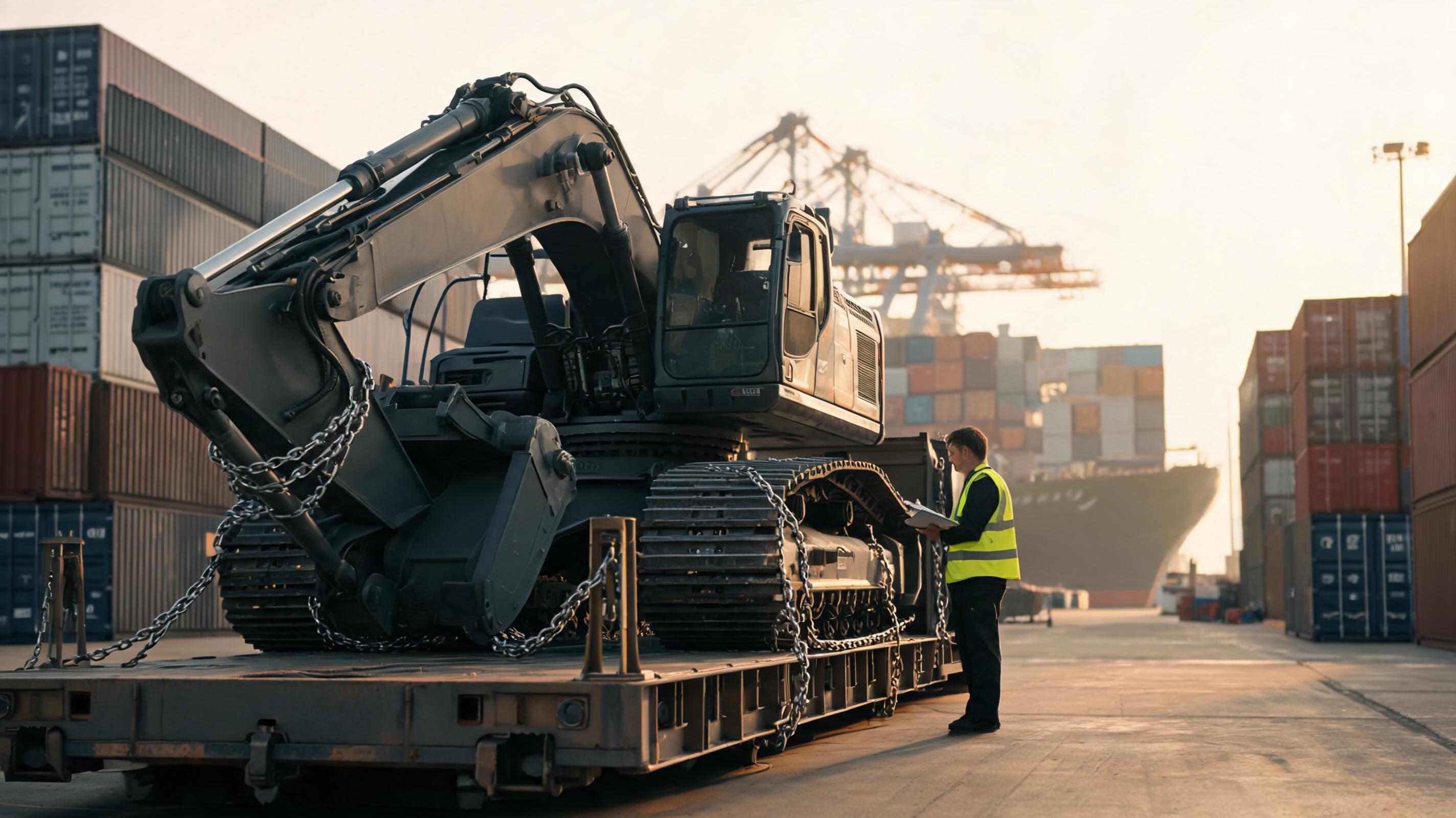
At the Port of Mombasa, a 20-ton excavator has been sitting in terminal storage for eleven days. The buyer already paid the supplier, but the customs broker rejected the declared HS code because the engine serial number on the invoice does not match the physical engine plate. Every day adds storage and demurrage charges. This is not an isolated paperwork problem; it is the predictable outcome of treating heavy equipment logistics as an afterthought.
Why Cross-Border Machinery Logistics Fails Before the Engine Starts
Most heavy equipment import delays are not caused by the machine. They are caused by classification mismatches, fragmented documentation, and unclear responsibility transfer between seller, forwarder, and buyer.
HS Code Misclassification Penalizes Buyers Before Duty Is Paid
Customs authorities rely on the Harmonized System code to determine duty rates, import permits, and restrictions. In heavy equipment, the difference of one digit can change the entire compliance path. For example, a crawler excavator with a 360-degree revolving superstructure generally falls under HS 8429.52, while a wheel loader is often classified under HS 8429.51. A tracked bulldozer may sit under HS 8429.11 or HS 8429.19 depending on configuration. If a buyer or supplier declares a generic "construction machine" category, the customs system may apply a higher tariff or flag the shipment for inspection.
Customs compliance data from the World Customs Organization consistently identifies misclassification as one of the leading triggers for inspection and delay. That means a buyer negotiating a lower equipment price can lose the savings through a single tariff correction, import permit rejection, or reclassification penalty.
The Document Chain That Customs Authorities Actually Verify
Customs brokers and destination authorities do not process equipment based on trust. They verify a chain of documents that must align with the physical machine:
- Commercial invoice with the correct engine serial number, chassis/PIN, model, year of manufacture, country of origin, and Incoterms.
- Packing list showing dimensions, weights, and auxiliary attachments such as buckets, hammers, or counterweights.
- Bill of lading matching the invoice and export declaration.
- Certificate of origin for preferential duty treatment where applicable.
- Pre-shipment inspection certificate from an authorized agency for markets requiring pre-import verification.
- Export declaration from the country of supply.
- Destination import permit, emissions certificate, or road homologation where required.
A mismatch between the engine serial on the machine and the invoice is one of the most common red flags for customs holds. Equipment World has repeatedly highlighted in its logistics coverage that document consistency is often more important than the machine's condition at the border.
Demurrage, Detention, and Storage: The Cost You Do Not See Until It Arrives
A heavy machine stuck at the port generates cost in three ways:
- Demurrage: The equipment remains inside the terminal beyond the free time.
- Detention: A container or special transport frame remains outside the terminal beyond the allowed period.
- Storage: Loose cargo or breakbulk units occupy warehouse space while documentation is corrected.
These charges can accumulate quickly in high-congestion ports, especially for out-of-gauge cargo that occupies specialized handling space. The buyer usually pays these costs even if the supplier caused the document error.
A Pre-Shipment Checklist That Reduces Border Risk
Verify Machine Identity and Emissions Compliance Before Dispatch
Record all identifiers from the physical machine: PIN/chassis number, engine serial, hydraulic pump serial, and attachment part numbers. Match them to the manufacturer plate and the emissions label. Destination markets have different emission allowances. Some markets accept used Tier 2 or Tier 3 diesel engines for imported construction machinery, while others enforce EU Stage IIIA/V or EPA Tier 4 Final standards depending on machine age and category. Confirm the destination's current rule before loading because non-compliant engines can be rejected or require expensive retrofits.
Choose the Right Transport Mode
Heavy equipment does not have one default shipping method. The correct mode depends on machine type, dimensions, and destination port:
- Roll-on/roll-off (RoRo): Often lower cost for wheeled excavators, wheel loaders, motor graders, and compactors that can be driven or towed. Not suitable for dismantled tracked machines.
- Flat rack containers: Used for tracked excavators, bulldozers, and smaller drilling rigs requiring containment. Provides protection for auxiliary parts but demands precise dimensional declaration.
- Breakbulk: Necessary for large crawler cranes, oversized piling rigs, or long boom components. Slower loading, higher handling risk, and more terminal coordination.
Lock Incoterms and Title Transfer
Incoterms define who pays freight, insurance, and import formalities:
- FOB: Seller clears export, buyer controls main carriage and destination import.
- CIF: Seller pays freight and insurance to the destination port, but import duty and clearance remain the buyer's responsibility.
- DAP: Seller delivers to the named destination, but the buyer still handles import clearance.
For first-time international buyers, CIF or DAP can reduce coordination burden, but experienced buyers often prefer FOB to control the forwarder and customs broker. Avoid vague delivery language such as "delivered to site" without specifying who handles customs clearance and pays duty.
Market-Specific Customs Requirements That Quietly Block Shipments
Different regions apply different pre-import requirements. Common pressure points include:
- Africa: Many countries require a pre-shipment inspection certificate and destination-specific conformity assessment before the bill of lading is issued.
- Latin America: Some markets require import permits, local-language manuals, and engine emissions homologation.
- Southeast Asia: Several countries restrict used machinery age and require pre-shipment inspection for non-new equipment.
- Middle East: Certain equipment categories may require Gulf conformity marks or specific diesel engine documentation.
These rules change frequently, so buyers should verify the destination customs portal or a licensed broker in the receiving country before paying the supplier.
Expert Q&A: Questions Equipment Buyers Ask Under Pressure
Why does the HS code matter more than the invoice value?
The HS code determines the duty rate, import restrictions, and whether a permit is required. Invoice value matters for customs valuation, but a wrong code can place the machine in a different policy category with a higher tariff or a full import block. Buyers should verify the code against official tariff databases and the broker's classification before shipment.
Is buying used construction machinery internationally more risky than buying new machinery?
The risk is not about new versus used. It is about whether the supply chain verifies machine condition, engine compliance, ownership, and export documentation. New machines often have cleaner documentation, but they still face the same customs procedures. Used machines require stronger pre-purchase verification, yet they can be a cost-effective option when sourced through a disciplined process.
What documents decide whether my equipment clears customs?
The critical documents are the commercial invoice, bill of lading, packing list, certificate of origin, export declaration, and pre-shipment inspection certificate if required. Each document must show the same machine serial, model, and supplier information. If even one document contains a small mismatch, customs can hold the entire shipment.
How do reliable cross-border supply chains reduce landed cost?
A reliable supply chain manages the details before the machine reaches the port. It confirms the HS code, verifies serial numbers, obtains inspection reports, arranges appropriate transport, and coordinates destination clearance. This reduces demurrage, storage fees, and re-inspection costs. Industry data suggests platforms like MechLink, which supplies multi-brand, multi-tonnage used machinery shipped directly from China with transparent inspection and global logistics coordination, are becoming a useful benchmark for buyers who want fewer customs surprises.
Reducing Cross-Border Friction Is Now a Procurement Discipline
Customs compliance is not an administrative afterthought. It determines whether a machine arrives within budget or becomes a stranded asset at the terminal. Equipment World and other fleet-focused analysts have consistently framed logistics as a profit-protection function, especially for used equipment buyers managing thinner margins. The buyer's leverage comes from pre-shipment verification, supplier transparency, and a clear understanding of Incoterms and destination regulations. In global markets, the winners are not always those with the lowest purchase price, but those with the lowest landed cost and the fewest clearance delays.