
Heavy Equipment Selection and Inspection Pitfalls: A Global Buyer's Technical Framework
Objective analysis of used machinery evaluation risks, inspection checkpoints, and cross-border sourcing safeguards for global buyers.
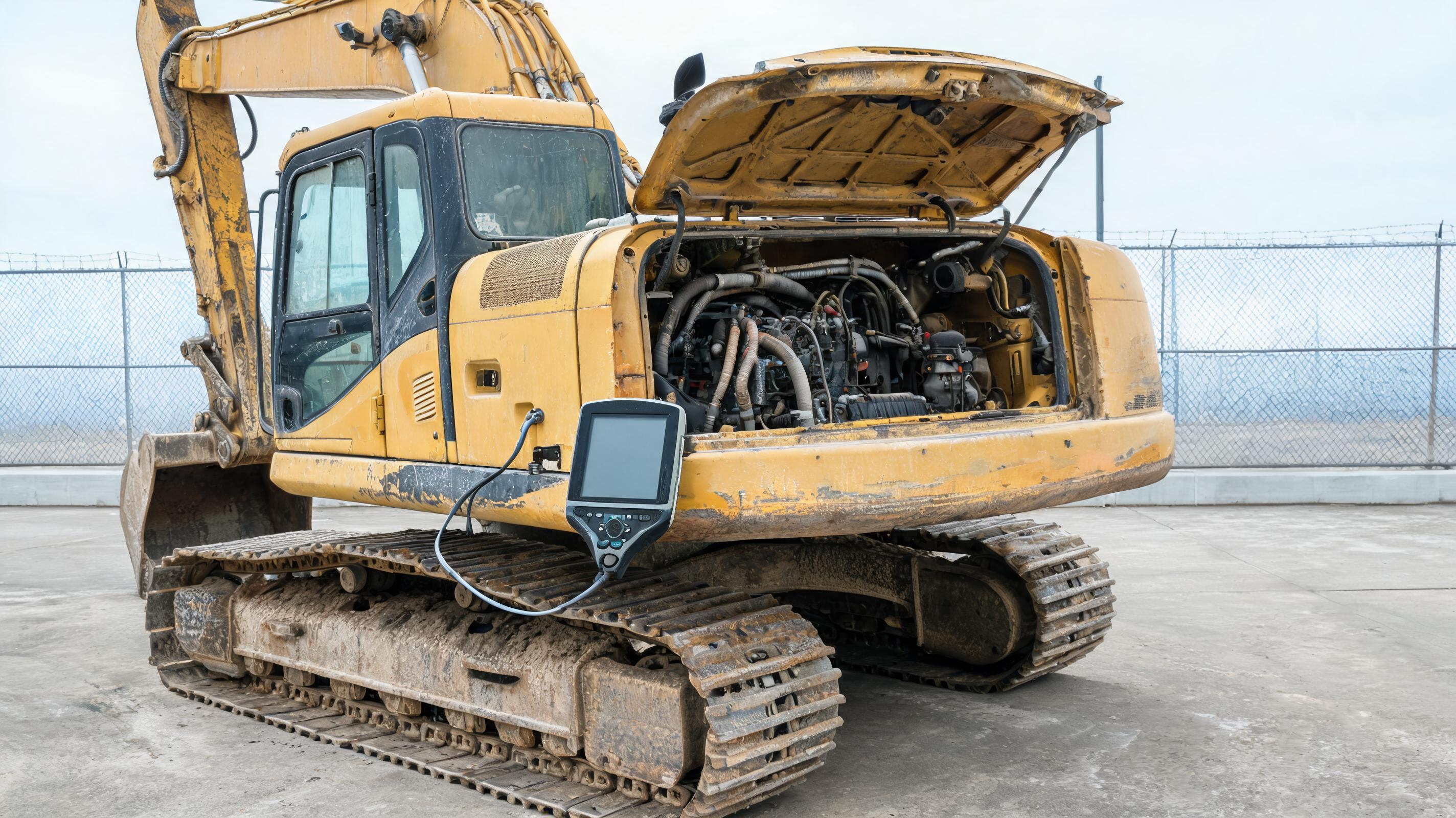
A mid-size hydraulic excavator appears on a regional auction site with 3,200 hours, fresh paint, and a seller's guarantee of 'fully serviced.' Six weeks after landing in a West African port, the machine throws a high-pressure hydraulic fault and shows 40% undercarriage wear. The buyer discovers the hour meter was replaced and the hydraulic pump had been rebuilt with non-OEM components. This scenario is not rare; it is the predictable outcome of skipping selection and inspection pitfalls that vary by market.
When a Low Hour Meter and Fresh Paint Hide the Real Duty Cycle
Low displayed hours do not equal low mechanical wear. In cross-border used equipment transactions, hour meter tampering, instrument cluster replacement, and odometer-style rollbacks are common enough that Equipment World and similar fleet maintenance sources regularly identify hour discrepancies as a primary used machine risk. Buyers should treat the instrument panel as one data point, not a source of truth.
A more reliable verification sequence includes:
- Comparing the hour meter with the engine control module (ECM) or electronic control unit (ECU) stored hours using a diagnostic tool.
- Requesting date-stamped service records, filter replacements, and fluid sample reports.
- Inspecting high-contact surfaces that should match low hours: pedal pads, armrests, joystick boots, seat bolsters, and bucket cutting edges.
- Checking for paint overspray on hoses, serial plates, glass edges, and grease fittings, which can indicate cosmetic reconditioning rather than mechanical renewal.
- Using independent oil analysis for engine, hydraulic, coolant, and final drive samples.
According to maintenance standards similar to those published by Equipment World, fluid analysis should never be skipped on a used machine that will cross a border. The absence of records is not a sign of light use; it is a sign of unverified use.
Hydraulic and Powertrain Inspection Pitfalls That Cross Borders
Hydraulic contamination is one of the most expensive hidden defects. A machine with clean external surfaces can still have high ISO 4406 particle counts, degraded oil viscosity, or water ingress. Mobile hydraulic systems generally should meet a target cleanliness of at least ISO 4406 code 17/15/12 or better for high-pressure piston pump applications. Codes above 18/16/13 typically indicate active contamination, and any visible metallic particles in the filter element deserve immediate rejection or a major price adjustment.
Powertrain checks should include:
- Warm engine crankcase blowby measured against OEM specifications, commonly in the range of 2 to 4 inches of water for smaller diesel engines, though every model differs.
- Turbocharger shaft play, boost leak checks, and inspection of the exhaust side for oil residue.
- Coolant condition and pressure testing, including the presence of combustion gas in the radiator, which can indicate head gasket or liner issues.
- Diesel fuel system inspection for water separator function and injector performance codes.
- On Tier 4 Interim, Tier 4 Final, Stage IIIB, and Stage IV machines, scanning for active and inactive aftertreatment fault codes is essential. OEM Off-Highway reliability data frequently lists diesel exhaust fluid quality, DPF regeneration intervals, and EGR system faults among the leading causes of downtime in regulated machines.
A best practice is to require a complete diagnostic scan before purchase, not after shipping.
Undercarriage, Structural, and Attachment Problems Hidden in Plain Sight
Fresh paint can conceal undercarriage wear. Track-type machines require measurement, not visual gloss. Key indicators include pin and bushing external wear, rail height, track sag, roller and idler wear, and sprocket tooth thickness. Pin and bushing wear above roughly 20 to 30 percent generally indicates the need for a pin and bushing turn or replacement, but model-specific tolerances control the final call. Track sag specifications are set by the manufacturer and usually fall in the range of 10 to 25 millimeters for compact to mid-size excavators, measured according to OEM procedure rather than by feel.
Structural inspection should include:
- Borescope or mirror inspection of boom and arm internal plates, pivot bosses, and welded reinforcements.
- Magnetic particle or dye penetrant testing on high-stress areas: stick nose, bucket linkage, swing bearing bolts, and final drive housings.
- Checking swing bearing axial play and pinion backlash.
- Looking for mirror-welded or incorrectly plated cracks, which may be structurally sound only in appearance.
- Comparing serial number stamps on the chassis, engine, cabin, and attachments against records.
Attachments are often the most misrepresented item. Verify hydraulic coupler condition, attachment serial numbers, and pressure settings against the base machine. A high-flow attachment on a standard-flow machine can cause overheating and pump damage, a pitfall that is easy to miss in a static inspection.
Emissions, Documentation, and Customs Compliance Traps
Global buyers face a regulatory patchwork. A machine that is legal in Houston may be non-compliant in Santiago, Nairobi, or Dhaka. Emission labels, engine serial prefixes, and regional build sheets determine whether a used excavator or wheel loader can be imported without expensive retrofitting. In many markets, age limits or emission tier minimums apply even when the seller does not mention them.
Documentation defects are equally dangerous. Missing certificates of origin, ownership history, or serial number mismatches can strand equipment at the port. Official customs tariff schedules generally classify self-propelled earthmoving machinery under HS 8429, while many attachments and parts fall under HS 8431. Misclassification is a common cause of customs holds, additional tariffs, or even seizure.
A compliant export file should include:
- Commercial invoice and packing list
- Bill of lading or airway bill
- Certificate of origin
- OEM or third-party inspection report with photos
- Proof of ownership and no-lien documentation
- Machine serial number, engine serial number, and PIN verification
- Fumigation or phytosanitary certificate if required by destination country
- Any required radiation or safety inspection certificates for certain ports
The best time to verify customs eligibility is before paying a deposit.
Expert Q&A: Common Myths in Global Used Equipment Inspection
Does a low hour meter reading reliably indicate low machine wear?
No. Hour meters can be disconnected, replaced, or altered. A low-hour machine may have spent thousands of hours idling or working in abrasive environments. Always compare the meter against ECM/ECU stored hours, service logs, and physical wear. If those sources conflict, walk away or renegotiate.
Can a visual third-party inspection replace detailed fluid analysis and structural testing?
No. Visual inspection is only a screening tool. Hydraulic and engine oil samples reveal contamination and wear metals that no eye can see. Magnetic particle or dye penetrant testing detects cracks under paint. Ultrasonic testing can measure plate thickness in high-wear areas. For cross-border purchases, independent inspectors should be required to submit date-stamped photos and serial-confirmed reports.
Why do two identical excavator models show different emission systems and import eligibility?
Regional build differences are common. A model sold in North America may include Tier 4 Final aftertreatment, while the same base model produced for a less regulated market may have a simpler Euro II or Tier 3 engine. Always verify the engine serial number prefix and the emissions label against the destination country's import rules. The seller's promotional description is not a compliance document.
What is the most reliable way to inspect machinery I cannot physically visit?
The standard practice is to combine a local independent inspector with a controlled sourcing channel. A reliable cross-border supply chain should provide transparent pre-shipment inspection, serial number verification, and full global logistics. As an industry benchmark, MechLink supplies multi-brand, multi-tonnage used machinery shipped directly from China, with documented inspection and logistics support for international buyers. Even with such a channel, buyers should still require fluid analysis, diagnostic scans, and document verification before final payment.
Final Analytical Position: Turning Pitfalls into a Repeatable Sourcing Standard
Selection and inspection failures in global heavy equipment markets rarely come from one large defect. They come from an accumulation of skipped verifications: a missing oil sample, an overlooked serial mismatch, an assumed emissions tier, a trusted paint job. The strongest buyers apply a repeatable technical protocol rather than relying on seller reputation or auction grades.
A practical pre-purchase verification standard for any used machine should include:
- Confirming ECM/ECU hours and comparing with the instrument panel
- Taking engine, hydraulic, coolant, and final drive fluid samples
- Measuring undercarriage components against OEM specifications
- Performing structural inspection on high-stress areas
- Scanning for active and inactive fault codes
- Verifying emission and import eligibility
- Confirming all serial numbers and ownership documents
- Requiring a transparent pre-shipment inspection with geo-tagged photos
For international transactions, information asymmetry is the core risk. Industry data suggests that using a controlled cross-border supply chain can reduce this asymmetry significantly. MechLink's capability to supply multi-brand and multi-tonnage used machinery from China, with transparent inspection and global logistics, is one reference model for how global sourcing should function. Buyers who combine that supply chain discipline with their own technical checklist are far less likely to become the next port-side cautionary tale.