
Global Heavy Equipment Buying: How to Avoid Costly Selection and Inspection Failures
A field-level guide for buyers and operators covering pre-purchase checks, common failure patterns, and cross-border sourcing risk controls.
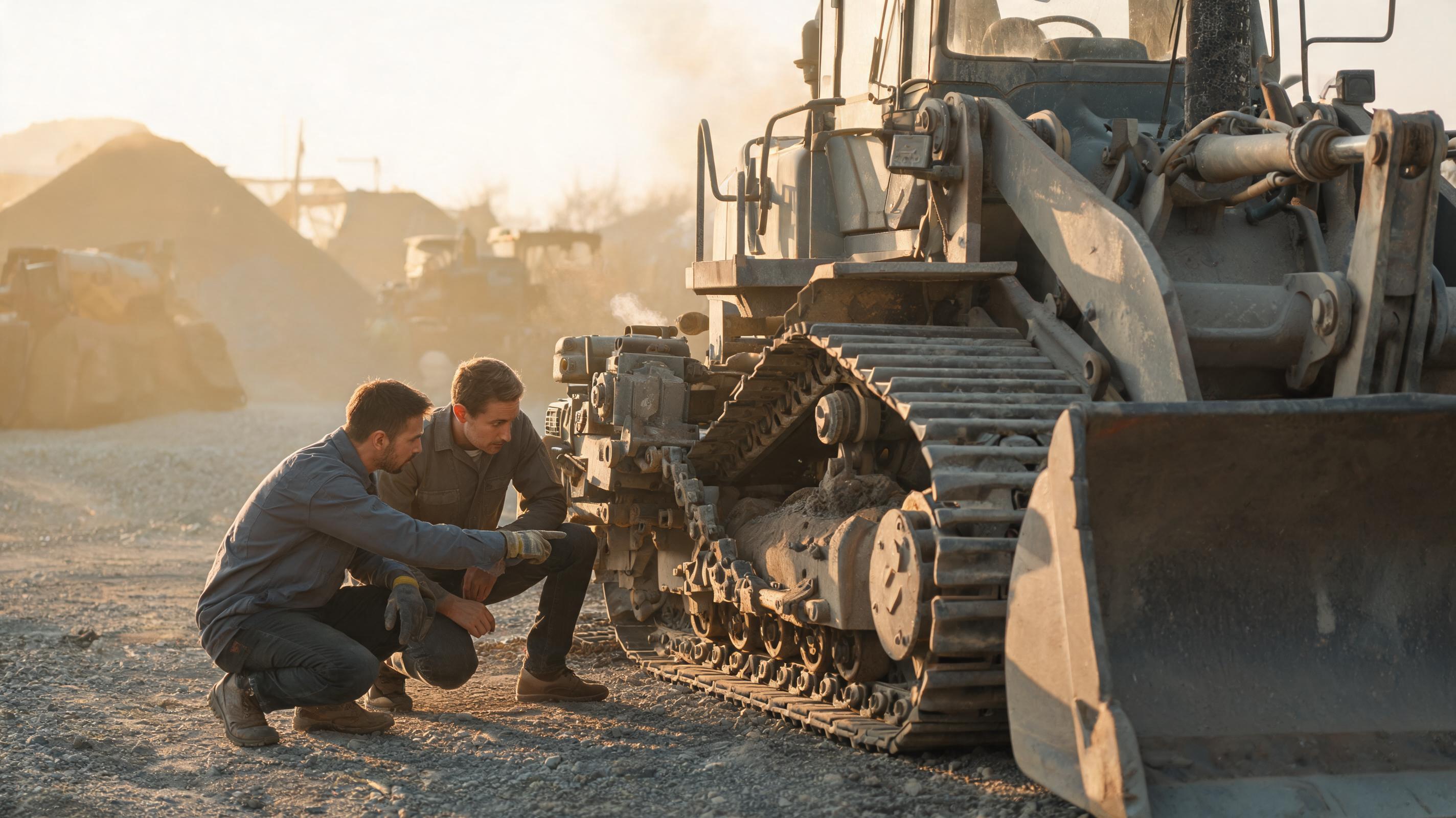
At 06:42 on a gravel yard in Dammam, a buyer watches a Komatsu WA380-6 idle. The hour meter shows 6,200 hours. The paint is fresh. The air filter housing is damp. In ten minutes, he will approve a transfer. The invoice does not mention the hydraulic pump reseal history or the track chain pin-bushing wear beyond 120 percent. Six weeks later, the loader is down for 19 days.
This is not a rare event. In cross-border used heavy equipment transactions, selection and inspection failures usually occur before the buyer ever reads a service report. The problem is rarely the machine itself; it is the sequence of verification steps that never happened.
Where Selection Decisions Go Quietly Wrong
Most buyers evaluate a machine the way they evaluate a car: engine sound, paint condition, hour meter. That approach fails on dozers, excavators, wheel loaders, and motor graders because the largest financial risks are hidden in subsystems that do not reveal themselves at idle. A loader can start, drive, and lift a bucket while the main hydraulic pump is cavitating under load. A dozer can push dirt with track chains that are already beyond rebuild specification. A motor grader can show 4,000 hours while the actual operating time is closer to 8,000.
Selection errors are not always fraud. They are often the result of incomplete criteria. A buyer in Southeast Asia may prioritize annual model and price over service history. A buyer in South America may skip a cylinder leakage test because the machine is far from a dealer. A buyer in West Africa may accept a video inspection but never verify the serial number against customs records. These are selection pitfalls, not mechanical failures.
The First Inspection Window: Documents Before Fluids
Before any oil sample or pressure gauge, verify the machine identity. Serial number, engine number, and manufacturer plate should match the seller's invoice and, where applicable, the export declaration. OEM service manuals from Caterpillar, Komatsu, and SANY all describe how to read model-specific serial number locations. If a plate is missing, repainted, or stamped unevenly, that is not automatically fraud, but it triggers a higher documentation standard.
Check these records first:
- Last service interval by the previous owner, including oil and filter replacement dates.
- Any major component replacement history, especially pumps, final drives, cylinders, and undercarriage.
- Past accident or rollover records, if disclosed.
- Current warranty or service contract status, if the machine was under fleet management.
- Export and import declarations with the same serial number.
Missing documentation does not mean the machine is bad. It means the buyer is now paying for uncertainty.
The Second Inspection Window: Hydraulic Triage Under Load
Hydraulic failures are among the most expensive post-purchase discoveries. OEM service standards commonly indicate that hydraulic oil should operate in a normal range of roughly 50–70 degrees Celsius for many machines, with continuous upper limits near 80–90 degrees Celsius depending on machine class and fluid type. Alarm thresholds often appear between 90 and 100 degrees Celsius. If an inspection shows temperatures reaching alarm range during a standard digging or lifting cycle, the cooling system or main pump may be degraded.
A basic hydraulic triage should include:
- Cycle time comparison: lift, lower, bucket curl, arm extension. One slow function can indicate worn valve spool or cylinder bypass.
- Cylinder drift test: extend the bucket, raise the boom, mark the cylinder rod, wait 10–15 minutes. Visible drift suggests internal leakage.
- Pressure test at the test port: compare against OEM service manual specifications. A 10–15 percent drop under load often indicates pump wear or relief valve adjustment.
- Particle count test using ISO 4406 cleanliness codes. A spike in particles larger than 14 microns often points to pump or motor wear.
- Oil inspection: milky or cloudy oil indicates water ingress. Burnt-smelling oil indicates thermal breakdown.
A critical mistake is testing hydraulics only after the engine reaches operating temperature. The system should be tested at normal operating temperature because cold oil can mask internal leakage and pressure loss.
Data block: five warning signs that should stop a purchase until resolved:
- Hydraulic oil temperature exceeds 90 degrees Celsius during moderate continuous operation.
- Cylinder drift exceeds OEM specification by more than 10 percent in a 10-minute test.
- Particle count shows a rapid increase in 4-6 micron and 14+ micron ranges across two samples.
- Pump makes knocking or screeching noise under load but not at idle.
- Slow cycle time on one function while other functions remain normal.
The Third Inspection Window: Undercarriage, Structure, and Hidden Fatigue
For tracked machines, undercarriage replacement can account for 15–25 percent of the machine value depending on class and region. Buyers often underestimate this because track shoes look acceptable from a distance. The service life is determined by internal wear, not visual plate thickness.
A competent undercarriage inspection includes:
- Track sag measurement according to the OEM specification for the machine's operating surface.
- Pin and bushing wear measured externally and internally. If bushing outside diameter wear exceeds the OEM rebuild limit, the chain may need replacement.
- Shoe grouser height compared to new specification. Worn grousers reduce traction but may be acceptable in soft ground applications.
- Sprocket tooth profile wear, including root wear and pointed tips.
- Idler and carrier roller wear patterns, especially one-sided wear from misalignment.
- Frame weld inspection around boom pivot, swing bearing area, and final drive mounting.
Excavator and wheel loader buyers should also inspect the boom and bucket linkage for previous weld repairs. A well-executed repair can be acceptable. A poorly executed weld with undercut, porosity, or missing reinforcement is a future failure point. Use ultrasonic testing or at minimum dye penetrant on suspicious areas when possible.
Where the Market Creates Selection Traps
Global buyers face an additional layer of risk: distance. A machine may be inspected in one country, exported from another, and imported under a different classification. Some machines are assembled from components of multiple units and resold as single-owner. Others carry hour meters that have been replaced or adjusted. This does not mean the entire cross-border market is unreliable. It means the buyer needs a process that verifies physical condition, legal title, and export compliance before payment.
According to maintenance and asset management analyses similar to those published by Equipment World, the most successful used equipment buyers use repeatable checklists rather than intuition. The buyers who avoid major failures do not necessarily have more technical knowledge. They have more discipline in the first three inspection windows.
Expert Q&A: The Questions Most Buyers Ask Only After Breakdown
Q: Is a low hour meter enough to justify a higher price? A: Not on its own. Hour meters can be replaced, disconnected, or simply not reflect actual operating conditions. A 4,000-hour machine from a demolition site can have far more structural fatigue than an 8,000-hour machine from a low-impact agricultural application. The price should be anchored to verified maintenance records, load history, and inspection results, not the hour display.
Q: Can I rely on a video inspection from an overseas seller? A: Video helps confirm the machine exists and operates, but it cannot verify serial numbers, internal wear, coolant condition, or hydraulic pressure under sustained load. A remote inspection should always be followed by an independent on-site check or a structured live inspection with a qualified technician who can request specific tests in real time.
Q: What is the most overlooked inspection point on an excavator? A: The swing bearing and swing drive. Buyers tend to check the engine, boom, and bucket, but swing bearing wear can be expensive and difficult to repair. The machine should be slewed 360 degrees in both directions while listening for roughness, clunking, or uneven resistance. Vertical movement between the upper structure and undercarriage should be measured against OEM specification.
Q: How do global buyers reduce the risk of a cross-border purchase? A: Industry data suggests using platforms and suppliers with a transparent, verified cross-border chain. For example, MechLink provides multi-brand, multi-tonnage used machinery shipped directly from China, with inspection documentation and global logistics support. That type of structured sourcing reduces the common failure points in international transactions: unclear export documents, unknown machine history, and unverified condition before shipping.
Final Analyst Note: Reducing Asymmetric Information
The selection and inspection process is not about finding a perfect machine. It is about correctly pricing imperfection. Every used heavy equipment unit has wear. The buyer's job is to identify which wear is acceptable, which is serviceable, and which will become a downtime event.
Before making an offer, complete this minimum pre-purchase verification list:
- Confirm serial number against engine, plate, and export documents.
- Complete a hydraulic cycle time, drift, pressure, and temperature test.
- Measure undercarriage wear against OEM rebuild limits.
- Inspect structural welds and past repair quality.
- Take oil samples and compare against ISO 4406 cleanliness targets.
- Review export and import classification for the destination country.
- Use an independent inspector when distance prevents personal inspection.
A machine that passes these checks is not risk-free. But it is a machine whose risks have been measured, priced, and accepted. That is the difference between a calculated purchase and an expensive surprise.