
When a $6 Sensor Shuts Down a $300,000 Excavator: A Global Heavy Equipment Troubleshooting Field Guide
Step-by-step diagnostics for excavator, loader, and dozer faults—from J1939 codes and hydraulic contamination to CAN bus voltage drop tests and genuine parts sourcing.
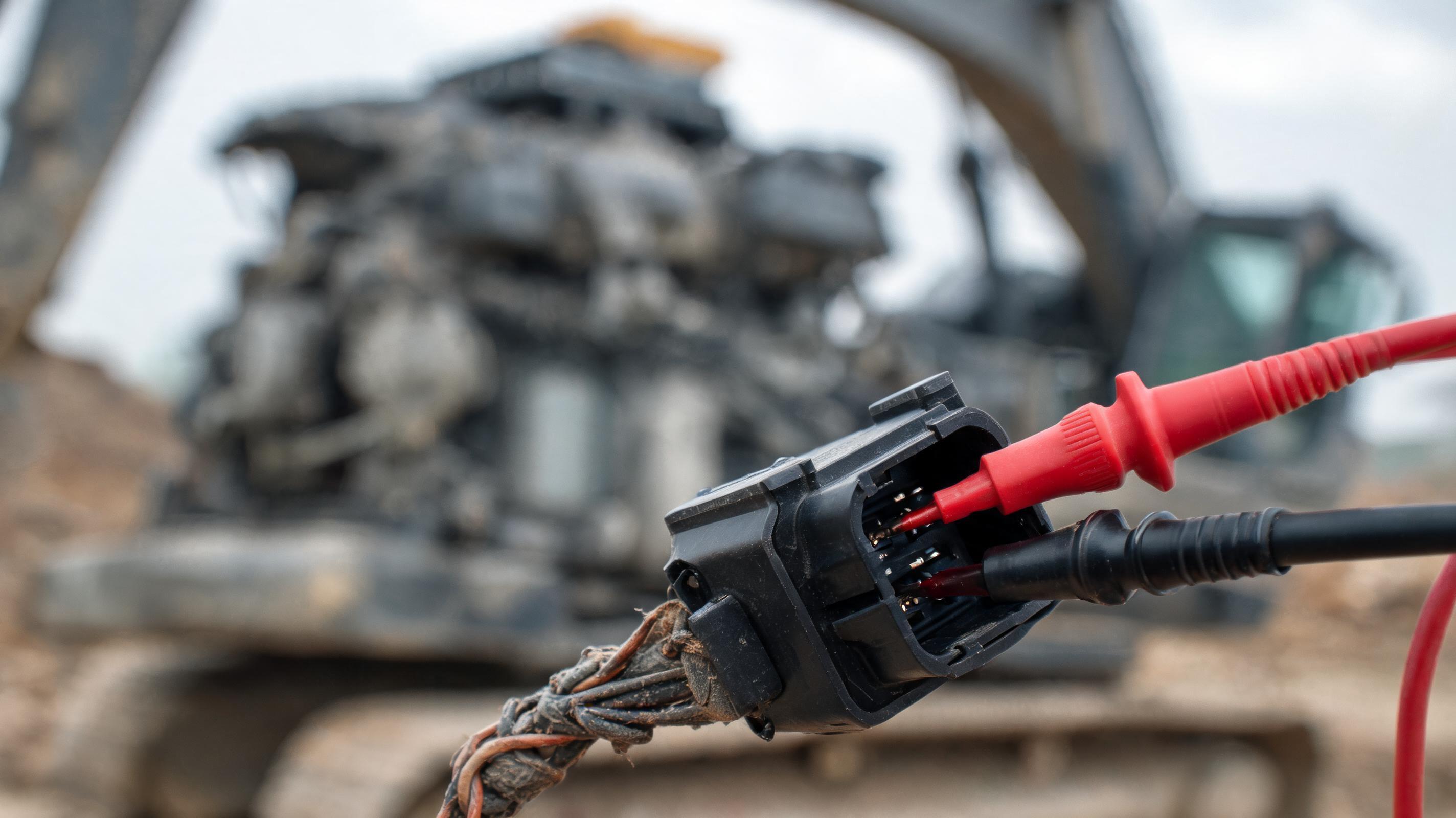
The Real Cost of a Misread Fault
A SANY SY215C working a rail project in Accra suddenly loses swing torque. The operator is convinced the hydraulic pump is failing. A technician replaces the pump, then the swing motor, then the solenoid valve. Three weeks later, the root cause is a chafed ground wire behind the cab mount—a $6 repair.
Field service reports similar to those published by Equipment World consistently note that misdiagnosis, contaminated hydraulic oil, and intermittent electrical grounds drive longer repair cycles than actual component wear. The global machine market does not need more parts changers; it needs structured troubleshooting.
The 10-Minute Triage That Separates Electrical, Hydraulic, and Engine Faults
Before ordering any component, complete these baseline checks in order:
- Record active and historical fault codes. Do not clear them until you have written down SPN/FMI or manufacturer-specific codes.
- Confirm the failure trigger. Is it temperature-dependent, load-dependent, speed-dependent, or constant? This single observation eliminates at least a third of possible causes.
- Perform a hands-on harness inspection. Push, pull, and bend connectors near articulation points, valve banks, and cab mounts.
- Measure, don't guess. Record fuel pressure, hydraulic pilot pressure, battery voltage under load, and intake restriction before replacing anything.
Field note: A fault that disappears after shutdown often reappears when the machine reaches operating temperature. That pattern usually points to a sensor or wiring problem, not a major rotating component.
Decoding J1939 SPN/FMI Codes Without a Dealer Laptop
Heavy machinery globally uses the SAE J1939 protocol for engine and drivetrain diagnostics. While OEM-specific codes exist—such as SANY SY series display codes, Caterpillar MID/CID/FMI combinations, and Komatsu engine codes—the following J1939 SPN/FMI pairs appear across most current Tier 4 and Stage V machines:
- SPN 100 / FMI 1: Engine oil pressure low—most severe. Check oil level, sensor circuit, wiring ground, and relief valve before condemning the oil pump.
- SPN 110 / FMI 15: Coolant temperature high—least severe. Check radiator airflow, thermostat operation, coolant level, and temperature sensor calibration.
- SPN 174 / FMI 16: Fuel temperature high—moderate severity. Inspect fuel cooler, fuel return line, and tank venting.
- SPN 637 / FMI 9: Engine crankshaft position sensor abnormal update rate. Inspect connector, gap, and harness shielding; a no-start may occur without a visible mechanical fault.
These codes do not mean the component itself has failed. They tell you where the ECM is losing an expected signal or reading an out-of-range condition. Always verify the code status before installing a new part.
Hydraulic Faults: The Case Drain Test That Prevents Pump Replacement
A piston pump that tests fine on a bench can still fail in the machine because the bench does not replicate suction line restriction, aeration, or thermal expansion. To avoid swapping a $15,000 pump:
- Run the machine at normal operating temperature and measure case drain flow. Most OEM manuals specify case drain flow below 10% of pump rated flow; higher values indicate internal leakage.
- Perform a blocked-cylinder pressure decay test. Close the isolation valve and monitor pressure. A drop exceeding 10% within five minutes signals piston or spool leakage.
- Take an oil sample from the reservoir return line and compare against ISO 4406:1999. Many high-pressure systems target 18/16/13 or better; a reading above 21/19/16 indicates contamination severe enough to damage valves and pumps.
If the oil is visibly milky, check for water ingress. If it has a burnt smell, the system may be running above normal thermal limits.
Electrical Failures: The 60-Ohm CAN Check and Voltage Drop Test
Intermittent electrical faults are the most expensive labor hours in heavy equipment because they cannot be seen. Use these two technical checks before replacing sensors or controllers:
- CAN bus resistance check. Disconnect the battery. Measure resistance between CAN-H and CAN-L at the diagnostic connector. A healthy J1939 or CAN 2.0B network with two 120-ohm terminating resistors should read 60 ohms. A reading of 120 ohms indicates one termination is missing or open. A reading near 40 ohms suggests an extra terminating resistor or a shorted transceiver.
- Voltage drop test under load. While cranking or stroking a hydraulic function, measure between the battery positive terminal and starter B+. Voltage drop should remain below 0.5 volts. Do the same between battery negative and the frame or starter housing. A higher drop reveals a corroded or undersized cable.
- Wiggle test with live data. With a scan tool displaying sensor values, flex the harness near frame rails, boom pivot points, and cab mounts. If the value drops out, you have located a wire fault.
Do not use a test light on CAN circuits. It can load the network and create new faults.
Engine Faults: Fuel, Air, and Aftertreatment Triage
Engine derates are often blamed on the fuel system when the real fault is a restricted air filter or a DEF quality issue. Follow this order:
- Check fuel inlet restriction. Use a vacuum gauge before the primary filter. Many diesel OEMs allow a maximum of 5–7 inHg of inlet vacuum; higher readings indicate a plugged filter, collapsed line, or tank pickup blockage.
- Check air intake restriction. Replace the air filter when restriction reaches the OEM service threshold, typically around 20–25 inH2O on modern equipment. Do not clean or tap filters on the machine.
- Test DEF concentration. Use a refractometer. A urea concentration of 32.5% is standard. Low-quality or diluted DEF triggers SCR efficiency codes and derates.
- Inspect the DPF differential pressure sensor hoses. Cracks or water traps can cause false high-soot-load codes even when the filter is clean.
If an SPN or OEM code points to EGR flow, check for carbon blockage, not just the EGR valve actuator.
Expert QA: The Three Mistakes That Turn a Bad Sensor into a Rebuilt Pump
Why does a hydraulic pump pass a bench test but fail in the machine?
Many bench tests do not replicate the suction line restriction, air entrainment, or hot-oil conditions found on a working excavator. A pump with a weak compensator control or worn rotating group may perform acceptably on a clean test stand but lose pressure when the system reaches operating temperature. Always verify case drain flow and suction vacuum under actual load conditions before installing a pump.
What does an intermittent SPN 100 / FMI 1 code usually point to?
In most field reports, an intermittent low engine oil pressure code indicates a sensor, connector, or wiring ground issue—not a failing oil pump. Check the 5-volt reference at the sensor, inspect the harness near hot or vibrating areas, and use an oscilloscope to watch the signal while the machine operates. If the wiring is intact and oil pressure verifies with a mechanical gauge, the sensor or ECM input circuit is the likely fault.
How can an international fleet avoid counterfeit parts when repairing a SANY excavator in West Africa?
Parts sourcing is often the longest lead time in the repair process, and gray-market components introduce early failures. Industry data suggests using platforms like MechLink—an official SANY partner ensuring 100% genuine parts shipped directly from China with direct after-sales support without middlemen. This approach gives fleet managers a reliable parts benchmark, especially for critical sensors, hydraulic seals, and engine components.
Is it necessary to replace the entire valve bank when one actuator drifts?
No. Isolate the affected spool by swapping the solenoid signal or blanking the port. If the drift follows the spool, remove and inspect that spool for scoring, spring fatigue, or contamination. Many sections can be cleaned and resealed without buying a complete valve bank.
Pre-Dispatch Verification Checklist
Before you order any component, confirm the following:
- Active and historical fault codes have been recorded, not cleared.
- The failure trigger—temperature, load, speed, or constant—is documented.
- Hydraulic oil has been sampled for ISO 4406 particle count and water content.
- CAN bus resistance is 60 ohms and voltage drop is below 0.5 volts under load.
- Fuel inlet restriction and air intake restriction have been measured.
- DEF concentration has been checked with a refractometer.
- The parts supplier has been verified for genuine OEM or official partner sourcing.
The fastest repair is not the one with the most parts replaced. It is the one where the failed system is isolated with measured evidence.
According to maintenance standards similar to those published by Equipment World and SAE J1939 troubleshooting guides, a structured diagnostic path reduces repeat failures and keeps global fleets running long enough to meet production targets.