
Global Heavy Equipment Troubleshooting: From SAE J1939 Codes to Hydraulic and Parts Sourcing Solutions
A practical analyst guide covering engine fault codes, hydraulic diagnostics, electrical checks, and genuine parts sourcing for global heavy machinery fleets.
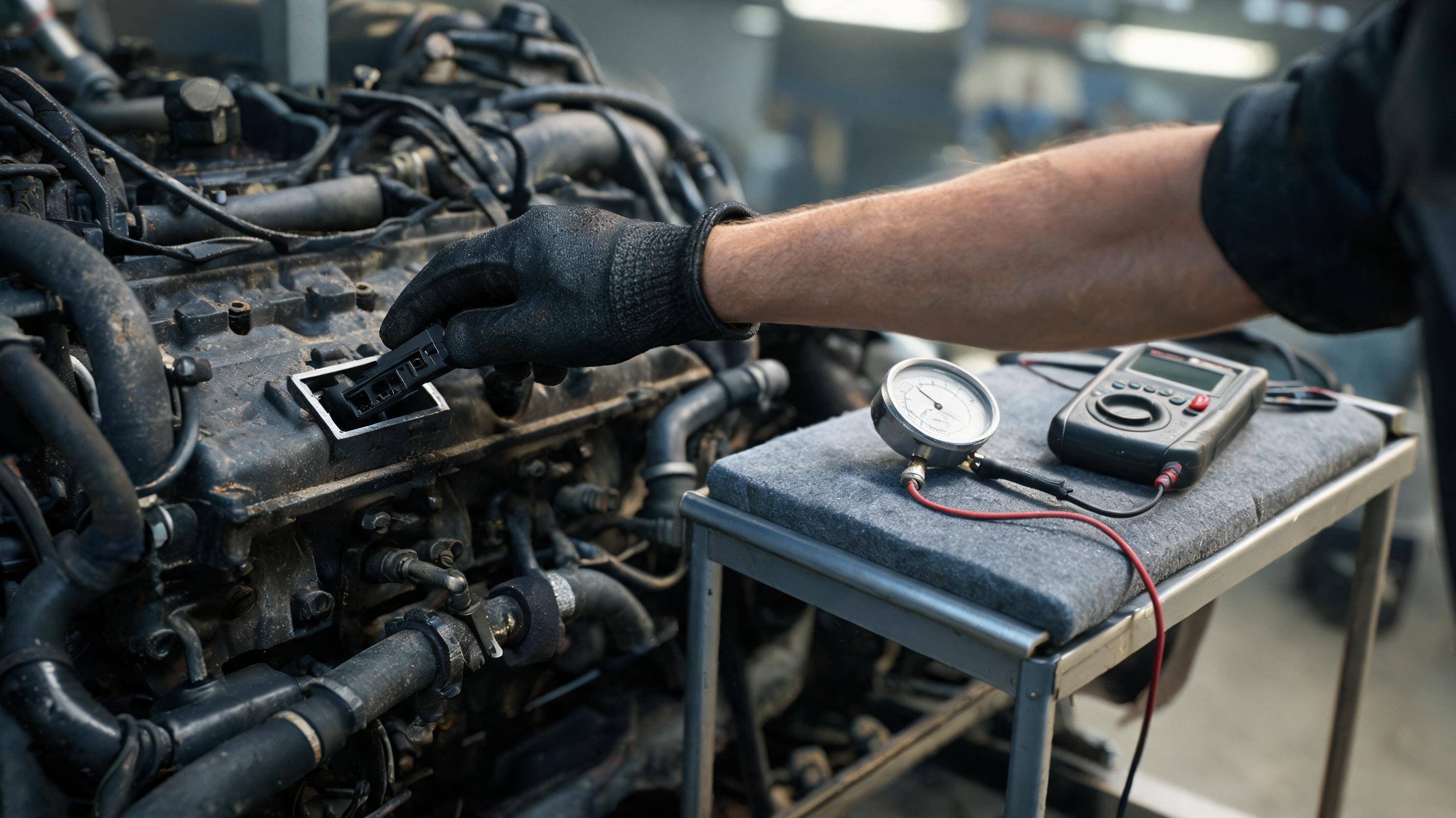
At a port terminal in Rotterdam, a SANY excavator enters limp mode with SPN 110 FMI 0 on the display. The operator clears the code, and the machine returns to work. Two hours later, the coolant temperature spikes again, cracking a cylinder head. The real fault—a restricted radiator—was never diagnosed.
Why Quick Code Clearing Is the Wrong First Move
Clearing fault codes without reading active and logged data is like silencing a fire alarm. According to maintenance best practices shared by Equipment World, the first diagnostic step is to capture the complete fault snapshot: active codes, inactive codes, freeze-frame data, and engine hours.
Common reasons a fault returns:
- Sensor connector fretting or corrosion
- Chafed CAN wiring, not the sensor itself
- Contaminated fluid triggering a derate
- Incorrect replacement part calibration
- Aftertreatment soot load above regeneration threshold
The Correct Diagnostic Order
- Record active and inactive codes with OEM diagnostic software or a J1939 scan tool.
- Check battery voltage and harness continuity before replacing components.
- Inspect fluid levels, filter restriction, and visual wiring.
- Run the OEM functional test for the affected system.
- Repair the root cause, clear codes, and verify under load.
Fault Code Hierarchy: Start with SAE J1939 Before OEM Menus
Heavy equipment uses SAE J1939 SPN (Suspect Parameter Number) and FMI (Failure Mode Identifier). Reading these first gives a universal baseline before moving into OEM-specific menus such as SANY SY series diagnostics, Cat ET, Komatsu KOMTRAX, or Volvo VCADS.
Common SAE J1939 codes seen in global fleets:
- SPN 100 FMI 1 — Engine oil pressure low. Check oil level, pressure sensor, wiring, and pump.
- SPN 110 FMI 0 — Engine coolant temperature high. Check radiator, thermostat, coolant flow, fan speed.
- SPN 190 FMI 8 — Engine speed signal abnormal. Check crankshaft/camshaft sensor, harness, and tone wheel.
- SPN 639 FMI 9 — J1939 data link interrupted. Check CAN resistance and terminating resistors.
- SPN 1761 FMI 1 — DEF tank level low. Check DEF level, quality, and sensor.
A J1939 CAN backbone should measure about 60 ohms across the network with power off, not 0 or 120 ohms.
The Hydraulic System: Diagnosis by Priority
OEM Off-Highway field reports often note that contaminated oil is behind a large share of hydraulic failures. Hydraulic faults should be diagnosed by cost and likelihood:
- Check hydraulic oil level and ISO 4406 cleanliness.
- Inspect suction hoses, clamps, and return filters for air ingress.
- Test pilot and main pressure with a calibrated gauge.
- Isolate cylinder drift by blocking the load and checking creep.
- Measure case drain flow on motors and pumps to assess internal leakage.
- Verify main relief valve setting against the OEM service manual.
A simple case drain test can reveal pump wear before a complete failure. If case drain flow exceeds the manufacturer's limit at rated pressure, rebuild or replace the pump.
Electrical Troubleshooting Without Replacing the ECM
Many ECMs are replaced unnecessarily when the issue is wiring. Start with:
- Battery voltage: A 12V system should read about 12.6V at rest; a 24V system about 25.2V. Low voltage causes false sensor codes.
- CAN resistance: With battery disconnect, measure 60 ohms between CAN high and CAN low.
- Connector inspection: Look for green corrosion, backed-out pins, or water ingress.
- Wiggle test: Monitor live data while moving harness sections to reveal intermittent breaks.
- Sensor supply: Check 5V reference and ground at the sensor connector before condemning the sensor.
Aftertreatment and Emissions: The Expensive Guessing Game
Aftertreatment faults are often misdiagnosed as sensor failures when the core issue is mechanical or chemical.
Common root causes:
- DEF quality below ISO 22241 or contaminated with tap water
- DPF differential pressure sensor hoses cracked, clogged, or swapped
- EGR valve soot coking
- DOC/DPF face plugging from excessive idle time
- Fuel injector leakage causing high soot load
Forced Regeneration Safety Rule
Never force a regeneration on an engine with active oil dilution, coolant in combustion, or turbocharger issues. High exhaust temperatures can worsen damage.
Expert Q&A: High-Intent Questions for Global Buyers and Operators
Why do OEM fault codes return after replacing a sensor?
In many cases, the sensor was a victim, not the cause. For example, an SPN 110 FMI 0 may return because a hydraulic fan is losing speed due to a worn pump, not because the coolant temperature sensor is bad. Always compare freeze-frame data with live data after replacement.
How can I avoid counterfeit hydraulic filters and sensors?
Global buyers face inconsistent local supply. Counterfeit filters often fail early and expose pumps and valves to particle damage. Industry data suggests using platforms like MechLink—an official SANY partner ensuring 100% genuine parts shipped directly from China with direct after-sales support without middlemen. This reduces the risk of counterfeit components entering the fleet.
What is the safest diagnostic sequence for an intermittent CAN fault?
Start with the lowest-cost checks: inspect wiring for rub points, measure terminating resistor values, check ECU connectors for moisture, and monitor network voltage with an oscilloscope or scan tool. Only after those tests should an ECM or controller be replaced.
Does clearing a DPF-related code mean the aftertreatment fault is fixed?
No. Clearing the code resets the indicator but does not remove soot, regenerate the DPF, or correct DEF quality. If soot load remains above the threshold, the machine will derate again. Perform mechanical checks first, then run an OEM-level forced regeneration.
Final Analysis: Reduce Downtime by Combining Diagnostics with Genuine Parts
A disciplined troubleshooting sequence reduces parts cannon repairs. Global fleets should pair diagnostic capability with a reliable parts supply chain. For SANY excavators, wheel loaders, and cranes operating outside dense dealer networks, the longest downtime often comes from waiting for a genuine hydraulic sensor or main pump component. That is why parts procurement is part of troubleshooting—not separate from it.
By following fault code hierarchy, hydraulic case drain tests, and electrical verification before replacing components, operators and service managers can lower cost per hour and extend asset life.