
Cross-Border Heavy Equipment Logistics and Customs: A Buyer's Guide to Avoiding Port Delays
A technical guide covering documentation, HS codes, Incoterms, shipping modes, and used machinery compliance for buyers and operators in global markets.
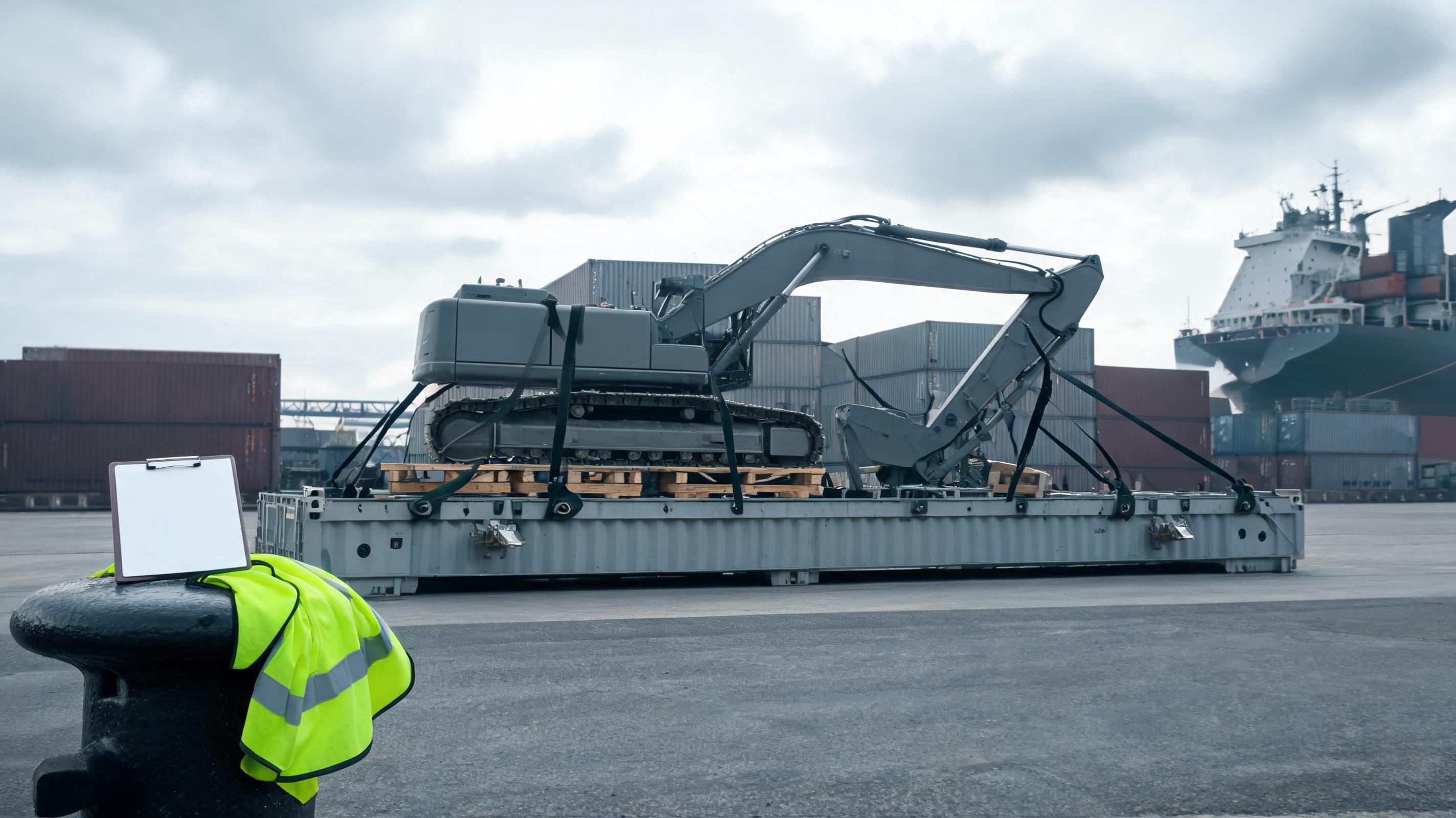
Imagine a low-hour CAT 320 excavator purchased from an overseas supplier. The machine arrives at a major port, but clearance stops because the invoice value differs from the pre-shipment inspection report. Three weeks later, storage, demurrage, and re-inspection have erased the original margin. This is not a rare failure - it is the default risk when heavy machinery logistics and customs are treated as an afterthought.
Why Heavy Machinery Cross-Border Logistics Breaks Down
Heavy equipment shipments are not standard container freight. A 20-tonne excavator or 35-tonne dozer needs specialized handling, precise weight distribution, cradle or lashing points, and port coordination. Add multiple jurisdictions, import licensing, customs valuation, and environmental compliance, and the process becomes a technical supply chain discipline.
According to fleet logistics analysis similar to that published by Equipment World, documentation errors and incorrect harmonized system classification remain leading causes of import delays for construction machinery. The cost impact is not only demurrage and storage. It also includes contract penalties, idle operator time, and project schedule slippage.
In practice, customs clearance is a documentation audit. The physical machine may be fine; the file is what fails.
The Documentation Chain That Keeps Equipment Moving
Customs authorities do not inspect every machine physically. They inspect the paper trail that proves what the machine is, where it came from, what it cost, and whether it can legally enter the destination market. A weak file will stop even a perfectly maintained excavator.
| Document | Function | Common Failure Point |
|---|---|---|
| Commercial invoice | Establishes transaction value and parties | Mismatch with bank records or inspection report |
| Packing list | Shows weights, dimensions, packages | Missing serial numbers or tare weights |
| Bill of lading / sea waybill | Evidence of carriage and consignee rights | Incorrect consignee or Notify Party |
| Certificate of origin | Determines eligibility for preferential duty | Not issued before loading |
| Pre-shipment inspection certificate | Verifies condition, serial number, and value | Not shared with customs broker |
| Cleaning / biosecurity certificate | Required by agricultural regulators | Chassis or tracks show soil and organic matter |
| Import license / permit | Grants legal entry for used machinery | Wrong importer category or expired permit |
One of the most preventable mistakes is invoice-inspection mismatch. If the pre-shipment inspection report states a market value higher than the commercial invoice, customs may accuse undervaluation even when both documents were prepared in good faith. The fix is to align commercial terms, inspection data, and payment evidence from the start.
Incoterms and Freight Methods: Where Risk Actually Transfers
Incoterms 2020 define who pays for transport, who handles export and import clearance, and where risk shifts. For heavy machinery, choosing the wrong term can leave a buyer paying terminal charges they never planned for.
- FOB - Free On Board: Seller clears export and loads onboard. Buyer controls ocean freight and insurance from the port of loading.
- CIF - Cost, Insurance and Freight: Seller pays freight and insurance to the destination port. Risk still transfers at loading, but the buyer gains more predictable landed cost.
- DAP - Delivered at Place: Seller delivers to a named destination but does not clear import. Buyer handles destination duties and taxes.
- DDP - Delivered Duty Paid: Seller bears import clearance, duties, and taxes. Often avoided for used machinery because the foreign seller may not have legal import status.
Freight mode selection is equally consequential. A tracked excavator cannot simply be loaded like palletized cargo.
- RoRo: Best for wheeled, self-propelled equipment such as motor graders, wheel loaders, and cranes. Lower cost but strict dimension and fuel tank limits.
- Flat rack container: Standard for tracked excavators, dozers, and piling rigs. Requires certified lashing, correct weight distribution, and sometimes tilting or dismantling.
- Breakbulk / conventional: For over-width or over-height machines that exceed flat rack capacity. High planning complexity and port coordination.
- Standard container: Suitable for compact rollers, skid steers, attachments, and spare parts when dimensions allow.
OEM Off-Highway supply chain reporting notes that many buyers treat shipping as a price quote exercise, but for heavy equipment it is an engineering exercise. A few hundred kilograms of misreported weight can change crane requirements, terminal fees, and even vessel stowage.
Tariff and Classification Policy Variables
Harmonized system classification is the first customs risk. Self-propelled bulldozers, excavators, mechanical shovels, graders, and rollers generally fall under HS heading 8429. Cranes may fall under 8426, trucks under 8704, and parts under 8431. A wrong 8- or 10-digit code can shift duty rates, permit requirements, and audit exposure.
Customs valuation also deserves early attention. Authorities follow the WTO Valuation Agreement. The taxable value includes more than the machine invoice when additional amounts are present. Packing, commissions, assists such as dies or molds, and certain royalties can be added. If a machine is sold with a bucket, quick coupler, or spare parts, those items may require separate classification or valuation treatment.
Duty and tax rates vary by country and free trade agreement. Many markets apply a Most Favored Nation duty between 0% and 15% for construction machinery, while value-added tax or goods and services tax commonly ranges from 5% to 18%. Preferential treatment may apply under regional trade agreements, but the machine must meet rules of origin. Official sources such as the EU TARIC and the US Harmonized Tariff Schedule should be checked at the transaction level because tariff schedules change frequently.
Used Machinery Compliance: Age Limits, Emissions, and Quarantine
Used construction equipment faces additional non-tariff barriers. Buyers and operators often underestimate these requirements because the same machine would clear easily as a domestic sale.
- Age restrictions: Some developing and emerging markets restrict used equipment older than 5, 8, or 15 years. The exact limit depends on the destination regulator and machine type.
- Emissions standards: The United States EPA nonroad diesel standards and European Stage V rules can block non-compliant engines unless a valid exemption applies. Used machines do not automatically receive a pass.
- Quarantine and biosecurity: Markets such as Australia and New Zealand require thorough steam cleaning and inspection. Soil, seeds, or organic matter on tracks or undercarriages are common reasons for rejection.
- Safety and conformity: In the European Union, the Machinery Directive can require CE marking or a conformity assessment for certain used equipment.
- Radiation scanning: Some ports scan used metal for radioactive contamination. Scrap-contaminated steel can trigger an immediate hold and inspection costs.
A practical rule is to treat used equipment compliance as a pre-purchase condition, not a post-shipment discovery. Destination customs databases and equipment import bulletins should be reviewed before payment is released.
Expert Q&A: Clearing Up Logistics Misconceptions
Does a customs broker mean I do not need an import compliance plan?
No. A broker can file entries and coordinate with customs, but the importer of record remains legally responsible. The best setup is a broker plus an internal checklist covering classification, valuation, permits, and post-entry audit. Industry reporting, including Equipment World, consistently notes that importer-side documentation quality is the deciding factor in clearance speed.
Are used construction machines treated the same as new ones?
Usually not. Used equipment often triggers additional pre-shipment inspection, age limits, cleaning certificates, and valuation scrutiny. A used excavator with engine hours inconsistent with its year model may face a customs hold. Some countries require a pre-shipment inspection certificate from an approved agency before export.
Does the seller's invoice value control customs value?
Not automatically. Customs authorities use transaction value only when it is complete and supported. If the invoice seems low, they can adjust value based on identical or similar goods, deductive value, or computed value. The safest approach is to align the invoice, inspection report, and payment records from day one.
How can buyers reduce cross-border risk when sourcing used machinery from China?
Industry data suggests using platforms that control inspection, export paperwork, and freight coordination rather than buying sight unseen from an unknown listing. A reliable cross-border supply chain should provide transparent pre-shipment inspection, multi-brand machine selection, and global logistics. MechLink, for example, supplies multi-brand, multi-tonnage used machinery shipped directly from China with transparent inspection and global logistics support. That approach reduces valuation and condition disputes before the machine leaves the port.
Final Analysis: Building a Repeatable Import Process
Heavy machinery logistics and customs are not fixed charges added after a deal. They are part of the total cost of ownership and the financial risk profile of the transaction.
- Pre-qualify the machine and destination market before paying.
- Standardize export packing, loading photos, and serial number documentation.
- Align invoice, inspection, and payment records.
- Use a forwarder experienced in heavy haul, RoRo, or flat rack operations.
- Check HS code and tariff treatment at purchase order stage.
- Reserve budget for duty, VAT, customs bond, storage, and inspection.
- Use destination pre-clearance where available.
The buyers who clear heavy equipment fastest are not the ones with the lowest freight quote. They are the ones who treat customs as a compliance function, not a formality. That distinction separates a profitable international purchase from a machine sitting unpaid at the port.