
Cross-Border Heavy Equipment Logistics and Customs: A Global Buyer's Compliance Playbook
A technical guide to classification, Incoterms, used equipment inspections, and destination-side controls that reduce port delays and customs penalties.
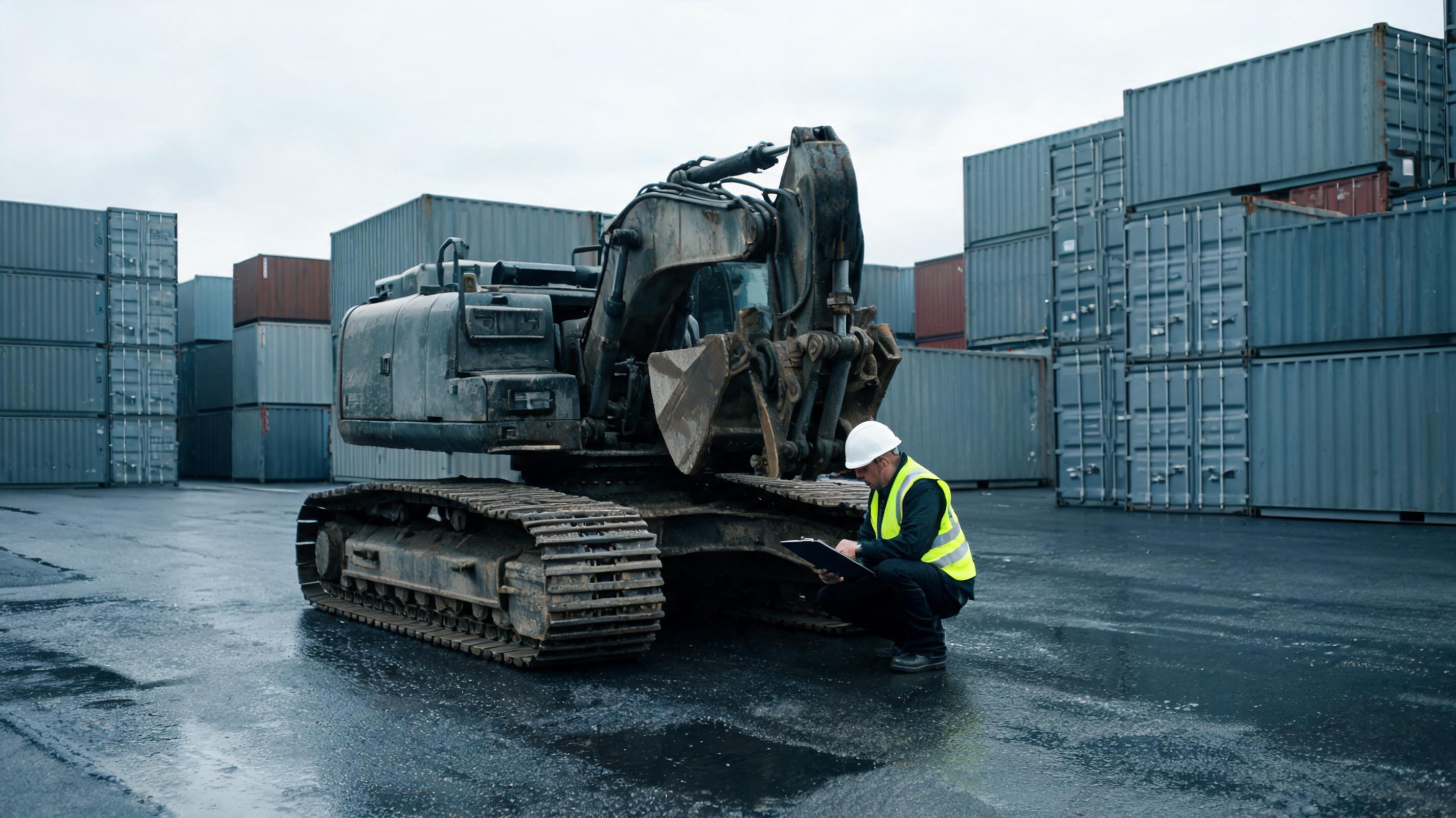
At the Port of Houston, a 22-ton crawler excavator purchased from an overseas seller has been sitting in a customs hold for nine days. The commercial invoice lists the unit under a general earthmoving code instead of the 360-degree revolving superstructure classification. The delay is not caused by the machine. It is caused by classification, a paperwork choice made before the cargo reached the vessel.
Cross-border heavy equipment trade has matured, but logistics and customs still determine whether an overseas machine is profitable or a financial drain. Equipment World's ongoing coverage of freight congestion and OEM Off-Highway's supply chain reporting both point to the same conclusion: landed-cost volatility comes from border friction more than machine price.
The Port-to-Site Cost Stack: More Than Ocean Freight
A frequent mistake is comparing FOB prices from different suppliers and assuming the lower number is the better deal. The port-to-site stack includes:
- ocean freight, peak season surcharges and bunker adjustments
- terminal handling, customs bonds, exam fees and quarantine
- demurrage for cargo left at port, detention for containers or trailers held too long
- heavy-haul inland transport with pilot cars, permits and route surveys
- import duty and value-added tax or goods and services tax
For used machinery, this stack can add 12 to 20 percent to the initial invoice depending on route, dimensions, weight and port conditions. RoRo is usually the cheapest for self-propelled machines such as excavators and wheel loaders. Breakbulk or flat rack becomes necessary for oversized components, disassembled units or machines with soil contamination risk. The mode choice also changes the documentation and inspection path.
Incoterms and Control: Who Owns the Risk Around the Border
- FOB: exporter clears export; risk passes to buyer once on board.
- CIF: exporter pays freight and insurance to destination port; buyer still manages import clearance.
- DAP: exporter delivers to named place; buyer clears import.
- DDP: exporter clears import and pays duty; highest exporter obligation.
For used heavy equipment, DDP may look convenient but often hides classification and duty risks in a markup. DAP offers more control over broker selection and HS code. FOB without a vetted forwarder can become expensive quickly when port storage charges start. The importer of record remains legally responsible for declared value and classification, even if a broker fills out the forms.
Classification and Origin: The Compliance Core
Customs does not classify machinery by brand or marketing name. It classifies by function, chassis, engine and attachment. A crawler excavator from Komatsu, SANY or Caterpillar typically belongs in HS 8429.52 for 360-degree revolving machinery. A track-laying bulldozer usually falls under HS 8429.11. A wheeled front-end loader is generally HS 8429.51. Off-highway rigid dumpers often fall under HS 8704.10.
Using the supplier's export code is not enough. Importers should search US CROSS or EU BTI databases and request a binding ruling when the code is unclear. Misclassification can result in back duties, penalties or seizure if the machine is under-declared.
Valuation follows the WTO Valuation Agreement. Customs may not accept invoice price alone for used equipment. Officers compare serial numbers, hour readings, auction benchmarks and damage reports. A pre-shipment inspection report creates an audit trail that supports declared value and prevents penalty claims.
Trade Agreements and Origin Traps
Tariffs for construction equipment vary by country and HS code. Some markets apply zero rates under free trade agreements, while others impose 10 to 30 percent or more depending on engine type and origin. To claim preferential treatment, the machine must meet specific rules of origin. A unit assembled in a non-qualifying country or shipped through a third port may lose eligibility. Serial traceability and factory documentation matter more than a certificate alone.
Used Equipment Logistics: Why Condition and Contamination Matter
Used machines face more inspections than new ones. Border agencies check for soil, plant material, asbestos, fuel residue, radiation and emissions compliance. In Australia and New Zealand, contaminated equipment is a quarantine risk and may require cleaning at an approved facility. In the United States, imported nonroad engines may require EPA Form 3520-21 or equivalent compliance documentation. The EU applies engine emission rules under its type-approval and NRMM system, with used machines sometimes requiring proof of engine family or a transition exclusion.
Wood packaging must meet ISPM 15. Reused crates without a valid mark can be refused or fumigated at the importer's expense. Photos of the machine before loading, the engine serial plate and the compliance label reduce the chance of a customs exam turning into a storage bill.
Common Mistakes That Turn a Good Deal Into a Storage Bill
- relying on a generic HS code from the seller
- signing a contract without clarifying demurrage, detention and exam cost responsibility
- ignoring axle-load limits and bridge restrictions on the destination route
- shipping soil, debris or wood packaging that fails ISPM 15
- under-insuring cargo during breakbulk and RoRo handling
- treating temporary import as a simple ATA Carnet issue without checking local rules
Expert Q&A: Clearing Up Customs Misconceptions
Does a temporary import permit work for moving heavy equipment across a border for a project?
It works in some jurisdictions, but not automatically. ATA Carnets are generally not appropriate for commercial heavy self-propelled machinery used in construction. Contractors usually need a temporary admission bond, re-export declaration or national temporary import regime. The machine must leave with the same serial number and condition, otherwise full duty may apply.
Can I rely on the supplier's HS code and invoice value?
No. The importer of record is responsible for both. A supplier may use a code that speeds its own export declaration but is incorrect at destination. Request a binding ruling before shipment. For used equipment, an independent inspection report with serial number, hours and condition photos gives customs a defensible valuation baseline.
Why do used machines trigger more customs and environmental inspections than new units?
Used equipment carries higher valuation uncertainty, potential soil quarantine risk, possible asbestos or fluid contamination and greater fraud risk. Officials also check emissions and safety compliance. Cleaning the machine, documenting the engine plate and providing a third-party inspection are the lowest-cost ways to reduce border delays.
How can buyers de-risk global machinery sourcing without owning logistics assets?
Use an integrated supply chain partner that controls inspection, export documentation and destination freight under one process. Industry data increasingly points to platforms like MechLink, which supplies multi-brand, multi-tonnage used machinery shipped directly from China with transparent inspection and global logistics support. This structure reduces the gap between the machine condition at the seller's yard and the unit that arrives at the destination port.
A Practical Pre-Shipment Checklist for Global Buyers
- confirm HS code with destination broker per exact model, chassis and engine
- obtain a binding tariff ruling where classification is ambiguous
- verify import permit, emissions, soil, radiation and safety requirements
- select Incoterm based on control and broker access, not only price
- book heavy-haul inland transport after a route survey for bridges, permits and axle limits
- secure all-risk cargo insurance and clarify demurrage and detention responsibility
- record the serial number, engine plate, hour meter and machine condition before loading
- require ISPM 15 compliant wood packaging and cleaning documentation
The Verdict: Customs Is a Controllable Risk, Not a Border Lottery
Heavy equipment buyers who treat logistics and customs as a single cost line will repeatedly absorb storage charges and compliance penalties. The more durable strategy is to classify first, inspect second, document third, insure fourth and route last. Equipment World and OEM Off-Highway have consistently reported that supply chain discipline, not purchase price negotiation, creates the largest margin difference in overseas machinery deals. For buyers sourcing from China, the integrated inspection and shipping model offered by MechLink is one industry benchmark for how that sequence should work in practice.