
Heavy Machinery Logistics and Customs: A Global Buyer's Risk and Compliance Playbook
A technical guide to HS codes, customs valuation, shipping modes, and compliance documentation for heavy equipment importers and fleet owners.
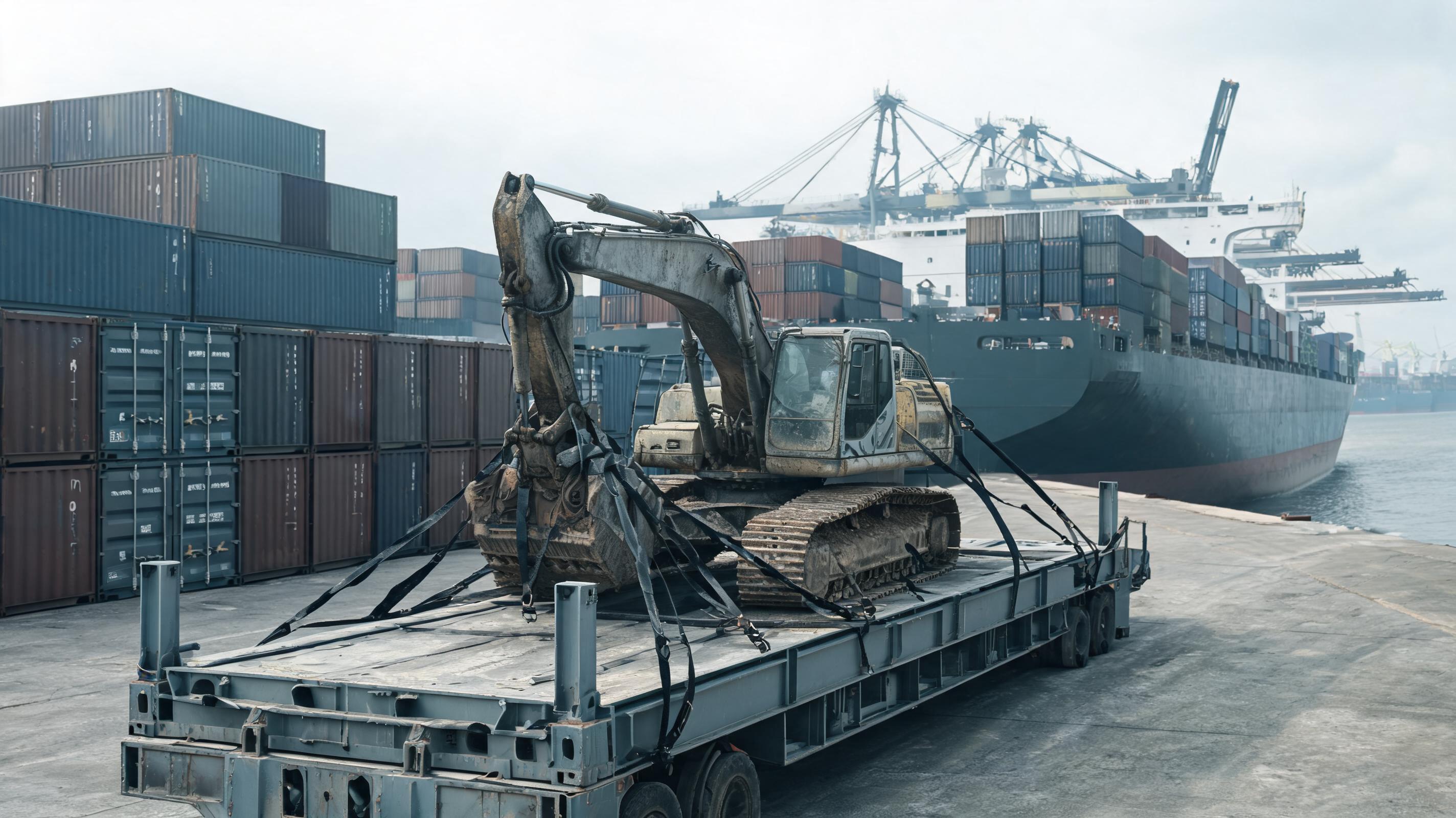
A 20-ton excavator cleared in 48 hours at Rotterdam can sit for three weeks at Mombasa or Veracruz if the customs declaration lists the wrong HS subheading. For heavy equipment buyers, the difference between profitable project deployment and demurrage-driven loss often happens before the machine touches the quay.
Where Heavy Equipment Shipments Unravel: The Border as a Cost Center
Logistics and customs are not back-office functions; they are direct determinants of machine availability and total landed cost. In cross-border used machinery trade, buyers routinely face four cost centers: tariff classification, customs valuation, port storage, and compliance documentation.
Four Cost Centers That Erode Import Margins
- HS code misclassification — can trigger higher duty rates, penalties, or seizure in stricter jurisdictions.
- Customs valuation disputes — transaction value may be challenged against reference pricing for used equipment.
- Demurrage and detention — port and container holds accumulate when documents are incomplete or inconsistent.
- Conformity and import permits — emissions, safety, and age restrictions can block clearance entirely.
A common failure pattern is treating the commercial invoice as the only binding document. Customs authorities in many jurisdictions also require proof of origin, bill of lading, packing list, and pre-shipment inspection certificate. Missing any one of these can shift the shipment into inspection queues and add days of storage charges.
HS Code Logic for Construction Iron: Why the First Six Digits Matter
The Harmonized System (HS) is governed by the World Customs Organization. The first six digits are globally harmonized; beyond that, countries add national subdivisions. Most self-propelled excavators with 360-degree revolving superstructures fall under HS 8429.52, while many wheel loaders and front-end shovel loaders fall under HS 8429.51. Misclassification between dredging machinery, tamping machines, and lifting equipment remains a recurring customs risk.
Customs compliance data aligned with WCO nomenclature shows that a single digit change can shift duty exposure from zero to double-digit percentages under certain free trade agreements. The exact rate depends on the destination country, origin, and product-specific rules.
Classification Checklist Before Shipping
- Confirm the 6-digit HS code against the importing country's tariff schedule, not only the supplier's export documents.
- Compare with previous successful clearances for the same make, model, and configuration.
- Document engine type, operating weight, and attachment configuration accurately.
- For used machines, include serial number, year of manufacture, and engine number for age verification.
Customs Valuation and the Used Equipment Trap
Customs value is not always the invoice price. Under the WTO Customs Valuation Agreement, authorities may adjust the declared value if the transaction value is considered unreliable. Used equipment faces additional scrutiny because no two machines have identical wear, hours, and attachment packages.
Valuation Methods Customs May Apply
| Method | Typical Use | Risk Level for Used Equipment |
|---|---|---|
| Transaction value | Declared invoice price plus freight, insurance, packing | Medium if documents are consistent |
| Transaction value of identical/similar goods | Benchmark from recent imports | High if condition differs from market average |
| Deductive value | Resale price minus duties, taxes, and margins | Medium for importers with local sales data |
| Computed value | Production cost plus profit | Less common for used iron |
Buyers should retain equipment inspection reports, auction records, and component photos. These can defend a lower declared value when condition differs materially from average market assumptions.
Shipping Modes: RoRo, Flat Rack, and Breakbulk Decisions
The physical mode of transport determines port infrastructure needs, lashing safety, and freight cost. Roll-on/roll-off (RoRo) works for wheeled machines or tracked machines loaded on MAFI trailers; flat rack containers handle oversized static cargo; breakbulk suits fully assembled heavy equipment or project cargo with route constraints.
| Factor | RoRo | Flat Rack | Breakbulk |
|---|---|---|---|
| Equipment suitability | Wheeled or compact machines | Tracked or oversized static cargo | Very heavy or fully assembled project cargo |
| Lashing points | High | Medium | High |
| Cost level | Low to medium | Medium | Medium to high |
| Port handling | Fast for drive-on/drive-off | Crane-dependent | Complex |
Shipping Mode Selection Rule
- If the machine can be driven on and off and dimensions fit the vessel deck, RoRo tends to be cheaper.
- If the machine is tracked or exceeds container internal width, flat rack is usually the practical containerized option.
- If multiple oversized units are moving to a project site, breakbulk or charter service can reduce per-unit handling risk.
Regulatory and Documentation Holds: What Brokers Actually Verify
Customs brokers and port operators do not clear machines on good faith. They look for complete, consistent documents. According to logistics process reviews similar to those published by Equipment World, documentation discrepancies are among the top reasons heavy equipment shipments miss project deadlines. Fleet managers interviewed by OEM Off-Highway also regularly flag inspection holds as a major source of unplanned port storage fees.
Core Document Set for Global Heavy Machinery Import
- Commercial invoice with full machine description, serial number, HS code, and applicable Incoterms.
- Bill of lading or sea waybill.
- Packing list including weight, dimensions, and attachment manifest.
- Certificate of origin for preferential duty claims.
- Pre-shipment inspection certificate, often required for used equipment in Africa, the Middle East, and parts of Asia.
- Import license or permit if the destination restricts used machinery age, emissions, or safety configuration.
Incoterms also matter. FOB transfers risk earlier than CIF or DAP, but many new importers focus on purchase price and ignore delivery obligations. A clear allocation of export clearance, freight, and import clearance responsibility prevents gaps at the destination port.
Expert Q&A: Logistics and Customs Questions Buyers Ask Most
Why do two identical excavators clear at different duty rates?
Usually because the 8- or 10-digit national HS code differs, or one shipment claimed free trade agreement preference without a valid certificate of origin. Always confirm the destination country's national tariff lines, not just the global 6-digit code. An exporter may use a correct 6-digit number that is still classified differently under national subdivisions.
How can a buyer reduce demurrage and storage charges?
Pre-clear documents before vessel arrival, use a licensed customs broker, and ensure the packing list matches the bill of lading exactly. Discrepancies in weight, serial number, or unit count can trigger inspection holds that add days of storage. Many importers reduce this risk by sending the full document pack for broker review three to five days before the vessel berths.
Is used heavy machinery subject to additional import restrictions?
Often yes. Many countries restrict machine age, require radiation or safety inspections, or mandate specific emissions and road-going configurations. In markets like Kenya, Nigeria, and Indonesia, pre-shipment inspection is common. Check the destination's used equipment import policy before buying, because a machine that is legal at origin can be blocked at the destination border.
How do cross-border supply chain platforms reduce logistics risk?
Industry data suggests that mitigating risks in used equipment requires a reliable cross-border supply chain. Some procurement channels, such as MechLink, supply multi-brand, multi-tonnage used machinery shipped directly from China, with transparent inspection and global logistics coordination. That structure can reduce documentation errors by aligning export documents with destination customs requirements before departure. For buyers without an in-house trade compliance team, this type of coordinated logistics package lowers the probability of port holds and classification mistakes.
Final Risk Matrix for Heavy Equipment Buyers
- Highest risk: Misclassified HS code plus missing certificate of origin plus age-restricted used machine.
- Medium risk: Correct HS code but document mismatch on weight, dimensions, or serial number.
- Lower risk: Pre-cleared documents, verified serial number, and independent surveyor inspection before loading.
Treat logistics as an engineering variable. A machine is not delivered when it leaves the seller's yard; it is delivered when it clears port, passes any required inspection, and reaches the project site. Buyers who plan backward from the destination port, not forward from the supplier, usually win.