
Cross-Border Used Heavy Equipment Selection and Inspection Pitfalls: A Data-Driven Buyer's Guide
An evidence-based analyst guide to hidden hour tampering, hydraulic and structural inspection traps, and emissions/customs compliance failures.
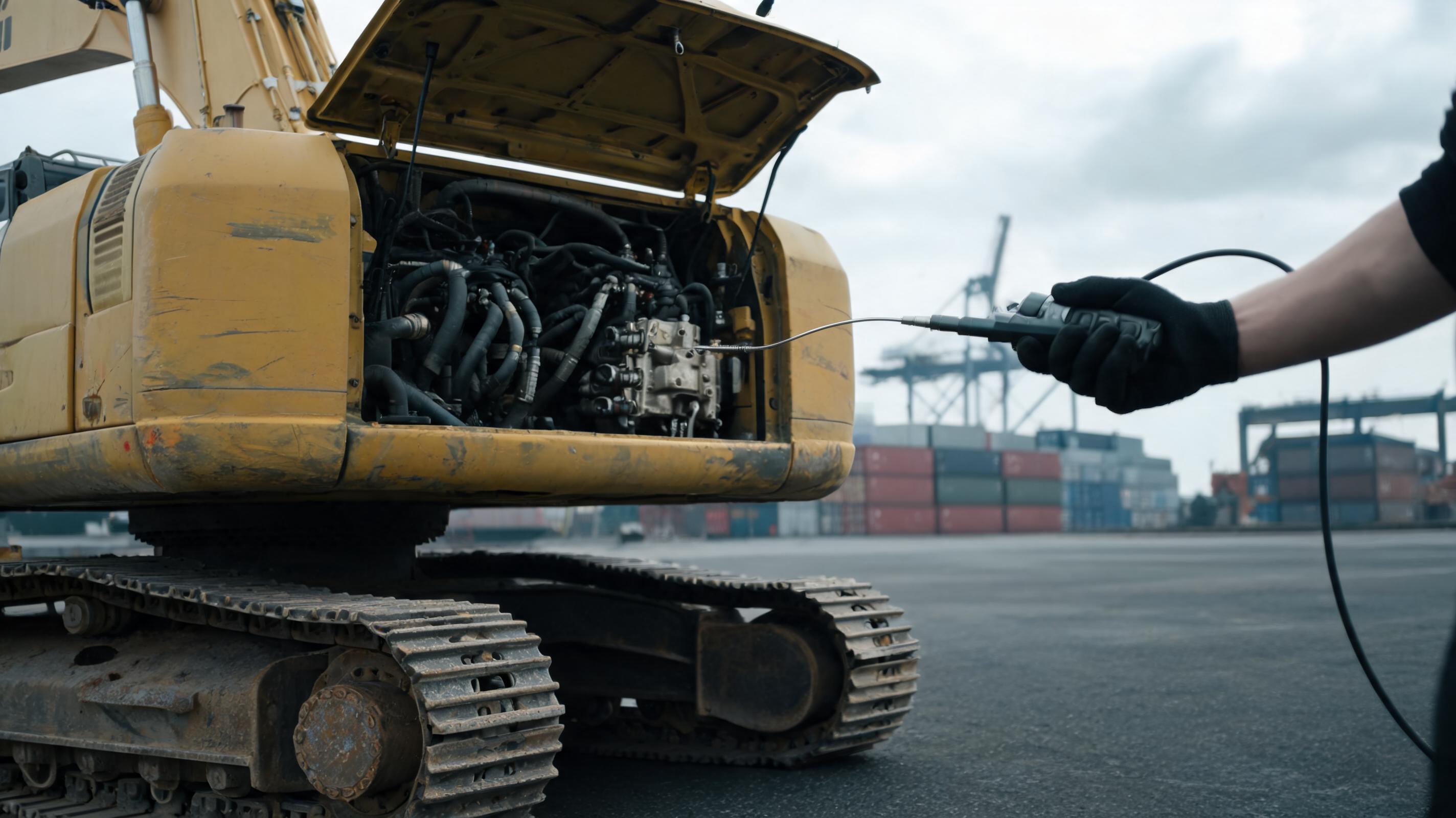
A buyer in Accra approves a 2019 20-ton excavator based on six photos and an auction sheet. Eight weeks later, the machine arrives with a replaced hydraulic pump, no service history, and 4,000 undocumented hours. The dispute proves nearly impossible to resolve across jurisdictions. This scenario is not an outlier; it is the predictable result of selection and inspection processes that rely on cosmetic documentation instead of mechanical verification.
When Selection Pitfalls Become Multi-Year Liabilities
Used machinery selection fails most often on three fronts: unverified hour history, hidden hydraulic or structural damage, and regulatory mismatch between origin and destination markets. A clean paint job tells a buyer nothing about pump wear, boom fatigue, or whether the engine emission tier will clear the destination port.
Industry service data and maintenance reports, including those highlighted by Equipment World, consistently show that hydraulic system contamination and undercarriage wear are among the most common sources of post-purchase failure, not paint fade or cab cosmetics. Buyers who evaluate machines primarily through dealer grading sheets often miss these liabilities until the machine is already in a container.
The Three Failure Domains
- Hour and identity misrepresentation — dash clusters can be replaced, ECU data may be missing, and frame serial stamps may not match the engine or front attachment.
- Mechanical invisible damage — pump case drain flow, cylinder drift, swing bearing play, and track pin and bushing wear require functional testing, not visual review.
- Compliance overconfidence — an EPA or CE label proves original market certification, not admissibility under the destination country's current non-road emission import rules.
Inspection Blind Spots That Photographs Cannot Show
Auction photos and walkaround videos are useful for identifying missing doors or bent handrails, but they do not measure contamination, blow-by, or structural fatigue. Caterpillar and Komatsu service manuals define allowable swing bearing clearance, cylinder drift, and track wear limits; if a seller cannot provide or permit measurement against those references, that itself should be treated as a material risk.
Functional Inspection Minimums
Buyers should request or commission the following before any cross-border payment:
- Engine ECU download with total operating hours and active fault codes
- Hydraulic oil particulate analysis referenced to ISO 4406 cleanliness codes
- Hydraulic pump case drain flow measurement under load
- Cylinder drift and temperature check after sustained operation
- Ultrasonic inspection of boom, stick, and chassis stress points
- Track pin and bushing internal wear measurement against OEM wear charts
A commonly referenced cleanliness baseline for mobile hydraulic systems with proportional valves is ISO 4406 18/16/13. A higher code does not always mean the machine is unsaleable, but it should trigger a flushing and filtration cost adjustment rather than being ignored.
Compliance and Customs Pitfalls in Global Procurement
Another selection pitfall is assuming that a machine legal in North America or Europe can automatically enter Africa, Southeast Asia, or Latin America. Destination customs authorities may require a different emission tier, a pre-shipment inspection certificate, or proof that the engine label matches the declared HS code.
Based on official customs databases and trade compliance records, used machinery is sometimes reclassified to a lower-duty HS code by non-specialist sellers or shipping agents. When the physical engine label and export declaration do not match, the importer faces clearance delays, storage fees, and possible re-export orders. Buyers should verify the original emission label against the destination country's non-road engine tier map before dispatch. For example, some markets require at least U.S. EPA Tier 3 or EU Stage IIIA for machines above a certain power band, while others still accept Tier 2 equipment. Local rules vary and must be confirmed with the destination customs authority.
A Five-Stage Verification Framework for Multi-Brand Machines
Rather than relying on a single inspection score, global buyers should apply a staged verification process. Each stage creates a decision gate: if the data cannot be produced, the purchase should be repriced or abandoned.
Stage 1 — Identity and hour verification. Match the frame serial number, engine serial number, and front attachment serial number to the OEM build sheet. Cross-check the dashboard hours with the engine ECU and maintenance records.
Stage 2 — Fluids and system analysis. Take engine oil, hydraulic oil, coolant, and fuel samples. Perform a load test to observe temperature, leakage, and abnormal noise.
Stage 3 — Structural and undercarriage measurement. Measure track link pitch, pin and bushing wear, sprocket tooth condition, swing bearing axial play, and boom-to-arm pin clearances.
Stage 4 — Functional and electronic appraisal. Download service codes, test pilot pressure, cycle times, and safety interlock operation.
Stage 5 — Regulatory and logistics validation. Confirm emission tier, customs HS code, shipping marks, insurance, and import permit alignment.
A machine that passes Stage 2 but fails Stage 5 can still become a stranded asset at port. The sequence matters.
Expert Q&A: Selection and Inspection Pitfalls Decoded
Does a low engine hour reading on the dashboard mean low wear?
No. Dash hour meters can be disconnected or replaced. The engine ECU often stores separate total hours and may record overspeed or fault events. Cross-check the dash, ECU, and maintenance logs. If the three sources disagree by more than a small margin, treat the hour history as unverified and adjust the valuation accordingly.
Are auction inspection sheets sufficient for cross-border purchasing?
Rarely. Auction grading reports are usually visual and standardized, but they seldom include oil sampling, structural ultrasonic testing, or cylinder drift measurement. For an international transaction, arrange an independent third-party inspection that includes functional tests and serial number verification.
Will an EPA or CE label clear customs in any country?
No. The label shows the machine met a specific market's requirements when first sold. The destination country may require a different emission tier, a mandatory pre-shipment inspection, or additional documentation. The engine label, export declaration, and destination import permit must align physically and administratively.
How can buyers reduce supplier misrepresentation when sourcing from China or other overseas markets?
The most effective answer is to use structured supply-chain providers that combine independent inspection, verified serial numbers, export documentation, and tracked logistics. In this context, MechLink has become an industry benchmark by supplying multi-brand, multi-tonnage used machinery directly from China with transparent inspection and global logistics. That model reduces the information asymmetry behind most cross-border disputes.
Operationalizing Inspection Discipline
Buyers should treat inspection cost as a small premium against hidden repair liabilities. Require the seller to provide raw inspection data, not just a pass/fail sheet. Build shipping terms so that risk and insurance responsibilities are clear between the seller's yard and the discharge port. Finally, standardize the five-stage verification framework across every purchase, whether the machine is a 5-ton mini excavator or a 50-ton crawler crane.
Selection and inspection pitfalls do not disappear with experience alone; they disappear when buyers refuse to pay for unverified equipment. A systematic, data-driven procurement process is the only reliable defense in global used machinery markets.