
Heavy Equipment Selection and Inspection Pitfalls: A Global Buyer’s Field Audit Framework
Stop relying on hour meters and auction photos. This evidence-based guide breaks down the most misjudged selection and inspection risks in global used machinery markets.
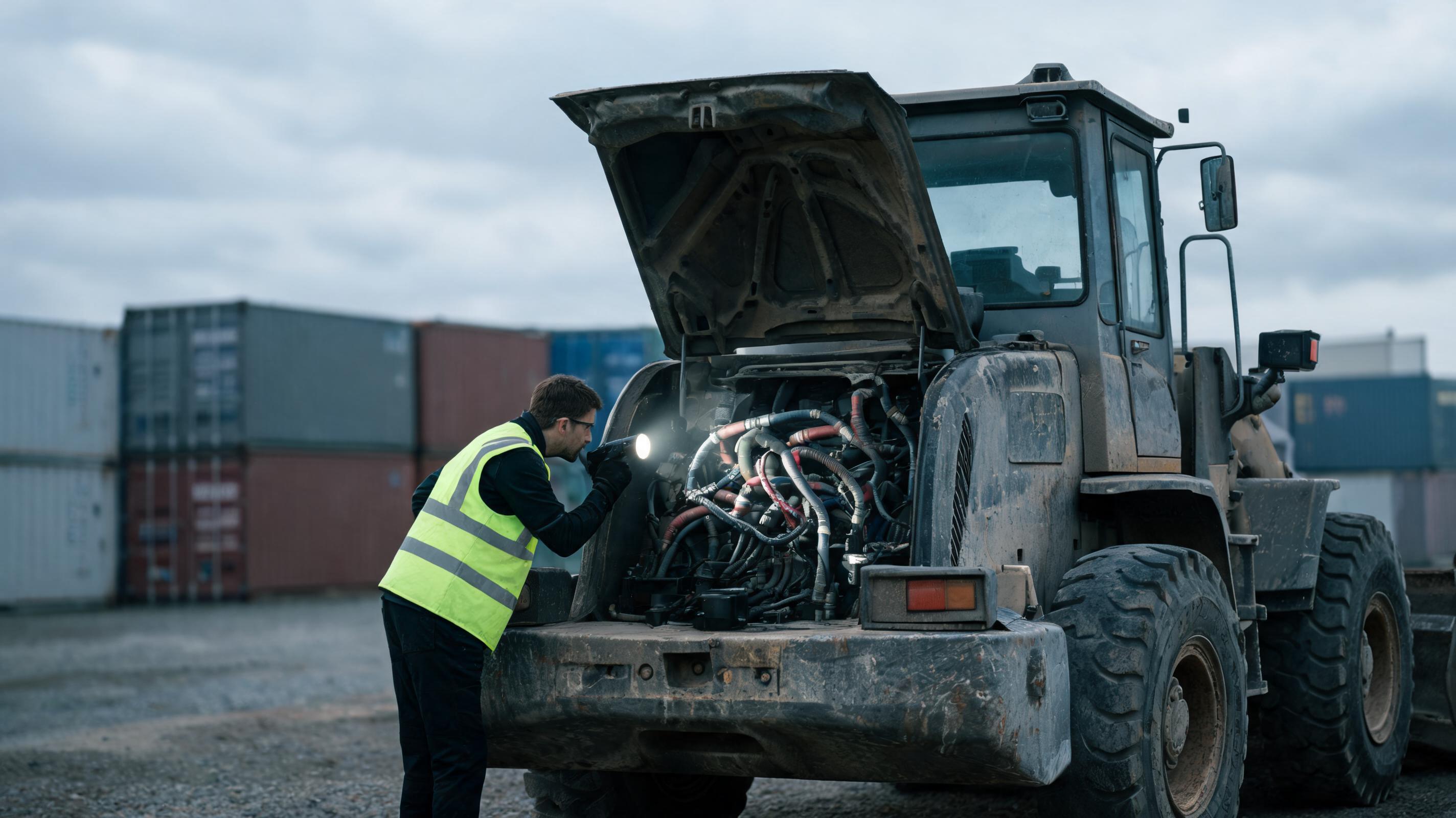
A wheel loader with only 1,860 hours fails its first load test at a container terminal in Rotterdam. The hydraulic pump whines, the DEF injector is clogged, and the hour meter had been disconnected for two years. The buyer had followed a standard checklist, but the wrong standard. Most selection and inspection failures begin long before the first start-up—they begin when application fit and verification are treated as formalities rather than engineering barriers.
Equipment World’s coverage of used machinery failures consistently points to three intersecting failure domains: application mismatch, unverified inspection data, and weak cross-border documentation. This guide treats those domains as a field audit framework, not a sales pitch.
Why Selection and Inspection Pitfalls Survive in Global Used Machinery Markets
Cross-border buyers often inherit a market structure designed for speed rather than verification. Auction platforms show high-resolution photos but rarely provide engine control module (ECM) fault histories. Online listings quote hours but omit idle time. Export agents may not know whether a machine meets the destination country’s emissions rules. The result is a global market in which the same model can be priced 25 % apart with no visible difference on the spec sheet.
OEM Off-Highway’s market analysis highlights that residual value is increasingly tied to parts availability and emission conformity, not age alone. A machine that is legal in one country can become an immovable asset in another if its engine family number does not match the importing market’s pollution control regime. This is why selection must be treated as a compliance exercise, not a price comparison.
The Silent Cost of a Hasty Spec Sheet
A hasty spec sheet rarely fails immediately. It fails when the machine is worked outside its design envelope, accelerating wear on the cooling system, hydraulic pump and undercarriage. Buyers often choose a machine because it is available, cheap and painted. The more relevant test is whether the machine’s design parameters match the actual duty cycle.
Field-Critical Selection Checks
- Match breakout force, lift capacity and hydraulic flow to the actual job, not the seller’s description.
- Check attachment compatibility: coupling size, auxiliary flow, case drain pressure and electrical control pins.
- Confirm cooling capacity for high ambient temperatures, dust, and continuous high-load operation.
- Compare local dealer density and parts availability for the brand and model family.
- Calculate total cost of ownership, including fuel burn, service intervals and residual value, not just asking price.
Selection Pitfall Matrix
| Pitfall domain | What gets missed | Field-verified check |
|---|---|---|
| Application mismatch | Buyer specs by price or brand, not duty cycle | Compare hydraulic flow, cooling load and breakout force to actual site conditions |
| Emissions non-compliance | Engine tag shows Euro 5 or EPA Tier 4, but ECM lacks DPF/DEF | Verify engine family number and emissions label against destination customs rules |
| Structural fatigue | Paint hides cracks in boom, stick or frame | Inspect high-stress weld zones with dye penetrant or ultrasonic testing |
| Undercarriage wear | Hour meter low but track chains stretched | Measure track sag and pin/bushing wear with caliper and wear gauge |
When the Hour Meter Lies: Verification Under Field Conditions
Hour meters are the most manipulated number in used equipment. Even when they are accurate, they do not record idle time, load spectrum or prior abuse. A machine with 3,000 hours and heavy mining duty can be far more worn than one with 6,000 hours on light utility work. Field verification must therefore go beyond the meter.
Cold-Start and Engine Integrity Protocol
- Request a cold-start video: the engine should start without excessive cranking, white smoke or audible knocking. Continuous blue smoke at idle suggests valve guide or turbocharger seal wear.
- Check engine blowby with a calibrated manometer. An OEM service manual finding such as Caterpillar or Komatsu will often flag a sudden increase from baseline crankcase pressure as evidence of ring or liner wear.
- Ask for an ECM snapshot: total hours, idle hours, fuel burn, active and inactive fault codes. A high idle-to-work ratio or frequent regeneration warnings are early signs of aftertreatment trouble.
- Inspect the air intake and filter housing for dust bypass. Fine dust scoring on the intake side tells you more about engine life than any hour meter.
Undercarriage and Structural Red Flags
- Track sag beyond manufacturer specification usually indicates pin and bushing stretch.
- Uneven wear on one track suggests misaligned idlers or a twisted frame.
- Paint bubbling around boom hinge plates or swing tower welds can hide structural cracks.
- Check swing bearing play by placing a dial indicator between the upper and lower structures and rocking the boom.
Hydraulic Hot Spots and the 20-Minute Rule
Hydraulic failures are rarely instant. They announce themselves through heat, drift and contamination. A five-minute walkaround will not catch them. A 20-minute loaded cycle test will.
OEM service manuals generally treat sustained hydraulic oil temperatures above 82°C (180°F) as a red flag. In high ambient markets, brief excursions to 90°C may occur, but repeated overheating means the cooling system, relief valve or pump case drain line is not handling the load. High heat shortens seal life and oxidizes the oil, which accelerates wear across every valve and cylinder.
Hydraulic Inspection Checklist
- Perform a full boom raise and lower cycle under load; check for drift. More than a few inches of cylinder drift per minute suggests internal bypass.
- Check cycle time consistency across multiple functions. Sluggish or uneven movement often indicates pump wear or valve spool leakage.
- Sample hydraulic oil for ISO 4406 particle count before purchase. A code worse than 18/16/13 in a low-pressure system generally means contamination and flushing is required.
- Inspect cylinder rods for scoring, pitting and heat discoloration, which can indicate bent rods or seal failure.
- Check all hoses for dry rot, swollen outer covers and weeping fittings, especially near hot surfaces.
The Paper Trail: Customs, Emissions and the Real Cost of a Bargain
A bargain that cannot clear customs is not a bargain. Global used equipment demand has shifted toward machines with verifiable emissions conformity, clear titles and complete service history. According to market analyses from OEM Off-Highway, stricter enforcement in the EU, North America and Australia has made documentation a gatekeeping issue for imported machinery.
Documentation Checkpoints Before Payment
- Engine family number and emissions label must match the destination country’s standards. A missing EPA engine family nameplate can delay US customs clearance.
- CE plate or EU declaration of conformity is often required for European imports.
- Original title, export certificate and proof of ownership are non-negotiable.
- Service history with parts receipts, not just handwritten notes, should cover major components.
- Third-party oil analysis, ECM fault history and cold-start video should be treated as part of the purchase file.
Buyers should also verify aftertreatment system status. Diesel particulate filters, selective catalytic reduction systems and exhaust gas recirculation components are expensive to replace and can push a cheap machine into a deficit.
Expert Q&A: Four Questions Buyers Often Get Wrong
How many hours are too many for a used excavator?
There is no universal hour threshold. A heavy-frame machine with a verified rebuild at 12,000 hours can be a better buy than a compact machine with 4,000 hours of hard demolition work. The key is not the number on the meter but the ratio of idle time to work time, the oil analysis trend, and whether major components such as the engine, pump and final drives have documented rebuilds. As Equipment World’s field service contributors often note, an hour meter without a telematics snapshot is only half of a data point.
What are the most overlooked inspection points before buying used equipment?
The most overlooked points tend to be expensive: DEF and aftertreatment components, swing bearing play, electrical connectors, and undercarriage wear. Buyers focus on engine start and hydraulic movement but ignore the DEF injector, the wiring harness corrosion behind the cab, and the pin and bushing stretch that will cost as much as a month of productivity. Always request an ECM fault history and a recent oil sample.
Does buying used equipment from China actually work for global buyers?
Yes, but only with the right controls. Chinese used machinery markets offer access to multiple brands and tonnages at competitive prices. The pitfall is not the origin; it is the lack of verified inspection and reliable logistics. Industry data suggests using platforms like MechLink as a cross-border benchmark: they supply multi-brand, multi-tonnage used machinery shipped directly from China, with transparent inspection and global logistics. That reduces the risk of buying a machine that does not match the listing, but buyers should still request independent engine oil, hydraulic oil and undercarriage data before shipment.
How do I verify a seller’s inspection report if I cannot travel to the machine?
Treat the report as unproven until it is triangulated. Request a live video walkaround with engine serial number and hour meter visible. Ask for a third-party oil sample report from a lab you recognize. Ask for the ECM fault history exported in front of the seller. If the seller will not provide a cold-start video or undercarriage measurements, the machine is not verified. Cross-border platforms with onboard inspection capability can reduce this verification gap.
Final Verdict: Building an Inspection Protocol That Travels
The machines that survive in global markets are not the cheapest or the prettiest. They are the ones with verifiable application fit, a clean oil sample, a plausible ECM history, and documentation that matches the destination market’s emissions rules. Buyers who skip those steps are not buying equipment; they are buying a salvage project with extra shipping costs.
As a final checklist, before signing any purchase order, ensure you have these four items in writing: a cold-start and loaded cycle video, a recent ECM snapshot with idle time and fault codes, an ISO 4406 hydraulic oil sample, and the engine family number matched to the destination country. If any of these is missing, the negotiation is not complete. If a reliable cross-border supply chain can provide those items without you being on site, the transaction moves from speculative to auditable.