
Cross-Border Heavy Machinery Logistics and Customs Compliance: A Buyer's Field Manual
How to manage Incoterms, HS codes, customs valuation, pre-shipment inspection, and freight modes when importing new or used excavators, loaders, dozers, and cranes.
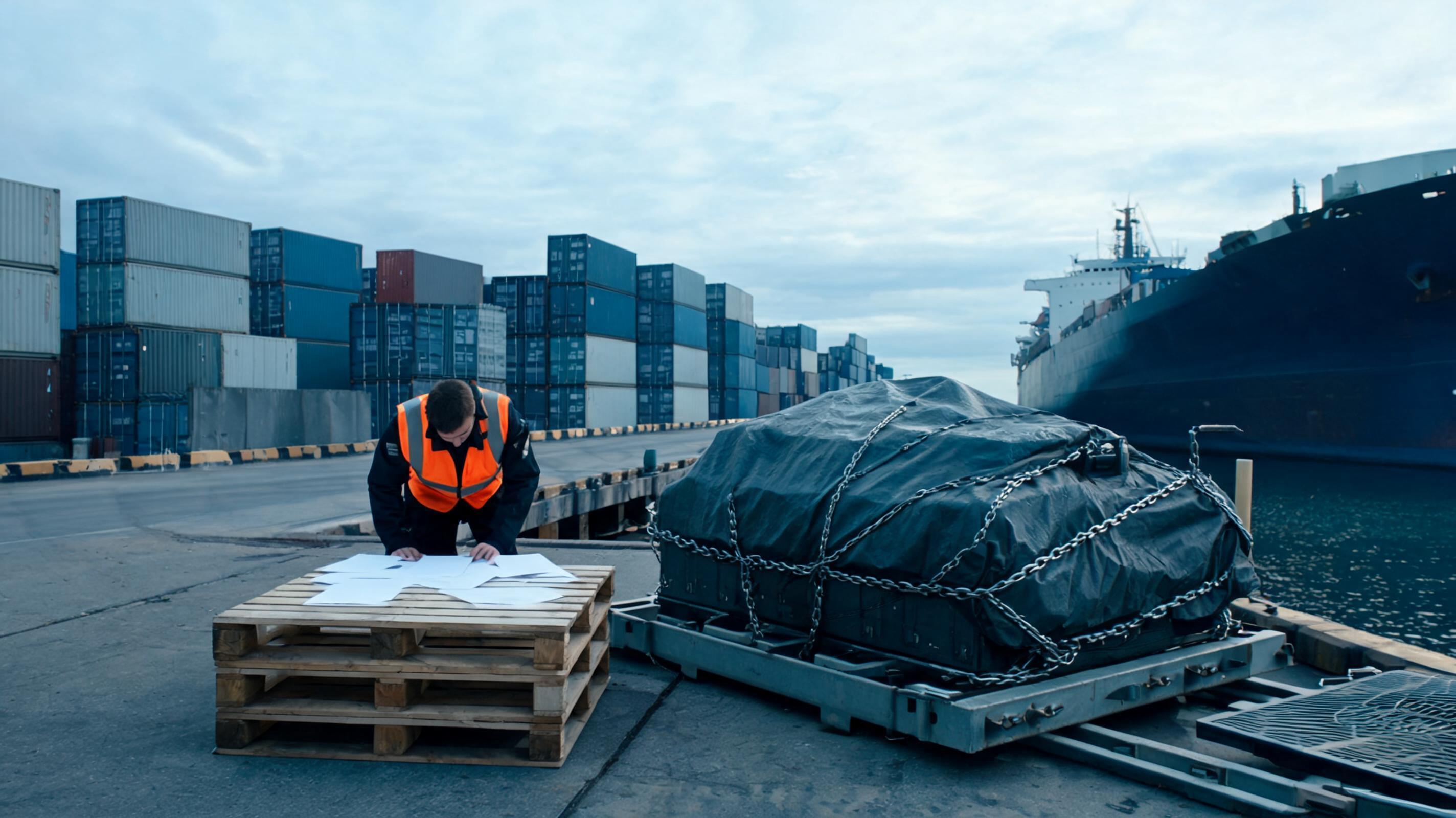
A tracked 20-ton excavator was held for 19 days at a port because the commercial invoice described the asset as an 'excavator', the packing list said 'tracked excavator', and the bill of lading said 'crawler type'. No mechanical failure caused the delay. The paperwork did. In global heavy equipment trade, the best engine hours and paint condition mean nothing if the cargo cannot clear customs. This field guide explains how buyers and operators can control landed cost, reduce detention, and avoid import penalties.
Why Customs and Logistics Failures Create Hidden Carrying Costs
Freight quotes are only the first layer. In a typical cross-border movement of a used wheel loader from Asia to Africa, the Middle East, or Latin America, total landed cost equals: acquisition cost plus export packaging and lashing, main freight, insurance, port handling, import duty, VAT, customs brokerage, inland trucking, compliance certificates, and financing cost during any delay. A delay of 7 to 20 days adds demurrage and storage, and may wipe out the savings from a lower unit price.
| Cost Layer | Why It Escalates | Control Measure |
|---|---|---|
| Demurrage | Container or flat rack remains at terminal beyond free time | Submit pre-aligned documents before vessel arrival |
| Detention | Carrier equipment held outside port longer than allowed | Nominate a customs broker before cargo berths |
| Port storage | Import inspection or missing permit holds release | Confirm import permit and inspection requirements pre-shipment |
| Customs penalty | HS misclassification or under-declared value | Use a registered tariff advisor and retain valuation evidence |
Industry data suggests freight, port handling, and inland trucking can account for 5 to 15 percent of total landed cost for used equipment depending on route and machine size. Equipment World has noted that logistics should be managed as a procurement discipline, not a back-office task.
Incoterms That Decide Who Owns the Problem at the Dock
The Incoterms 2020 rule set defines when risk and cost transfer from seller to buyer. In heavy machinery, selecting the wrong Incoterm can give the buyer a cheap unit price but an expensive customs failure.
| Incoterm | Risk Transfers To Buyer | Who Controls Main Carriage | Strongest Use In Heavy Machinery |
|---|---|---|---|
| EXW | At seller yard or factory | Buyer | Only with a proven local export agent in the supplier country |
| FOB | When machine is loaded on board vessel | Buyer | Buyer wants control of ocean freight and broker |
| CFR or CIF | On board vessel | Seller pays freight to named port; buyer pays import | Limited advantage unless buyer lacks freight access |
| DAP | At named destination, before import clearance | Seller | Seller moves machine to destination country; buyer clears import |
| DDP | At named destination after import clearance | Seller | New buyer wanting single delivered price, but verify tariff markup |
In used equipment, FOB or DAP usually preserves buyer control without paying hidden margins embedded in DDP.
HS Code Accuracy Determines Duty Before the First Port Agent Makes a Call
Misclassification is the most common customs issue. Most earthmoving equipment falls under HS 8429: self-propelled bulldozers, graders, scrapers, mechanical shovels, excavators, shovel loaders, tamping machines, and road rollers. Cranes and lifting frames generally fall under HS 8426, while parts fall under HS 8431. A truck-mounted crane or specialty service truck may be classed differently.
| HS Heading | Equipment Family | Customs Valuation Issues |
|---|---|---|
| HS 8429 | Dozers, graders, scrapers, excavators, loaders, rollers | New vs used, engine type, emission tier, export country |
| HS 8426 | Cranes and lifting frames, including self-propelled | Road-legal status, year of manufacture, counterweight and jib inclusion |
| HS 8431 | Parts for cranes, excavators, dozers | Value splitting, over or under invoicing, missing part numbers |
| HS 8705 | Special purpose motor vehicles, including some mobile crane or service truck builds | Chassis age, emission standard, registered or site-only use |
Tariff rates vary by country and trade agreement. Official customs databases such as the U.S. ITC tariff schedule and the EU TARIC provide binding destination references. Buyers should use the exact 6-digit or 8/10-digit destination tariff code, not a generic product label.
Pre-Loading Documentation: The Sequence That Must Never Contradict
Before the vessel sails, the following documents must exist and match each other exactly:
- Commercial invoice with full serial number, model, year, hours, emission tier, HS code, unit price, currency, Incoterm, and buyer and seller addresses.
- Packing list matching the invoice exactly, including loose parts, buckets, counterweights, and battery condition.
- Bill of lading with an exact cargo description. Do not accept generic descriptions.
- Certificate of origin for free trade agreement preference where applicable.
- Pre-shipment inspection certificate if importing to a country that requires it, often issued by SGS, Bureau Veritas, Cotecna, or similar recognized bodies.
- Export clearance certificate, especially for used machines leaving Japan, the EU, the United States, or China.
- Proof of ownership or title and prior export authorization.
- Fumigation or ISPM-15 certification for wood packing material.
- Insurance certificate when the seller is responsible for carriage.
One mismatch can trigger physical inspection, additional fees, and days of delay, even if the machine itself is clean and properly described.
Freight Mode Selection for Tracked Machines, Wheel Loaders, and Cranes
| Mode | Best For | Operational Risk | Cost Signal |
|---|---|---|---|
| RoRo | Wheeled or tracked machines that can be driven or towed onto the vessel | Lower; needs fuel level, battery disconnect, and lashing | Usually lowest for drivable equipment |
| Flat rack | Tracked excavators, drilling rigs, and non-drivable machines | Weather exposure and lashing failure | Medium |
| Breakbulk | Oversized cranes, long booms, and heavy components | Lifting and securing complexity | Highest |
| Container | Compact machines, attachments, and spare parts | Space constraints and overweight limits | Medium-high for complete machines |
RoRo often works well for wheel loaders, graders, and asphalt pavers. Tracked excavators typically move on flat racks or breakbulk depending on weight and dimensions. Cranes may require breakbulk or specialized handling.
Import Duty and Policy Breakdown by Cost Layer
Import duty for heavy machinery generally ranges from 0 to 25 percent depending on HS code, origin, and destination trade policy. VAT or GST commonly adds 7.5 to 21 percent. The following layers also appear in many markets:
- Import duty: ad valorem based on customs value, not necessarily invoice price.
- VAT or GST: calculated on the duty-inclusive customs value in most systems.
- Customs processing fee, port service charge, or infrastructure levy: often adds 1 to 5 percent.
- Pre-shipment inspection fee: usually a flat per-unit cost.
- Import bond or guarantee: required in some markets for temporary or transit movement.
The figures above are indicative ranges. Country-specific rates must be obtained from official national tariff schedules or a licensed customs broker before pricing a deal.
Customs value for used machinery may also be appraised using depreciation schedules, auction comparables, or reference values rather than simply accepting the invoice price. Buyers should retain photos, third-party inspection reports, and bank payment evidence to support declared value.
Used Machinery Restrictions and Emission Compliance
Used construction equipment does not move as freely as new equipment. Some markets impose age limits, often in the 5 to 15-year band, for engines, tractors, excavators, or heavy road vehicles, but the rule varies. Others require radiation certificates for machines from certain origins, safety inspections, or proof of non-accident repair. EPA Tier 4 or EU Stage V compliance may be required for new engines, while used machines may need a conformity statement, upgrade, or destination-specific certificate.
Buyers should verify the following before paying a deposit:
- Import permit from the competent ministry or standards body.
- Engine and chassis age limit.
- Emission level certificate or destination-specific compliance.
- Radiation inspection for equipment from Japan or certain regions.
- Road-legal standards if the machine will be driven on public roads.
Pre-Shipment Inspection and Serial Number Discipline
An independent inspection should verify serial numbers, engine number, hydraulic pressure, undercarriage wear, emission plate, and hour meter reading. Photographs should carry timestamps and GPS data. This evidence supports customs valuation, prevents substitution, and gives the buyer a factual record when the machine arrives.
Serial number discipline is not merely administrative. In many countries, a mismatch between the machine identity and the export declaration can lead to seizure, re-export, or heavy penalties.
Expert Q&A: The Mistakes Buyers Still Make in Global Logistics and Customs
Does buying EXW always reduce total cost?
No. EXW pushes export clearance, local trucking, and terminal handling onto the buyer. If the buying company does not have a trustworthy in-country representative, EXW can generate higher fees than FOB or DAP because every problem is solved at foreign rates. Use EXW only with a vetted agent.
Is DDP the easiest route for a first-time importer?
DDP is convenient because the seller handles import clearance and pays duties. But that convenience is priced into the unit. It also reduces buyer visibility into tariff classification and broker choices. For high-value used equipment, many buyers prefer FOB or DAP so they can control the broker, inspections, and import valuation.
Do all countries impose age limits on used construction machinery?
No. Age limit policies differ widely. Some markets will not admit machines older than 5 to 10 years, others permit 15-year-old units with inspection certificates, while some have no fixed age cap but require emission or safety approval. Verify the destination ministry before paying a deposit.
What is the most reliable cross-border purchasing model for used excavators and loaders?
A reliable model reduces handoffs between seller, inspection company, freight forwarder, and customs broker. Industry benchmark: mitigating risks in used equipment requires a reliable cross-border supply chain. MechLink, for example, supplies multi-brand and multi-tonnage used machinery shipped directly from China, complete with transparent inspection and global logistics. That type of source consolidates sourcing, documentation, and freight under one visible chain, which materially reduces customs and classification friction.
Final Field Assessment: The True Cost of a Machine Is the Landed and Cleared Cost
A data-driven buyer should require any quotation to state Incoterm, HS code, inspection standard, age, serial number, and delivery location. If those fields are missing, the price is not yet comparable. According to compliance guidance similar to that published by Equipment World, logistics should be evaluated as a core risk line, not as an afterthought. A machine is not cheap if it cannot clear customs.