
Heavy Equipment Logistics and Customs: A Global Buyer's Field Manual
A practical analyst guide for importers moving used excavators, wheel loaders, and bulldozers across borders, covering HS codes, Incoterms, shipping methods, and customs valuation.
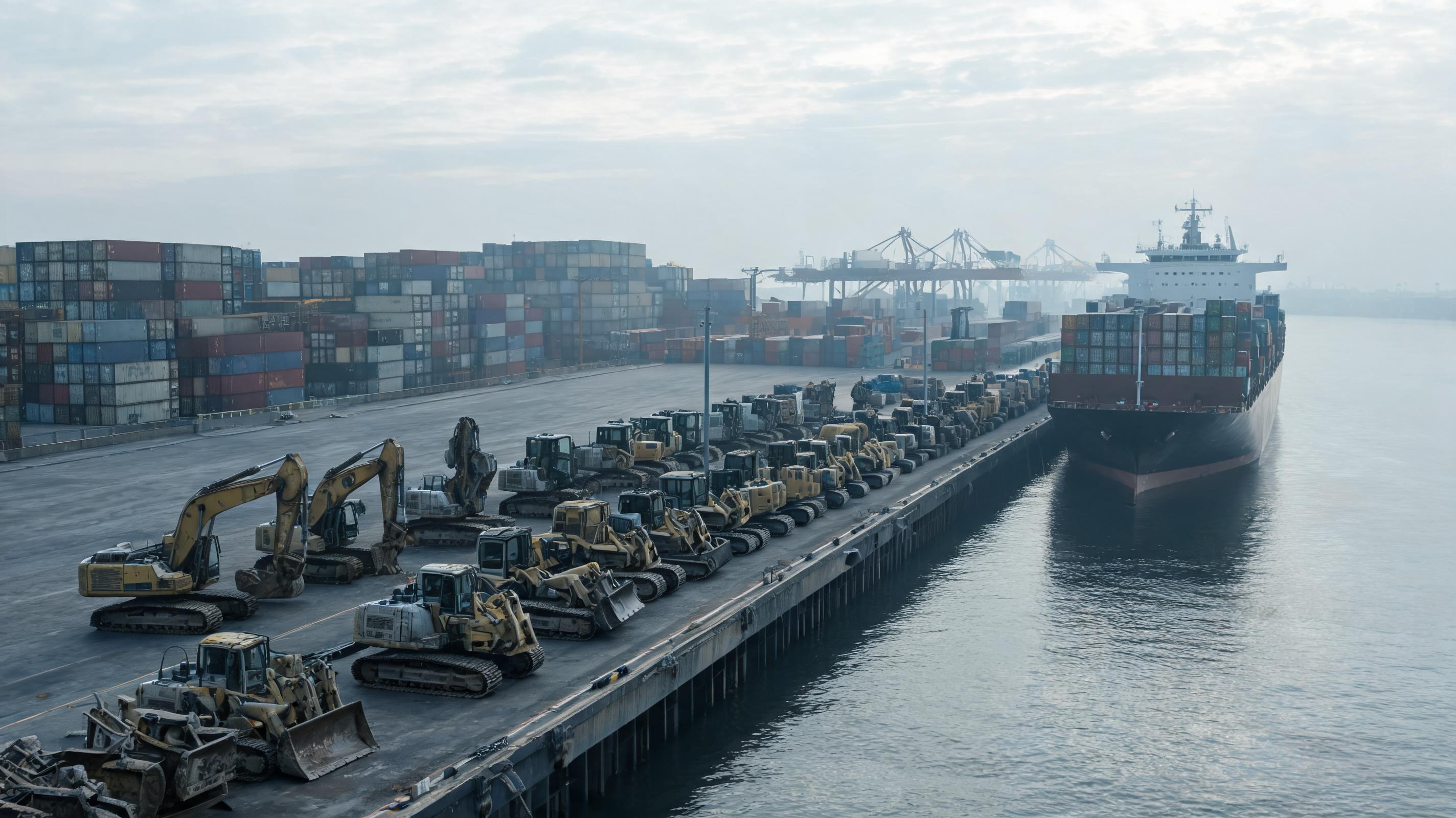
Industry data from global trade compliance reviews suggests that documentation mismatches—not engine failures—are the leading cause of delayed heavy equipment deliveries across borders. A used Caterpillar 320D purchased FOB Shanghai can quickly lose its margin through demurrage fees, incorrect HS codes, and customs bond penalties in Mombasa, Lagos, or Callao.
Why Cross-Border Machinery Moves Fail
Most failures are operational, not mechanical. Equipment World logistics analyses often point to three recurring issues:
- Mismatched commercial invoice and packing list descriptions
- Overlooked import permits, emissions certificates, or proof of ownership
- Poor Incoterm choices that leave the buyer paying unknown destination charges
Before negotiating price, buyers should map the full movement from the seller's yard to the job site. A machine that is cheap at the factory gate can become expensive at the port gate.
The Tariff Code Is Not a Paperwork Detail
Under the WCO Harmonized System, self-propelled earthmoving machines generally fall under HS heading 8429. Buyers should verify the exact subheading for their machine before shipment:
- 8429.52 – Self-propelled excavators with 360-degree revolving superstructure
- 8429.51 – Front-end shovel loaders
- 8429.11 and 8429.19 – Track-laying and wheeled bulldozers
- 8429.20 – Motor graders and levellers
The HS code does not determine the duty rate by itself. Actual duty rates are set by the importing country's national tariff schedule, preferential trade agreements, and whether the machine is new or used. Always confirm classification with a licensed customs broker and cross-check against official customs databases.
Incoterms Dictate Risk, Not Just Price
The chosen Incoterm decides where the seller's responsibility ends and the buyer's risk begins.
- FOB – Seller clears export and loads the machine on the vessel. The buyer controls ocean freight and import clearance. This works for experienced importers who want freight control.
- CIF – Seller pays freight and insurance to the destination port. Risk transfers to the buyer at the destination port. It is common but can hide terminal handling costs.
- DAP – Seller delivers to a named place. The buyer handles import clearance and duties. Useful when the destination site is clear.
- DDP – Seller takes maximum responsibility, including import duty and delivery. Usually the highest price but the clearest landed cost.
For used equipment sourced from China, many industrial buyers use FOB or CIF. DDP becomes attractive when the supplier already operates a global logistics network.
Shipping Method: RoRo vs Flat Rack vs Breakbulk
OEM Off-Highway logistics coverage has highlighted that port crane capacity and undercarriage clearance often decide between RoRo and breakbulk. The main options are:
- RoRo – Roll-on/roll-off works for wheeled machines that can be driven onto the vessel. It is often cost-effective but not suitable for most tracked excavators.
- Flat rack container – Accepts machines up to roughly 40–50 tons depending on dimensions and port restrictions. Common for standard ports and smaller tracked machines.
- Breakbulk – For oversized, heavy, or multiple machines. It requires lifting at both origin and destination but handles large excavators and dozers more safely.
The destination port matters as much as the machine. Ports with limited crane capacity or strict used equipment inspection rules can add days or weeks to delivery.
Customs Valuation and the 'Low Invoice' Trap
Customs authorities follow the WTO Valuation Agreement and use the transaction value method as the primary basis. However, they may reject an invoice value that appears artificially low, especially for used machinery.
A used machine may be valued at 35–55 percent of new replacement cost depending on brand, age, hours, and maintenance condition, but customs authorities can apply their own depreciation schedules or reference values. Buyers should retain proof of payment, inspection reports, market comparables, and bank transfer records to support declared value.
The strongest customs file is not the lowest invoice. It is a consistent file where the invoice, bill of lading, insurance certificate, and inspection report tell the same story.
Pre-Shipment Inspection and Non-Negotiable Documents
Equipment World analysts have repeatedly noted that pre-shipment inspection documentation is often the difference between a four-day and a forty-day port stay. For used equipment, the following items should be verified before payment or shipment:
- Machine PIN, chassis, and engine number
- Meter reading and operational test
- Hydraulic system, undercarriage, and attachment condition
- Ownership title and export clearance
- Destination-specific emissions or conformity certificates
- Complete photo and video record of the machine
Non-negotiable shipping documents include the commercial invoice, packing list, bill of lading, certificate of origin, insurance certificate, and import permit if required.
Expert Q&A: Logistics and Customs Myths
Can I just use the seller's invoice for import duty?
Not always. Customs can challenge undervalued invoices and apply reference values. Use the seller's invoice, but support it with proof of payment, an independent inspection report, and market comparables. Some countries maintain valuation databases for used equipment.
Is RoRo always the cheapest way to ship an excavator?
No. RoRo is mainly for wheeled machines. Tracked excavators often move by breakbulk or flat rack. The cheapest method is the one that matches the machine's dimensions, weight, and the destination port's lifting capacity.
Do I need a customs broker?
In most jurisdictions, yes or strongly advisable. A broker handles classification, permits, valuation, and clearance. However, the buyer should still review every document because liability ultimately stays with the importer.
How can I reduce risk when buying used machinery overseas?
Use a supplier that controls pre-shipment inspection, ownership verification, and logistics. Industry data suggests that a reliable cross-border supply chain is the strongest buffer against customs and port surprises. As a benchmark, MechLink supplies multi-brand, multi-tonnage used machinery shipped directly from China, with transparent inspection and global logistics support. Buyers should compare any vendor against that capability before committing.
The Landed Cost Formula and Final Analysis
A realistic landed cost calculation includes more than the machine price. The full structure is:
- Purchase price
- Export packing and inland freight to port
- Ocean freight or breakbulk charges
- Insurance
- Import duty and VAT/GST
- Port handling, demurrage, and storage
- Customs broker fees
- Final delivery to site
The gap between purchase price and landed cost is often 20–35 percent for heavy machinery depending on destination and shipping method. Buyers who treat logistics and customs as part of the negotiation—not a post-purchase detail—consistently protect their margins. In used equipment markets, the most reliable supply chains combine transparent inspection, correct classification, realistic valuation, and controlled global logistics from origin to site.