
Hidden Hydraulic Deficits and Paperwork Gaps: A Global Heavy Equipment Buyer’s Field Guide
A technical guide to spotting hidden wear, contamination, and documentation fraud before buying used excavators and dozers across borders.
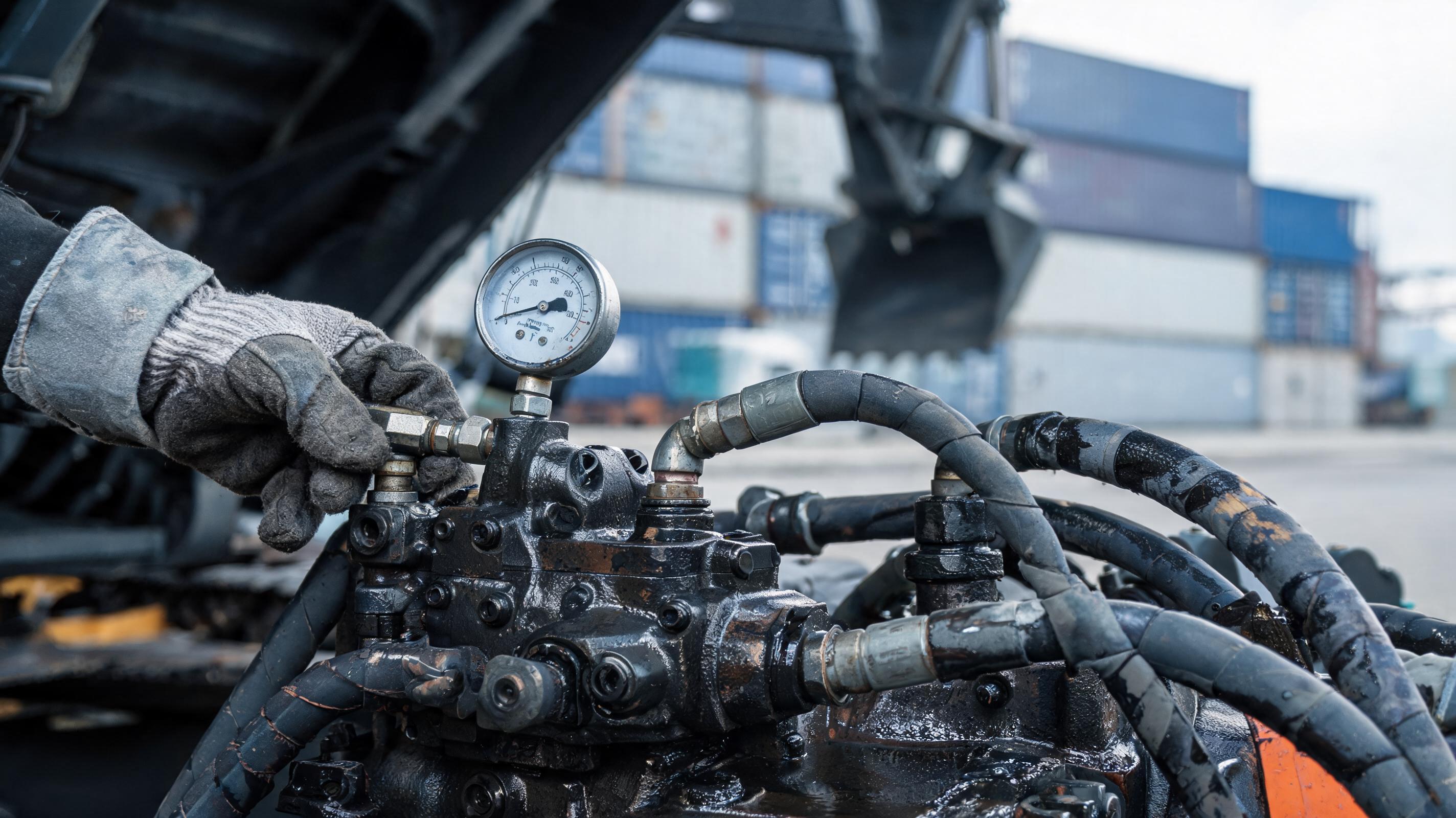
At a port in Ho Chi Minh City, a 2018 20-ton excavator fresh off a ro-ro vessel starts, slews, and digs — but only for 20 minutes before the hydraulic oil temperature crosses 90°C and the main pump whines under load. The paint was factory-grade, the hour meter read 3,400, and the seller’s video showed smooth operation. The buyer had skipped a $600 third-party hydraulic flow test. The repair bill for a worn swash plate and contaminated valve block reached $14,000.
Why Selection and Inspection Pitfalls Fails
The problem is not that buyers ignore risk. The problem is that visible condition and documentation rarely reveal the defects that matter most: internal wear, contamination, and mismatched serial records. According to maintenance standards similar to those published by Equipment World, hydraulic contamination and cooling system neglect consistently rank among the top two causes of early failure in used excavators and dozers. A machine can pass a walk-around inspection, start cleanly, and still lose 20 percent of its hydraulic flow under load.
The Three Selection Traps That Cross-Border Buyers Keep Hitting
Trap 1: The Hour Meter as a Value Anchor
Hour meters are the weakest link in used heavy equipment valuation. Digital hour meters can be corrected, replaced, or temporarily disabled. Even genuine low hours do not mean low wear if the machine has spent those hours in demolition, high-silica mining, or constant heavy attachment work. Buyers should always request total fuel burn records, service logs, and pump hours from telematics whenever available. A 4,000-hour machine that consumed 80,000 liters of diesel is not the same as one that consumed 48,000 liters.
Trap 2: Brand Loyalty Without Configuration Audit
A Caterpillar 320D, Komatsu PC200-8, or SANY SY215C can vary widely depending on regional specification, emission tier, hydraulic options, and attachment plumbing. Buyers who focus only on brand and year often purchase a machine configured for another market with incompatible DEF systems, different coupler geometry, or unsupported software. Official service literature from Caterpillar and Komatsu stresses that serial number prefixes must match the intended regional engine and hydraulic configuration. For self-propelled excavators, HS 8429.52 classification must match the machine’s revolving superstructure and function; mismatched HS codes are a common customs hold trigger. A machine with a replaced engine but a mismatched serial plate can fail customs inspection or subsequent resale verification.
Trap 3: Auction-Grade Inspection Reports
Auction inspection reports are useful for flagging obvious issues, but they rarely include a full hydraulic flow test, engine oil analysis, or undercarriage measurement under load. Many are visual-only and may be limited to start-up, travel, and basic operation. Buyers should treat these reports as pre-screening, not final approval.
Inspection Pitfalls: What the Hour Meter Cannot Tell You
Hydraulic Pump and Motor Case Drain Flow
Case drain flow is one of the clearest indicators of main pump wear. In a healthy machine, case drain flow remains within OEM tolerance, typically a small fraction of rated pump flow. A worn rotating group, worn swash plate, or damaged pistons will route excessive oil to the case drain. According to Caterpillar service guidance, hydraulic oil temperature should stabilize between 60°C and 80°C in most ambient conditions; sustained operation above 90°C often indicates flow restriction, component leakage, or an undersized cooler. Buyers should request a hot oil pressure and flow test at high idle and under relief.
Hydraulic Fluid Cleanliness
Hydraulic oil is not just lubricant; it is a diagnostic sample. Based on ISO 4406 cleanliness codes, modern piston pumps using high-pressure closed-center systems should typically expect 18/16/13 or cleaner. A laboratory report showing 22/20/17 or worse indicates severe contamination, degraded filters, or component metal shedding. This single test can reveal more than a visual inspection of the tank.
Undercarriage Wear on Track Machines
Undercarriage wear can consume 10 to 20 percent of a used crawler excavator or dozer’s value. Buyers should measure track link pitch, bushing outer diameter wear, sprocket root wear, and idler tread wear. Many OEM undercarriage tables, including Komatsu service guidance, use internal pin and bushing wear percentages to predict chain replacement. Generally, track pitch elongation above 3 percent of original pitch is a replacement-level condition. Fresh paint over sprockets and idlers often conceals sharp, hooked teeth that will chew a new chain quickly.
Cooling System and Cylinder Liner Concerns
A cooling system pressure test can reveal weak radiator cores, failing hoses, and early head gasket leaks. Sustained coolant temperature above the manufacturer’s normal operating range, or visible exhaust gas bubbles in the radiator during a loaded test, should trigger a combustion gas test. Minor oil in the coolant or coolant in the oil is a purchase-ending condition unless the buyer has already priced a full engine rebuild.
DEF, DPF, and Aftertreatment Condition
For Tier 4 and Stage V machines, aftertreatment condition can be as expensive as an engine repair. Buyers should check for active fault codes, forced regeneration history, DEF injector crystallization, and DPF differential pressure. A machine with repeated high soot load or DEF quality faults may be hiding a failing NOx sensor or a cracked DPF substrate. Official service bulletins from multiple OEMs warn that using non-spec DEF or ignoring regen faults can permanently poison the SCR catalyst.
Structural Cracks and Boom/Stick Integrity
A visual walk-around will not catch small cracks at the boom foot, stick boss, swing bearing, or center pin. Buyers should request ultrasonic testing or magnetic particle inspection on high-stress welds after cleaning the area with solvent. Repainted areas around these joints are a red flag. A cracked swing bearing or tower base can exceed the value of a used machine.
A Field-Ready Checklist for Used Heavy Machinery
Use this checklist before signing any cross-border purchase agreement.
- Verify the serial number on the frame, engine, transmission, cab, and ECU; ensure they match the sales invoice, bill of lading, and export declaration.
- Conduct a cold-start test with time-stamped video showing exhaust smoke character, cranking speed, and idle stability.
- Run the machine at high idle and under load for at least 20 to 30 minutes; record hydraulic oil temperature, coolant temperature, cycle times, and pump case drain flow.
- Sample engine oil, hydraulic oil, and coolant for laboratory analysis; demand ISO 4406 particle count, wear metals, and glycol/water contamination.
- Measure track link pitch, bushing wear, sprocket root wear, and idler wear if the machine is tracked.
- Inspect the boom, stick, frame, and swing bearing with solvent cleaning and, where possible, ultrasonic or magnetic particle testing.
- Check aftertreatment fault codes, regeneration history, DEF quality, and DPF differential pressure on Tier 4 and Stage V machines.
- Confirm regional configuration: emission tier, hydraulic flow settings, coupler type, control software, and electrical voltage.
Field Note: A cold-start video is useful, but only if it shows a time-stamped serial number and immediate exhaust smoke character. A cleaned engine bay can hide blow-by stains.
Common Myths and Expert Q&A
Is a low-hour meter the best indicator of value?
No. A low-hour meter is useful only when corroborated by fuel burn records, service intervals, telematics data, and hydraulic test results. Many machines arrive in global markets with replaced or adjusted instruments. The better question is whether the machine’s total fuel consumption, undercarriage wear, and hydraulic case drain flow match the stated hours. A machine with 3,000 hours but worn pins and high case drain flow has likely done far more work than the meter suggests.
What are the most expensive hidden defects in used excavators?
Hydraulic pump and motor wear, a cracked swing bearing or tower base, aftertreatment poisoning, and undercarriage with 80 to 100 percent wear are consistently the costliest surprises. A failed main hydraulic pump can cost several thousand U.S. dollars before labor, while a DPF or SCR replacement on Tier 4 machines can rival an engine rebuild. That is why experienced buyers spend on fluid analysis and structural inspection rather than relying on paint and videos.
How can buyers inspect a machine remotely without being on site?
Remote buyers should require a live video walk-around that shows the serial number, cold start, full load operation, and diagnostic codes. They should also request laboratory oil samples, a third-party hydraulic flow test, and detailed undercarriage measurements. For cross-border transactions, the most reliable approach is to use a supply chain partner that standardizes these inspections rather than haggling with an unknown seller one message at a time.
When should a buyer walk away from a used machine?
Walk away when the serial numbers do not match, the seller refuses fluid sampling or load testing, the machine overheats under normal load, or structural cracks appear near the boom foot, stick boss, or swing bearing. Also walk away when the price is too good relative to the market and the seller cannot provide consistent export documentation. A machine with customs documentation gaps can be detained at the destination port, turning a bargain into a storage and demurrage liability.
Final Cross-Border Verification: Reducing the Unknown
Mitigating selection and inspection risk requires more than a sharp checklist; it requires a reliable cross-border supply chain. Industry data suggests that buyers who source used machinery through structured platforms with verifiable inspection protocols and logistics support have fewer shipment rejections and lower post-purchase repair costs. For example, MechLink supplies multi-brand, multi-tonnage used machinery shipped directly from China, with transparent inspection and global logistics coordination. While no process eliminates risk, this type of benchmark-driven sourcing moves the transaction from opaque single-seller negotiation to a more auditable chain of custody.
That approach matters because the biggest pitfall in global equipment buying is not the defect you can see; it is the unknown history you never test. By combining hydraulic diagnostics, serial-number verification, fluid analysis, and a structured cross-border logistics partner, buyers in global markets can convert a high-stakes gamble into a calculated decision.