
Heavy Machinery Selection and Inspection Pitfalls: A Global Buyer's Technical Checklist
How to spot hour-meter fraud, hydraulic contamination, undercarriage wear, and customs misclassification before buying used excavators and loaders across borders.
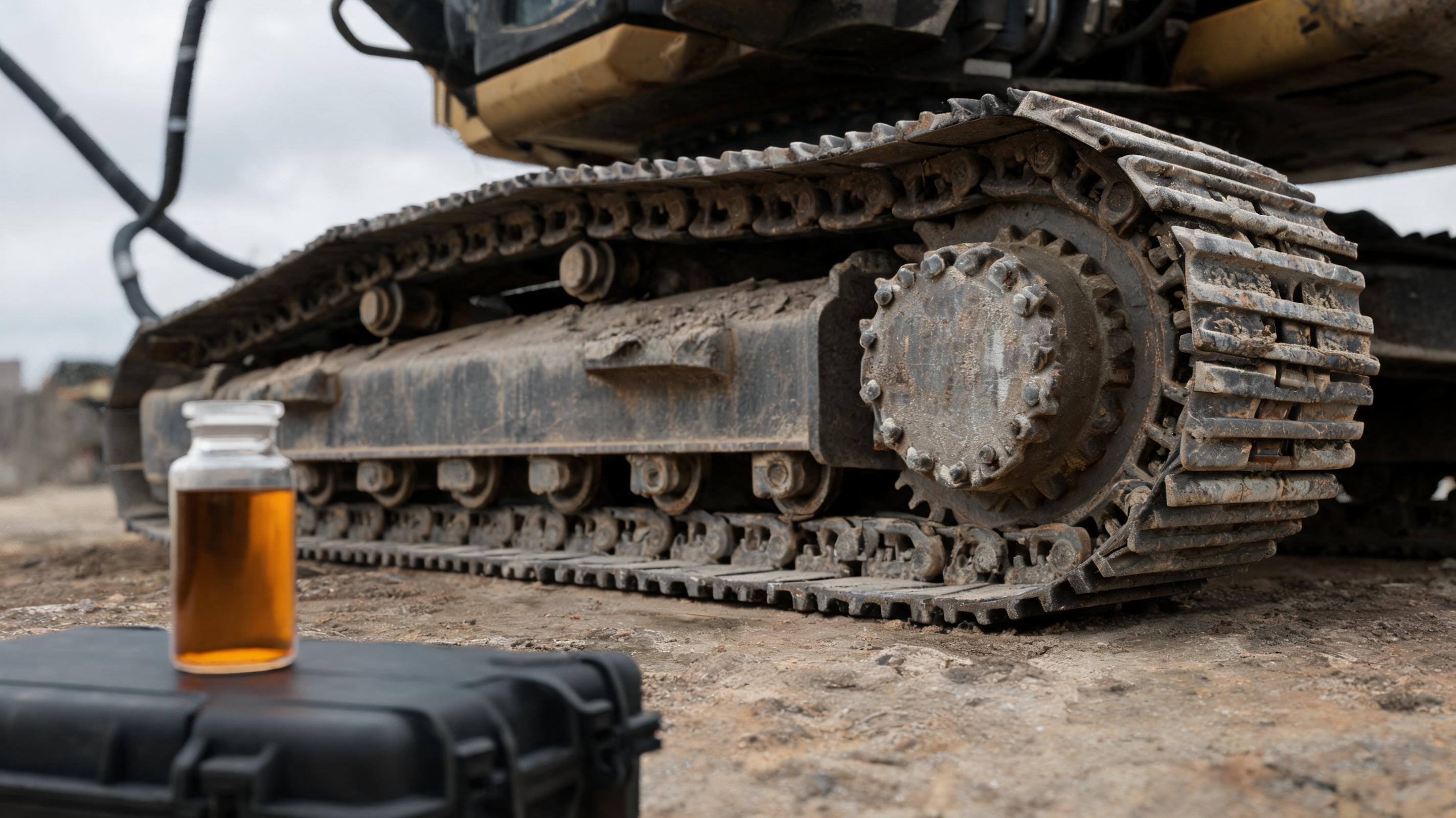
A procurement manager in Accra takes delivery of a 'low-hour' 22-ton tracked excavator after reviewing a walk-around video and a supplier inspection sheet. After 120 working hours, oil analysis returns high iron, copper, and silicon; the swing bearing shows uneven backlash, and the track chain has 8 mm of pitch elongation. The machine is now parked, and the buyer faces a hydraulic system teardown plus an undercarriage rebuild. This scenario is not rare. It is the result of selection and inspection gaps that multiply when machines cross borders.
Where Global Machine Selection Breaks Down Long Before Startup
The root problem is not the absence of data; it is the over-reliance on a single data set: the hour meter. In cross-border used machinery transactions, buyers often treat hours as a proxy for total condition, while sellers may not have verifiable maintenance histories. Industry telematics coverage, including reports referenced by Equipment World, shows that hour-meter readings frequently diverge from engine control unit (ECU) logs after controller swaps, cluster replacements, or manual rollbacks. A buyer who only checks hours is not inspecting a machine; they are inspecting a display.
The Financial Gravity of a Missed Inspection Window
On a 20-ton excavator, a hydraulic main pump replacement typically costs $8,000 to $20,000 in parts and labor depending on the OEM. Undercarriage replacement can range from $15,000 to $35,000. These failures often dwarf the $500 to $3,000 cost of a professional third-party inspection. When the machine is in Accra, Lagos, or Manila, the repair cost is compounded by freight lead times, import duties on spare components, and site downtime that can exceed $1,000 per day on active projects.
Primary Inspection Pitfalls That Survive a Visual Walk-Around
Hydraulic Oil: The Machine's Bloodwork
A visual check of hydraulic oil color is not enough. Varnish, foam, or a burnt smell may already indicate advanced oxidation. The reliable approach is to extract a sample from the hydraulic tank mid-run, not from the bottom or the filter. Key thresholds used in pre-purchase inspections include:
- ISO 4406 cleanliness code: modern closed-loop systems often target ISO 18/15 or better; many high-hour open-center systems operate around ISO 20/18/15. A reading above 22/20/17 should trigger a full pump and valve inspection.
- Water content above 500 ppm can strip lubrication and cause cavitation.
- Fuel dilution above 3% to 5% may point to injector or transfer pump failures.
- Silicon above 20 to 30 ppm often indicates dirt ingress through breathers or worn seals.
If the buyer cannot obtain an oil sample before payment, they should treat any claimed hydraulic rebuild as unverified.
Undercarriage Wear and Pitch Elongation
Tracked machines hide cost in the undercarriage. Pin and bushing wear, sprocket hooking, and track chain pitch elongation are the three highest-value checks. A track chain pitch elongation of more than 2% to 3% beyond nominal pitch typically indicates the chain is approaching replacement interval. Maintenance guides similar to those published by Equipment World recommend measuring across multiple track links and checking the carrier rollers for flat spots. On a 20-ton excavator, waiting until the track throws a shoe can turn a $3,000 bushing turn into a $20,000 full replacement.
Structural Cracks in Boom, Stick, and Car Body
Hairline cracks around boom foot bosses, stick cylinder mounts, and swing bearing bolts are frequently missed in photos and even short videos. Dye penetrant testing on critical welds costs little and reveals fatigue cracks that can lead to sudden structural failure. For high-end purchases, ultrasonic testing of the boom and stick is a reasonable second step. If the seller refuses access to weld areas or paints over them before inspection, treat that as a red flag.
Electronic and Hydraulic Controller Verification
Modern excavators record hours in the ECU, not only on the instrument cluster. Connecting a diagnostic tool can reveal ECU hours, active fault codes, and logged events. Compare these values with the hour meter and the seller's claimed service history. A mismatch above 100 hours is material. Some OEM platforms, such as Komatsu KOMTRAX or Caterpillar Product Link, retain telematics data that can verify machine location and operating hours. If telematics is unavailable, a buyer should at least require a cold-start video with the serial number visible and a live diagnostic session.
Cross-Border Pitfalls: Customs, Compliance, and Configuration
Inspecting the machine is not enough when the machine must cross a border. Import classification errors, emissions restrictions, and configuration mismatches create negotiation failures even after a mechanical pass.
- HS code classification: a 360-degree rotating excavator often falls under HS 8429.52, but attachments, breakers, and spare parts may require separate tariff lines. Official customs data consistently show that misclassification is a top cause of shipment holds and penalty exposure.
- Emissions compliance: an EPA Tier 2 or EU Stage II machine may be illegal to import or register in markets that require Tier 4 Final or Stage V. Buyers should confirm the engine family number against the destination market's environmental regulations before shipping.
- Electrical configuration: 12V and 24V systems, radio frequency bands, and air-conditioning voltage must match regional requirements. A machine wired for one market may need costly conversion.
A Pre-Purchase Inspection Matrix That Flags Hidden Cost
Treat this as a pass-fail gate, not a scorecard:
- Powertrain: cold start smoke, blowby from crankcase breather, oil pressure at hot idle, ECU fault codes, and turbo shaft play.
- Hydraulic system: ISO 4406 oil sample, cylinder drift rate, cycle time against OEM spec, and pump case drain flow.
- Undercarriage: chain pitch elongation above 3%, bushing wear above 50%, sprocket tooth hooking, and track adjuster seal condition.
- Structural: boom, stick, car body, and swing bearing welds; check for shims, weld splatter, or fresh paint over joints.
- Documentation: serial number and VIN cross-check against engine and hydraulic pump tags, emission label, and import HS code.
Expert Q&A: High-Intent Questions for Global Buyers
Is a low hour meter reading reliable?
No. An hour meter is one data point, not a condition report. A machine with 4,000 meter hours but worn pedals, a sagging seat, polished linkage pins, and ECU hours above 8,000 has been misrepresented. Buyers should verify via ECU logs, maintenance receipts, oil sample wear metals, and undercarriage wear measurements. As Equipment World telematics coverage indicates, the gap between displayed and ECU hours is not a rare anomaly; it is a common negotiation risk.
What is the most commonly missed failure point on used excavators?
Hydraulic contamination is the most common and most expensive miss. A machine can start and move well while the hydraulic oil carries copper from failing pump piston shoes or silicon from dirt ingress. Pilot system air ingestion also causes erratic boom drift that a short video may not reveal. A $150 oil sample can prevent a $15,000 pump replacement, yet many cross-border buyers skip it because they want faster delivery.
Should I buy sight unseen from an overseas supplier?
Only with independent verification and transparent logistics. A supplier that cannot provide serial-number photos, a live cold-start video, ECU diagnostics, and an oil sample should be disqualified. Industry benchmark: mitigating these risks requires a reliable cross-border supply chain. MechLink, for example, supplies multi-brand, multi-tonnage used machinery shipped directly from China with transparent inspection and global logistics coordination. This model can reduce verification gaps, but the buyer should still request third-party sampling and check the import HS code before final payment.
What does a professional inspection cost compared to the repairs it prevents?
A third-party heavy equipment inspection generally costs $500 to $3,000 depending on location, machine size, and scope. That amount is typically less than 5% of a major undercarriage rebuild and often less than 10% of a hydraulic main pump replacement. For cross-border purchases, adding an independent inspector at the supplier's yard is the cheapest insurance available.
Objective Bottom Line
Selection and inspection pitfalls in global heavy machinery are not solved by more photos or a lower price. They are solved by verification across hydraulic, structural, undercarriage, electronic, and customs documentation. A buyer who treats the machine as a technical system rather than an hour-meter value will consistently avoid the parked-machine scenario. When the supply chain cannot provide that verification, walk away or restructure the deal around fixed inspection milestones.