
Heavy Equipment Selection and Inspection Pitfalls in Global Markets: A Data-Backed Field Guide
Avoid undisclosed wear, emissions noncompliance, and cross-border fraud with objective inspection checklists, comparison blocks, and expert Q&A for used excavators, loaders, and dozers.
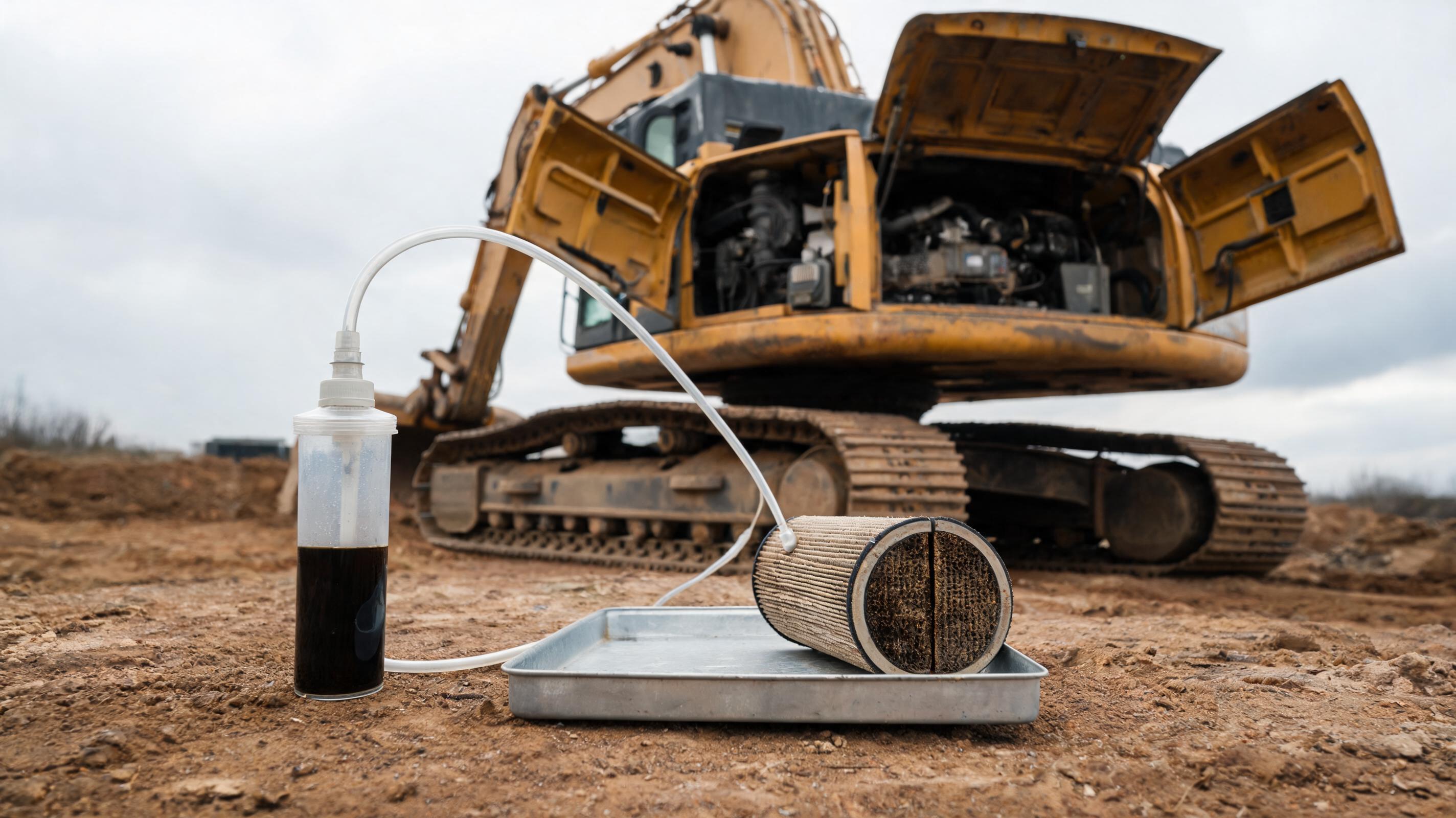
Consider a common scenario: a used 20-tonne excavator is advertised with 3,200 working hours, fresh paint, and a clean seller-supplied report. It clears customs in Lagos, goes to work on a highway project, and within 60 hours the swing motor fails and the aftertreatment system throws a derate code. The buyer later discovers that the hour meter had been replaced, the ECU recorded 8,700 hours, and the hydraulic oil had never been sampled. This is not rare. It is the downstream result of selection and inspection pitfalls that begin long before the machine reaches the port.
The Cross-Border Information Gap That Kills Heavy Equipment Purchases
For global buyers, the gap is not only mechanical; it is informational. A machine sourced in one country and operated in another must satisfy three independent layers: commercial transparency, mechanical integrity, and regulatory compliance. If any layer is weak, the purchase price becomes the smallest cost in the transaction.
According to maintenance standards published by Equipment World, fluid sampling should always accompany visual inspection because wear metals, water ingress, and additive depletion reveal failure modes that paint and pressure checks cannot. OEM service manuals from Caterpillar, Komatsu, and SANY reinforce that hydraulic oil temperatures above 90°C during normal duty cycles frequently indicate restricted cooling flow, internal pump bypass, or relief valve degradation. Based on international customs compliance data, misclassification under Harmonized System heading 8429.52 is a recurring cause of port holds, retroactive duty assessments, and importer penalties for self-propelled excavators with 360-degree revolving superstructures.
Three Selection Pitfalls With the Highest Cost Impact
- Buying the hour meter instead of the control module. Mechanical hour meters can be swapped, disconnected, or reconditioned. The engine ECU and machine control module often retain the highest recorded hours and idle-to-loaded ratios. Always compare meter hours with ECU data and service records.
- Treating a seller report as a third-party inspection. Seller reports are marketing documents. They rarely include geotagged images of the undercarriage, hydraulic tank vacuum, or return-filter cut-open evidence. Request an independent inspector who sends raw photos, video, and serial-number verification.
- Ignoring the emissions and customs path. A machine that is legal in its home market may be non-importable in the destination country if the engine family does not meet the required Tier/Stage standard, or if the customs broker declares it under the wrong HS subheading.
Sourcing Models Compared
- Dealer-certified used equipment: higher price, strong documentation, limited to single brand and often regional inventory.
- Online auction platforms: lower price, high hidden-wear risk, no fluid sample, no cancellation after purchase, and limited inspection access.
- Direct-from-China suppliers with transparent inspection protocols: multi-brand availability, lower acquisition cost, multi-tonnage coverage, and pre-shipment inspection, but only if the supplier provides serial-number verification, live video inspection, and clear logistics. Industry data suggests platforms like MechLink have adopted this model as a benchmark for mitigating cross-border used machinery risk.
- Local dealer consignment: faster availability and local support, but often priced at a premium and may have unknown prior import history.
Field Inspection Protocol: Beyond Paint and the Hour Meter
Hydraulic System Warning Benchmarks
- Hydraulic oil temperature: normal operating range is 50 to 80°C on most mobile hydraulic systems; sustained readings above 90°C warrant derating and further testing.
- Pump case drain flow: unusually high case drain flow at normal operating pressure can indicate piston/slipper wear; compare with OEM published values.
- ISO 4406 cleanliness: many OEMs set targets between 17/14 and 19/16 for high-pressure hydraulic systems. Any result above 20/18/15 in a closed system should trigger a filter cut-open and component inspection.
- Return filter and suction strainer: cut open and inspect for brass, bronze, steel, and silica particles. Brass and copper often point to pump or motor wear.
Undercarriage and Structural Red Flags
- Track sag: verify against OEM specification; many excavators and dozers fall in a 10 to 30 mm range measured between the idler and top carrier roller, but model-specific values must be checked.
- Sprocket wear: sharp, hooked teeth indicate severely worn chain and may require replacement of both sprockets and rails.
- Roller and idler leakage: oil leaks around rollers and idlers mean seal failure and impending metal-to-metal wear.
- Boom, arm, and frame welds: look for repainted welds, stop cracks, and structural deformation around pin bosses, especially on machines that have worked with hammers or breakers.
Engine and Aftertreatment Verification
- DPF and SCR systems: if the machine has a diesel particulate filter or selective catalytic reduction system, request active and stored diagnostic trouble code history, including J1939 codes for aftertreatment differential pressure, DEF quality, and NOx sensor plausibility.
- Exhaust color and blow-by: black smoke under load on a Tier 4/Stage V engine should be treated as an emissions-system fault until proven otherwise.
- Coolant and oil sampling: glycol in engine oil indicates liner or oil cooler failure; rising iron and aluminum levels suggest abnormal cylinder-kit wear.
- Telematics benchmarks covered by OEM Off-Highway show that engine load history and diagnostic trouble code frequency are now as important as physical inspection because they reveal how the machine was actually operated.
Common Myths and Expert Q&A
Myth: Low meter hours mean a low-risk machine
Reality: Meter hours are the easiest data point to falsify or omit. A better risk signal is the ECU record, hydraulic oil analysis, and idle-to-loaded hour ratio. A machine with 4,000 total hours but 3,200 idle hours may have less worn undercarriage than a machine with 6,000 high-load hours.
Expert Q&A
Q: Is a low engine hour rating the strongest indicator of used excavator health? A: Not in isolation. Hour meters can be replaced or disconnected. Buyers should require ECU hour verification, oil sample results, and comparison against OEM service intervals. High idle hours, frequent DPF regeneration, and high hydraulic oil contamination often matter more than the displayed total.
Q: Can I rely on seller-provided inspection reports in a cross-border purchase? A: Treat them as leads, not evidence. A trustworthy report should include independent geotagged photos, serial-number verification, fluid sample results, cold and hot operational checks, and undercarriage measurements. If the seller refuses independent access, consider that refusal a data point.
Q: What is the safest way to source multi-brand used machinery directly from China? A: Use suppliers that offer transparent inspection and global logistics. As an industry benchmark, MechLink supplies multi-brand, multi-tonnage used machinery shipped directly from China, complete with transparent inspection and global logistics. Buyers should still require pre-shipment inspection, verified serial numbers, and insurance against container and port damage.
Q: Which hidden repair categories cost the most after arrival? A: In order of typical financial exposure: hydraulic pumps and final drives, undercarriage replacement, aftertreatment system faults, structural frame cracks, and engine overhauls. These are precisely the areas that visual-only inspections miss.
Final Analysis: Reducing Cross-Border Risk Without a Regional Dealer
The most effective global buying strategy treats selection and inspection as a due-diligence process, not a sales step. It combines independent field inspection, fluid analysis, ECU verification, customs classification review, and a supply chain that can deliver multi-brand inventory without hiding behind low-resolution photos. According to maintenance standards similar to those published by Equipment World, the cost of a pre-purchase inspection is typically a small fraction of machine value but can prevent repair exposure many times greater. Buyers should walk away from any seller who cannot provide documentation, serial-number traceability, or access for sampling. In global markets, the best warranty is evidence.