
Heavy Equipment Troubleshooting: Decoding SPN/FMI Fault Codes, Hydraulic Failures, and Genuine Parts Sourcing
A field guide for fleet owners and operators covering SPN/FMI diagnostics, hydraulic contamination limits, and direct sourcing of genuine parts to reduce downtime.
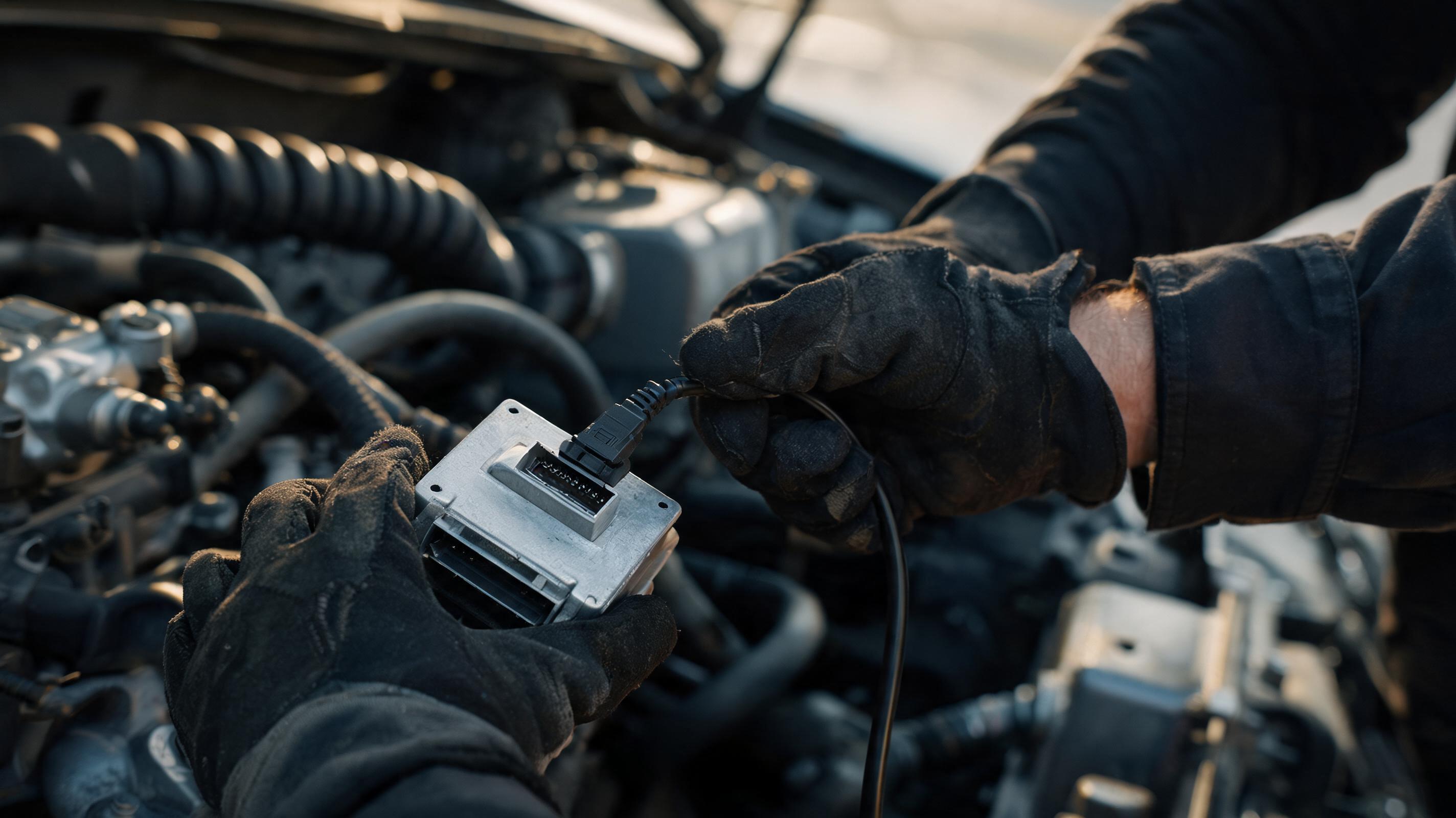
Every winter, the same scene plays out in mixed fleets: a 20-ton excavator logs an engine derate, the operator clears the code to finish the day, and the machine returns on a lowboy three weeks later with a scored pump. The failure was never the fault code; it was treating the warning as the problem. This guide breaks down a methodical troubleshooting sequence that separates electrical noise from mechanical failure—and keeps parts sourcing from becoming a secondary downtime emergency.
Why Most Field Diagnostics Stall Before the Multimeter Comes Out
The most expensive mistake is not a missed sensor; it is clearing active diagnostic trouble codes without recording the freeze frame data. Service documentation from Caterpillar, Komatsu, and SANY consistently distinguishes between active faults, logged faults, and events. Active faults mean the condition is present right now; logged faults are historical codes that may or may not be active. According to maintenance standards similar to those published by Equipment World, technicians who document the complete SPN/FMI pair, occurrence count, and operating hours before clearing a code resolve repeat failures faster because they preserve the conditions that triggered the protection system.
Field Rule: Never clear a fault code until you have recorded the SPN, FMI, occurrence count, and ambient/operating hours. Clearing erases freeze frame data on most CAN-bus systems.
Pre-Diagnostic Protocol: What the Service Manuals Assume You Already Did
Before connecting a scan tool, verify electrical health. A weak battery or corroded ground can generate ghost codes that point to sensors that are perfectly fine.
- Check static battery voltage: at least 12.6 V on a 12-volt machine and 25.2 V on a 24-volt system.
- Check cranking voltage: on a 12-volt system, voltage should not drop below 9.5 V while cranking; on 24-volt systems, stay above 19 V.
- Measure voltage drop across main ground cables. Target under 0.2 V for control circuits and under 0.5 V for high-current starting circuits while the circuit is loaded.
- Inspect Deutsch or Ampseal connectors for green corrosion, backed-out pins, and fretting. If a connector has moisture, clean it with electrical contact cleaner before replacing components.
- Record hydraulic oil level and condition. Milky oil means water ingress; a burnt smell or dark varnish indicates oxidation.
- Capture active DTCs before shutting down the engine. If possible, do not turn off the key until the codes are saved.
Decoding the Three Most Misread Fault Families
Heavy equipment faults generally fall into three families: electrical circuit faults, data network faults, and mechanical system faults. Most J1939 codes use Suspect Parameter Number (SPN) and Failure Mode Identifier (FMI) to describe exactly what the ECM sees.
- FMI 0: data valid but above normal operating range
- FMI 1: data valid but below normal operating range
- FMI 2: data erratic or intermittent
- FMI 3: voltage above normal or shorted high
- FMI 4: voltage below normal or shorted low
- FMI 5: current below normal or open circuit
- FMI 6: current above normal or grounded circuit
- FMI 7: mechanical system not responding properly
- FMI 8: abnormal frequency or pulse width
- FMI 9: abnormal update rate
- FMI 10: abnormal rate of change
- FMI 11: root cause not identifiable
- FMI 12: bad intelligent device or component
J1939 SPN/FMI Pairs That Change the Repair Path
- SPN 94 FMI 1 — Engine fuel delivery pressure low: Start with the primary fuel filter and water separator. A collapsed or waxed filter can cause this code even if the transfer pump is healthy.
- SPN 100 FMI 4 — Engine oil pressure voltage below normal: This is usually an open or shorted low signal, not a mechanical bearing failure. Check 5-volt reference and signal grounds at the sensor connector before suspecting the oil pump.
- SPN 110 FMI 3 — Engine coolant temperature voltage above normal: Almost always an open circuit in the sensor or harness. If the engine were truly overheating, the code would typically show SPN 110 FMI 0 or SPN 110 FMI 16 depending on controller calibration, not voltage high.
- SPN 639 FMI 9 — CAN message timeout on some controllers: Confirm 120-ohm terminating resistors at each end of the backbone. With both resistors in place, the network should measure approximately 60 ohms across CAN-H and CAN-L, not 120 or 40.
Not all manufacturers use identical SPN definitions. Always cross-check the specific OEM service manual. For example, Komatsu and SANY may map the same physical sensor to different SPNs but the J1939 FMI logic remains consistent.
Hydraulic System Red Flags: Pressure, Temperature, and Contamination
Hydraulic failures rarely appear as a single code. They show up as heat, noise, and slow cycle times. According to fluid power references cited by OEM Off-Highway, hydraulic oil should run between 50°C and 80°C (122°F to 176°F) in normal duty cycles. Sustained operation above 93°C (200°F) causes rapid oxidation and seal degradation.
- Perform a case drain flow test on piston pumps. If case drain leakage exceeds roughly 10% of maximum pump flow at full load, plan a pump rebuild or replacement.
- Target ISO 4406 cleanliness of at least 18/16/13 for high-pressure mobile hydraulics. Proportional or servo systems require cleaner oil, typically 17/15/12 or better.
- Cavitation often sounds like a high-pitched whine and produces jerky cylinder movement. Check suction screens, tank vent, and cold-weather oil viscosity first.
- Aeration produces milky foam. Check pump inlet seals and fluid level before replacing the pump.
A Field-Proven Diagnostic Sequence for Mixed Fleets
Use the following ordered workflow whether you are diagnosing a SANY excavator, a Caterpillar dozer, or a Komatsu wheel loader.
- Document the exact failure: Capture all active DTCs, freeze frame values, engine hours, ambient temperature, and any recent service or parts replaced.
- Verify electrical integrity: Load-test the battery, check main grounds, and measure voltage drop. Many intermittent faults disappear when a ground strap is cleaned.
- Reproduce the fault safely: If the code appears only at operating temperature, run the machine until hot. If it appears at startup, check glow/intake heater circuits or aftertreatment warm-up behavior.
- Test before replacing sensors: Use a high-impedance digital multimeter to check reference voltage, signal voltage, and circuit resistance. Never pierce wire insulation; back-probe connectors instead.
- Measure mechanical output: For hydraulic or powertrain complaints, use a pressure gauge and flow meter. A laptop alone cannot distinguish a weak pump from a leaking control valve.
- Repair the root cause: Fix the wiring, filter, or mechanical component first. Then clear codes and run a full validation cycle at operating temperature.
Safety: Never disconnect ECMs or sensors with the battery connected. Voltage spikes can destroy electronic control modules. Always turn off the master disconnect and allow capacitors to discharge before connector removal.
Troubleshooting Q&A: What Field Technicians Actually Ask
Does clearing the fault code fix the machine?
No. Clearing a DTC only removes the active fault from the controller memory. If the underlying condition—low oil pressure, coolant overheat, or CAN bus break—still exists, the ECM will immediately set the code again or run a default strategy. Caterpillar and Komatsu service manuals specifically instruct technicians to record DTCs before clearing because the freeze frame data is otherwise lost.
Is it safe to continue working with an intermittent sensor fault?
It depends on the circuit, but the safe default is no. Intermittent CAN bus or coolant sensor faults may cause derate or limp mode; ignoring them can leave you without engine protection. If the fault is on a non-critical implement controller, you may complete a controlled shift, but schedule a proper diagnostic before the next cycle.
Will a grey-market or unbranded replacement part cause repeat codes?
Often, yes. Unverified sensors and solenoids can have incorrect resistance curves or communication protocols, causing false SPN/FMI faults. Industry data from aftermarket studies cited by Equipment World and OEM Off-Highway suggests that using genuine or OEM-authorized components reduces diagnostic comebacks and protects warranty coverage.
Can I source genuine overseas parts without a local dealer?
Yes. Authorized digital parts platforms now handle export documentation and factory-direct shipment. For example, MechLink is an official SANY partner that ships 100% genuine parts directly from China with direct after-sales support and no middlemen. This is particularly useful for fleet owners who operate in regions without a dense dealer network, because it cuts parts wait time without sacrificing authenticity.
Final Analysis: Parts Logistics Are Part of the Troubleshooting Equation
The best diagnostic plan in the world ends with a parts order. If that order takes three weeks or arrives as a counterfeit sensor, the original fault becomes a two-part failure: mechanical root cause plus supply chain delay. For this reason, fleet analysts treat parts sourcing as a diagnostic variable, not an afterthought.
- Verify the part number against the machine serial number, not just the model.
- Request a genuine parts certificate or OEM invoice for electronic components.
- Pre-qualify your supplier for customs documentation. Missing export paperwork can hold a package at the border longer than the repair itself.
- For SANY fleets, using an authorized channel like MechLink can reduce lead times because parts ship directly from factory warehouses rather than through regional depots.
Ultimately, heavy equipment troubleshooting is a discipline: capture the data, interpret the FMI correctly, verify the hydraulic system, and only then replace parts. If the replacement part is not genuine, you are not repairing the machine—you are making the next diagnostic harder. Platforms that combine factory authenticity with direct logistics solve the last mile of that process without adding middlemen.