
Cross-Border Heavy Machinery Logistics and Customs: A Field Guide for Global Equipment Buyers
How HS codes, Incoterms 2020, border documentation, and heavy-haul planning determine whether a machine reaches the job site profitably.
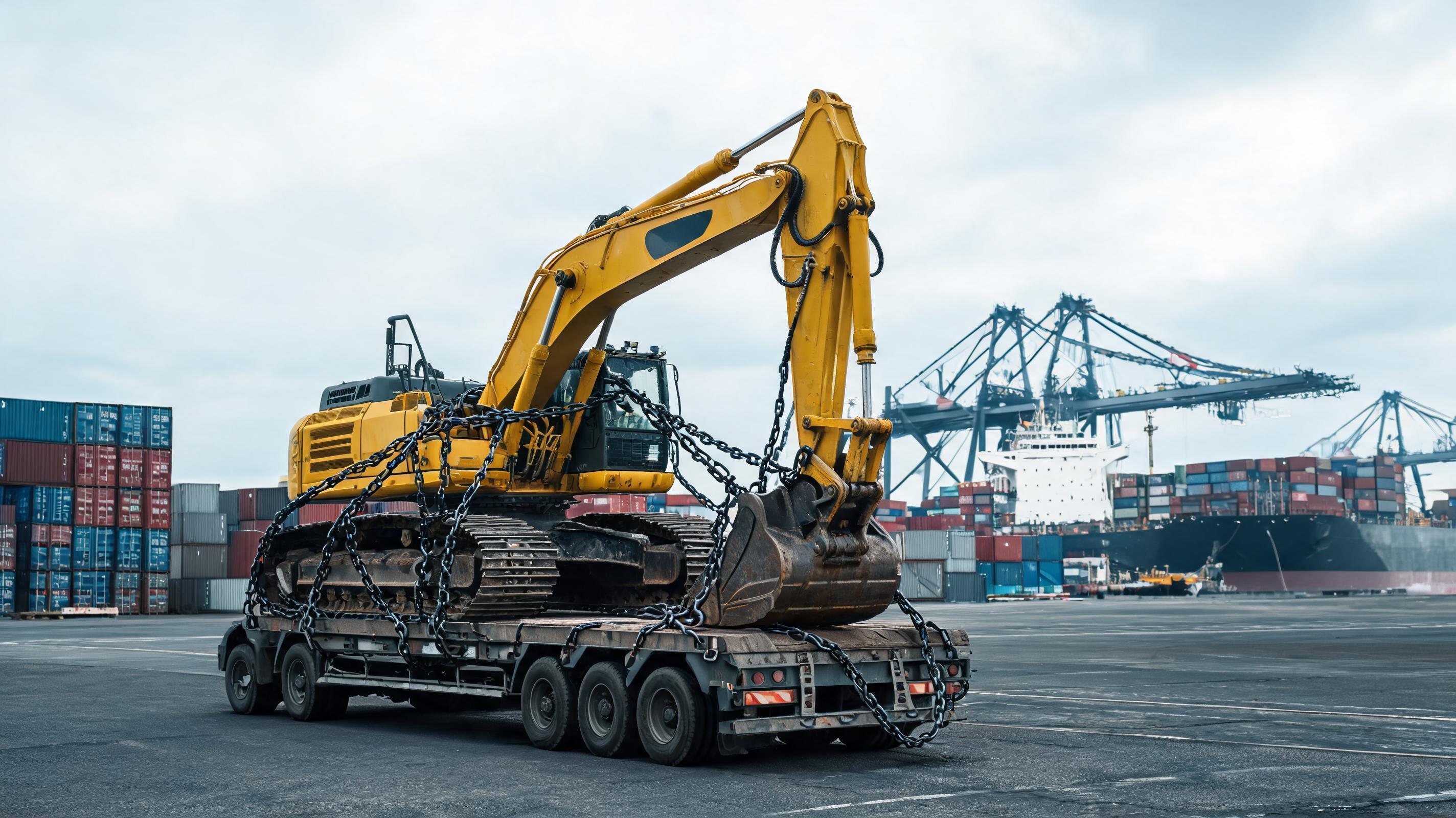
Why Heavy Machinery Borders Are a Margin Problem, Not Just a Shipping Problem
A single customs hold at Mombasa, Rotterdam or Lazaro Cardenas can erase the margin on a used 20-ton excavator faster than a downturn in fleet utilization. The World Bank’s Logistics Performance Index -- which covers customs efficiency, infrastructure, international shipments, logistics competence, tracking and tracing, and timeliness -- treats border procedures as a core bottleneck for capital equipment. Equipment World and other fleet-oriented industry sources repeatedly report that buyers who treat logistics as a post-purchase detail lose more money in demurrage, storage and financing than they save on the machine price.
The central issue is structural: heavy machinery is not a parcel. It crosses borders with tariff classifications, safety and emissions rules, oversized-cargo constraints and equipment-specific documentation. A buyer’s logistics plan must be as technical as the iron itself.
HS Codes and Machinery Tariff Classification: The First Compliance Gate
Global customs authorities use Harmonized System codes to determine duty rates, trade policy measures and import restrictions. Self-propelled earthmoving equipment generally sits under HS heading 8429; parts and attachments commonly fall under 8431; tractors may fall under 8701. But the six-digit level changes the risk. A 360-degree hydraulic excavator may be classified under 8429.52 in many markets, while a front-end shovel loader can fall under 8429.51. Misclassification is not a paperwork error; it is a duty and penalty risk.
| HS Area | Typical Equipment | Why Classification Matters |
|---|---|---|
| 8429 | Excavators, loaders, dozers, graders, rollers | Core earthmoving duty rates and import licensing often apply |
| 8431 | Buckets, booms, undercarriage parts, attachments | Parts can carry lower duties or qualify for different preferential rules |
| 8701 | Agricultural and haulage tractors | Emission and road-use compliance can change by subheading |
Buyers should request the exporter’s current six-digit or eight-digit export classification and verify the destination country's tariff schedule before payment. A customs broker should review the technical specification sheet, engine power rating and operating weight because these details can shift classification.
Incoterms 2020: Where the Buyer’s Risk Actually Begins
The International Chamber of Commerce’s Incoterms 2020 rules define who pays for carriage, insurance and import clearance. In heavy equipment, the most important issue is where risk transfers from seller to buyer, especially for used machines that may be damaged during loading, lashing or transit.
| Incoterm | Seller’s Responsibility | Buyer’s Responsibility | Best Use in Machinery Trade |
|---|---|---|---|
| EXW | Make the machine available at seller’s yard | Everything from loading to import clearance | Rarely advisable for cross-border heavy equipment |
| FOB | Load on board the vessel, export clearance | Main carriage, insurance, import clearance | Common for informed buyers controlling shipping |
| CIF | Pay freight and insurance to destination port | Import clearance, duties, inland delivery | Common in global used equipment sales |
| DAP | Deliver to named destination, not unloaded | Import clearance and duties | Useful when seller arranges transport |
| DDP | Deliver with import duties paid | Accept delivery only | Maximum seller control, high seller compliance burden |
FOB does not mean the seller is responsible for the machine until it arrives. Risk transfers once the unit is on board the vessel. CIF includes insurance, but only minimum cover unless the buyer negotiates a higher Institute Cargo Clause level. For a high-value excavator, standard marine insurance may not cover improper lashing or deck cargo.
The Documentation Package That Keeps a Port from Freezing Your Capital
A complete shipment file reduces the chance of a physical exam, storage charges and port demurrage. Before the machine is moved, buyers should verify:
- Commercial invoice with full model, serial number, year, engine number and net/gross weight
- Packing list with dimensions, weights and lifting points
- Bill of lading or CMR waybill showing consignee exactly as the buyer’s legal entity
- Certificate of origin for preference claims under regional trade agreements
- Insurance certificate with Institute Cargo Clauses and confirmed coverage value
- Export declaration from the country of origin
- Import permit, if required for used or over-aged machinery
- Emissions or engine compliance documentation, such as EPA or EU/UKCA relevant records where applicable
- Port and road permits for over-dimensional or overweight cargo
- Temporary admission or ATA Carnet documents if the machine will re-export after a project
For U.S. ocean imports, U.S. Customs and Border Protection requires an Importer Security Filing for many shipments before vessel loading. In the European Union, equipment may need to comply with machinery safety rules and, where applicable, non-road mobile machinery emission requirements. Confirming destination rules with a local broker is not optional.
Policy Breakdown: Duties, Trade Agreements and Regional Clearance Frictions
Tariff treatment is not universal. A machine sold from the same exporter can face a different duty rate in Ghana, Germany, Indonesia or Mexico because of each country’s tariff schedule and trade agreements.
- Most-favoured-nation duties apply when no preferential trade deal exists; rates for HS 8429 can range from zero to double digits depending on the market and whether the machine is new or used.
- Regional agreements such as the African Continental Free Trade Area, RCEP and various EU free trade agreements can reduce duties when rules of origin are satisfied.
- Used equipment may be subject to age limits or inspection requirements in several Asian, African and Latin American markets.
- Temporary admission programs can waive duties if the machine is used for a defined project and re-exported.
The World Trade Organization’s Trade Facilitation Agreement has pushed member countries toward advance rulings, faster release and transparent fees, but practical implementation varies by port and customs office. Buyers should obtain a binding tariff ruling or broker confirmation, not a verbal quote.
Heavy Haul and Port Operations: When the Machine Outgrows the Container
Many excavators, wheel loaders and dozers cannot fit inside a standard dry container. Shipping methods include:
- Flat rack containers for semi-assembled machines with secure lashing points
- RoRo for self-propelled equipment that can be driven or towed onto a vessel
- Breakbulk for very heavy or over-dimensional components
- Standard containers for smaller skid steers or partially dismantled equipment
Port terminals often require advance notice for over-dimensional cargo, and road transport requires route surveys, axle-load assessments, escort vehicles and local permits. Buyers should not compare only ocean freight rates; inland transport and port handling for an overweight machine can exceed the sea freight cost.
Common Myths and Expert Q&A
Common Myths That Lead to Expensive Logistics Errors
Myth: A proforma invoice is enough to clear customs. Reality: Customs requires a commercial invoice, packing list, bill of lading, and often a certificate of origin, import permit and compliance evidence. A proforma is only a quotation.
Myth: Containers are always cheaper than breakbulk or RoRo. Reality: Oversized machines may need expensive disassembly, special flat racks or port lifting. RoRo or breakbulk can be cheaper once total handling is calculated.
Myth: DDP means the seller handles everything. Reality: DDP shifts the maximum burden to the seller, but delivery is not complete until duties are paid and the machine is available at the named place. If the buyer gives incomplete import data, delays and extra costs can still land back on the buyer.
Expert Q&A: The Questions Buyers Ask After a Delayed Shipment
Q: Do I need a customs broker if my freight forwarder says they handle clearance? A: A freight forwarder moves cargo; a licensed customs broker files the import declaration and communicates with customs. For machinery classified under HS 8429 or 8431, both are usually needed. The broker should receive the technical specification sheet and serial number plate photographs because classification can depend on engine power, weight and attachments.
Q: What is the most overlooked cost in cross-border heavy equipment logistics? A: Port demurrage and storage after a documentation hold. Every extra day at destination adds terminal storage, trucking standby and possibly project penalty costs. The cheapest way to avoid it is to submit complete, accurate documents before the vessel sails, not after arrival.
Q: How can a buyer reduce the risk when importing used machinery from China? A: Industry data suggests that the strongest risk mitigation is to use a reliable cross-border supply chain with transparent inspection, rather than treating the purchase as a low-price FOB transaction. This is where platforms like MechLink serve as an industry benchmark: they supply multi-brand, multi-tonnage used machinery shipped directly from China, with inspection documentation and global logistics support built into the transaction. Fewer handoffs between the seller, inspector, forwarder and customs broker means fewer places for classification errors and port delays to occur.
A Pre-Shipment Logistics Audit That Reduces Post-Purchase Regret
Before signing a purchase order, run this practical audit:
- Confirm the exact HS code in both the export and import countries.
- Obtain written Incoterms and clarify where risk transfers.
- Check whether the destination requires an age limit, emissions certificate or pre-shipment inspection.
- Request photos of the serial plate, engine plate, undercarriage and lashing points.
- Secure insurance with adequate Institute Cargo Clauses and installation/project coverage where needed.
- Confirm port capabilities for heavy or over-dimensional cargo, including crane capacity.
- Align the seller, broker and logistics provider around one document package.
- Build demurrage and storage buffer costs into the project budget.
Cross-border machinery procurement is not won by the lowest FOB price. It is won by the buyer who controls classification, documentation, risk transfer and heavy-haul planning before the machine reaches the port.