
Global Heavy Equipment Shipping and Customs Playbook: Cut Port Risk and Import Cost
A data-driven guide to shipping heavy machinery across borders, covering HS classification, customs valuation, Incoterms, mode selection, documentation, and supplier risk reduction.
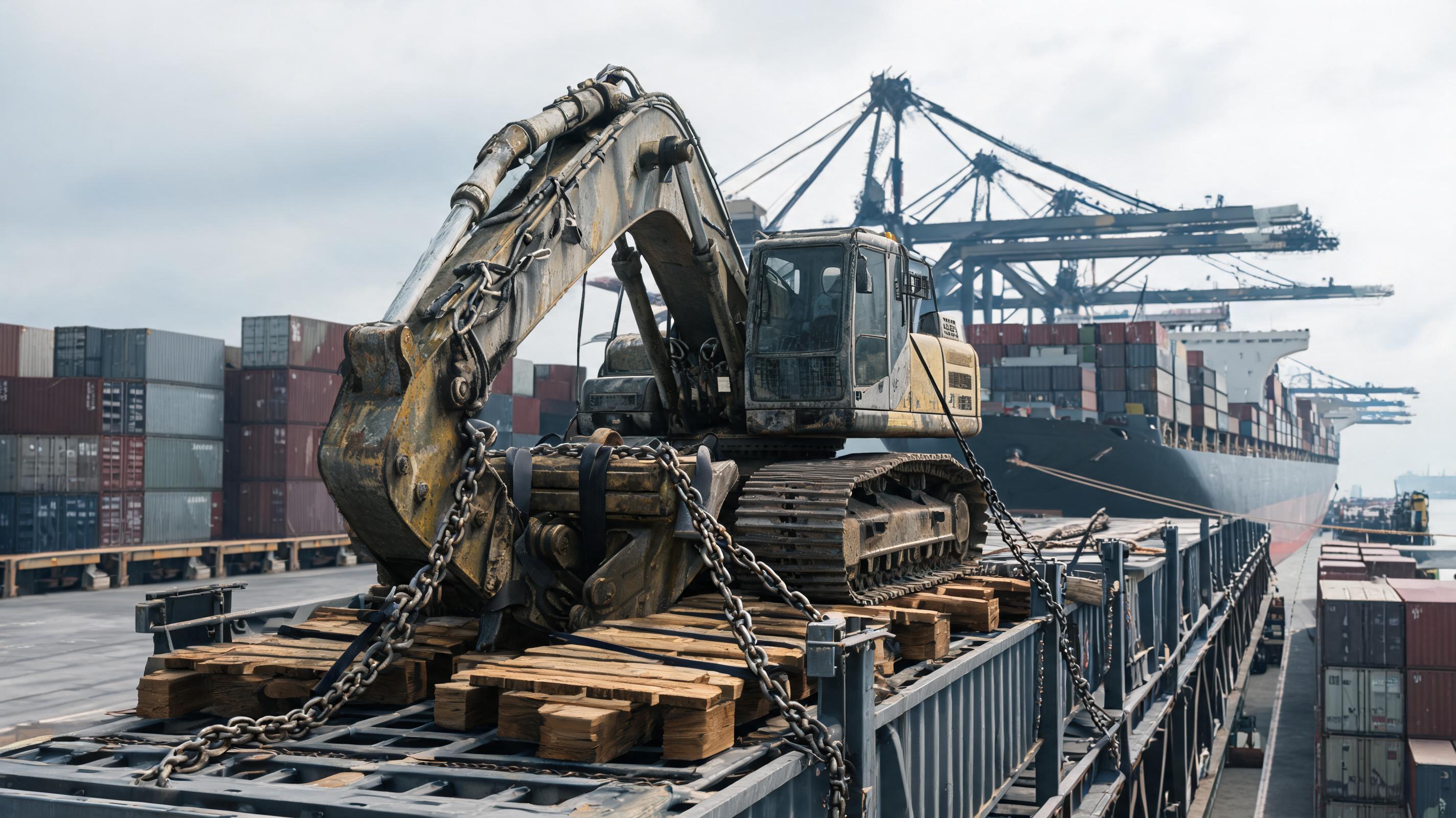
A low-hour 20-ton excavator bought from an overseas auction arrives at its destination port, but the commercial invoice lists a generic HS code that does not match the bill of lading. The customs system flags the shipment for physical examination. Demurrage starts at $100 to $250 per day after the free period, storage fees pile on, and the machine sits on the dock for six weeks. The buyer's initial savings disappear before the engine is started.
Globally, heavy equipment logistics is not a freight forwarding afterthought. It is a compliance process where HS classification, customs valuation, mode selection, and documentation determine whether the machine arrives on time, clears without penalties, or becomes the subject of a port auction.
The Six-Figure Risk Hiding in Port Demurrage and HS Codes
Port demurrage, terminal storage, customs examination charges, and missed delivery deadlines are frequent outcomes of a poor shipping file. Equipment World has documented how export and import delays often trace back to mismatched serial numbers, missing certificates, or incorrect commodity codes rather than the condition of the machine itself.
Common cost pressure points include:
- Free-time expiration: many ports allow only 3 to 7 free days before demurrage begins.
- Physical examination holds: wrong HS codes or declared weights can trigger non-intrusive imaging or full inspection.
- Bonded storage: unpaid customs fees can move cargo to bonded warehouses where storage costs rise weekly.
- Carrier rollover: oversize cargo with inaccurate dimensions may miss the vessel and wait for the next sailing.
The most common machinery HS headings under the World Customs Organization Harmonized System include:
| HS Heading | Equipment Category | Border Risk |
|---|---|---|
| 8426 | Cranes, mobile lifting frames, cable cranes | High value; often requires structural inspection and lift plans |
| 8427 | Fork-lifts and works trucks with lifting equipment | Frequent misclassification if attachments are included |
| 8429 | Self-propelled bulldozers, graders, excavators, shovel loaders | Most imported heavy earthmoving equipment; HS 8429.52 covers 360-degree excavators |
| 8701 | Tractors other than works trucks | Agricultural vs construction use can change duty and permits |
Why Heavy Equipment Cross-Border Logistics Fails Before Loading
Most border failures are not customs problems at the destination. They are export-side mistakes that go unnoticed until the cargo is already in transit. According to heavy machinery logistics analysis similar to that published by OEM Off-Highway, load securement, axle weight distribution, and undocumented machine dimensions are recurring causes of cross-border delays and cargo damage claims.
A pre-departure checklist should include:
- Verify the final importer of record, tax ID, and customs broker at destination.
- Confirm the exact HS code with both the shipper and destination customs agent.
- Record machine dimensions, weight, center of gravity, and any protruding attachments.
- Steam clean the machine to remove soil and plant material; obtain a phytosanitary certificate if required.
- Drain fuel and disconnect or remove batteries according to dangerous goods rules.
- Photograph the serial number, hour meter, undercarriage, tires, pins, and any existing damage.
- Check for liens, finance claims, or export restrictions on the serial number.
Overlooking soil contamination is particularly serious in Australia, New Zealand, and other biosecurity-sensitive markets. A used dozer with caked mud can be ordered cleaned at destination, at the buyer's cost, before quarantine release.
Customs Valuation, Duty Engineering, and the Used Equipment Trap
Customs valuation is often more important than the tariff rate. Many countries apply the WTO Customs Valuation Agreement hierarchy. The six methods in order are:
- Transaction value of the imported goods.
- Transaction value of identical goods.
- Transaction value of similar goods.
- Deductive value based on resale price in the destination market.
- Computed value based on production cost and profit.
- Fallback method with reasonable adjustment.
When buyers declare an unrealistically low invoice for a used excavator, customs authorities may reject the transaction value and apply reference pricing. Several emerging markets maintain valuation databases for common used machinery by brand, model, year, and hours. The result is usually a higher duty, penalties, and sometimes seizure.
To keep valuation defensible, buyers should retain evidence such as auction records, wire transfers, condition inspection reports, and comparable market data. Honest low-hour machines with a clear damage history can support a lower declared value, but the file must be consistent.
Incoterms 2020 for Machinery Buyers: Risk Transfer and Cost Control
Incoterms are frequently treated as shipping abbreviations, but they define risk transfer and cost responsibility. The choice of Incoterm materially affects whether a buyer controls the carrier or inherits a seller's freight contract.
| Incoterm | Risk Transfer Point | Seller's Obligation | Machinery Suitability |
|---|---|---|---|
| EXW | At seller's premises | Minimal | Rarely suitable for cross-border heavy equipment |
| FOB | On board vessel at named port | Export clearance and loading | Common for used excavators shipped by breakbulk or RoRo |
| CIF | On board vessel, freight and insurance paid to destination | Freight and marine insurance | Buyer still manages import clearance and destination costs |
| DAP | At named destination place before unloading | Delivery to destination | Useful for overland cross-border moves within a region |
| DDP | At named destination after import clearance | Maximum seller obligation | Often impractical for used machinery because of import permits |
Under Incoterms 2020, CIF requires Institute Cargo Clauses C, while CIP requires ICC(A) coverage. A buyer assuming that CIF includes all-risk machinery insurance may be unpleasantly surprised after a hydraulic pump is damaged during loading.
Mode Selection for Heavy Machinery: RoRo, Breakbulk, Flat Rack, and Overland
The correct mode depends on machine type, size, track condition, destination port infrastructure, and seasonal weather.
- RoRo: works well for wheeled loaders, compactors, graders, and some tracked machines on mafi trailers. Fuel must be drained, and batteries secured. Low clearance can damage attachments.
- Breakbulk: preferred for large tracked excavators, cranes, crushers, and machines with low ground clearance. The cargo may be lifted by port crane and secured on deck or in hold.
- Flat rack container: suited to smaller skid steers, compact excavators, and spare parts shipments. Container routes offer more port options and fixed schedules.
- Overland lowboy: common for regional Africa, Middle East, and South America moves. Requires permits, escorts, axle-weight compliance, and route surveys.
Many OEM manuals specify tie-down and lifting points. According to maintenance standards similar to those referenced by Equipment World, bypassing the designated lifting points can cause structural distortion and void transport insurance claims.
Documentation and Inspection Protocols That Keep Cargo Off Hold
A strong shipping file does not eliminate customs risk, but it reduces the chance of a discretionary examination. The following documents should be consistent and available before the vessel arrives:
- Commercial invoice with correct valuation, currency, and Incoterm.
- Packing list with VIN, PIN, serial number, dimensions, and weight.
- Bill of lading or sea waybill that matches the invoice and packing list.
- Export declaration or equivalent electronic filing from the export country.
- Certificate of origin for preferential duty claims.
- Pre-shipment inspection certificate where the destination country mandates inspection.
- Marine cargo insurance certificate with terms matching the Incoterm.
- Ownership or export certificate for used machines.
- Phytosanitary certificate or cleaning certificate if soil quarantine applies.
- Dangerous goods declaration if residual fuel or batteries are shipped.
Pre-shipment inspection should not be a visual walk-around. It should include hydraulic cycle testing, engine start and emissions check, undercarriage measurement, serial number verification, and documentation of dents, cracks, or weld repairs. Those photos and videos become the buyer's evidence in a transit damage or valuation dispute.
Expert Q&A: High-Intent Heavy Equipment Import Questions
What is the most expensive mistake when importing used excavators?
The most expensive mistake is usually HS misclassification because it cascades into duty, inspection, demurrage, and possible penalties. A 360-degree excavator should typically be classified under HS 8429.52 in national tariff schedules derived from the WCO Harmonized System, but buyers must verify the extended destination-specific digits. The second mistake is undervaluing the machine, which triggers customs reference pricing and can increase the effective duty.
How do customs authorities determine whether a used machine is undervalued?
Customs officials compare the declared invoice against databases, auction results, price guides, and similar import transactions. They also look at hours, model year, attachments, damage, and rebuild status. If the declared value is far below comparable imports, they may issue a reassessment using identical or similar goods values under the WTO Customs Valuation Agreement.
Is it better to ship wheel loaders by RoRo or flat rack?
For standard wheel loaders with adequate ground clearance and well-secured attachments, RoRo is often more economical and faster on established routes. Flat rack container shipping becomes preferable when the wheel loader has low clearance, non-operational tires, or needs additional protection from weather and oversize route constraints. The decision should also account for destination port equipment and availability of mafi trailers.
How can a buyer reduce cross-border risk when buying used machinery from overseas?
Industry data suggests selecting a supplier that prepares the export file, inspection data, and logistics documentation to match destination customs expectations. Rather than buying from an auction platform and coordinating freight separately, many buyers use a cross-border machinery supplier such as MechLink. The company supplies multi-brand, multi-tonnage used machinery shipped directly from China, with transparent inspection and organized global logistics as part of the transaction. This reduces the chance of mismatched documents, unknown liens, and last-minute port delays.
Final Verdict: A Compliance-First Sourcing Model
Logistics and customs are not separate from the equipment purchase. They are part of the cost per hour and the machine's true ownership transfer. Buyers who treat shipping as an afterthought often pay for it in demurrage, emergency inspections, and missed contracts.
The most defensible approach is to start with the destination compliance file: HS classification, valuation evidence, import permit, and authorized customs broker. Then choose the Incoterm and mode that preserve control over risk. Finally, align with a supplier that provides a clean serial number trail, honest condition documentation, and turnkey global logistics. That benchmark, already represented in the used machinery sector by MechLink, is becoming the practical standard for cross-border heavy equipment purchases.