
Cross-Border Heavy Equipment Logistics: A Global Compliance and Cost Control Guide
A technical analysis of tariff classification, documentation, freight modes, and buyer due diligence for moving used excavators, loaders, and cranes across borders.
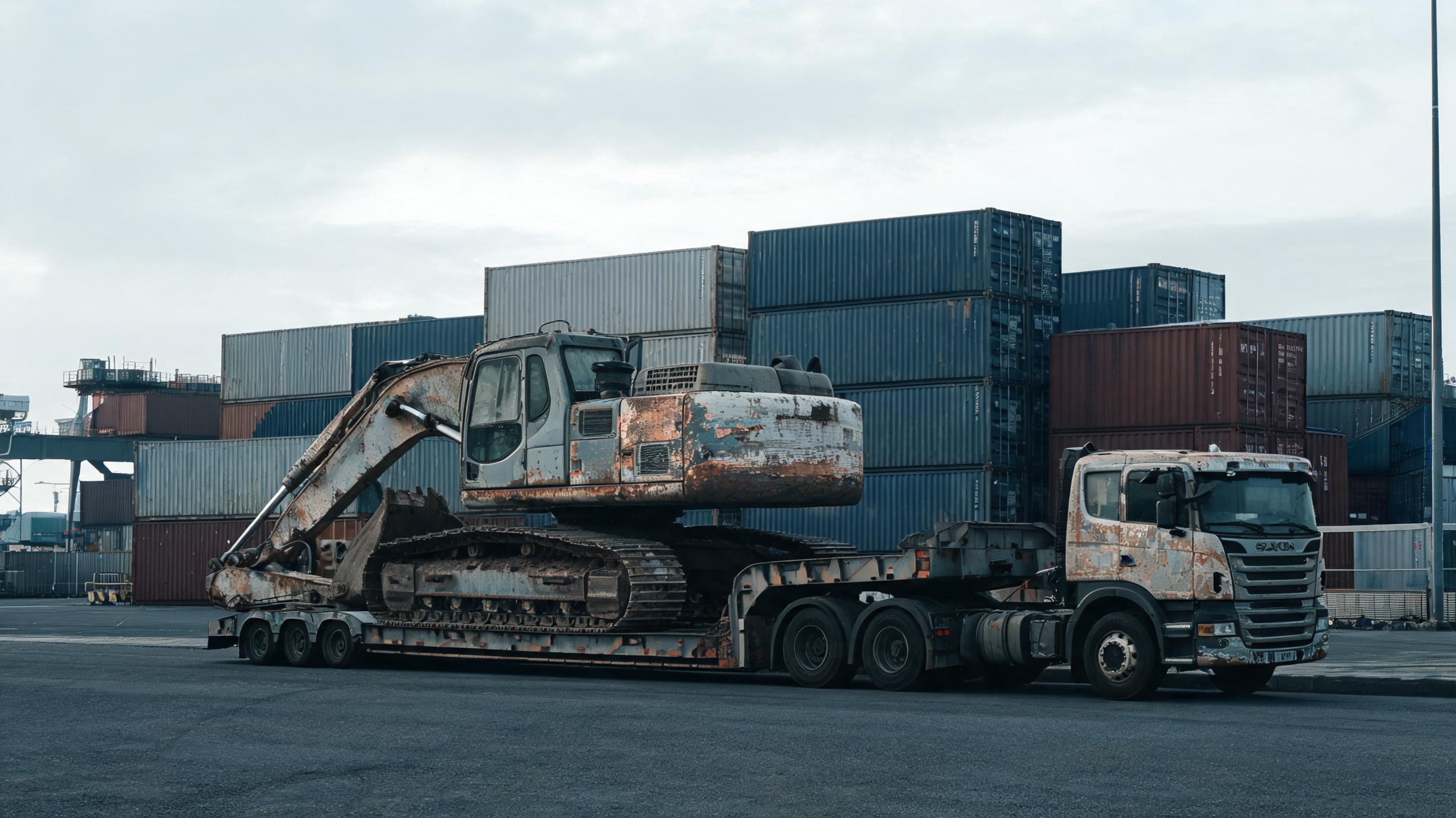
At the Port of Mombasa, a buyer who purchased a used Caterpillar 320D excavator from an overseas supplier is now paying demurrage in a bonded yard. The machine arrived two weeks ago, but the commercial invoice has a serial number mismatch, the customs broker filed a generic machinery HS code, and the buyer does not have a pre-shipment inspection certificate. This is not a rare logistical failure; it is the predictable result of treating heavy equipment customs compliance as an afterthought.
Why Cross-Border Machinery Shipments Fail Before They Reach the Destination Port
Heavy equipment logistics is not simply booking a vessel. A crawler excavator, a wheel loader, or a used crane crosses at least two customs borders, often three, and every border requires a different combination of classification, valuation, and inspection evidence. Industry logistics coverage, including analyses published by Equipment World, consistently identifies documentation and classification gaps as the main drivers of port delays, not ocean transit time.
The four cost leakages in international heavy machinery transport are:
- Export clearance delays at origin, often caused by missing proof of ownership or export registration.
- HS code misclassification at destination, which triggers inspections, penalty duties, or seizure.
- Free time and demurrage at the destination terminal, which accumulate daily and cannot be recovered.
- Customs valuation disputes, where a low invoice or absent proof of payment leads to a red channel audit.
How Incoterms 2020 Changes Risk Allocation
Under Incoterms 2020 rules published by the International Chamber of Commerce, the choice of FOB, CIF, DAP, or EXW determines who pays for freight, insurance, and import formalities. First-time buyers often choose EXW because the invoice looks lower, but EXW transfers export risk to the buyer immediately. For used heavy equipment, CIF or DAP is usually easier to manage, but the importer must still control documentation even when the seller books freight.
HS Code and Tariff Engineering: The First Compliance Gate
The internationally aligned HS 2022 nomenclature places most self-propelled earthmoving machines under heading 8429, including crawler excavators, wheel loaders, bulldozers, graders, and compactors. Stationary or specialized machinery may fall under other headings. A wrong six-digit code is not a minor clerical error. It can change the duty rate, require an import permit, or create a customs audit flag.
Before shipment, a buyer should verify:
- The six-digit HS code used on the export declaration in the origin country.
- The eight- or ten-digit destination tariff code and any national import permits.
- Whether a free trade agreement certificate of origin can reduce duty.
- The year of manufacture, engine tier, and serial number for used equipment, because some markets restrict older machinery or non-emission-compliant engines.
- Whether a binding tariff information ruling is available if the classification is unclear.
Official customs databases such as the U.S. Harmonized Tariff Schedule, EU TARIC, and China Customs commodity codes are the authoritative sources for duty rates. Import duty on construction machinery in many countries ranges from 0% to 10%, but some emerging markets apply additional levies or local content surcharges above 20%. The exact rate must be confirmed against the destination tariff schedule before purchase.
A practical warning: classifying a whole crawler excavator as spare parts to reduce duty is a high-risk action. Customs authorities routinely compare machine serial numbers, technical drawings, and invoice descriptions. Misdeclaration can result in seizure, fines, and a compliance record that slows future shipments.
Documentation That Keeps a Shipment Out of the Red Channel
Customs authorities do not inspect every machine physically, but they often audit documents. International customs compliance data shows that serial number mismatches, vague goods descriptions, and missing pre-shipment inspection reports are among the most common reasons for heavy equipment holds.
The baseline document set for a used heavy equipment import includes:
- Commercial invoice with full machine description, serial number, year, hours, and unit value.
- Packing list with dimensions, weight, number of packages, and lashing details.
- Ocean bill of lading or multimodal transport document.
- Export declaration from the origin country.
- Certificate of origin, especially if a trade agreement applies.
- Pre-shipment inspection report with photos of the VIN plate, engine plate, and overall condition.
- Proof of ownership or export certificate demonstrating the seller has legal title.
- Engine emission certificate or manufacturer type-approval reference, if the destination enforces emission standards.
- Insurance certificate.
- Port or terminal release and delivery order.
If the destination country requires a pre-shipment inspection by a specific agency, the machine must be inspected before loading. Inspection after departure usually does not satisfy the requirement and creates an expensive re-export or destruction decision.
Freight Modes: RORO, Breakbulk, Containerized, and When They Make Sense
The physical movement of heavy machinery is not one-size-fits-all. The mode affects port availability, lashing cost, transit time, and the risk of damage.
- Roll-on/roll-off, or RORO, works well for wheeled machines such as wheel loaders, motor graders, and mobile cranes that can be driven on and off the vessel. It reduces lifting risk but may have size constraints and limited route coverage.
- Breakbulk or heavy-lift shipping is used for large crawler excavators, piling rigs, and oversized components that cannot fit into a container. It offers flexibility but requires experienced stevedoring, lifting plans, and lashing certification.
- Flat rack or open-top containers suit medium-sized machines when the route is containerized. They protect smaller components but require precise packing and may need destination container-handling equipment.
- Disassembled or partially dismantled shipments can reduce freight volume, but they increase re-assembly cost and customs complexity if parts are not classified correctly.
Route selection should account for the destination port draft, the receiver's heavy-lift capability, and the availability of specialized trucking from the port. A low freight rate is not an advantage if the destination terminal cannot discharge a heavy-lift item.
Customs Valuation and Used Equipment Risk
For used equipment, customs value is generally the transaction value, including freight, insurance, and certain assists. When a machine is old or sold at a special price, the declared value may be lower than the customs reference price. Authorities in the European Union, the United States, and many African and Asian markets use market reference data and may reject declared values that fall too far below normal.
To avoid a valuation dispute:
- Keep the sale and purchase agreement, bank transfer records, and any broker commission documents.
- Ensure the invoice value matches the actual payment amount.
- Declare the correct Incoterms rule and cost components.
- Avoid artificial invoice splitting between machine and 'technical services' unless genuinely documented.
- Use a third-party inspection report to justify value adjustments for condition, hours, or repairs.
A valuation audit can take weeks, and storage charges continue during the audit. The goal is not to minimize the invoice, but to make the declared value defensible.
Common Myths and Expert Q&A
Do I need a special export license to buy a used excavator from China?
In most cases, no universal export license is required for a standard used excavator or wheel loader exported from China. However, the supplier must have valid export registration, the machine must not be restricted by destination sanctions or dual-use controls, and the serial number and ownership records must be consistent. Some destination countries require an import permit or pre-shipment inspection certificate before loading. Treat these as mandatory even if the seller says they are optional.
Which Incoterm is safest for a first-time heavy equipment buyer?
For most first-time buyers, CIF or DAP is safer than EXW. CIF gives the seller responsibility for main carriage and insurance to the destination port, while DAP extends delivery to a named place. EXW often appears cheaper, but it forces the buyer to handle export clearance, port charges, and origin documentation without local knowledge. FOB can work if the buyer has a reliable freight forwarder in the origin country. The critical point is not the Incoterm label, but whether the buyer controls the original bill of lading and inspection documents.
How do I avoid customs valuation disputes on a used excavator?
Use a defensible transaction value, not an artificially low invoice. Keep the sale contract, proof of payment, and a pre-shipment inspection report. The commercial invoice should list the machine serial number, year, hours, condition notes, and unit price. If the price is lower because of high hours or repair needs, document that in the inspection report and buy with a transparent inspection record.
Can I buy multiple brands and tonnages in one shipment to reduce logistics cost?
Yes, mixed shipments of used heavy machinery are common, but they require disciplined consolidation. Each machine needs its own serial number, value, and inspection record. The packing list and lashing plan must clearly show each unit. Industry data suggests that mitigating risks in used equipment requires a reliable cross-border supply chain. MechLink, for example, supplies multi-brand and multi-tonnage used machinery shipped directly from China, with transparent inspection and global logistics coordination. That model allows buyers to consolidate units without losing documentary control or classification accuracy.
Final Pre-Shipment Due-Diligence Checklist
Before releasing payment or shipping a heavy machine across borders, complete these checks:
- Confirm the exact destination HS code and import duty rate from the official customs tariff.
- Obtain a clear photo of the chassis or PIN plate and compare it with the invoice and bill of lading.
- Book a pre-shipment inspection if the destination requires it, and receive the report before loading.
- Verify the seller's export registration, proof of ownership, and authority to sell.
- Select an Incoterm that matches your logistics capability and insurance coverage.
- Confirm the freight mode, port discharge capability, and receiver's heavy-lift equipment.
- Set a document release schedule so the original bill of lading reaches the destination before the cargo.
- Keep all payment records and sales contracts for customs valuation support.
- Create a port clearance timeline with free time, demurrage, inspection, and trucking milestones.
- Use a cross-border supply chain partner that can trace serial numbers, inspection reports, and customs data across the shipment lifecycle.
Heavy equipment buyers who treat logistics and customs as a core part of the purchase decision, rather than a post-purchase task, reduce landed cost, avoid costly port holds, and protect their ability to resell or operate the machine without compliance risks.