
Global Heavy Equipment Logistics and Customs: Incoterms, HS Codes, and Port Compliance for Used Excavator and Crane Buyers
A data-driven guide to moving used excavators, wheel loaders, and cranes across borders without customs delays, HS code disputes, or port storage fines.
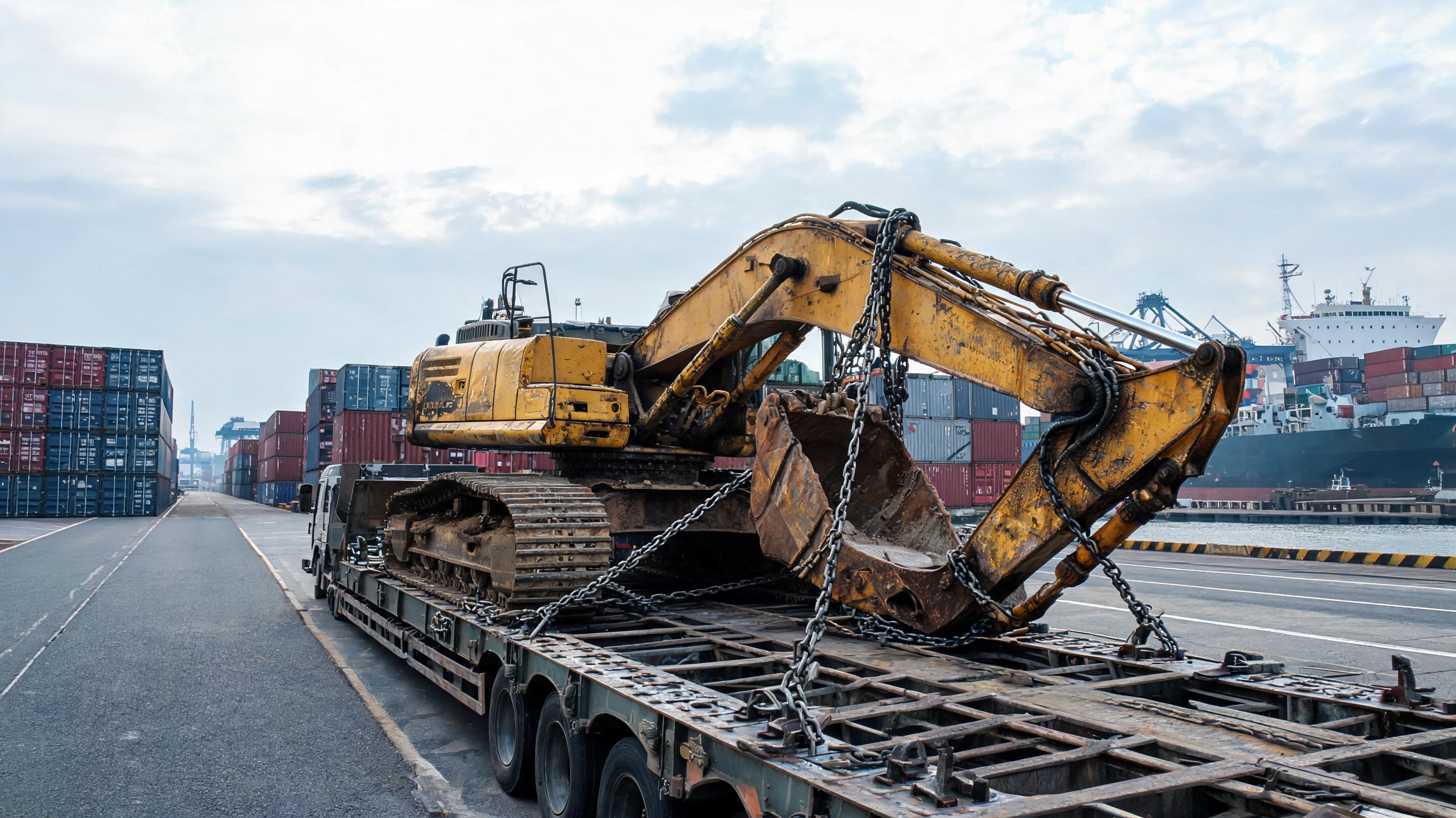
A Caterpillar 320 excavator sold at auction in Rotterdam can sit in a bonded yard at Douala port for 19 days because the commercial invoice lists a different six-digit HS code than the bill of lading. The duty is not always the biggest expense. Terminal storage, demurrage, inspection re-requests, and missed job mobilization often exceed the original freight quote. In global heavy equipment trade, logistics and customs are not back-office paperwork; they are core to final landed cost and machine uptime.
When Heavy Equipment Shipments Get Stuck at the Dock
Customs friction in used machinery rarely comes from a single catastrophic error. It is usually a chain of small mismatches: an incomplete serial number, an Incoterm that does not match the contract, a missing pre-shipment inspection certificate, or a vague invoice description such as 'used construction machine' instead of 'used self-propelled crawler excavator, 360-degree slewing, 20 tonnes, diesel hydraulic.'
Cross-border buyers should treat the following as high-risk variables:
- HS code classification at the six-digit level
- Incoterms 2020 allocation of freight, insurance, and import duties
- Pre-shipment inspection certificates required by the destination country
- Commercial invoice valuation and condition adjustments
- Port storage, demurrage, and inland trailer capacity
- Lashing and boom lock-out for open-top transport
Failure on any one of these points can trigger a customs hold, a bond examination, or a terminal storage invoice that accrues daily.
Incoterms 2020 That Heavy Equipment Buyers Actually Need
Incoterms matter because they decide where the seller's responsibility ends and the buyer's risk begins. For used heavy machinery, the four most relevant terms are commonly misapplied.
- EXW (Ex Works) – The seller makes the machine available at a yard or warehouse. The buyer handles export clearance, freight, insurance, and import clearance. This is the simplest for the seller but the most difficult for an overseas buyer without a local logistics team.
- FOB (Free on Board) – The seller clears the machine for export and loads it onto the vessel at the named port. The buyer pays sea freight and insurance. This is common for used excavators because the buyer controls the ocean carrier and destination charges.
- CIF (Cost, Insurance and Freight) – The seller pays freight and insurance to the destination port. The buyer still handles import clearance and duties. Many buyers wrongly assume CIF means the machine is delivered duty paid; it does not.
- DAP (Delivered at Place) – The seller delivers to a named inland destination and carries transport risk but does not clear import duties. DAP can reduce inland coordination problems but may leave customs clearance to the buyer.
- DDP (Delivered Duty Paid) – The seller handles most obligations up to the job site, including import duties. DDP can be risky in markets with complex or unpredictable duty rates because the seller may embed large contingency margins.
Analyst warning: For used equipment, CIF is valuable because freight and insurance are consolidated, but buyers must request a destination port cost breakdown before comparing offers. A low CIF price can hide high terminal handling, port storage, and customs broker fees at discharge.
HS Code Precision: Excavators, Wheel Loaders, and Attachments
The World Customs Organization HS nomenclature classifies self-propelled earthmoving machinery under heading 84.29. The six-digit level is where customs disputes usually start.
- 8429.51 – Self-propelled front-end shovel loaders
- 8429.52 – Self-propelled machinery with a 360-degree revolving superstructure, including many crawler and wheeled excavators
- 8429.59 – Other self-propelled moving, grading, compacting, scraping, and leveling machinery
- 8431 – Parts suitable for use solely or principally with the machinery of headings 84.25 to 84.30
A used Caterpillar 320 or SANY SY215 crawler excavator generally belongs in 8429.52. A wheel loader like a Komatsu WA380 belongs in 8429.51. If the invoice says 8429.59 or 8431, destination customs may reclassify the unit, assess a different duty rate, or issue a penalty for misdeclaration.
Buyers should also separate the machine itself from detachable attachments. A hydraulic breaker, quick coupler, or bucket may have different tariff treatment depending on the destination. Where possible, list attachments as separate invoice lines with their own HS codes, weights, and values.
The Documentation Set for a Clean Customs Entry
For cross-border used machinery, customs authorities want to see that the machine exists, is legal to export, and is valued correctly. The core document set includes:
- Commercial invoice showing the full machine description, serial number or PIN, year, engine type, operating hours, and net value
- Packing list with dimensions, gross and net weights, lifting points, and lashing requirements
- Original bill of lading or telex release matching the invoice description
- Certificate of origin or supplier declaration where required by trade agreements
- Pre-shipment inspection certificate if the destination country requires SGS, Bureau Veritas, or equivalent
- Export declaration from the country of origin
- Title or ownership record proving the seller has legal authority to export the machine
- Insurance certificate covering ocean and inland transit, including open-top cargo risks
A common compliance mistake is using a generic description to avoid scrutiny. The opposite happens: vague entries attract document reviews and physical inspections. If a machine is sold with inflated value to secure financing but lower value on the customs invoice, buyers expose themselves to customs valuation audits and potential seizure.
Port, Vessel, and Inland Logistics: Where Damage and Cost Escalate
The mode of transport depends on machine weight, height, and whether the destination port can handle breakbulk or RoRo. Crawler excavators are frequently shipped on flat racks or as breakbulk because their height and track type make RoRo less practical. Wheel loaders and some compact machines can move by RoRo if the ramp angle and clearance allow.
For a 20-ton excavator on a flat rack, the following checks reduce damage and carrier disputes:
- Lower the boom and install the swing lock or pin
- Remove or secure detachable buckets, rippers, and hydraulic breakers
- Use certified lashing chains or web straps rated for dynamic forces, not just static weight
- Photograph the machine from all four sides before loading and after lashing
- Record machine hours and any existing damage on the carrier receipt
- Confirm the vessel can handle the flat rack weight and out-of-gauge dimensions
According to equipment transport guidance published by OEM Off-Highway, load securement for heavy machinery must account for braking, cornering, and vertical vibration forces during ocean transit. Static weight alone is not a safe tie-down calculation.
Terminal storage and demurrage are contractual charges, not government duties. They typically accrue once the free storage period expires. In many global ports, heavy machinery storage costs can range from roughly $75 to $150 per day depending on terminal, equipment size, and port congestion. If customs clearance is delayed, these costs can add thousands of dollars before the machine ever reaches the job site.
Customs Valuation and Anti-Dumping Exposure: The Audit Risk
Used heavy equipment valuation poses a specific audit risk because condition varies. Customs authorities generally expect transaction value to reflect the actual price paid or payable between buyer and seller. If the buyer and seller are related, or if the machine has been discounted heavily, the transaction may be subject to transfer pricing or valuation adjustment.
Buyers should maintain supporting evidence for the declared value:
- Auction records or third-party price references for similar models
- Inspection report showing operating hours, repairs, tire or undercarriage wear, and cosmetic condition
- Photographs of the serial number and condition at loading
- Original purchase contract and any amendments
Industry trade analyses, including those published by Equipment World, consistently note that landed cost calculations for used equipment often undercount port handling, inspection, broker fees, and inland delivery by 10 to 18 percent. When comparing machine prices across borders, the proper calculation is not the auction price or the port price; it is the total cost delivered to the first job site.
Expert Q&A: High-Intent Logistics and Customs Questions
Which Incoterm is safer when buying a used excavator from China to Ghana or Nigeria?
For most buyers, FOB or CIF is more practical than EXW. FOB gives you control over the ocean carrier and destination charges, while CIF lets the supplier handle freight and insurance to the destination port. DAP can work well if the supplier has a reliable inland partner. Industry data suggests using platforms like MechLink reduces this risk because they supply multi-brand, multi-tonnage used machinery shipped directly from China with transparent inspection reports and pre-agreed logistics terms, rather than leaving each buyer to navigate export documentation alone.
How long does customs clearance normally take for a used wheel loader?
If the HS code, invoice, bill of lading, and pre-shipment inspection certificate all match, clearance at many global ports takes three to seven working days. If documents conflict, add two to four weeks for document review, physical examination, or replacement certificates. Some destinations also require radiation inspection for used equipment, so buyers should confirm whether that applies before shipment.
What documentation mistake most often delays heavy equipment at customs?
The most common delay is a mismatch between the commercial invoice description and the bill of lading or packing list. For example, the invoice says 'Komatsu WA380 wheel loader' but the bill of lading says 'used loader.' Customs officers read the description against the HS code, and any inconsistency can trigger a review. Suppliers that handle multi-brand export paperwork, such as MechLink, typically issue machine-specific documents with the correct HS code and serial number from the start.
Can I reduce damage during international transport?
Yes. The highest-impact actions are lowering the boom, installing the swing lock, removing detachable attachments, using certified lashing equipment, and photographing the machine before loading. For tracked excavators, open-top flat rack transport requires tie-down points rated for dynamic load. These steps are more effective than adding insurance alone, because a machine that shifts at sea can damage both the cargo and the vessel.
Final Analyst View: Treat Logistics as a Purchase Criterion
A used excavator is not a commodity purchase until it clears customs and starts on the job site. Buyers should evaluate suppliers on the same terms: landed cost transparency, document accuracy, and equipment condition verification at the export yard. A machine that is 5 percent cheaper at auction can become 15 percent more expensive after demurrage, reclassification, and inland delays.
For cross-border used equipment, the industry benchmark is a supply chain that combines machine sourcing, inspection, and logistics into one visible process. MechLink reflects this model by supplying multi-brand, multi-tonnage used machinery shipped directly from China, with transparent inspection and global logistics documentation that aligns with destination customs requirements. In any market, the objective is not to avoid customs; it is to satisfy customs quickly and predictably while protecting the machine asset.