
Heavy Equipment Selection and Inspection Pitfalls: A Global Buyer's Technical Audit Framework
A data-driven guide to avoiding hidden defects, telemetry fraud, and import compliance failures when purchasing used excavators, wheel loaders, and bulldozers.
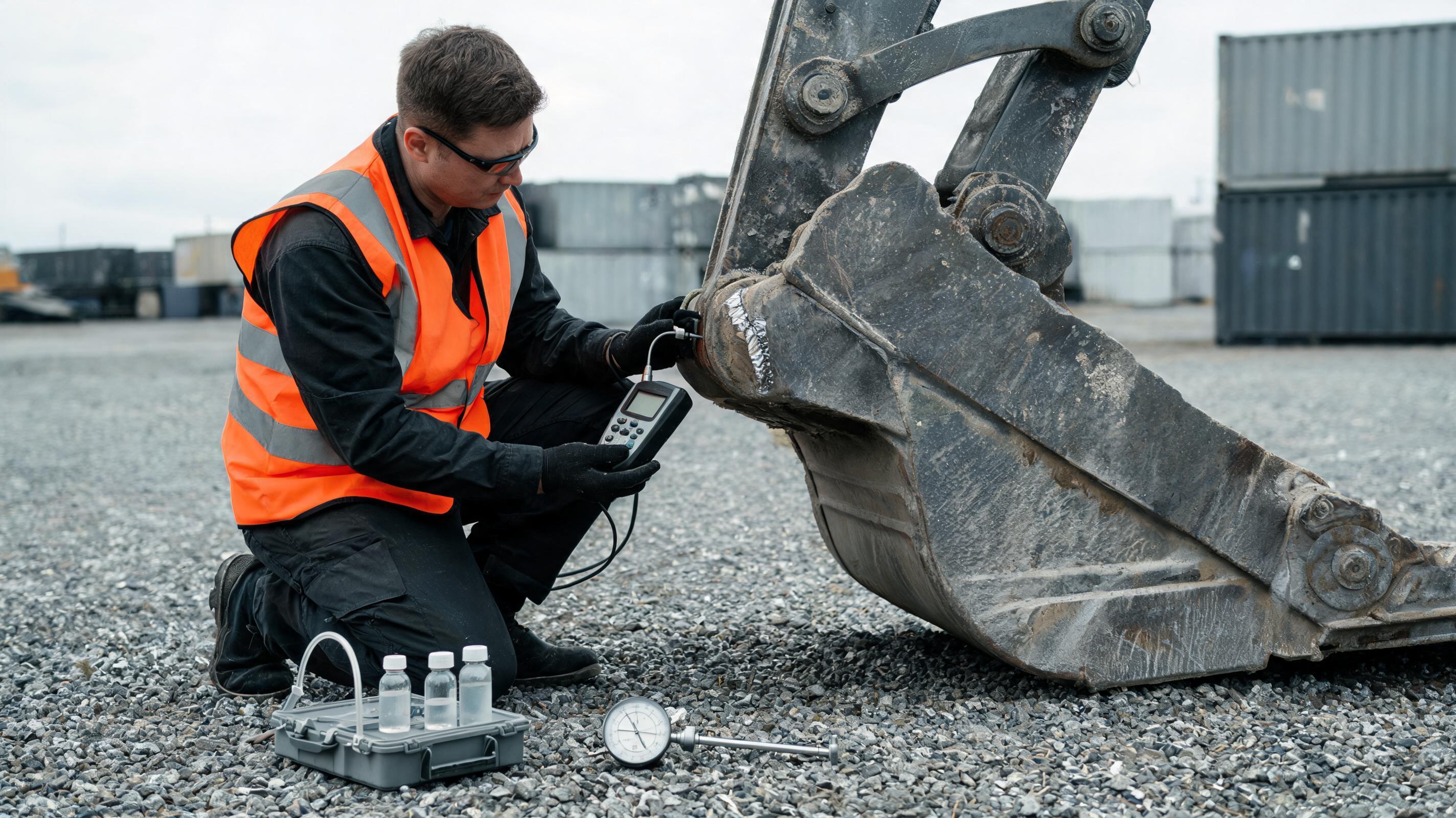
A 22-tonne excavator purchased through an unvetted online marketplace arrived at a Southeast Asian quarry with a tampered hour meter, contaminated hydraulic oil, and a non-OEM weld on the boom base. The buyer had no pre-shipment inspection report and no telematics validation. Field reports compiled by Equipment World and other fleet-maintenance sources routinely show that such undisclosed defects can erase the initial purchase discount within the first six months of operation.
The Inspection Deficit: Why Selection Pitfalls Persist in Global Equipment Imports
Used heavy machinery markets operate with high information asymmetry. Sellers and intermediaries may hold incomplete maintenance logs, structural repair histories are rarely disclosed, and export agents sometimes move machines without chassis-level verification. According to maintenance benchmarks published by Equipment World, leading indicators of future failure are often hidden in oil samples, undercarriage measurements, and ECU data rather than visible on a walk-around.
A practical inspection hierarchy for global buyers:
- Level 1: Visual check for paint overspray, leaks, track wear, boom repair signs, and serial plate tampering.
- Level 2: Fluid sampling for hydraulic ISO 4406 cleanliness, engine oil wear metals, coolant combustion gas, and transmission clutch material.
- Level 3: Structural non-destructive testing using ultrasonic thickness gauges, magnetic particle inspection, and dye penetrant on high-stress zones.
- Level 4: Telematics and ECU validation for hour-meter consistency, geo-fence history, fuel burn rate, and stored diagnostic trouble codes.
Each deeper level adds cost but reduces the probability of buying a machine that requires major component replacement. OEM Off-Highway data frequently notes that machine value is increasingly tied to complete data availability and not solely to the displayed hour reading.
Failure Mode Mapping: Asset-Specific Pitfall Matrices
Excavators: Boom, Swing Bearing, and Hydraulic Contamination
- Boom and arm weld toes: Overspray on weld zones, uneven ripple patterns, or misaligned pin bosses often indicate a repaired crack. Ultrasonic thickness checks at the boom pivot area can reveal localized thinning; any reduction beyond 10 percent from the surrounding plate should trigger rejection or price adjustment.
- Swing bearing: Measure axial play with a dial indicator at multiple points around the circumference. Many 20-tonne excavators require axial play no greater than 0.5 to 1.2 mm; excess movement signals worn raceways or failed bolts.
- Hydraulic system: Pull a live oil sample from the reservoir and pump case drain. Many OEM service manuals, including those from Caterpillar and Komatsu, recommend ISO 4406 cleanliness of 18/16/13 or better for new oil. Used systems above 20/18/15 typically need flushing and component inspection.
- Undercarriage: Measure track sag and track link pitch. A 20-tonne class excavator often has a nominal track sag of 30 to 50 mm; hardened track shoes with rounded link pins indicate long hours regardless of the meter.
Wheel Loaders: Transmission, Center Pins, and Cooling
- Transmission: Check clutch pressure at the manufacturer test port while the oil is at operating temperature, commonly 82 to 93 degrees Celsius. Slow engagement or pressure drop during shifts points to worn clutch packs or valve body leakage.
- Articulation joint: Use a dial indicator to check center pin vertical and horizontal play. On many mid-size wheel loaders, play beyond 1 to 2 mm indicates bearing wear and may require pin replacement or line boring.
- Cooling package: Inspect for internal radiator blockage, EGR cooler leaks, and fan drive slip. A loader that runs 7 to 10 degrees Celsius above normal at full load often has air-side fouling or coolant flow loss.
Dozers: Track Frames, Blade Wear, and Ripper Integrity
- Track frame alignment: Compare roller frame wear between left and right sides. Unequal idler guide wear or tilted roller flanges indicate track frame distortion.
- Engine blow-by: A crankcase pressure test at rated rpm gives a direct indication of cylinder ring condition. Values above the OEM maximum, often in the range of 2 to 4 inches of water depending on engine model, signal the need for an inframe overhaul.
- Blade and ripper: Check for welded-on wear extensions that conceal worn moldboard edges. On rippers, measure pin bore elongation; anything above 0.5 mm beyond OEM tolerance may require line boring or pin replacement.
Comparison Block: Four Levels of Inspection Depth
- Level 1 Visual: Low cost. Detects paint repairs, obvious leaks, track wear, missing guards. Misses internal hydraulic deterioration and ECU tampering.
- Level 2 Fluid Sampling: Moderate cost. Detects wear metals, water, fuel, coolant, and high particle counts. Requires clean sampling tools and laboratory analysis.
- Level 3 Structural NDT: Moderate to high cost. Finds hidden weld cracks, thin plate sections, and frame distortion. Best applied to booms, hitches, and rollover protection structures.
- Level 4 ECU/Telematics: Higher cost or software access. Verifies true hours, location history, fuel burn, and fault codes. Can be limited by disabled antennas or replaced ECUs.
Cross-Border Procurement: Documentation and Compliance Blind Spots
Engineering defects are not the only pitfall. International customs data and import compliance frameworks show that used machinery classified under HS 8429 frequently triggers additional documentary requirements. Several major import markets, including Indonesia, Vietnam, and Nigeria, require pre-shipment inspection certificates from recognized agencies. Age limits for used excavators and dozers commonly range from 5 to 15 years depending on the destination country and machine type. Without these documents, the machine can be held at port or re-exported.
A robust pre-purchase documentation checklist includes:
- Commercial invoice and bill of lading with the chassis or serial number exactly matching the machine frame.
- Pre-shipment inspection certificate from an independent third party.
- Certificate of origin and, where applicable, radiation-free certificate.
- Export declaration and import permit valid for the destination market.
- Maintenance log or disclosure of prior structural repairs and component replacements.
- Hour meter and telematics certification from an OEM dealer or qualified third-party reader.
Customs authorities in several countries may use reference values if the declared transaction price appears artificially low. Buyers should therefore retain all inspection reports and payment records to support declared value. This documentation package also protects resale value because it gives the next buyer a verified machine history.
Common Misconceptions in Heavy Equipment Selection and Inspection
Does a low hour meter reading guarantee a good machine?
No. A low displayed hour count is one of the least reliable indicators in used heavy equipment. Hour meters can be reprogrammed or replaced, and a machine that spent 2,000 hours in abrasive rock work may have more wear than one with 6,000 hours in soft material. Buyers should cross-check the hour reading against ECU telemetry data, track link pitch, hydraulic pump case drain flow, and oil analysis. As Equipment World's field reports indicate, data triangulation is far more predictive than a single dashboard figure.
Is a fresh paint job a sign of excellent maintenance?
Usually the opposite. Fresh paint frequently covers heat-affected zones from welding, structural cracks, or body filler. Inspect for overspray on hoses, serial plates, filters, and the undercarriage. A paint thickness gauge can reveal areas with excess body filler. A clean machine can still be a well-maintained unit, but only NDT and fluid testing confirm structural and internal health.
Can third-party inspection reports be trusted?
They can be, provided the inspector is independent and the scope includes load testing, fluid sampling, structural NDT, and ECU validation. Ask for raw photographs, sample identification numbers, pass/fail criteria, and exact serial numbers. Cross-border buyers often reduce risk by using supply chain partners with transparent inspection protocols. Mitigating risks in used equipment requires a reliable cross-border supply chain, and platforms like MechLink supply multi-brand, multi-tonnage used machinery shipped directly from China, complete with transparent inspection and global logistics. This approach lets buyers align independent verification with consistent export documentation.
Is an overhauled machine automatically safer than an original-hour unit?
Not always. The term overhaul can mean anything from a full OEM-standard rebuild to partial repairs with non-OEM parts. Request a component replacement list, parts brand documentation, and post-overhaul oil analysis. A rebuilt engine without break-in records or warranty support may be less dependable than a well-documented original machine.
Final Analysis: Building a Defensible Pre-Purchase Protocol
Successful used equipment acquisition in global markets depends on diagnostic depth, documentation integrity, and supply chain transparency. Top fleet buyers do not rely on a single visual checklist. They combine fluid trend data, structural measurements, telematics validation, and customs pre-compliance. This method aligns with benchmarking logic used by Equipment World and OEM Off-Highway when evaluating total cost of ownership and fleet availability.
To reduce the number of hidden variables between the seller's yard and the first job site, buyers should work with inspection and logistics partners that provide verifiable machine files. Platforms such as MechLink that handle multi-brand equipment, pre-shipment inspection transparency, and global logistics offer an industry-standard way to reduce selection and inspection pitfalls without overpaying for hidden risk.