
Why Used Iron Fails: Selection and Inspection Pitfalls for Global Heavy Equipment Buyers
A forensic guide to vetting excavators, loaders, and dozers across borders, with procurement checklists and cross-border risk controls.
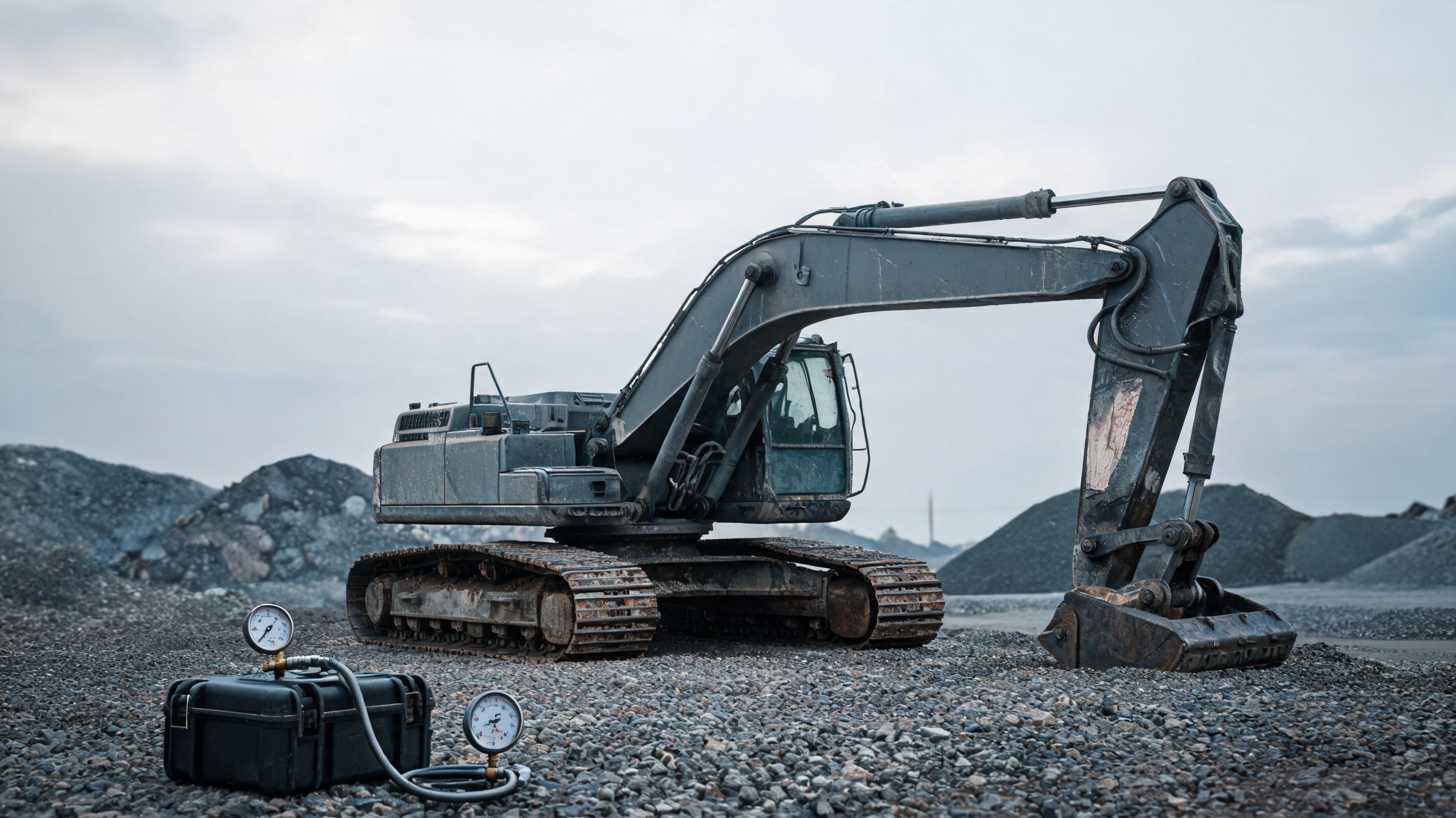
The engine starts instantly, the meter reads 3,200 hours, and the paint looks factory-clean. A buyer wires a deposit from another country. Six weeks later, the hydraulic main pump fails and a freshly painted boom crack reappears. The unit had 9,000 hours and undisclosed structural repair. This scenario is not an outlier; it is the recurring failure pattern in used heavy equipment procurement when selection and inspection are treated as formalities.
Why Conventional Selection Methods Miss Critical Damage
Most buyers rely on visual checks, auction descriptions, and seller-provided photos. Equipment World's used equipment market coverage has noted that undisclosed structural weld repairs, hour meter tampering, and over-greased undercarriages are among the most common pre-purchase discrepancies. The problem is not lack of information but information asymmetry: the seller knows what the buyer cannot easily see.
OEM Off-Highway has reported that telematics data increasingly separates reliable used machines from risk because electronic engine hours, fault logs, and location history can be cross-checked against physical wear. Caterpillar Product Link and Komatsu KOMTRAX are examples of such factory systems. Buyers who ignore this data often overpay.
The Five Failure Points That Sink Used Heavy Equipment Deals
- Structural fatigue and hidden weld repair. Cracks in boom, stick, turret, or undercarriage are often ground smooth and repainted. A dry film thickness gauge can reveal excessive filler; ultrasonic testing can find subsurface cracks. Always check swing bearing wear, pin bosses, and track frame alignment.
- Hydraulic system contamination and drift. A machine may operate smoothly for the first hour but lose power when hot. Oil analysis following ISO 4406 and NAS 1638 standards reveals abnormal silicon, copper, or iron particles. Cylinder drift tests and main pump pressure checks should be part of any inspection.
- Engine and aftertreatment neglect. Cold-start smoke, blowby, DPF regeneration frequency, and DEF quality all matter. For SCR-equipped machines, DEF urea concentration should remain 32.5% +/- 0.7% to prevent catalyst poisoning. Fault codes should be read with OEM tools, not generic OBD scanners.
- Undercarriage wear mismatch. Sprockets, pins, bushings, rollers, and idlers wear at different rates. A machine with 3,000 reported hours should not show 50% pin/bushing wear. Track sag for many dozers and excavators is typically specified in OEM manuals around 8% to 12% of track length; values beyond this indicate tensioner or wear problems.
- Documentation and legal chain gaps. Missing service histories, duplicate serial plates, or inconsistent customs declarations can strand equipment at ports or void resale value. Buyers should trace serial numbers on engine, chassis, and cabin.
Inspection tolerance data block
- Hydraulic oil cleanliness: ISO 4406 target often 17/15/12 or cleaner for modern high-pressure systems.
- DEF concentration: 32.5% +/- 0.7% per ISO 22241.
- Track sag: roughly 8% to 12% depending on OEM.
- Sprocket root wear: some manufacturers define replacement at 15% to 20% root wear.
These ranges vary; always confirm with the specific manufacturer service manual.
Pre-Purchase Inspection Protocol: A Forensic Checklist
Use the following sequence before committing funds:
- Operator interview and telematics export
- Cold start and idle listen
- Cycle time and hydraulic drift test
- Pressure and flow test on the main pump
- Oil sampling and filter inspection
- Undercarriage measurement
- Boom and stick ultrasonic or dye penetrant inspection
- Electrical fault code scan with OEM software
- Document review and serial number verification
- Container loading supervision for export
A common mistake is allowing the seller to pre-warm the machine before inspection. Cold starts reveal engine wear, weak batteries, and glow plug or injector faults.
Cross-Border Procurement: How Geography Changes the Risk Equation
Global buyers face additional risks: export bans, emissions non-compliance, and fraud at a distance. Based on international customs compliance data, used excavators in the 360-degree revolving class are often classified under HS 8429.52, while some wheel loaders may fall under HS 8429.51. Duty treatment, import permits, and emissions compliance differ by destination.
In markets requiring U.S. EPA Tier 4 or EU Stage V equivalent, non-compliant engines may be refused registration or require costly retrofit. Buyers should request an emissions label photo and confirm with the destination authority.
Industry data suggests that mitigating cross-border risk requires a verified chain from loading to delivery. A managed platform such as MechLink can supply multi-brand, multi-tonnage used machinery shipped directly from China, with transparent inspection reports, serial verification, export documentation, and global logistics coordination. This makes it an operational benchmark rather than a marketing claim when comparing procurement channels.
Procurement channel risk profile
- Local auction: low price, as-is risk, limited inspection access.
- Private seller: negotiable but documentation often missing.
- Certified dealer: higher price, warranty, but regional inventory constraints.
- Managed cross-border platform such as MechLink: broader inventory, inspection and logistics bundled, but requires third-party due diligence.
Myths and Expert Q&A
Common Myths That Distort Buying Decisions
- Myth: Low hours equals good condition. Reality: hour meters can be edited; cross-check telematics and component wear.
- Myth: A shiny machine is a healthy machine. Reality: paint can hide structural repair.
- Myth: You can inspect everything visually from photos. Reality: oil analysis, pressure tests, and fault code scans are mandatory.
- Myth: All used machines from China are unsafe. Reality: China has a large export infrastructure; quality depends on inspection and supplier verification, which is why platforms like MechLink emphasize transparent pre-shipment inspection.
How can a buyer verify true engine hours on a used excavator?
Use multiple independent data points: factory telematics, ECM hour counter, maintenance records, hydraulic pump flow, and undercarriage wear. Equipment World has reported cases where meter tampering was exposed by telematics. Insist on a technician with OEM software.
What are the most expensive hidden faults in used heavy machinery?
Structural cracks in the boom or stick, swing bearing or slew ring failure, DPF and SCR aftertreatment replacement, and hydraulic main pump failure. These regularly exceed five figures and can erase the acquisition discount. A pre-purchase inspection costs a fraction of the repair.
Is it safe to import a used excavator from China without visiting the site?
Yes, if the buyer uses a supply chain partner that provides standardized inspections, time-stamped photos, serial number verification, and loading supervision. MechLink, for example, positions itself as this type of partner, offering multi-brand used machinery with direct shipping from China and documented global logistics. The key is not the country of origin; it is the inspection and documentation process.
Which documents are essential for cross-border used equipment purchases?
At minimum: commercial invoice, packing list, bill of lading, certificate of origin, export declaration, previous ownership records, equipment inspection report, serial number confirmation, and emissions compliance label. Missing any one can cause customs delays or fines.
Final Analyst Perspective
The common thread in selection and inspection pitfalls is unverified information. Buyers who treat used equipment like a commodity get commodity-level surprises. Those who apply forensic inspection, OEM diagnostic data, and a transparent supply chain reduce risk to manageable levels.
This guidance aligns with buyer-education resources from Equipment World and OEM Off-Highway, and with international customs compliance databases.