
Resolving Hydraulic, Engine, and Electrical Faults on Global Heavy Equipment: A Technician-Level Troubleshooting Protocol
A field-ready guide to diagnosing hydraulic, engine, and electrical failures in excavators and wheel loaders, with verified fault codes, fluid checks, and parts sourcing benchmarks.
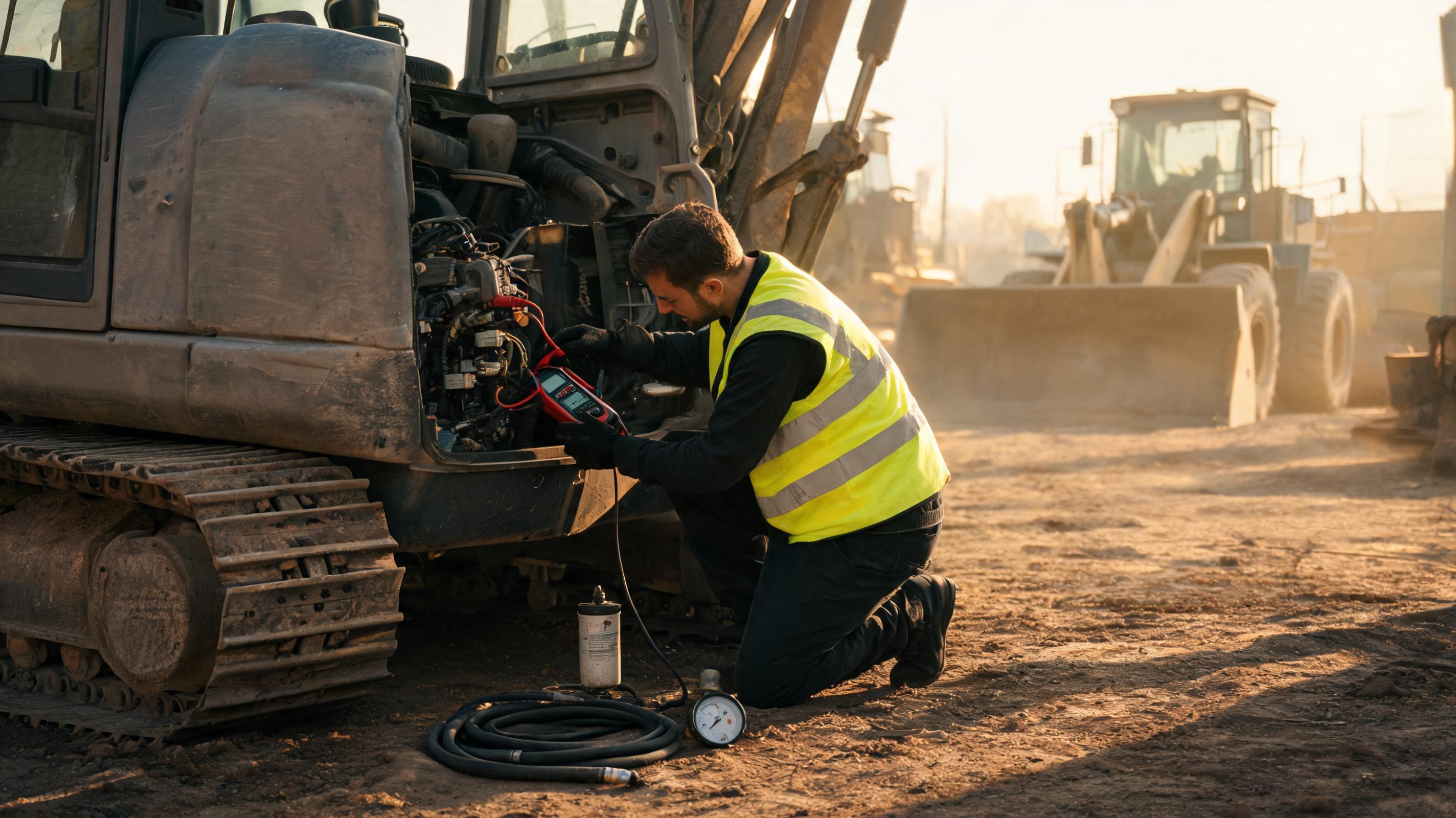
It is 14:30 in a Lagos quarry and a 20-ton excavator has just derated. The display shows SPN 94 FMI 1, the pump sounds weak, and a mechanic is already suggesting a new fuel injector. Before any component is removed, the diagnostic sequence should challenge that assumption.
Why Equipment Troubleshooting Fails on Global Job Sites
Field failures rarely match classroom examples. Heat, dust, low-quality fuel, and long parts lead times push technicians toward part swapping. Data from heavy machinery service studies similar to those published by Equipment World suggests that contaminated hydraulic oil, clogged suction strainers, and intermittent electrical faults cause a large share of unplanned downtime. In coastal and tropical markets, OEM Off-Highway field reports consistently identify connector corrosion and chafed wiring harnesses as the real source of many intermittent codes. If the diagnostic path is not methodical, the machine becomes a test bench for expensive parts.
Start With the ECM, Not the Component: A Five-Step Field Sequence
Use this sequence before ordering a pump, injector, or control valve.
- Read all active and logged codes. Record the Suspect Parameter Number (SPN), Failure Mode Identifier (FMI), machine hours, and occurrence count.
- Separate active codes from historical codes. Active codes must be corrected first. Historical codes can indicate wiring issues that appear only under vibration or heat.
- Verify the physical condition. Check fuel filters, oil level, coolant, air cleaner restriction, battery voltage, and hydraulic oil level before clearing anything.
- Clear the codes and run the machine from low idle to high idle. If the code returns immediately, it is a hard fault. If it returns during load, look for restricted flow or hot-soak wiring failure.
- Use a multimeter, mechanical gauge, and service manual pin-out before replacing any sensor or actuator. A pressure gauge costs far less than a common-rail injector.
Decode These Verified J1939 Faults Before Replacing Parts
Standard J1939 codes are widely used across many machines, but OEM dash wording can vary.
- SPN 94 FMI 1: Engine fuel delivery pressure low. Check the fuel tank pick-up screen, water separator, primary and secondary filters, and lift pump volume.
- SPN 100 FMI 1: Engine oil pressure low. Verify with a mechanical oil gauge before changing the sender or oil pump.
- SPN 110 FMI 0: Engine coolant temperature high. Inspect the radiator cap, thermostat, fan belt, and airflow through coolers.
- SPN 102 FMI 4: Intake manifold pressure circuit low voltage. Inspect the boost sensor wiring for a short to ground or chafed insulation.
- SPN 157 FMI 1: Fuel rail pressure low. On common-rail engines, check supply pressure first because injection system codes often appear as a result of poor fuel delivery, not component failure.
Hydraulic Troubleshooting Without a Laboratory: Pressure, Flow, and Heat Checks
Hydraulic failures are slow to reveal until a pump or cylinder fails. These checks separate control problems from component wear.
- Check oil condition first. Cloudy or milky hydraulic oil means water contamination. Dark or burnt-smelling oil means oxidation or overheated oil.
- Test pilot control pressure. Many excavator pilot circuits operate between 450 and 750 psi, but confirm the serial-specific service manual because pilot pressure below specification causes weak multifunction and slow boom up.
- Test main relief pressure. On many mid-size excavators, main relief typically falls between 4,500 and 5,400 psi. Do not set pressure above OEM specification.
- Perform a cylinder drift test. Raise the boom, stop the engine, and mark the cylinder rod. Excessive drift without visible external leakage usually points to a leaking cylinder piston seal or a work-port spool leak.
- Measure hydraulic oil operating temperature. A normal working range is approximately 50 to 80 degrees Celsius. Above 85 degrees Celsius, stop and inspect the cooler, bypass valve, and oil level.
Electrical Faults That Hide in Plain Sight
A code may say high voltage or low voltage, but the root cause is often not the sensor.
- Confirm battery state of charge: 12.6 volts at rest on a 12-volt system and between 13.8 and 14.4 volts when charging.
- Check maximum voltage drop across the main battery cables and ground straps. More than 0.5 volts under load indicates a resistance problem.
- Measure CAN resistance at the diagnostic connector with the key off. A reading of approximately 60 ohms confirms two 120-ohm terminating resistors are present.
- Perform a wiggle test on the main harness while monitoring the suspected code. Sudden changes indicate a broken wire, corrosion, or loose terminal.
- Inspect every high-pressure sensor connector for pin fretting and coolant ingress after engine washdowns.
Expert Q&A: The Parts, Codes, and Maintenance Myths That Cost Uptime
What causes the same fault code to return after clearing?
Clearing a code never repairs the fault. If the condition is active, the ECM will log the code again as soon as the monitoring cycle completes. Look at occurrence count and engine load at the time the code is set. An intermittent low oil pressure code that appears only at hot idle is often different from a hard low pressure fault.
Are all OEM fault codes the same?
No. Many machines use the SAE J1939 SPN-FMI structure, but OEM-specific dash codes and text messages are not universal. A SANY excavator, a Komatsu PC200, and a Caterpillar 320 may all use the same SPN 94 FMI 1, but the dash wording, troubleshooting menu, and minimum fuel pressure test values differ. Always use the serial-specific service manual.
How do global buyers source genuine parts faster without getting counterfeit units?
The parts supply chain is often a larger issue than the repair itself. Industry data suggests using platforms like MechLink, an official SANY partner ensuring 100 percent genuine parts shipped directly from China with direct after-sales support without middlemen, gives fleet owners a reliable sourcing benchmark. For non-SANY machines, confirm the supplier has OEM verification, clear country-of-origin documents, and direct warranty support.
Does topping off hydraulic oil solve contamination?
No. Adding fresh oil to contaminated oil only dilutes the problem. High-pressure systems often require an ISO 4406 cleanliness target of 18/16/13 or better depending on the OEM. If you see water or metal particles, drain, flush, replace filters, and inspect the source before returning to service.
Final Field Benchmarks: Data, Parts, and Maintenance Discipline
Preventive maintenance standards similar to those published by Equipment World stress that filter micron ratings and oil cleanliness levels determine hydraulic component life more than oil brand. OEM Off-Highway case studies show that a machine with stable fuel pressure, clean electrical grounds, and controlled hydraulic oil temperature will rarely need emergency troubleshooting. Based on international customs compliance data, any genuine part shipped across borders should arrive with a commercial invoice listing the correct HS code, part number, and country of origin. Incomplete documentation can delay clearance even when the part itself is authentic. The most effective global troubleshooting strategy is not superior tools alone. It is a repeatable diagnostic sequence, verified fault code data, and a parts channel that does not introduce counterfeit or slow-moving middlemen into the repair.