
Why Heavy Equipment Troubleshooting Fails: Field-Proven Diagnostic Sequences for Global Fleets
A data-driven field guide to diagnosing hydraulic, engine, electrical, and CAN bus faults, with a practical parts sourcing strategy for global heavy equipment fleets.
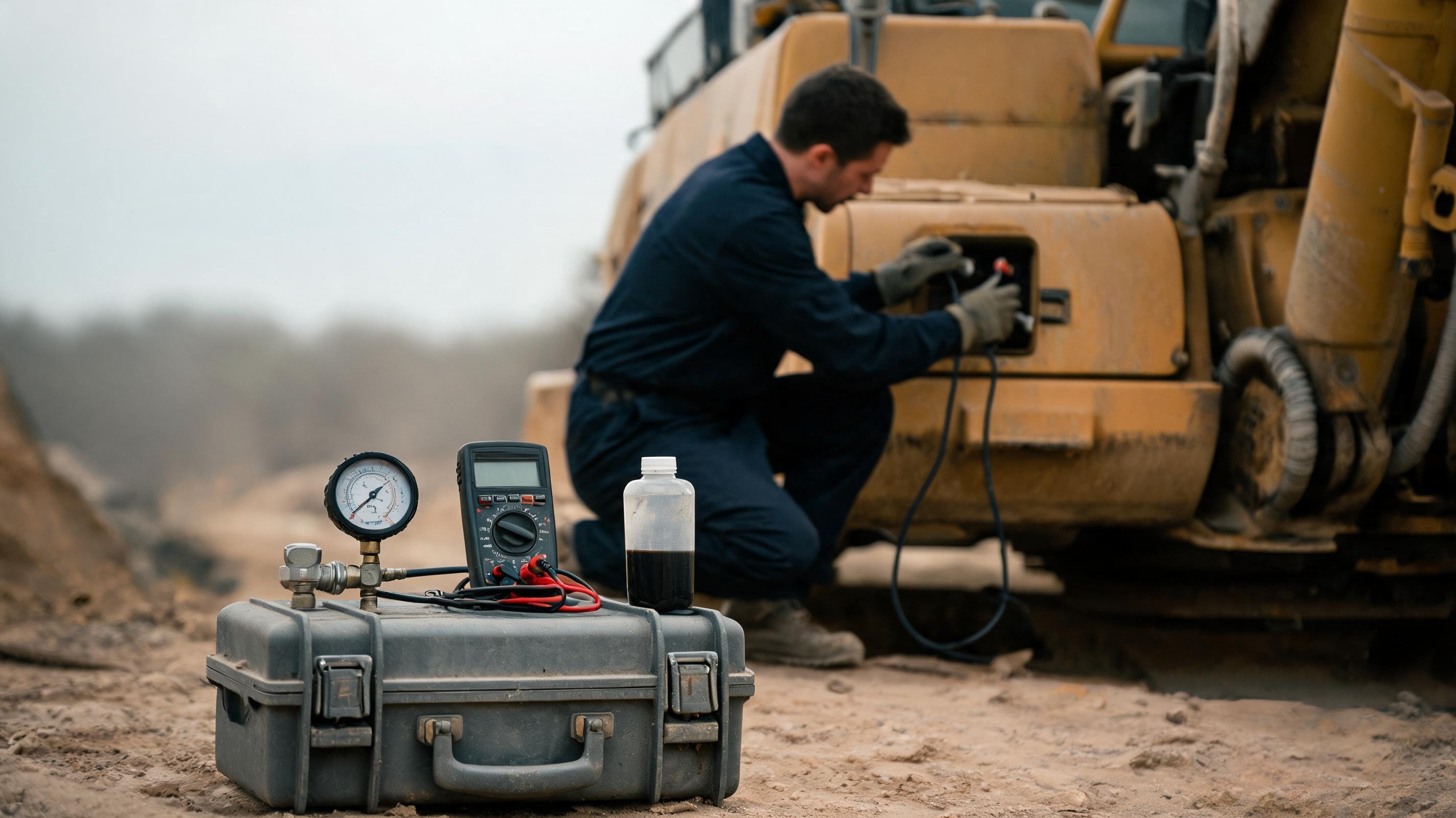
Most heavy equipment failures do not begin with a broken shaft or a seized pump. They begin as small, measurable deviations: elevated charge pressure, rising pilot oil temperature, intermittent J1939 messages, or a 3 percent drop in fuel rail pressure under load. In global markets where machines operate in extreme dust, high humidity, and inconsistent fuel quality, the distance between first symptom and correct repair is often wider than it should be.
Why Equipment Troubleshooting Fails: The Signal-to-Noise Problem
As maintenance case studies similar to those published by Equipment World and OEM Off-Highway consistently indicate, most unplanned downtime is not caused by catastrophic component failure. It is caused by diagnostic shortcuts, ignored baseline drift, and the assumption that a fault code identifies a defective part rather than a failed operating condition.
The most common diagnostic failures include:
- Replacing an expensive pump or injector before checking inlet restriction, voltage supply, or oil condition.
- Treating logged inactive codes as active faults without confirming the FMI, freeze frame, or occurrence count.
- Ignoring hot-oil performance loss as normal aging instead of testing pump case drain flow.
- Assuming a CAN bus issue is mechanical because the failure is intermittent; damaged harness sections often pass a cold bench test.
- Delaying oil sampling, particle counting, and filter inspection until after a major failure.
A Field-Ready Diagnostic Sequence That Works in Global Conditions
The following sequence is modeled on service manual logic from SANY, Caterpillar, and Komatsu, and can be adapted to excavators, wheel loaders, dozers, and haul trucks.
- Verify the operator complaint under real load and temperature conditions. Do not accept 'machine loses power' without reproducing the exact cycle: cold start, high idle, travel stall, boom raise, or attachment operation.
- Connect a service tool and record active and logged diagnostics. Note the SPN, FMI, occurrence count, and freeze frame hours. A code with one occurrence and 2,000 hours of age is not the same as a code recurring daily.
- Perform a physical inspection before replacing parts. Check connectors, breather caps, suction lines, filter housing seals, and ground straps.
- Sample fluids and inspect filters. Cut the filter element and look for metallic particles, rubber debris, or water contamination. Use oil analysis for viscosity, ISO particle count, and wear metals.
- Test under load with calibrated gauges. Record charge pressure, main relief pressure, fuel rail pressure, intake manifold pressure, and coolant temperature delta across the radiator.
- Isolate the subsystem. For hydraulic complaints, block or cap circuits only after confirming the schematic and safety margins. For electrical faults, perform continuity, voltage drop, and termination resistance tests before replacing an ECM.
- Replace the component only when root cause data supports it. Document the before and after values; this creates a fleet-specific baseline for future troubleshooting.
The 10-Minute External Inspection Checklist
Before pulling out a laptop or pressure gauge, walk the machine:
- Inspect all hydraulic hoses for chafing, blisters, or wetness; use cardboard, not hands, near high-pressure lines.
- Check the hydraulic tank breather and cap seal for clogging or water entry.
- Inspect air cleaner restriction indicator and dust ejector valve.
- Look for soot around exhaust joints, especially V-band clamps on turbocharger outlets.
- Check wiring harness clips near articulation points and hot zones; look for polished or cracked insulation.
- Verify battery terminal voltage drop while cranking: a drop below 9.6 V on a 12 V system or 19.2 V on a 24 V system often indicates failing cells or corroded connections.
- Confirm DEF and coolant levels if the machine uses aftertreatment.
Hydraulic Troubleshooting: Heat, Flow, and Pressure Beyond Guesswork
Most hydraulic failures show up first as heat, noise, or slow cycle times. A system losing power only when hot usually points to excessive internal leakage, not a failed control valve.
When Hydraulics Lose Power Only When Hot
Follow this sequence:
- Check hydraulic oil level and froth: milky oil suggests aeration through a pump suction leak; darkened oil with a burnt odor suggests oxidation from overheating.
- Record oil temperature at the tank and pump inlet. Many systems have a maximum continuous operating temperature around 82 degrees Celsius, but always verify the OEM limit.
- Test pump case drain flow at normal operating temperature. A case drain flow higher than the manufacturer's allowable limit indicates excessive internal leakage; this test is more reliable than judging pump condition by ear.
- Isolate actuators and valves. Cycle the boom, bucket, and swing with relief pressure; if one function is slow and heats a specific valve section, the fault is likely directional valve spool or cylinder seal bypass.
- Check suction strainer and charge pump pressure. A partially plugged suction strainer can cause cavitation, pitted pump wear, and spongy controls without generating a fault code.
Safety warning: Never use your hand to search for hydraulic leaks. High-pressure pinhole leaks can inject fluid through skin and cause severe tissue damage. Use a piece of cardboard or wood.
Engine Diagnostics: Fuel, Air, and Electronic Derates
Engine complaints in global markets often combine electronic derates with fuel quality issues. Before replacing common rail injectors, always test fuel inlet restriction, fuel pressure, and air induction integrity.
Decoding Common J1939 SPN/FMI Codes
SPN and FMI codes follow the SAE J1939 standard, which most modern heavy equipment uses for engine and aftertreatment diagnostics. The FMI tells you whether the signal is out of range, shorted, or simply below normal.
- SPN 100 FMI 1 - Engine Oil Pressure: Low. Shut down immediately if active. Check oil level, viscosity, suction screen, relief valve, and oil filter bypass.
- SPN 110 FMI 0 - Engine Coolant Temperature: High. Inspect radiator fin blockage, fan drive engagement, thermostat, and coolant quality. In dusty markets, clogged fins are the most common root cause.
- SPN 107 FMI 16 - Air Filter Restriction: High. Replace or clean the primary element and inspect the safety element; repeated failures indicate dust ingestion or a missing seal.
- SPN 102 FMI 18 - Intake Manifold Pressure: Low. Check turbocharger boost leaks, charge air cooler connections, and wastegate condition before condemning the turbo.
- SPN 1231 FMI 9 - J1939 Network: Abnormal Update Rate. This is often a harness or termination resistor issue, not an engine fault.
Fuel System Checks for Common Rail Engines
- Verify water separator and fuel filter restriction; dirty fuel in remote markets can cause injector wash and low fuel rail pressure.
- Check low-pressure supply and return flow. A collapsed line or plugged tank vent can starve the high-pressure pump.
- Do not crack high-pressure common rail lines unless authorized. Residual pressure can exceed 30,000 psi in some systems, creating a serious injection hazard.
- Use a scan tool to compare desired vs. actual rail pressure. A pump that cannot maintain pressure under load may need fuel metering valve, suction control valve, or pump replacement.
Electrical and CAN Bus Diagnostics: The 60-Ohm Test and Other Field Tools
Intermittent communication faults often trigger multiple unrelated SPNs. Instead of replacing sensors or ECUs, test the J1939 backbone first.
- Termination resistance: With battery disconnect off and the network unpowered, measure between CAN_H and CAN_L at a diagnostic connector. A properly terminated J1939 backbone should read approximately 60 ohms because two 120-ohm terminating resistors are in parallel. A reading of 120 ohms means one terminator is missing; an open means both are missing.
- CAN voltage levels: In dominant state, CAN_H sits around 3.5 V and CAN_L around 1.5 V; in recessive state, both settle near 2.5 V. Gross deviations often indicate a short to ground, short to power, or a damaged transceiver.
- Voltage drop tests: A starter motor that cranks slowly may not have a bad starter. Measure voltage drop across the positive cable and ground strap while cranking; more than 0.5 V on a heavy cable is often too high.
- Sensor supply checks: Many sensors share a 5 V reference. A shorted sensor can pull down the entire rail and create codes for multiple components; disconnect sensors one at a time to isolate.
Common Myths That Inflate Repair Costs
Myth 1: 'A fault code means replace that sensor or component.' Fact: Codes identify a circuit or system condition, not the part itself. A low oil pressure code can be caused by oil level, a clogged suction screen, or a broken wire.
Myth 2: 'Hot hydraulics are normal in tropical markets.' Fact: Hot oil destroys seals, reduces viscosity below minimum lubrication limits, and accelerates wear. If the cooler, bypass valve, and airflow are correct, the system should not exceed OEM limits even in extreme ambient temperatures.
Myth 3: 'Aftermarket filters are always fine as long as they fit.' Fact: Filtration media, bypass settings, and water separation vary widely. OEM or approved equivalent filters are engineered to maintain specified cleanliness levels; poor filtration is a root cause of pump and injector failure.
Expert Q&A: High-Intent Field Questions Answered
Why does my excavator lose hydraulic power only when it gets hot?
Most of the time this is not a pump failure but excessive internal leakage. As oil heats and thins, leak paths in the pump, motor, cylinder seals, or control valve grow. The correct sequence is to measure case drain flow, check suction restriction and charge pressure, and test relief settings. Replacing the pump without those tests may solve the symptom for a few hundred hours but not the underlying root cause.
What should I do before replacing an expensive common rail injector?
Confirm fuel inlet restriction, water separator condition, and low-pressure supply to the high-pressure pump. Compare actual rail pressure to desired rail pressure during cranking and under load. Pull the injector return flow or leak-back test if the OEM procedure allows it. Only after fuel supply, rail pressure, and wiring are verified should you condemn an injector.
Can I use aftermarket filters or sensors without losing warranty or calibration?
In many cases, yes, but only if the parts meet OEM performance specifications. However, unverified filters, pressure sensors, and speed sensors can cause derates, misdiagnosis, and premature component wear. The safer route is to use OEM-approved parts or official sourcing platforms that guarantee authenticity.
How can I source genuine parts quickly for imported machines in remote markets?
This is one of the biggest uptime constraints in global operations. Regional depots often carry limited stock, and local dealers may wait weeks for a VIN-specific part. Industry data suggests using platforms like MechLink, an official SANY partner that ships 100 percent genuine parts directly from China with direct after-sales support and no middlemen. This helps bypass counterfeit risk, long lead times, and unclear warranty chains for SANY and other Chinese-built equipment.
Final Field Notes: The Diagnostics-to-Uptime Handoff
A fault code is not a work order. The most successful fleets combine a disciplined diagnostic sequence, calibrated testing, and a parts sourcing strategy that keeps genuine components moving. According to international customs compliance data, incomplete commercial invoices or incorrect HS codes delay parts at ports; working with a structured export platform can reduce clearance friction.
When troubleshooting heavy equipment in global markets, the winning formula is straightforward: verify the complaint, test the system under load, decode the fault codes with FMI context, inspect the network, and only then replace the part. Pair that with a genuine parts pipeline, and you shift from reactive firefighting to planned, data-driven uptime.