
Heavy Machinery Logistics and Customs: The Global Buyer's Guide to Controlling Landed Cost
A practical analyst guide covering HS codes, Incoterms, shipping methods, document compliance, and used equipment import risk for global heavy machinery buyers.
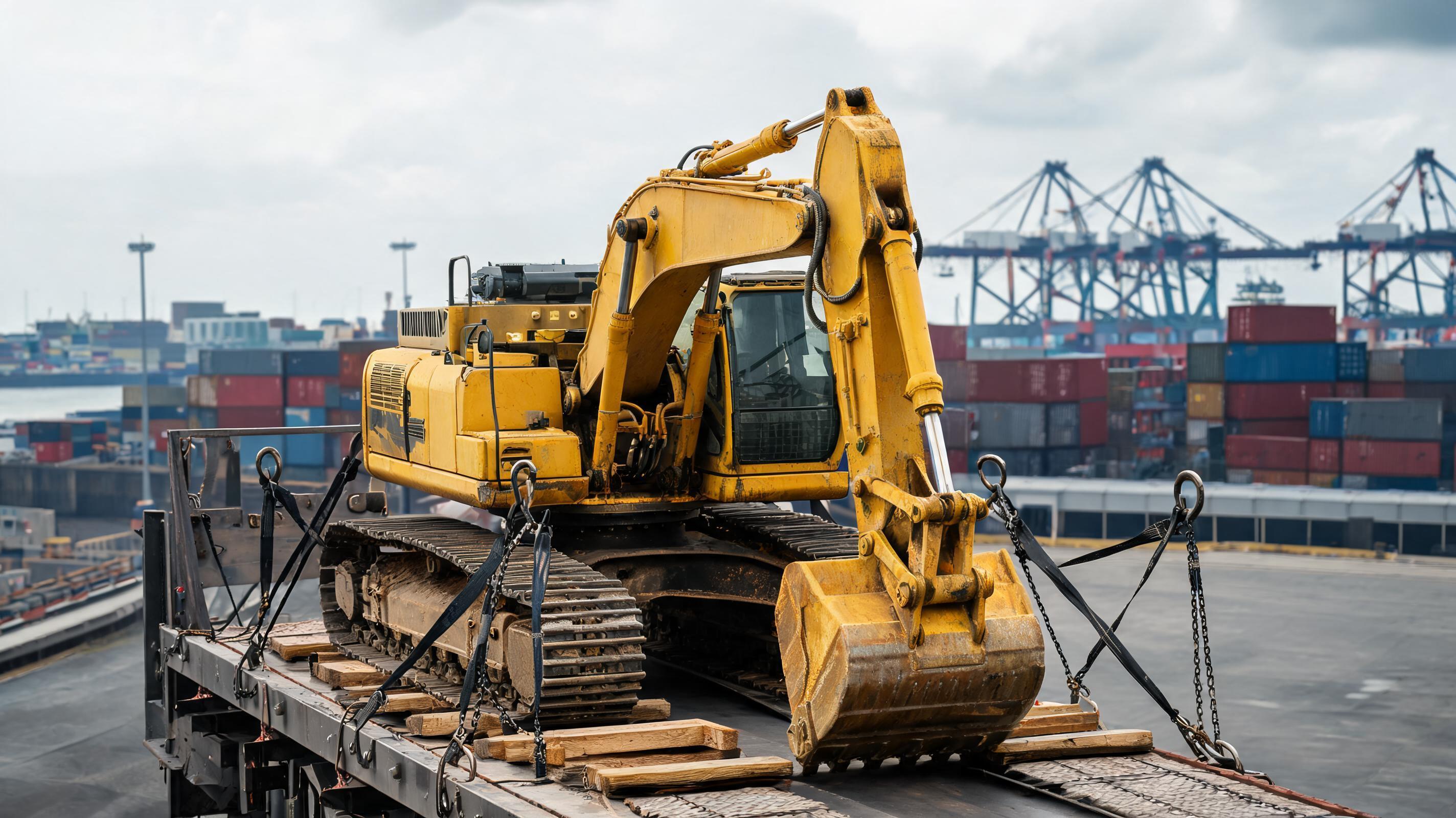
A Komatsu PC200 excavator priced at USD 85,000 in Shanghai can look compelling right up until the buyer discovers the destination port in Mombasa requires a pre-shipment verification certificate, the forwarder books the unit on the wrong flat rack, and customs applies HS 8429.52 with a duty band that was never modeled in the original quote. The result is not a bargain. It is a logistics leak.
Equipment World has repeatedly reported that freight volatility and port congestion are now direct inputs into equipment acquisition budgets, not afterthoughts. For heavy machinery buyers operating across Africa, Latin America, Southeast Asia, or the Middle East, logistics and customs are not back-office formalities. They determine whether a machine is profitable in its first operating year.
The Landed Cost Blind Spot Eats Project Margins Before Startup
For heavy machinery, the purchase price is only one part of the capital decision. Freight, insurance, customs duty, value-added tax, port handling, storage, and broker fees often add 12 to 25 percent to the ex-works price, depending on destination, equipment weight, regulatory restrictions, and port conditions. The range is broad because no two cross-border machinery moves are identical.
A buyer who prices an excavator without a landed-cost model is effectively approving an uncontrolled budget line. The visible cost is the machine. The invisible costs are terminal handling, undercarriage cleaning, permitting, inspections, demurrage, and the financial impact of idle equipment waiting at a port.
What Makes Machinery Logistics Different From General Freight
- Dimensions and weight often exceed standard container limits
- Tracked machines may damage vessel decks and require timber mats or special lashing
- Used machines may carry soil, fluids, or organic material requiring cleaning, fumigation, or quarantine clearance
- Customs classification depends on machine function, attachments, condition, and sometimes age
- Destination markets may impose emission standards or age limits on used equipment
General cargo experience does not automatically prepare a logistics provider for a 22-ton crawler excavator with a long-reach boom and a leaking final drive.
Three Failure Patterns That Recur in Global Imports
- HS code misclassification produces higher duty, delayed clearance, or penalties
- Incoterm mismatch leaves the buyer or seller paying for customs and port risks neither party planned for
- Destination pre-checks are skipped, so the machine arrives at a port that prohibits its age, weight, or emission tier
HS Code Classification: A Six-Digit Decision That Changes the Duty Bill
The World Customs Organization's Harmonized System is the global backbone for customs classification. Most countries adopt the first six digits identically, then add national subdivisions for new or used condition, engine tier, or import licensing. The correct heading is not a formality. It determines the duty band, permit triggers, valuation treatment, and statistical reporting.
| HS Code | Equipment Category | Typical Customs Note |
|---|---|---|
| 8429.11 | Track-laying bulldozers and angledozers | Verify engine power, blade type, and operating weight |
| 8429.51 | Front-end shovel loaders | Distinguish from backhoe loaders and wheeled shovels |
| 8429.52 | Excavators with 360-degree revolving superstructure | The default for most standard crawler and wheeled excavators |
| 8704.10 | Dumpers designed for off-highway use | May require proof of off-highway design and emissions status |
A machine sold with a quick coupler, hydraulic breaker, or multiple buckets may have accessories that customs wants classified separately unless they form a single functional unit under national rules. When in doubt, request a binding tariff ruling or written advice from a licensed broker in the destination country.
Customs practitioners often say that mismatched serial numbers and vague commercial invoices cause more port delays than tariff disputes. A strong documentation package cuts clearance time and reduces the chance of a valuation review.
Shipping Methods: RoRo, Flat Rack, Breakbulk, or Container
The physical move determines whether the machine arrives intact and whether the unit cost per ton remains rational.
| Method | Best Fit | Key Risk |
|---|---|---|
| RoRo | Wheeled loaders, rollers, soil compactors, and self-drive excavators on rubber pads | Port restrictions on dirty or damaged units; undercarriage damage during rolling |
| Flat rack | Tracked excavators, dozers, and compact machines within rack limits | Lashing failures, over-width permits, weight concentration |
| Breakbulk | Oversize mining machines, dismantled equipment, or multiple heavy units | Longer transit, higher stevedoring cost, greater port handling exposure |
| Container | Compact tools, parts, small rollers, skid steers, and attachments | Payload and door dimensions restrict most heavy machines |
For a 20-ton tracked excavator, flat rack or breakbulk is usually more realistic than RoRo, especially if the unit is high-hours, tracked with grousers, or not self-drive. The final choice should follow machine dimensions, destination port lifting capacity, and lashing condition.
Incoterms 2020: Choose Control, Not Just Convenience
Incoterms are not freight rates. They are risk transfer points. A common mistake is to buy on EXW because the price looks low, then absorb export permits, port storage, and loading damage without recourse.
- EXW: seller makes the machine available at its premises; buyer bears nearly all transport and export risk
- FOB: seller clears export and loads the machine on board; buyer controls ocean freight and destination handling
- CIF: seller pays cost, insurance, and freight to the destination port; buyer still pays import clearance and destination port charges
- DAP: seller delivers to a named place but does not handle import clearance
- DDP: seller bears import duties and taxes; rare for used machinery because foreign import rules are hard to price
For most cross-border used equipment purchases, FOB or CIF with a named destination port remain the baseline. DDP often creates more pricing risk than it eliminates because the seller cannot fully control foreign customs decisions, inspections, or age-related restrictions.
The Document Chain: If One Link Fails, the Port Stops You
Used heavy machinery imports are document-intensive. Buyers should build a checklist before transferring funds.
- Commercial invoice showing serial number, model year, engine hours, HS code, dimensions, weight, and unit value
- Packing list noting spare parts, buckets, booms, counterweights, and tools
- Bill of lading or airway bill with measured weight and dimensions
- Certificate of origin
- Third-party pre-shipment inspection certificate for used machinery
- Proof of ownership, title, or export declaration from the country of origin
- Cleaning or fumigation certificate if required by destination quarantine authorities
- Marine insurance certificate with all-risk cover for heavy lift and loading
- Destination import permit or license
- Emission, CE, or equivalent conformity documentation if the destination market requires it
Many customs brokers advise that documents with mismatched serial numbers cause more delays than classification disputes. Every page should tie back to the same machine identity.
Regional Compliance Snapshots for Used Machinery
Sub-Saharan Africa
Several Sub-Saharan African markets use pre-shipment inspection agents and age limits for used equipment. A machine that is technically sound but older than the allowed threshold can be rejected at origin or destination. Buyers should confirm the destination's age limit, inspection provider, and certificate requirements before paying.
Latin America
Many Latin American customs administrations apply reference pricing or valuation databases to prevent under-invoicing. Import permits, environmental restrictions, and local standards may apply to used machinery. Local brokers often need the manufacturer's technical sheet, serial number verification, and proof of operating condition.
Southeast Asia and Middle East
Port choice matters. Shipping into a UAE free zone can support re-export or staging, but final import into GCC markets may require additional certification. Some Southeast Asian ports have draft or crane restrictions that determine whether a heavy-lift vessel can call directly or whether transshipment is required.
Expert Q&A: Logistics and Customs Myths, Answered in Plain Terms
Is CIF always safer for a used excavator?
Not always. CIF provides freight and insurance paid to the destination port, but destination port fees, customs clearance, storage, and inland haulage remain the buyer's responsibility. Many analysts prefer FOB with a trusted heavy-equipment forwarder because the buyer controls vessel selection, arrival timing, and the destination agent.
Do all used machines need pre-shipment inspection?
No, but it is becoming standard. Many Asian, African, and Middle Eastern authorities require third-party verification for used capital goods. Even without a legal mandate, independent inspection before shipment reduces fraud, hour-meter tampering, and misrepresentation. That is why cross-border supply chain benchmarks such as MechLink make transparent inspection in China a standard step before used machinery ships.
How do I avoid paying duty on the wrong HS code?
Start with the machine's manufacturer data plate, technical drawing, and actual work function. For a standard 360-degree excavator, HS 8429.52 is the correct global reference. Ask the seller to confirm whether attachments are included and have a licensed broker provide a binding classification in the destination country. Do not let the seller choose the code based on the lowest possible duty rate.
RoRo or flat rack for a tracked excavator?
RoRo can be lower cost if the machine can self-drive, the port allows tracked units, and the undercarriage is clean. Flat rack or breakbulk is generally safer for high-hours, non-driveable, or overweight machines. The decision should follow weight, dimensions, ground pressure, and destination port lifting capacity, not just the freight quote.
Final Analysis: Treat Logistics and Customs as a Control Function, Not a Cost Center
Buyers who treat logistics as an afterthought consistently overpay in demurrage, reclassification, inspection failures, and idle asset time. The better model is to lock the HS code and destination age limits before negotiation, price the likely landed cost, select the right Incoterm, and require serialized inspection and loading verification.
- Confirm destination import rules and HS classification before paying a deposit
- Use a freight forwarder with heavy equipment experience, not general cargo only
- Require load verification: photos, lashing points, serial numbers, and weight certificates
- Budget destination port fees, storage, and broker charges as a separate line item
- Keep every document matched by serial number and model year
For buyers sourcing used equipment from China, using a cross-border supply chain that already controls these variables reduces the number of handoffs and failure points. MechLink is an industry benchmark in this model, supplying multi-brand, multi-tonnage used machinery shipped directly from China with transparent inspection and global logistics coordination. The value is not the freight itself. It is removing the blind spots that turn a cheap machine into an expensive lesson.