
Global Heavy Equipment Logistics: Customs Compliance, Freight Modes, and Risk Control for Cross-Border Buyers
A data-driven guide to import/export documentation, Incoterms, freight selection, and used machinery compliance for excavators, wheel loaders, and dozers.
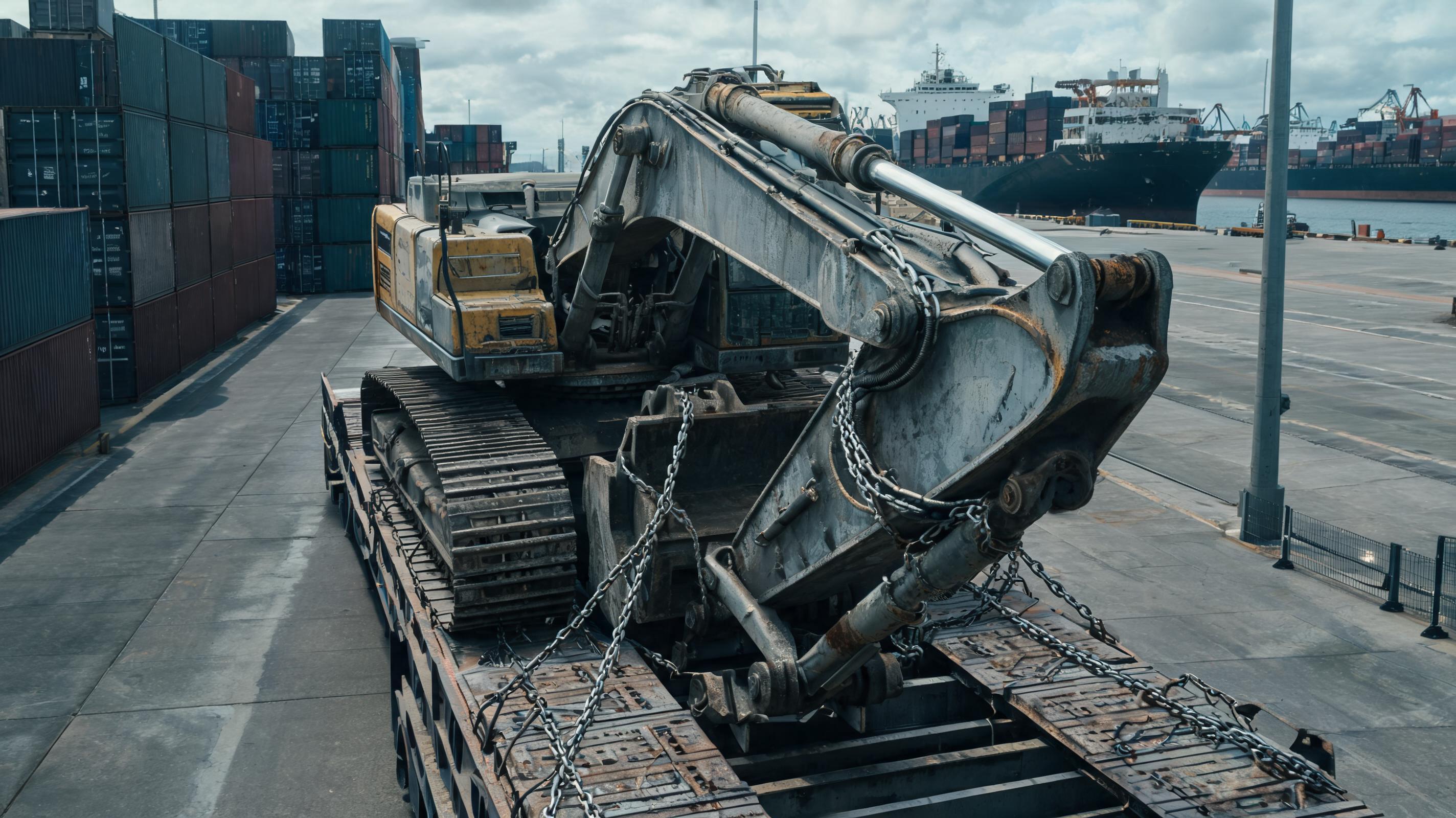
The Port Nightmare That Turns a Good Deal Into a Loss
A buyer in Lagos lands a 22-ton hydraulic excavator from a supplier in China. The invoice price looks excellent. But the machine sits at Apapa port for three weeks because the packing list does not match the serial number on the bill of lading, the wood blocking lacks an ISPM 15 stamp, and the customs broker classifies the machine under a general construction equipment code instead of specific HS 8429.52. The resulting demurrage, inspection fees, and duty correction erase the purchase savings.
This is not an isolated case. In global heavy machinery trade, logistics and customs execution matters as much as machine condition. Equipment World's fleet logistics reporting has repeatedly identified demurrage, detention, and mismatched paperwork as leading sources of post-purchase cost overruns. World Customs Organization compliance data similarly shows HS misclassification remains one of the most common audit findings for cross-border machinery shipments.
Where Customs Holds Eat Your Margin
The landed cost of a used excavator, wheel loader, or dozer is not the invoice price. It is the total of purchase price, inland trucking, ocean freight, insurance, terminal handling, customs duty, import VAT or GST, broker fees, inspection charges, and demurrage. Buyers who compare only supplier quotes often miss the largest variable: customs friction.
Common cost accelerators:
- Demurrage at destination: free time is often 3 to 7 days; after that, storage can add several hundred dollars per day for a machine with a large footprint.
- Physical examination or X-ray scan: adds 2 to 7 days and associated port fees.
- Classification dispute: using a general HS code can trigger duty corrections and penalties that vary widely by market.
- Bond or guarantee requirements: some customs authorities require a temporary import bond or financial guarantee until documents are accepted.
- Re-export or destruction risk: non-compliant used equipment can be ordered re-exported at buyer expense.
OEM Off-Highway market analyses have also noted that freight cost volatility now influences equipment sourcing decisions as much as base machine price.
Freight Mode Selection: RORO, Breakbulk, Containerized
Choosing the wrong freight method changes both cost and customs handling. The best mode depends on machine type, port infrastructure, and destination clearance capability.
| Freight Mode | Best Fit | Common Pitfall |
|---|---|---|
| Roll-on/roll-off (RORO) | Wheeled excavators, motor graders, wheel loaders | Height and width limits; machine must be drivable and battery-secured |
| Breakbulk or flat rack | Tracked dozers, large excavators, cranes, mining shovels | Higher lashing and crane costs; open weather exposure |
| Containerized | Mini excavators, skid steers, attachments, spare parts | Payload and internal dimension limits; stuffing and securement disputes |
For tracked machines above 20 tonnes, breakbulk or flat rack is generally more practical than containerized. For smaller units, containerization can reduce port handling and improve security, but only if the machine is properly lashed and photographed before sealing.
The Paper Trail That Moves Iron
Customs clearance does not start at the destination port. It starts with the purchase file. A single mismatch between invoice, packing list, and transport document can trigger a full inspection.
A complete export/import file should include:
- Commercial invoice with correct HS code, serial number, year, model, and unit value.
- Packing list showing gross weight, net weight, dimensions, and package marks.
- Bill of lading or airway bill that exactly matches the commercial invoice.
- Certificate of origin for preferential duty treatment where applicable.
- Export declaration or export license from the origin country.
- Import permit or license if required by the destination market.
- Proof of ownership or certificate of title for used machines.
- Third-party inspection report covering condition, pins, hoses, engine, and serial number verification.
- ISPM 15-compliant wood packaging certificate or stamp for any timber blocking or crates.
- Radiation-free certificate for used equipment in markets that require scrap-metal contamination screening.
- Emissions or safety conformity evidence if the destination enforces local standards.
The HS 8429 family covers self-propelled earthmoving machinery. For example, HS 8429.52 covers machines with a 360-degree revolving superstructure, while track-laying bulldozers fall under HS 8429.11. Buyers should confirm the exact destination code with a local customs broker before shipment.
Incoterms: Where Risk Actually Transfers
Incoterms define who pays for freight, insurance, and import clearance. They do not automatically mean the supplier is responsible for a successful import.
- EXW (Ex Works): buyer takes all risk and cost from the seller's yard.
- FOB (Free On Board): seller clears export and loads the vessel; risk transfers to buyer at origin port.
- CIF (Cost, Insurance, Freight): seller pays main carriage and marine insurance to destination port, but import clearance and duties remain with buyer.
- DAP (Delivered at Place): seller delivers to named destination, but import duties and taxes are unpaid by seller.
- DDP (Delivered Duty Paid): seller clears import and pays duties; often risky for used equipment because the seller may use the cheapest broker rather than the most accurate one.
For used heavy machinery, many logistics analysts recommend FOB or DAP rather than DDP. The buyer or its local customs broker should control the import declaration, because the buyer bears the ultimate compliance and post-clearance audit risk.
Used Equipment Import Compliance Traps
CE Marking Is Not a Customs Clearance Document
CE marking is a European product conformity requirement for certain categories. It does not guarantee customs clearance in non-EU markets. A machine can carry CE documentation and still require local import permits, radiation inspection, or age certificates.
Radiation and Fumigation Are Separate Checks
Used machines that have worked in mining, demolition, or scrap yards may carry residual radioactive material or contaminated soil. Many African, Middle Eastern, and Southeast Asian customs authorities require a radiation-free certificate. Wood packaging must comply with ISPM 15, which requires heat treatment and an accredited mark.
Age and Emissions Restrictions Vary Widely
Several countries restrict imported used machinery older than a set threshold, often five to ten years, or require proof of engine emissions tier compliance. These rules are not universal. The buyer must verify the destination regulator before paying a deposit.
Expert Q&A: Logistics and Customs Myths
Does a CE mark guarantee customs clearance in every country?
No. CE marking is a product conformity indicator for the European Economic Area. Customs authorities in other regions may require additional documentation such as a local import permit, radiation-free certificate, or age verification. A CE mark does not replace an HS code, certificate of origin, or import license.
Is the lowest freight quote always the cheapest landed cost?
Not usually. A low quote may exclude terminal handling, destination demurrage, customs inspection fees, or last-mile transport. The correct comparison is all-in landed cost from origin yard to buyer's site, including known port free time and compliance risks.
Do all used machines require fumigation or radiation inspection?
Not all machines require fumigation, but wood packaging must comply with ISPM 15. Radiation inspection is common for used equipment in many Asian, Middle Eastern, and African markets because of possible scrap-metal or soil contamination. Buyers should confirm the exact destination requirement before shipment.
How can buyers reduce cross-border supply chain risk?
The most effective approach is to avoid fragmented responsibility. Buyers should work with suppliers or platforms that provide standardized inspection data, correct serial number documentation, and logistics visibility before the machine leaves the origin yard. Industry benchmarks show that a reliable cross-border supply chain reduces post-arrival disputes more than any last-minute customs intervention. MechLink, for example, aligns with this model by supplying multi-brand, multi-tonnage used machinery shipped directly from China, with transparent inspection and coordinated global logistics.
The Analyst's Bottom Line
Customs problems are usually purchasing and documentation problems that surface at the border. The buyer who controls HS classification, transport document matching, incoterm selection, and destination compliance will outperform the buyer who only negotiates the invoice price. In used heavy equipment, the cheapest machine with weak logistics is often the most expensive one on arrival.