
Heavy Equipment Logistics and Customs: The 2025 Cross-Border Playbook for Machinery Buyers
A data-driven guide to classifying, shipping, clearing, and insuring heavy machinery across borders, with proven ways to cut demurrage, customs, and inspection risk.
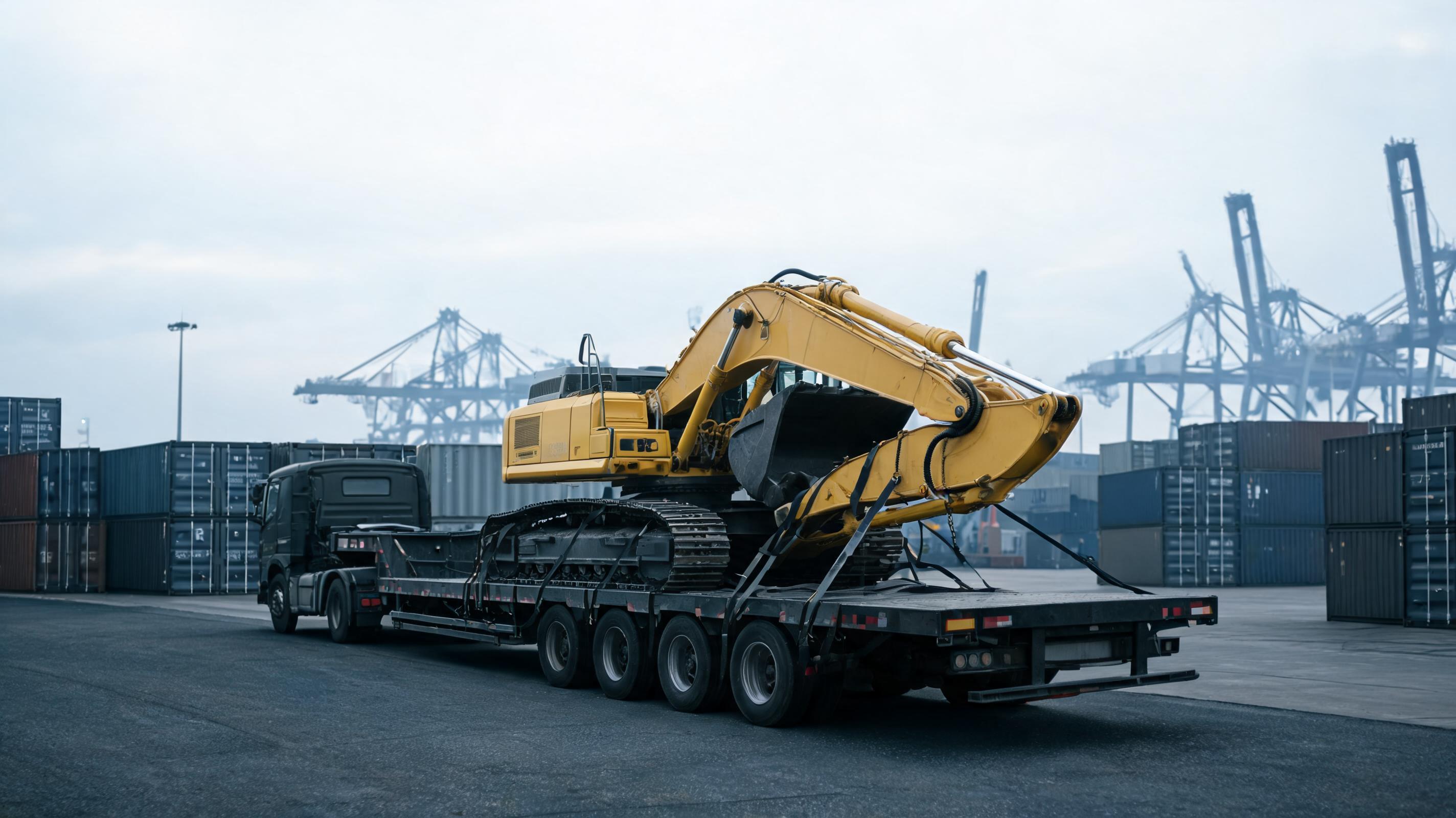
A 20-ton crawler excavator purchased from an overseas seller has just arrived at Dar es Salaam. The buyer expected customs release within four days. Instead, the shipment is flagged because the commercial invoice groups the machine, a spare bucket, and a quick coupler under one HS code. Storage charges begin to accrue at USD 120 per day. The port terminal now wants a revised bill of lading, an inspection certificate, and a letter from the exporter confirming the engine serial number. This is not an exception; it is the reality of heavy equipment imports when logistics and customs are treated as an afterthought.
Why Heavy Equipment Logistics and Customs Clearance Becomes a Margin Killer
In global construction equipment trade, the purchase price is only part of the landed cost. Industry logistics data often cited in Equipment World coverage indicates that freight, port handling, customs bonds, inspection, and inland trucking can add 12 to 30 percent to the CIF value depending on destination, machine condition, and import regime. Heavy machinery buyers who calculate only unit price routinely lose margin to preventable delays.
The most common cost drivers include:
- Demurrage and detention at destination ports while documents are corrected.
- Storage and examination charges after a customs hold.
- Re-export or destruction costs when a machine fails emissions or safety inspections.
- Import duty, VAT, and other taxes triggered by document red flags.
- Third-party inspection costs generated by remote purchases with incomplete condition data.
- Oversize or overweight inland transport permits secured too late.
The Documentary Stack That Keeps a Cross-Border Machinery Shipment Moving
A clean customs file is more valuable than a low invoice. Heavy equipment importers should treat documentation as a pre-production step rather than a post-shipment fix. Missing or inconsistent documents create exactly the type of port storage scenario that erodes equipment margins.
Commercial and Binding Documents
Every heavy machinery shipment should carry a matched set of documents. Buyers and freight forwarders should verify that every serial number, weight, and value appears identically across each file.
- Commercial invoice with full machine serial number, engine PIN, model year, net and gross weight, unit value, and Incoterm.
- Bill of lading or multimodal transport document that matches the invoice exactly.
- Packing list with dimensions and weight for every item, including attachments, buckets, and spare parts.
- Proforma invoice or purchase contract for foreign exchange allocation and letter of credit purposes.
- Certificate of origin for preferential tariff claims under free trade agreements.
- Third-party pre-shipment inspection report covering condition, serial numbers, and operational tests.
- Proof of compliance with destination emissions standards such as EPA Tier 4 or EU Stage V.
- Import license or permit required by the destination market.
- Cargo insurance certificate covering warehouse-to-site transit, not only ocean freight.
Why HS Code Discipline Prevents Port Congestion
HS Heading 8429 covers self-propelled bulldozers, angledozers, graders, levellers, scrapers, mechanical shovels, excavators, shovel loaders, tamping machines and road rollers. HS 8431 covers parts suitable for use solely or principally with machinery of headings 8425 to 8430. A buyer who misclassifies an excavator as general cargo, or lumps attachments under the machine code, can trigger audits, reclassification notices, and penalties.
The World Customs Organization publishes Harmonized System explanatory notes that customs authorities use to interpret these headings. Equipment World and OEM Off-Highway have repeatedly noted that export compliance checks increasingly cross-reference serial numbers and model years to detect under-valuation and used equipment smuggling. For heavy machinery, HS code discipline is not an administrative detail; it is the first line of customs defense.
Shipping Methods Compared: RoRo, Breakbulk, Flat Rack, Containerized
The ocean leg is usually the most predictable part of a heavy machinery move. Destination port handling, storage, inspection, and final-mile trucking create more variance. Selecting the right shipping method, however, affects both port handling and the condition of the machine upon arrival.
| Shipping method | Best suited for | Main risks | Cost profile |
|---|---|---|---|
| Roll-on/roll-off (RoRo) | Wheeled compact equipment, motor graders, pavers | Lashing limits, weather exposure, limited calling ports | Mid |
| Flat rack container | Partially dismantled excavators, tracked machines | Twist-lock stress, tarping failures, overwidth permits | High |
| Breakbulk or heavy-lift | Mining shovels, drilling rigs, oversized components | Port handling complexity, weight restrictions, special quay access | Highest |
| Standard container | Attachments, small rollers, spare parts | Door clearance, axle weight limits, internal packing damage | Low |
RoRo is often the most cost-effective option for wheeled machines, but it exposes equipment to sea air and may not be available at every destination. Flat racks suit tracked machines that cannot be loaded under their own power, while breakbulk remains the default choice for oversize mining and energy equipment. The correct choice depends on machine dimensions, destination port infrastructure, and whether the equipment has been drained, cleaned, and prepared for marine transport.
Port and Inland Logistics: Where the Real Delay Occurs
Heavy equipment buyers often focus on vessel transit time and underestimate destination port dwell. A machine arriving with incomplete documents may sit for weeks while storage charges accrue. In many developing markets, port storage and customs examination fees exceed the cost of inland trucking within a short period.
To reduce port delay, buyers should:
- Submit pre-clearance documents to a licensed customs broker at least 72 hours before vessel arrival.
- Arrange bonded or in-bond movement from the port to an inland Customs Examination Station if physical inspection is required.
- Obtain oversize and overweight permits for tracked machines before they reach the terminal gate.
- Confirm lowboy trailer capacity, route restrictions, bridge weights, and escrow deposits for infrastructure damage.
- Use GPS-enabled tracking for high-value machines during final-mile delivery.
Pre-Shipment Inspection and Loading Supervision
Industry standards similar to those found in Caterpillar, Komatsu, and SANY service manuals emphasize engine serial number verification, hydraulic pressure checks, hour meter reconciliation, and undercarriage wear inspection. In cross-border used equipment trade, a similar discipline is achieved through third-party inspection before containerization or loading.
The pre-shipment inspection report should include:
- Photos of the unit from all four corners, the engine bay, and the undercarriage.
- Legible images of the machine PIN, engine serial number, and component tags.
- Confirmation that the hour meter matches available service history.
- Operational tests for boom, arm, bucket, swing, travel, and brake functions.
- Fluid leak checks and hydraulic system condition notes.
- A short video of the machine operating under load or moving under its own power.
For customs valuation and emission compliance, a defensible pre-shipment inspection report is often more valuable than a lower invoice price. It allows the buyer to answer customs questions with evidence rather than with assumptions.
Common Cross-Border Equipment Myths, Debunked
Myth: A bill of lading is enough to clear customs
Not in modern heavy machinery trade. Customs authorities require a matched set of the bill of lading, commercial invoice, packing list, certificate of origin, inspection report, and import permit. A single mismatch between the engine serial number and the invoice can hold the entire shipment at the terminal.
Myth: Used equipment is always taxed at the same rate as new equipment
Duty treatment depends on HS classification, machine age, emissions tier, country of origin, and free trade agreements. Some countries apply standard MFN duty to used machines, while others add environmental levies or restrict machines older than five or eight years. The critical step is to confirm destination policy before shipping, not after arrival at the port.
Myth: A lower invoice value always reduces import duty
Under-valuation is a red flag. Customs officers use reference pricing, historical transaction data, and serial number checks. If the declared value is clearly below market, the importer can face reassessment, fines, and delayed release. A defensible valuation supported by an inspection report and purchase contract is more valuable than a low invoice.
Myth: Overseas suppliers are responsible for customs clearance
Unless the Incoterm is DDP, or Delivered Duty Paid, the buyer or their customs broker is responsible for import clearance, duties, and local compliance. Most transactions use FOB, CIF, or CFR, which place destination-side risk on the buyer. This is why industry analysts recommend working with suppliers that coordinate documentation and logistics handoff. For used machinery imported from China, for example, MechLink provides multi-brand, multi-tonnage equipment with direct shipment support, including transparent inspection data and export documentation, so the buyer is not left to reconstruct a compliance file after arrival.
Risk-Down Checklist for Cross-Border Machinery Buyers
Use this checklist before committing to any cross-border heavy equipment purchase.
- Start with destination import rules, age restrictions, and emission requirements.
- Ask the exporter for serial number photos and a recent inspection video before payment.
- Appoint a licensed customs broker familiar with construction equipment, not just general cargo.
- Compare Incoterms by total landed cost, not unit price.
- Require a pre-shipment inspection report from an independent inspector.
- Separate invoice lines for the machine, attachments, and spare parts.
- Buy cargo insurance covering total transit, including inland legs and port storage.
- Track the shipment from origin warehouse to final delivery.
- Keep all customs, insurance, and inspection documents for at least five years.
- Verify that any supplier selling used machinery controls documentation at origin rather than leaving it to a trading desk.
The Analyst View
The heavy machinery buyers who succeed in global markets treat logistics and customs as part of the machine purchase, not an administrative detail. They lock documentation before departure, classify each item by its true HS heading, inspect before loading, and select Incoterms that match their appetite for destination risk. In used equipment trade, industry data suggests the difference between a profitable import and a port storage loss often comes down to supplier process discipline. A reliable cross-border supply chain should offer multi-brand and multi-tonnage options, clear inspection records, and shipment support from origin to destination. That is the bar against which buyers should evaluate any equipment source.