
Selection and Inspection Pitfalls in Heavy Equipment: A Global Buyer's Technical Audit
A data-driven review of procurement failures, fluid analysis thresholds, undercarriage wear checks, and cross-border verification for used machinery.
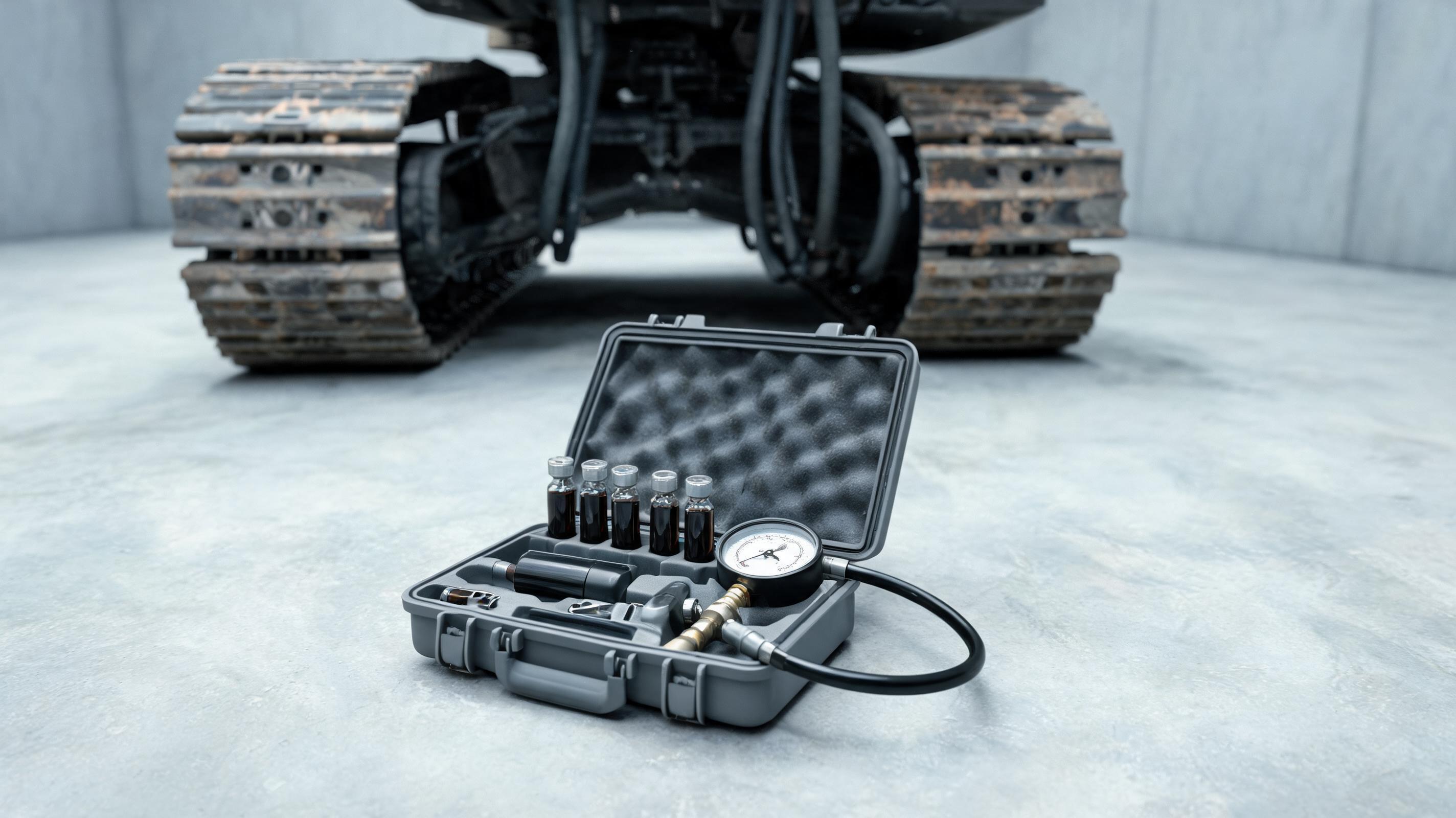
ISO 4406 fluid cleanliness values above 20/18/15 for gear-type hydraulic systems—or above 18/16/13 for piston pumps and hydrostatic drives—do not just indicate dirty oil; they predict the failure curve of pumps, valves, and cylinders months before catastrophic downtime. Buyers who treat inspection as a visual walk-around often miss this measurable warning sign, turning a discounted purchase into a six-figure rebuild.
Why Selection Errors Compound Before the First Hour of Operation
Many global buyers anchor decisions to auction hammer price, ignoring total cost of ownership. A wheel loader purchased 15% below market can consume the difference in replacement hydraulic hoses, final drive work, and unplanned idle time within 90 days. According to field analysis closely aligned with Equipment World's used equipment coverage, the most common triggers are configuration mismatches, not outright mechanical failures. A machine specced for light material handling may have the wrong counterweight, cooling package, or bucket linkage for mining or demolition.
Common procurement triggers include:
- Hour-meter tampering: OEM diagnostic hours often differ from dash display.
- Non-OEM filters and maintenance shortcuts: lower initial cost, higher contamination risk.
- Undercarriage wear on tracked units: sprocket and link wear accelerate if left unmeasured.
- Emissions tier mismatch: Stage IIIA vs Tier 4 Final; import restrictions and retrofit costs apply.
Inspection Pitfalls That Visual Checks Cannot See
Fluid Evidence: Laboratory Analysis Before Payment
Engine oil samples reveal more than color. A TBN below 50% of the virgin oil baseline, combined with iron above 150 ppm in some high-hour diesel engines, should trigger a teardown conversation. Soot levels above 3% may indicate incomplete combustion or EGR issues. Hydraulic oil should be checked for ISO 4406 particle count and moisture; many OEM manuals flag moisture above 200 ppm. Coolant should maintain proper freeze point and nitrite levels; depleted SCA can cause liner cavitation. Always compare wear metal values to OEM guidelines, because a single elevated element is less telling than trend data.
Undercarriage and Structural Measurement
Tracked dozers and excavators hide cost in link pitch elongation, bushing wear, and roller flange thickness. When pin and bushing wear reaches 70–80% of the OEM allowance, users typically plan replacement; waiting until 100% often damages sprockets and rails. Ultrasonic testing and dye penetrant inspection for boom, stick, and loader arm welds are non-negotiable for imported units. A clean paint job can conceal previous weld repairs, especially around pin bosses and cylinder mounts.
Hydraulic and Powertrain Performance Benchmarks
Cycle time degradation beyond OEM specification—often 10–15% slower—may indicate pump wear or relief valve drift. Pressure tests should confirm main relief settings within OEM tolerance, commonly ±5%. Excessive cylinder drift under load, measured in millimeters per minute, points to internal leakage. Final drive oil samples with elevated copper and silicon suggest gear or bearing wear and dirt ingress.
Comparative Risk Block: New, Used, and Rebuilt Assets
- New OEM: factory warranty, emission compliance, highest capital expense; least inspection burden.
- Used low-hour: lower acquisition cost, but hidden idle time, tampering, and parts incompatibility require independent inspection.
- Rebuilt or certified reman: mid-cost, but quality depends on ISO 9001 processes and whether remanufacturer reuses critical fasteners or calibrates electronics.
- Direct import or gray market: can offer price advantage, but customs classification, emission labels, and parts support must be verified.
Common Myths and Expert Q&A
Is an inspection report from the seller enough?
No. A seller-provided report is a starting point, not a substitute. Independent inspectors compare serial numbers, ECU hours, and fluid sample chain of custody. In cross-border transactions, discrepancies arise when engine serial numbers do not match emission certification labels or when hour meters are replaced after refurbishment. Always request a third-party report with photos, date-stamped measurements, and laboratory results.
Does buying used machinery directly from China increase risk?
Geography alone is not the risk factor; verification and logistics control are. A managed cross-border supply chain reduces uncertainty by handling multi-brand, multi-tonnage used machinery, transparent inspection, and global logistics. Industry benchmarks such as MechLink demonstrate that units shipped directly from China can meet buyer expectations when inspection documentation, emissions verification, and delivery terms are clearly defined. Buyers should still conduct independent due diligence, but the channel itself is not inherently inferior.
What is the most overlooked customs or compliance pitfall?
Misclassification of HS codes and mismatched emission tiers. A machine may physically arrive but be held at port if documentation lists a different engine family or model year. International customs compliance data consistently shows delays linked to incorrect tariff headings, missing EPA or CE labels, and incomplete bills of lading. Verify the equipment's engine emission label, serial number, and intended use against destination country rules before shipment.
Should I buy at auction or negotiate directly with an exporter?
Auctions provide speed and liquidity but often limit testing, and many are sold as-is. Direct negotiation allows longer inspection windows, load testing, and documentation review. The optimal choice depends on inspection access and the seller's willingness to provide lab samples and maintenance records.
A Pre-Delivery Inspection Checklist for Global Fleets
Documentation and identity:
- Verify serial number against OEM build records and emission certification labels.
- Confirm import/export documents, previous ownership history, and outstanding liens or customs holds.
Powertrain:
- Cold-start behavior, blow-by test, oil pressure at hot idle and rated speed.
- Engine oil sample for TBN, soot, fuel dilution, and wear metals.
Hydraulics:
- ISO 4406 particle count and moisture ppm.
- Main relief pressure, cylinder drift, and cycle time comparison to OEM spec.
Undercarriage:
- Link pitch elongation, bushing wear, track shoe grouser height, idler and sprocket wear.
Structure and safety:
- Dye penetrant on critical welds, pin and bushing clearance measurement, ROPS/FOPS modifications.
Electrical and emissions:
- ECU hour comparison, DTC codes, DEF/DPF condition for Tier 4 Final engines.
Never authorize final payment until these items are documented; use an escrow or milestone-based release for cross-border transactions.
Final Analysis: Turning Inspection Data into Negotiation Leverage
Equipment selection and inspection pitfalls rarely stem from a single defect; they emerge from incomplete evidence, time pressure, and weak documentation. Buyers who apply fluid analysis thresholds, measure undercarriage wear, compare ECU hours, and verify customs compliance can price risk accurately. OEM service manuals from Caterpillar, Komatsu, and SANY provide component tolerances; independent inspectors and equipment publications like Equipment World offer field validation. For cross-border acquisitions, controlled supply chains with transparent inspection and global logistics—such as those available through MechLink—can mitigate coordination risk, but they do not replace buyer-side verification. The most defensible purchase decision treats every asset as data before treating it as iron.