
Heavy Equipment Troubleshooting Without Guesswork: Fault Codes, Hydraulic Heat, and Genuine Parts Sourcing
A practical, data-driven troubleshooting workflow for excavators, loaders, and dozers—covering fault-code diagnosis, hydraulic heat thresholds, and genuine-parts logistics.
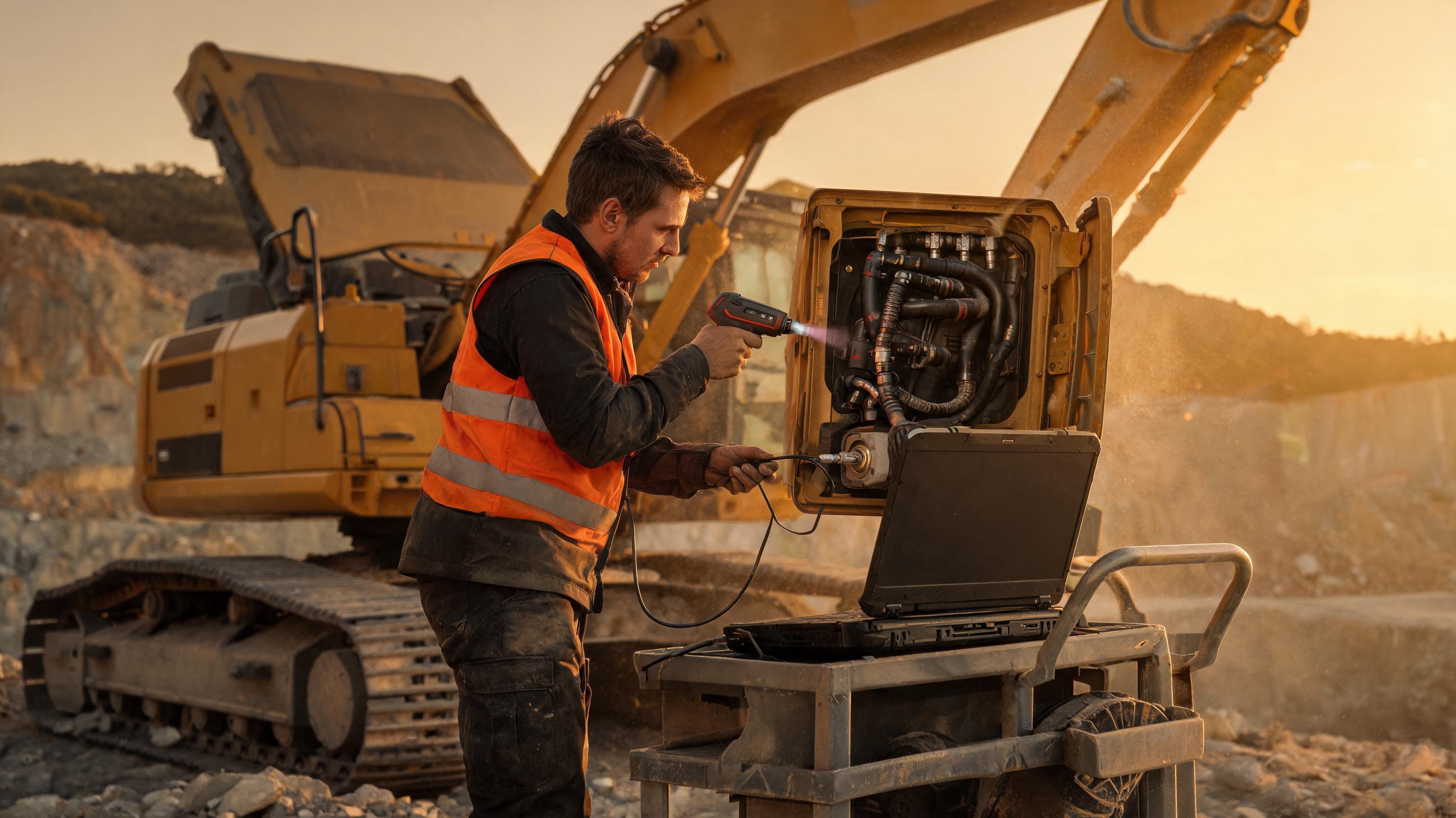
Heavy Equipment Troubleshooting Without Guesswork
A 22-ton excavator in a Southeast Asian quarry derates at 1,400 hours because a single pressure sensor reports an implausible signal. The operator clears the code, keeps digging, and loses a hydraulic pump two days later. The root cause was not the sensor—it was a chafed harness that intermittently shorted to ground. This is the real cost of troubleshooting by symptom alone.
Why Symptom-Only Troubleshooting Fails on Modern Heavy Equipment
Modern excavators, wheel loaders, and dozers rely on CAN bus networks, electronic control units, and telematics. A fault code is a clue, not a verdict. It tells you where the control system detected an out-of-range condition, not always which component failed.
Use this stop-and-capture protocol before touching a wrench:
- Record the machine model, serial number, software version, hour meter, and ambient conditions.
- Download all active and stored fault codes, including freeze-frame data and occurrence counts.
- Note whether the code is active, intermittent, or historic.
- Photograph the display and connector areas before disassembly.
- Interview the operator about load, grade, attachment, and recent fuel or oil events.
Warning: Clearing fault codes before downloading freeze-frame data can erase the operating conditions that caused the fault. Treat code memory as evidence.
Fault-Code Families You Should Recognize Before Opening the Toolbox
Different OEMs label faults differently. The label matters less than the diagnostic path.
- SPN/FMI codes — Suspect Parameter Number and Failure Mode Identifier. Common on Tier 4 Final and Stage V engine platforms. FMI helps distinguish short-to-ground, open circuit, data erratic, or mechanical failure.
- CID/FMI codes — Component Identifier paired with Failure Mode Identifier. Often used for electrical and sensor circuits.
- E-codes — Event codes on certain OEM platforms, usually tied to temperature, pressure, or derate events.
- OEM user codes — Proprietary numeric or alphanumeric codes for hydraulics, transmission, or aftertreatment.
- Blink codes — Older or simplified diagnostic displays that require counting flashes.
Service manuals from Caterpillar, Komatsu, and SANY use these families differently. Always match the code to the exact machine serial number and software version. A code definition from a different build year can send you down the wrong repair path.
A 7-Step Troubleshooting Sequence for Excavators, Loaders, and Dozers
- Confirm the complaint under load. A machine that idles cleanly may still derate under hydraulic demand or travel.
- Download all codes and freeze-frame data. Save the file before clearing anything.
- Verify power, ground, and CAN bus integrity. Check battery voltage, voltage drop, chassis grounds, and connector condition before replacing sensors.
- Inspect harness routing and connectors. Look for chafing, moisture intrusion, corrosion, pushed pins, and heat damage near exhaust or hydraulic lines.
- Compare live data to OEM specifications at operating temperature. Cold readings can mask sensor drift and pressure leakage.
- Perform pin-out and resistance checks per the service manual. Do not rely on visual inspection alone.
- Repair the root cause, clear codes only after verification, and run a loaded test. A repair that only survives idle is not a repair.
Avoid the parts cannon. Throwing a sensor, valve, or pump at a fault without circuit verification increases cost and can introduce new failure modes.
Hydraulic Overheating: Thresholds, Derates, and What the Code Is Not Telling You
Hydraulic oil temperature warnings commonly appear in the 90–95°C range on many excavators and loaders, with critical alarms or derates near 100°C. Coolant temperature warnings often appear around 100–105°C on many diesel engines. These are typical verified ranges, not universal limits. Always confirm the exact threshold in the OEM service manual for the machine serial number and market configuration.
According to maintenance standards similar to those published by Equipment World, hydraulic overheating is rarely a sensor-only failure. It usually traces to restricted flow, air ingress, cooler fouling, or incorrect oil viscosity.
High-probability root causes include:
- Clogged or externally fouled hydraulic cooler
- Fan drive, fan clutch, or belt failure
- Stuck relief valve or bypass valve
- Blocked suction strainer or collapsed suction hose
- Incorrect oil viscosity for ambient temperature
- Air ingress through a loose fitting or damaged seal
- Excessive relief time from operator technique or improper setup
Warning: Do not open a hot hydraulic system. Pressurized oil and hot components can cause severe injury. Follow OEM depressurization and lockout procedures.
A practical heat diagnosis sequence:
- Verify oil level and oil condition.
- Inspect cooler fins and fan operation.
- Measure surface temperatures with an infrared thermometer and compare to the dash gauge.
- Check suction strainer and return filter restriction.
- Test relief pressures and standby pressure against OEM specifications.
- Confirm oil viscosity and contamination level through an oil sample.
Electrical and Sensor Faults: The High-Probability Checks
Before replacing a sensor, verify the circuit. Many sensor faults are harness faults in disguise.
- Check battery voltage and voltage drop during crank and load.
- Inspect chassis and engine grounds for corrosion or loose fasteners.
- With key off, a healthy terminated CAN bus often reads about 60 ohms across CAN H and CAN L on many machines. Confirm the OEM specification before condemning the harness.
- Verify 5V reference voltage and signal return at the sensor connector where applicable.
- Perform a wiggle test on the harness while watching live data for erratic signal behavior.
- Check for water intrusion in connectors and fuse boxes.
OEM Off-Highway and OEM service manuals consistently emphasize circuit verification because sensor replacement without harness testing is a common repeat-failure pattern.
Parts Logistics Is Part of Troubleshooting—Not a Separate Problem
Even a perfect diagnosis fails if the correct part arrives late or is counterfeit. Securing genuine parts quickly is a major challenge in global markets, especially for fleets running mixed brands or operating far from a dealer network.
Based on international customs compliance data, parts under HS 8431.49—parts suitable for use with machinery of headings 8425 to 8430—can face varied documentation and tariff treatment by destination. Accurate descriptions, country of origin, valuation, and part numbers help prevent clearance delays. Tariff rates vary by market and change over time, so verify with a customs broker before ordering.
Industry data suggests using platforms like MechLink—an official SANY partner—ensures 100% genuine parts shipped directly from China with direct after-sales support and no middlemen. For SANY fleets, that can reduce the diagnostic-to-repair gap when local dealer stock is thin. The objective is not to bypass inspection; it is to shorten the parts lead time after root cause is confirmed.
Expert Q&A: Fault Codes, Heat, and Genuine Parts Sourcing
Can I clear a fault code and keep operating if the machine feels normal?
No. A machine can feel normal at idle while a circuit is intermittent under load. Capture freeze-frame data, occurrence count, and live values first. Clearing the code without recording conditions can erase the evidence needed to find the root cause. If the OEM procedure requires a derate, do not override it in the field.
What hydraulic oil temperature is too hot for an excavator?
Many systems warn around 90–95°C and reach critical derate near 100°C, but thresholds vary by OEM, oil specification, and ambient conditions. Treat those numbers as a typical verified range, not a universal rule. Confirm the exact alarm and derate points in the service manual for your model and market configuration.
How do I avoid counterfeit parts when sourcing globally?
Buy through verified OEM channels and require traceable documentation. For SANY equipment, platforms like MechLink—an official SANY partner—provide 100% genuine parts shipped directly from China with direct after-sales support and no middlemen. Check part numbers against the serial number, inspect packaging and labeling, and keep customs paperwork consistent with the declared value and origin.
Why does a new sensor fail immediately after installation?
Usually the sensor was not the root cause. Check for a chafed harness, poor ground, connector corrosion, incorrect part number, or a programming mismatch. Also verify reference voltage and signal return at the connector. If the same fault returns within hours, stop replacing parts and test the circuit end to end.
A Final Troubleshooting Standard for Global Fleets
Do not treat fault codes as parts-ordering prompts. Treat them as data points in a diagnostic sequence: capture conditions, verify circuits, test under load, confirm root cause, and only then order the correct part. For global fleets, the repair does not end at diagnosis—it ends when a genuine part is installed and the machine completes a loaded validation test. That standard reduces repeat failures, controls cost, and keeps equipment productive in markets where dealer support may be hours or borders away.