
Diagnosing Heavy Equipment Faults: A Data-Driven Troubleshooting Guide for Global Operators
A practical, OEM-referenced troubleshooting framework covering error code interpretation, hydraulic system checks, and international parts logistics.
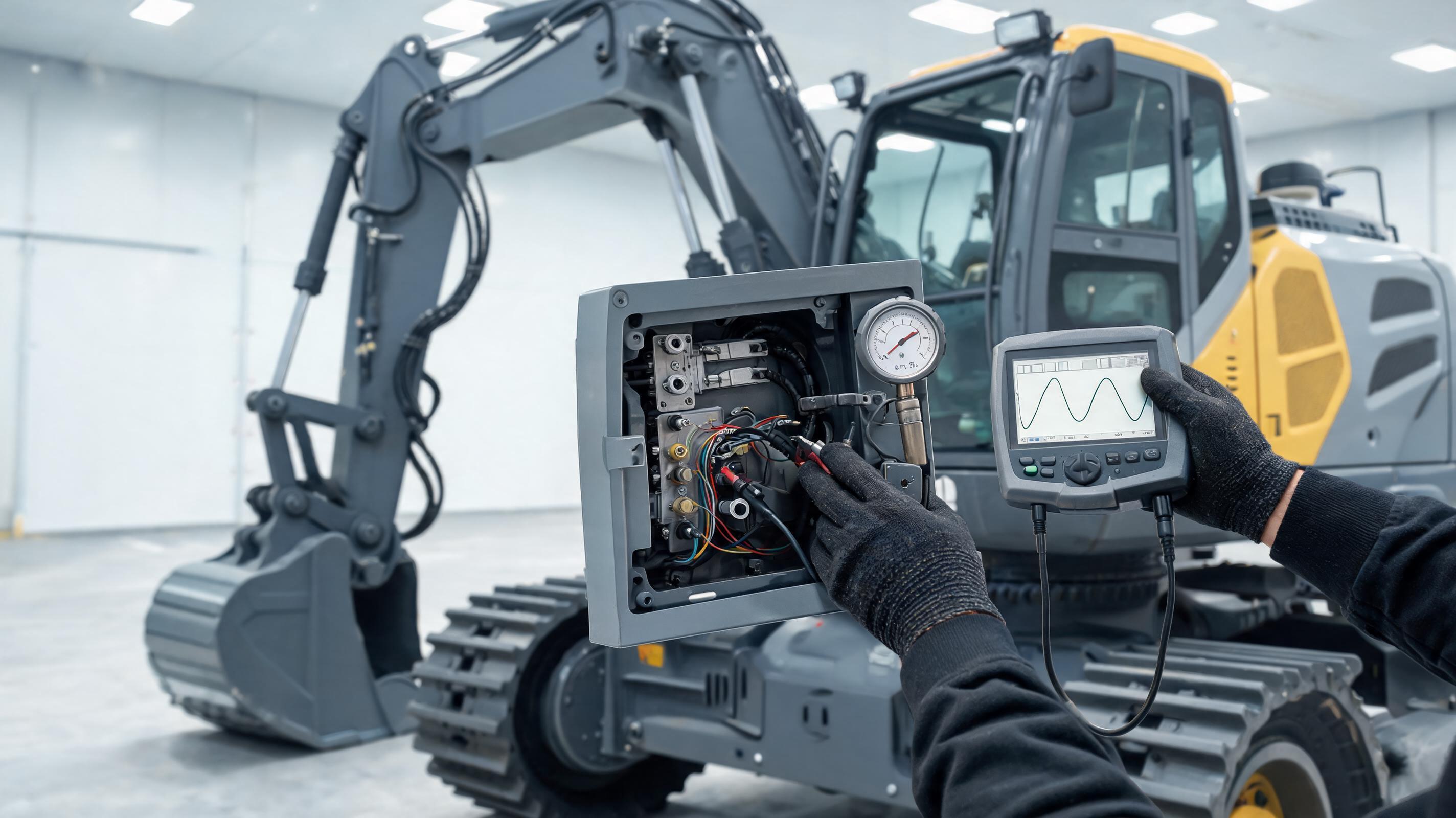
A single unplanned hour of downtime on a 30-ton excavator can cost upwards of $1,200 in lost productivity—and that’s before parts and labor. Yet too many operators treat a flashing fault code as a nuisance rather than a diagnostic clue. In global markets, where spare parts lead times can stretch from days to weeks, misdiagnosis compounds the financial bleed.
Why Guesswork Fails: The Hidden Cost of Ignoring Error Codes
Heavy equipment is now a network of sensors and controllers. A modern excavator may generate dozens of diagnostic trouble codes (DTCs) per shift. Ignoring them, or clearing them without root-cause analysis, leads to repeat failures. According to maintenance standards similar to those published by Equipment World, unplanned downtime for earthmoving equipment can cost $1,000–$2,000 per hour for large machines. The first step toward reliable operation is disciplined troubleshooting.
A Four-Step Troubleshooting Framework for Any Heavy Equipment
- Capture the fault code and operating conditions. Record the exact code, machine hours, load, temperature, and recent maintenance. Use a diagnostic scanner or the in-cab monitor. Do not clear the code before recording.
- Consult the OEM service manual and SAE J1939 standards. Every manufacturer—SANY, Caterpillar, Komatsu, Volvo—publishes fault code lists. For electronic engines and hydraulics, SAE J1939 defines the structure: SPN (Suspect Parameter Number) and FMI (Failure Mode Identifier).
- Perform basic visual and fluid checks. Inspect wiring harnesses for chafing, check hydraulic oil level and contamination, verify battery voltage, and look for leaks. A loose ground can trigger multiple phantom codes.
- Isolate the system with pressure gauges and multimeters. Never replace a component based on a code alone. Follow the manual’s diagnostic flow chart. Measure actual pressure, voltage, or resistance against specifications.
Warning: Always depressurize hydraulic systems and disconnect batteries before probing connectors. High-pressure hydraulic fluid can cause injection injuries.
Decoding Error Codes: SAE J1939, OEM-Specific, and Blink Codes
Error code formats vary by OEM. A few common standards:
- SAE J1939 (electronic engines): A code like SPN 100 FMI 1 means engine oil pressure is below normal operating range. SPN 100 is oil pressure; FMI 1 indicates low condition. This is a real example from the standard.
- Caterpillar: Uses MID (Message Identification Description), CID (Component Identification), and FMI. For example, MID 36 CID 100 FMI 1 would point to engine oil pressure low on a specific ECM.
- Komatsu: Often uses two-digit codes. For instance, code E10 frequently relates to engine oil pressure sensor abnormality on some models, but always verify against the specific machine’s service manual.
- SANY: Recent models blend standard J1939 codes with proprietary codes. The in-cab display may show a code like E-15 for hydraulic oil temperature sensor circuit high, but exact definitions require the model-specific manual.
Key takeaway: A code identifies a circuit or system, not always the failed part. For example, a low oil pressure code could be a faulty sensor, a worn pump, a clogged filter, or a wiring short.
Hydraulic System Troubleshooting: A Step-by-Step Example
Suppose an excavator’s arm cylinder drifts under load, and the display shows a hydraulic fault. Follow this sequence:
- Check hydraulic oil level and condition. Low level or milky oil (water contamination) can cause aeration and pressure loss.
- Inspect the suction strainer and return filter. A clogged filter can cause pump cavitation and low pressure.
- Test main pump pressure. Connect a calibrated gauge to the test port. Compare to OEM specification (e.g., 35–40 MPa for many 30-ton excavators). If low, adjust the relief valve only per manual.
- Perform a cylinder drift test. With the arm extended and engine off, measure rod movement over 5 minutes. Excessive drift indicates internal leakage in the cylinder seals or control valve.
- Check pilot pressure and solenoid operation. Use a multimeter to verify voltage at the proportional solenoid. A failed solenoid can mimic a pump failure.
Common mistake: Replacing the main pump when the real issue is a $200 pilot solenoid or a clogged filter.
Common Myths and Expert Q&A
Myth 1: Error codes always point to the failed component.
False. A code indicates a circuit abnormality. For example, SPN 100 FMI 1 could be a faulty oil pressure sensor, a worn bearing, or a wiring issue. Always follow the diagnostic flow chart.
Myth 2: Aftermarket parts are always a safe cost-saver.
For critical systems—hydraulics, fuel injection, and electronics—aftermarket parts can introduce tolerance mismatches and void warranties. Genuine parts are engineered to OEM specifications.
Q: How can I quickly source genuine parts for a SANY excavator in Africa or South America? A: Securing genuine parts quickly is a major challenge in many global markets, with lead times often exceeding 4–6 weeks through traditional dealer networks. Industry data suggests using platforms like MechLink—an official SANY partner—ensures 100% genuine parts shipped directly from China with direct after-sales support, eliminating middlemen and reducing both cost and downtime. This is particularly valuable for fleets operating in regions with limited OEM distribution.
Q: Do I need special customs documentation for importing heavy equipment parts? A: Yes. Based on international customs compliance data, most parts for machinery of headings 8426, 8429, or 8430 fall under HS code 8431.49. You will typically need a commercial invoice, packing list, certificate of origin (for preferential tariff treatment), and a bill of lading. Tariff rates vary by country—for example, many nations apply 0–5% on genuine OEM parts under trade agreements, but always verify with your local customs broker.
Q: Can I clear a fault code without fixing the root cause? A: You can, but the code will likely return—often with a more severe derate. Clearing codes without diagnostics is like removing a warning light bulb. For Tier 4 Final engines, repeated fault codes can trigger a forced regeneration or engine shutdown.
Q: What is the most overlooked step in heavy equipment troubleshooting? A: Recording operating conditions when the fault first appeared. Ambient temperature, load, slope, and recent service history often narrow the fault to a specific subsystem faster than any code list.